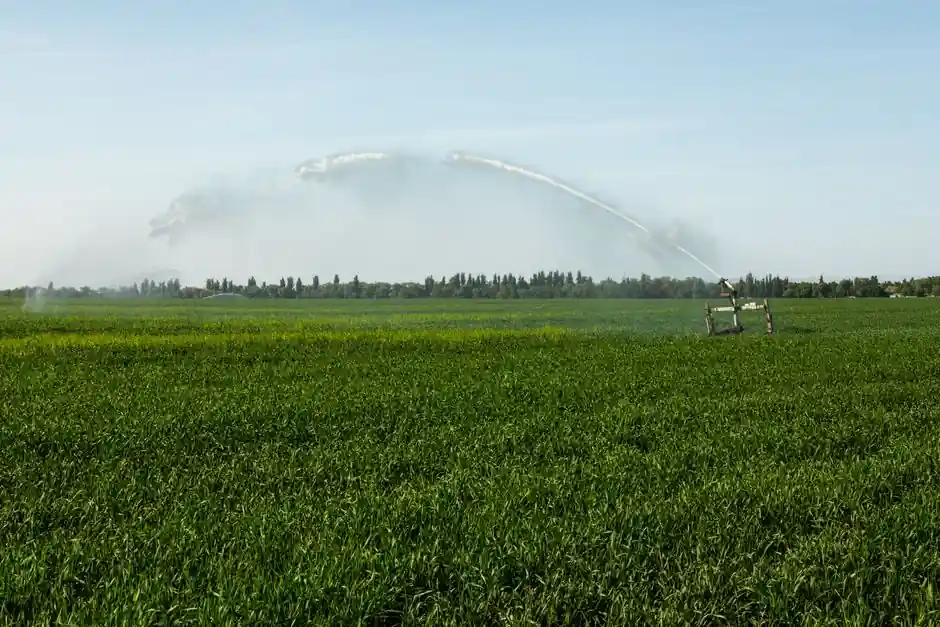
Needle valves provide precise flow-rate control in low-flow applications and are widely used in water management, including irrigation systems [S5].
For clean water, brass with NBR seals is a practical baseline; stainless steel with PTFE is the stronger choice for corrosive dosing or chemical service [S5].
Where a Needle Valve Fits the Irrigation System
A needle valve uses a tapered stem to make fine flow adjustments, making it suitable for low-flow, low-viscosity service [S5][S6].
Needle valves are not the preferred primary isolation devices for large irrigation mains. Ball and gate valves provide low-loss on-off service, and a ball valve should not be left partially open because cavitation, vibration, and wear can result [S2][S3].
Flow, Pressure, and Valve Sizing
Begin with the required flow rate, upstream pressure, allowable pressure drop, and downstream pressure requirement rather than the pipe diameter alone. An irrigation valve can have the correct nominal size while still being hydraulically oversized, and excessive pressure loss can limit downstream coverage [S4].
Published material bounds include 100 bar at 110°C for brass needle valves and 300 bar at 200°C for stainless steel needle valves [S5]. These are material-family application limits, not a substitute for checking the specific manufacturer model, seat, seal, end connection, and test pressure.
For chemical injection, the fine-metering valve may be preferable when repeatable low-flow metering is the governing requirement, because needle valves are generally chosen for lighter, less viscous fluids and precise control [S1]. Specify the injection rate, required turn resolution, and pressure differential rather than accepting a generic small-port designation.
Threads, port size, and body configuration must match the irrigation header, injector, or instrument connection. Irrigation valve assemblies should be selected to the same size and connection type as the pipe, with reducers or fittings used where necessary [S2].
Material and Seal Comparison for Irrigation Water
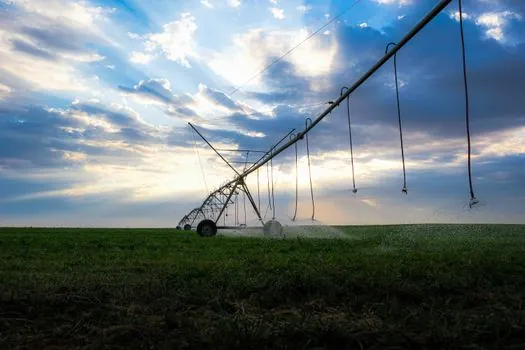
Brass needle valves are ideal for potable water and non-reactive, non-corrosive liquids [S5]. This combination is economical for manual sampling or low-flow adjustment when the water is not aggressive and service temperatures remain within the selected product rating.
Stainless steel provides a higher corrosion and temperature capability, with the cited application limit reaching 300 bar and 200°C [S5].
Surface water from wells, ponds, or canals can contain sand, silt, algae, organic matter, fertilizer residue, and chemical residue [S4]. Needle valves have relatively restricted flow passages, so inspect for a straight or adequately swept internal path, select corrosion-resistant trim, and plan for disassembly and cleaning. A small flow rating alone does not establish debris tolerance.
Comparison with Globe and Ball Valves
Needle valves provide fine adjustment at small flow, but their restricted passages make them less suitable for moving large irrigation volumes. Globe valves also regulate flow through an S-shaped passage, while ball valves are intended primarily for quick on-off service [S2][S3].
For manual irrigation flow control, compare the three realistic options by duty, hydraulic loss, and operating behavior. Needle valves fit small chemical or sampling flows with fine adjustment and restricted capacity. Globe valves fit manual regulation with a wider irrigation-flow role. Ball valves fit isolation because a quarter-turn opens or closes a straight-through bore [S1][S3].
Those size ranges describe typical application preferences, not universal limits, and they reinforce the need to verify actual flow capacity, pressure drop, and end connections for the selected model.
Installation, Adjustment, and Maintenance
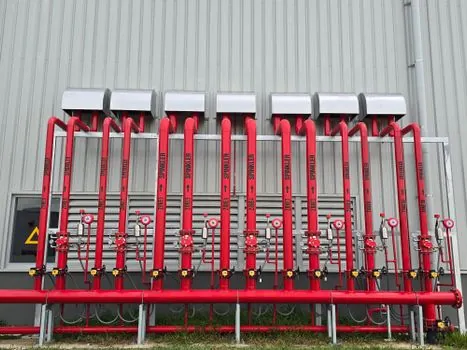
Install an isolation valve upstream of a metering needle valve so the assembly can be serviced without shutting down the entire irrigation system [S2][S5]. Mount the valve so the tapered stem and packing remain accessible, and provide enough clearance to operate the handle or knob through its full travel.
Open the valve slowly and avoid excessive stem force. Needle valves regulate through minute changes in stem position, so hydraulic forces at the seat can affect repeatability and wear [S5][S6]. Record the fully open and closed positions, and establish a marked adjustment range for chemical injection rather than relying on an arbitrary number of turns.
Do not use a partially open ball valve as a substitute for a regulating valve. The resulting cavitation, vibration, and wear can damage the valve, while gate valves have a nonlinear control profile and can suffer rapid erosion near the seat [S2][S3].
Chemical Injection and Water-Quality Constraints
Chemical injection requires compatibility across the wetted body, stem, seat, seal, tubing, and injected chemical. Stainless steel with PTFE is the cited configuration for corrosive chemical dosing, sampling, solvent service, and other applications requiring chemical resistance [S5].
Pressure variation changes the output of a manually adjusted needle valve. Confirm that the injector or dosing system can compensate for inlet-pressure changes, and size the valve for the lowest expected operating differential. If stable fertilizer or pesticide application is critical, a purpose-built metering or diaphragm dosing device may be more suitable than a generic needle valve.
Do not use a needle valve as the only backflow barrier. Irrigation assemblies require a dedicated check or backflow-prevention device where the hazard assessment requires one; check valves and non-return valves arrest reverse flow that could contaminate the source [S2].
Specification Checklist Before Purchase
Specify at least 8 data points: medium and injection chemical, required flow range, inlet and outlet pressure, available differential pressure, connection size and thread form, body material, seal material, and temperature exposure. For outdoor service, add UV exposure, temperature variation, chemical residue, debris conditions, and the required cleaning interval [S4].
Require the supplier to state the valve model, rated pressure and temperature, flow characteristic or Cv where applicable, seat and seal materials, end connections, maximum operating differential pressure, and whether the stem is lockable or capped. The cited 100 bar and 300 bar limits apply to the brass and stainless steel families described, but the purchased model rating governs [S5].
For chemical dosing, request stainless steel trim and PTFE-compatible wetted components. For clean, non-corrosive irrigation water, brass with NBR seals is a defensible lower-cost configuration [S5]. If the task is full-zone water regulation rather than small injection, specify a globe valve or engineered control valve instead.
A plant requiring repeated distribution-zone flow selection can use Select Irrigation Gate Valves by Water and Duty as the isolation and distribution benchmark, while reserving needle valves for the small-flow metering duty.
Before purchase, record the design flow and differential pressure, identify the wetted medium, and confirm the manufacturer model limits. These three checks expose an oversized valve, an incompatible seal, and an unsuitable pressure rating before installation.