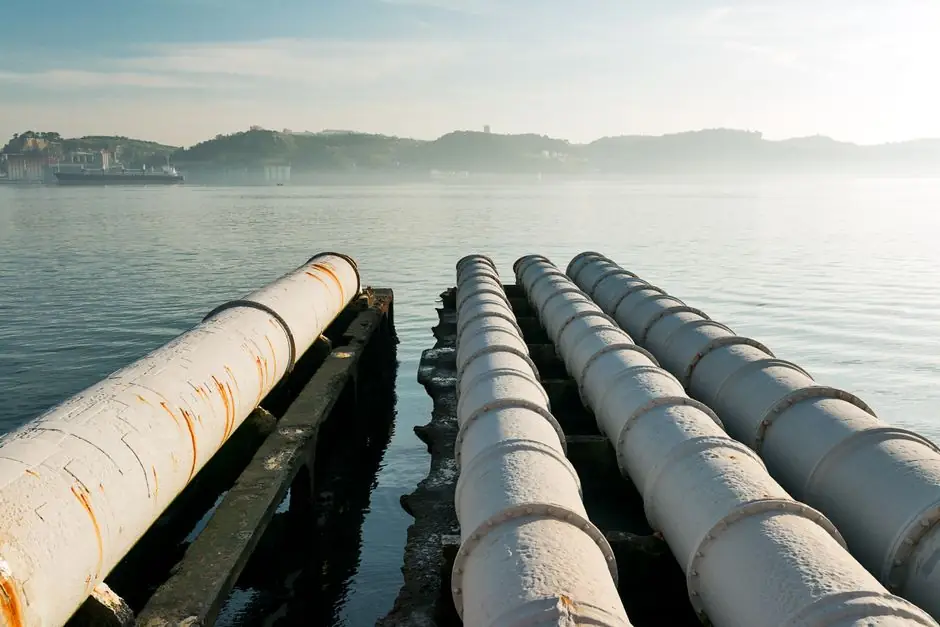
For seawater reverse osmosis, specify a corrosion-resistant needle valve with super duplex UNS S32750 selected for chloride service.
Needle valves suit fine flow, pressure and bypass regulation in intake, pretreatment, high-pressure RO, brine and product-water duties, but each application requires its own material, pressure and actuator assessment.
Match the needle valve to the desalination stage
Needle valves provide precise regulation rather than primary pipeline isolation, so the required function must be fixed before comparing materials or actuation options [S1][S5].
Small-bore needle valves are used for precise antiscalant and biocide dosing, while needle valves are also identified for pressure and flow control in high-pressure reverse osmosis equipment [S3][S4]. In seawater intake systems, butterfly and gate valves are better suited to bulk flow regulation and isolation, while ball valves provide high-pressure shut-off in RO trains [S3][S5]. Brine discharge and chemical dosing present different threats: concentrated brine can carry abrasive solids, while antiscalant and biocide duties can attack wetted materials [S3][S4].
Needle valves should therefore be reserved for small-bore adjustment, sampling, auxiliary stabilization or bypass control. If the duty requires full-bore isolation of a large seawater line, a ball, gate or butterfly valve is normally the more functional selection [S1][S3][S5].
Select materials for seawater, brine and chloride exposure
Super duplex UNS S32750 and duplex UNS S32205 provide higher chloride resistance than conventional stainless steel, making them the principal metallic candidates for high-pressure seawater RO systems [S2][S3].
Duplex and super duplex stainless steels address the risks of general corrosion, pitting and crevice corrosion, while erosion must also be checked where suspended solids or high-velocity brine are present [S3]. Titanium Grade 2 or Grade 5 offers high corrosion resistance for critical applications but has a higher material cost, while nickel-aluminum bronze is suitable for some seawater intake and low-pressure duties [S3].
Standard 316 stainless steel should not be assumed suitable for high-chloride service because it is susceptible to pitting corrosion [S3]. For chemical dosing, PTFE, PFA and EPDM polymer options can provide compatibility with corrosive fluids, but the selected elastomer and liner must be checked against the actual chemical concentration and temperature rather than selected by generic material name [S3][S8].
Compare manual, automated and severe-service needle valves
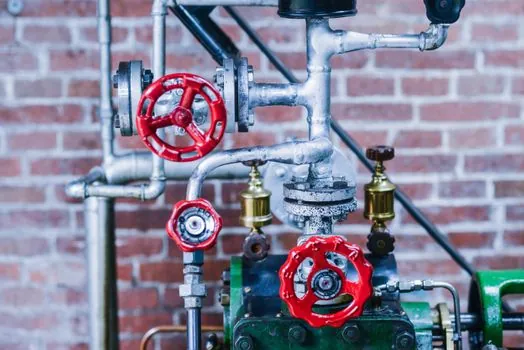
Manual needle valves are the rational choice for occasional adjustment, accessible locations and duties outside a control sequence; electric multi-turn actuation becomes relevant for frequent adjustment, remote access or PLC/SCADA integration [S2][S7].
General-service and severe-service needle valves must be distinguished before comparing seat geometry, trim, sealing and actuator options [S7]. For automated service, the EF70-E concept uses an electric multi-turn actuator with remote operation, analogue signal and PLC/SCADA-ready integration, while the EF70 is the manual counterpart [S2]. The actuator choice does not replace the pressure, corrosion and flow-function review.
Size the pressure and flow-control envelope
The selected needle valve needs a working-pressure and differential-pressure rating above the maximum design condition, not merely enough nominal capacity at low differential pressure [S2][S3]. Evaluated characteristics should include flow coefficient, opening and closure precision, and response time [S1][S5]. The same valve may regulate differently depending on whether it provides bypass control, pressure adjustment, isolation assistance or auxiliary regulation, so its P&ID function must remain part of the sizing calculation [S2].
Stability under sudden pressure and flow changes is a separate selection criterion because desalination systems can operate with fluctuating pressures and changing feed salinity [S1][S5]. A needle valve that cannot maintain stable control at the minimum and maximum differential pressure may require trim changes, a different valve family or a revised control strategy.
Choose actuation from control need, not automation preference

A manual super duplex needle valve remains technically adequate when adjustment is occasional, access is convenient and the valve is not part of a control sequence [S2].
Electric actuation becomes justified when the valve requires repeated adjustment, is installed in an inaccessible location or must provide repeatability, remote operation and position traceability within a PLC/SCADA system [S2]. Pneumatic, electric, hydraulic and manual options are all identified as possible desalination actuation methods, but the actuator must match the actual control demand and installation environment [S1][S5].
For chemical injection, an automated needle valve does not replace compatibility checks for antiscalant or biocide concentration, nor does it validate the metering pump’s turndown and response requirement [S4]. In high-pressure RO, electric, pneumatic and manual needle valves can all be appropriate, provided each has a pressure rating appropriate to its function and material set compatible with the fluid [S3].
Limit failures through construction, sealing and maintenance access
Top-entry construction can simplify inspection, cleaning and repair without removing the valve from the pipeline, reducing maintenance time in contamination-prone seawater systems [S3][S5].
Common corrosion mechanisms to investigate during material qualification are general corrosion, pitting, crevice corrosion and erosion [S3]. Seawater salt, chloride concentration, suspended solids, velocity and temperature should all be included in the corrosion review, because material compatibility depends on the complete service rather than salinity alone [S1][S3].
Seal and trim construction must also match the duty. PTFE is identified for corrosive, low-viscosity or hazardous chemical applications because of its chemical stability [S8]. For high-pressure or severe-service valves, the manufacturer’s pressure and temperature limits should govern the final selection, with corrosion testing and pressure testing forming part of procurement verification [S1][S7].
Apply standards and procurement evidence
ISO 15848 addresses fugitive emissions, while API 6D applies to pipeline valves; CE and PED also appear among the procurement requirements identified for desalination equipment [S3].
These references must be applied only to the valve type and scope actually governed by each document. API 600, API 6D, NACE MR0175 and AWWA C516 are listed in general desalination selection guidance, but they are not interchangeable acceptance criteria for every small-bore needle valve [S3]. A project specification should identify the applicable edition, pressure class, materials, test requirements, seat leakage criteria and actuator protocol.
For super duplex needle valves, require evidence for the specified UNS grade, maximum working pressure, differential-pressure limit, temperature, flow coefficient, seat configuration, end connections and actuator function. The EF70 specification provides a concrete material and configuration reference, including UNS S32750/F53 and manual versus EF70-E electric execution [S2].
The final shortlist should retain a manual super duplex needle valve for simple, accessible adjustment; an electric multi-turn version for frequent or remote regulation; a severe-service model for elevated duty; and a non-needle valve when the real requirement is large-line isolation or high-flow shut-off [S2][S3][S5].
Track the next procurement decision through the approved P&ID duty, maximum pressure and temperature, chloride concentration, required flow coefficient, actuator signal list and inspection test plan.