
Needle valves suit high-pressure, low-flow throttling in power generation because their tapered plug provides gradual, fine adjustment rather than rapid on-off action [S2][S3].
Selection must be driven by medium, operating temperature, pressure, flow rate, and installation conditions, with special attention to steam, water, instrumentation, and hydraulic duties [S8].
Needle valve duty and operating principle
A needle valve has a long, tapered, needle-like stem that gradually opens or closes an orifice as the valve is turned [S3]. Rotation moves the plug progressively into or out of the seat, changing the opening gradually and supporting fine flow regulation [S2].
This geometry makes the valve appropriate where small flow rates, repeatable throttling, and stable pressure control matter [S3][S7]. Power-generation applications include plant water systems, dams, reservoirs, sampling lines, instrumentation, and hydraulic or pneumatic circuits [S1][S6].
For a larger steam or water isolation duty, compare the operating concept with globe valves for high-power steam and water service.
Compare the principal needle-valve options
Manual, automatic, straight-body, and angle-body needle valves differ most in control method, installation geometry, and operating function rather than in the basic tapered-plug principle [S2][S3].
For straight versus angle bodies, the practical decision criteria are available straight-line piping, physical space, flow direction, and service access. For manual versus automatic versions, the decisive criteria are required control mode, operating sequence, fail position, and operator workload [S2][S3].
Pressure, temperature, flow, and closing performance
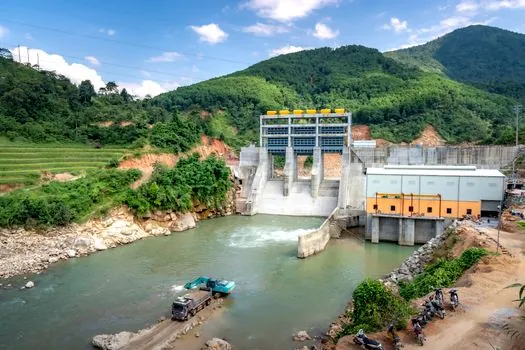
Power-generation valve selection depends on the medium, including steam or water, plus operating temperature, pressure, flow rate, and the specific installation requirement [S8]. A complete purchase specification should record design pressure, design temperature, operating pressure, operating temperature, minimum controlled flow, maximum controlled flow, and allowable pressure drop [S8].
Their tapered adjustment is suited to high-pressure, low-flow, and high-precision control applications [S2][S3].
Do not accept a general statement such as “high pressure” as a rating. The selected model needs an identified pressure class, applicable size range, and a seat and body construction rated for the actual medium and temperature. For steam service, verify whether the valve is intended for throttling, isolation, or both, because a product intended only for isolation does not establish acceptable throttling performance [S8].
Materials must match water, steam, and chemistry
Material compatibility must include the stem, packing, seat, bonnet, and internal flow surfaces, not only the body material.
Water treatment, boilers, cooling systems, and chemical dosing require different exposure profiles even within one power station. Ask whether the medium contains dissolved oxygen, chlorides, treatment chemicals, or entrained solids, and confirm the manufacturer’s stated compatibility for the complete wetted material set [S1][S3].
Connections, stem sealing, and installation access
Needle valves are available in compact straight and angle forms for small-diameter piping and instrumentation assemblies [S3].
The bonnet, packing, stem, and seat form the sealing arrangement [S3].
Installation also affects selection. Check handle swing, service clearance, support requirements, accessibility for packing adjustment, available travel, and the need for a locking mechanism to preserve a set flow rate [S3]. For powered operation, confirm actuator mounting orientation, stroke behavior, and whether manual override is required [S2].
Where needle valves fit and where they do not
Use a needle valve for low-flow metering, pressure regulation, sampling, instrument isolation, and controlled injection where fine adjustment is the main requirement [S1][S6][S7]. These duties include water distribution, dam and reservoir systems, power-plant service, hydraulics, and pneumatics [S1][S6].
Do not select the mainstream manual needle valve for high-capacity steam throttling, rapid emergency isolation, or heavily viscous fluids. The tapered plug is deliberately suited to gradual modulation, while the valve is not suited to high-flow or rapid shutoff duties [S3]. For large-bore isolation or high-capacity throttling, evaluate a valve type engineered for those functions, including a globe or control valve [S5].
Automatic selection is also a mistake when only local manual adjustment is needed. Actuators and sensors add failure modes, control-integration requirements, and maintenance demands that a handwheel design avoids [S2]. Use manual operation for accessible, infrequent set-point adjustment; use automatic control where remote monitoring, repeatable positioning, or an operating sequence is required.
Power-generation application selection

For boiler or turbine auxiliary systems, the first decision is whether the duty is steam, feedwater, cooling water, condensate, or a chemical service [S8]. Each medium changes the required material, temperature rating, seat design, and acceptable flow range [S3][S8].
For sampling and instrumentation, prioritize fine resolution, repeatable positioning, small flow capacity, and compact end connections [S6][S7]. For hydraulic or pneumatic control, define the operating fluid, pressure range, required adjustment speed, and actuator method before choosing body form [S2][S6].
For water treatment and distribution within a power facility, define whether the valve is regulating treated-water flow, controlling reservoir or dam discharge, or providing pressure regulation [S1]. Fine metering valves can be preferable to ordinary needle valves when the fluid is light and the required control precision is unusually high [S5].
Procurement specification and acceptance checks
A traceable data sheet should identify valve type, straight or angle body, manual or automatic operation, size range, end connection, body and seat material, stem construction, packing arrangement, pressure class, design temperature, operating pressure, flow range, and actuator details [S2][S3][S8].
At least 3 acceptance checks deserve defined treatment: shutoff leakage at the applicable test condition, functional movement across the full opening range, and operating torque or actuator force under rated pressure and temperature. The applicable product and project specifications govern the acceptance values; the research material supports the functional checks but does not establish a universal leakage class or torque limit for power-generation needle valves.
Before release, verify that the valve will not be used outside its pressure-temperature envelope, that the stem and seat materials suit the medium, and that installation clearance permits full travel and maintenance access [S1][S2][S8]. For a wider comparison of control-valve options in the same industry, use control valve selection for power generation.
The shortlist logic is straightforward: retain a manual straight or angle needle valve for accessible low-flow regulation, specify an automatic version when remote or sequence control is required, and use a fine metering valve when resolution exceeds ordinary needle-valve capability.