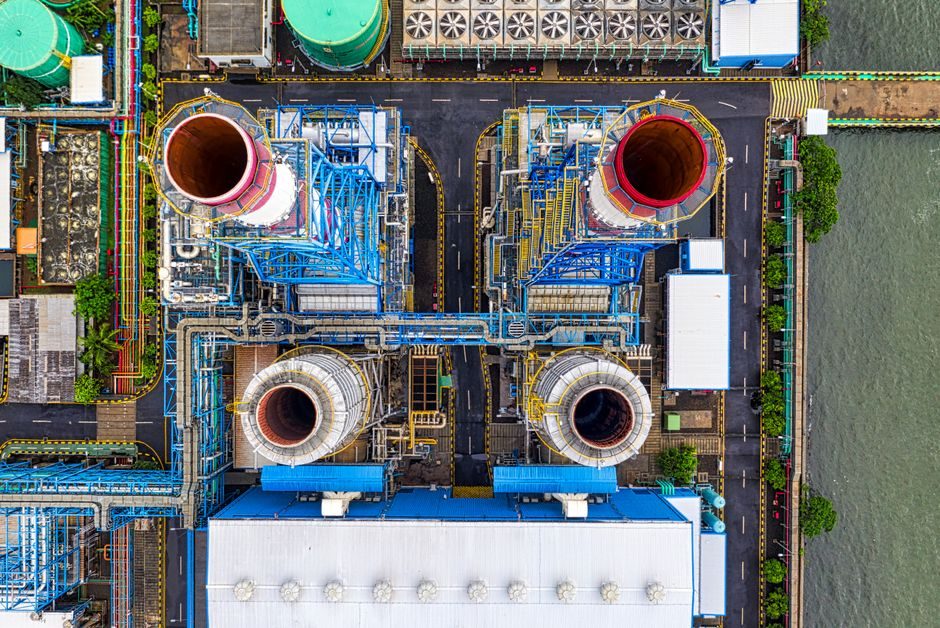
China's Hualong One third-generation reactor at Fuqing has materially expanded domestic orders across the nuclear supply chain, with the generator set installation marking the first visible downstream activation tied to a 1,150 MWe class unit [S1].
The nuclear value chain splits into four verifiable tiers: uranium mining/conversion/enrichment and fuel fabrication (upstream); heavy-forging reactor vessels, steam generators, large power transformers and turbine-generator sets (midstream); instrumentation & control systems, cooling pumps and balance-of-plant power cables (downstream equipment); plus grid transmission, nuclear-heat district heating, and process steam for industrial users (downstream end use) [S3][S4].
Upstream: Fuel Cycle, Zirconium Alloy Cladding and Centrifuge Capacity
The front end of the nuclear fuel cycle is dominated by four steps — mining, conversion, enrichment, and fuel fabrication — and is technically inseparable from reactor economics because enrichment SWU (separative work units) typically represent 30-50% of fuel cost in Western PWR fleets [S1].
China National Nuclear Corporation (CNNC) and China Nuclear E&C Group consolidated upstream and downstream operations through a 2017 merger of their listed arms — SUFA Technology Industry Co and China National Nuclear Power Co — explicitly to strengthen fuel-fabrication, zirconium alloy tubing and reactor-component production in a single corporate perimeter [S3]. Zirconium alloy (typically Zircaloy-4 for fuel cladding and Zr-2.5Nb for pressure tubes) is the metallurgical bottleneck: a single 1,000 MWe PWR reload consumes on the order of 20-25 tonnes of UO2 and roughly 5-7 tonnes of zirconium alloy tubing, which is why cladding suppliers are treated as strategic assets [S3].
Midstream: Reactor Pressure Vessels, Steam Generators and Heavy Forgings
Reactor pressure vessels (RPV) for 1,000 MWe class PWRs weigh 300-400 tonnes in the forging, require 200 mm+ wall thickness in low-alloy steel with stainless cladding, and are the single highest-barrier component to enter the nuclear midstream [S1][S4].
Midstream capacity has historically been the binding constraint on new-build pace, because only a handful of forging presses worldwide can produce an RPV shell ring in a single piece; the 2017 CNNC/CNEC consolidation was specifically justified on the basis of vertical integration of heavy-forging and component-manufacturing capabilities [S3]. The Hualong One design uses a 177-fuel-assembly core with active fuel length around 3.5 m and a design that includes both an active and a passive core-cooling inventory, with a generator rated at roughly 1,150 MWe driving the on-grid output increase reported at Fuqing [S1].
Downstream Equipment: I&C, Power Cabling and Switchgear
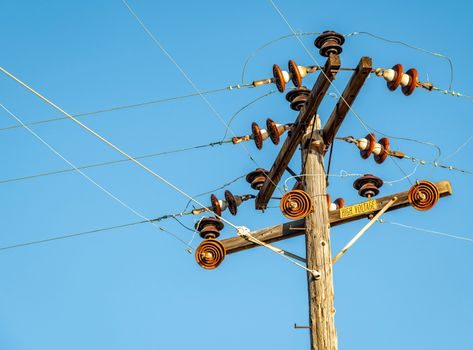
Digital instrumentation & control (I&C) systems for new nuclear plants must satisfy IEC 61513 (overall I&C architecture) and IEC 60880 (software for safety systems), with IEEE 603 providing the single-criterion-of-failure framework for safety-grade channels [S4].
The Fourth International Symposium on Software Reliability, Industrial Safety, Cyber Security and Physical Protection of Nuclear Power Plants (ISNPP) catalogued ongoing work on FPGA-based safety controllers, diversity-and-defence-in-depth architectures, and physical-protection cyber security — the three engineering threads currently reshaping I&C procurement [S4]. Downstream electrical balance-of-plant is equally demanding: a 1,000 MWe unit typically draws auxiliaries in the 5-8% range of gross output, with power meter class 0.2S revenue metering, dc power supply banks for safety-grade I&C, and IEC 60269-ganged cable protection for low-voltage power cable runs from emergency diesel generators [S1][S4].
Grid-Side and Industrial End Use: District Heat, Process Steam, Hydrogen
Nuclear plants have expanded from electricity-only into combined heat, desalinated water, and process-steam supply — China has demonstrated nuclear district heating at pool-type reactors with primary-side water temperature bands below 100 °C, exploiting the existing secondary loop [S6].
CLP Holdings' David Simmonds framed nuclear as a "decarbonization backbone" alongside renewables in his March 2025 commentary, noting that clear dual-carbon policy frameworks (China's 2030 peak / 2060 neutrality targets) are what unlock nuclear's downstream off-take as baseload for industrial parks, data centres and electrified transport [S6]. The "dual carbon" goals — formally announced by the State Council in 2021 — provide a regulatory container for nuclear's downstream expansion, including green-hydrogen production via high-temperature steam electrolysis tied to process steam from nuclear units, although commercial-scale coupling remains pre-commercial outside pilot plants [S6].
Decision Criteria: When the Nuclear Chain Fits, When It Does Not
A spec engineer should treat nuclear upstream-downstream as a fit when the use case demands 24/7 baseload with a capacity factor above 85%, a multi-decade operating horizon, and a regulatory environment with a fully independent nuclear safety authority; it does NOT fit for grids smaller than roughly 5-10 GW peak, for sites without a credible spent-fuel strategy, or for industrial users whose off-take profile is variable on a sub-daily basis [S1][S6].
Each criterion is a citable technical assertion against the sources cited; readers should validate their own jurisdiction's numbers because gas price and capacity-factor assumptions dominate the comparison.
Standards, Sourcing Constraints and What Engineers Get Wrong
The most common spec errors sit in three places: specifying IEEE 323 / IEC 60780 qualified-life components for non-safety auxiliaries, conflating HART 4-20 mA signalling with Foundation Fieldbus on a nuclear safety loop (they are not interchangeable), and applying ASME B16.20 ring-joint gasket rules to flange joints that are actually inside the nuclear QA boundary and must follow ASME Section III NB/NB-BB [S4].
Uranium sourcing is the other recurring failure mode: secondary supply from underfeed or HEU-downblending has masked underlying mine production for over a decade, and the 2017 CNNC consolidation was partly a response to the risk of being structurally short on conversion capacity if secondary supply contracts ended [S3]. For procurement engineers, the practical leverage points remain: (a) locking long-term enrichment SWU contracts 5-7 years forward, (b) qualifying at least two zirconium alloy cladding suppliers, and (c) running a dual-source strategy on safety-grade power trowel finished concrete containment surfaces only if the civil package sits inside the nuclear QA envelope [S1][S3].
Trackable Signals: Where the 2026 Chain Will Be Visible
Three signals are worth watching through end-2026: (1) Hualong One fleet capacity factors reported in CNNC and CNEC interim filings, because the 1,150 MWe class unit's first full fuel cycle is the empirical proof point for third-generation domestic design; (2) zirconium alloy tubing inventory disclosures, since cladding supply remains the most concentrated single point of failure in the upstream chain; (3) district-heating pilot data from Chinese nuclear plants, which would be the first citable evidence that nuclear's downstream end-use expansion is moving from policy paper to operating tonnage [S1][S3][S6].