An online water quality analyzer is a multi-parameter or single-parameter instrument installed in-line or in a side-stream panel that continuously measures parameters such as pH, conductivity, dissolved oxygen, turbidity, residual chlorine, ozone, COD, TOC, ammonia nitrogen, total phosphorus, or heavy metals on raw, process, or finished water [S3][S4][S6].
Selection is dominated by five decision gates: the parameter set and detection range, the verification protocol, the matrix chemistry, the data/communication interface, and the environmental certification. This article walks those five gates in the order a process engineer will hit them, then finishes with a side-by-side criteria comparison and the calibration-spec landscape a buyer should expect in 2026 [S1][S5][S10].
Parameter Set, Detection Range, and Limit of Quantification
The first gate is the parameter list, because most online analyzers are built around a defined set of measured entities rather than being freely reconfigurable — DABECO's W501, for example, is published as measuring ozone, chlorine, hydrogen peroxide, and water [S3], while ERUN's SP7 portable line lists COD, ammonia nitrogen, total phosphorus, total nitrogen, turbidity, and copper as the headline parameters [S4].
For CODcr analyzers specifically, the published inspection regime for online instruments includes indication error against standard solutions near 40 mg/L, 100 mg/L, and a higher range point, plus lower limit of quantification, repeatability, 24-hour low-concentration drift, 24-hour high-concentration drift, memory effect, voltage influence, and chloride ion influence [S5]. The buyer should request the manufacturer's actual drift and memory-effect numbers, not a marketing "high accuracy" claim, before locking a CODcr spec.
Drinking water and aquaculture parameters are subject to US EPA aquatic-life ambient water quality criteria, which list the highest concentration of specific pollutants or parameters in water not expected to pose a significant risk to the majority of species in a given environment [S1]. These values define the boundary targets the analyzer must resolve, and they should be cross-referenced against the instrument's stated detection range before sign-off.
Matrix Chemistry, Interferences, and Sensor Compatibility
The second gate is the water matrix, because the same sensor will fail differently in raw river water, clarified process water, boiler feed, and recirculating cooling water — ERUN's product family explicitly splits offerings into boiler water, recirculating cooling water, drinking water/tap water, secondary drinking water supply, farmland irrigation, sewage/wastewater, surface water, and aquaculture water categories [S4].
Chloride ion interference is one of the most common failure modes for CODcr instruments in industrial applications, which is why the published inspection method lists chloride ion influence as a standalone test [S5]. For heavy-metals analysis, the Chinese national metrology specification JJF 1565-2016 covers calibration of heavy-metal water quality online analyzers and details calibration environment, reference materials, operating steps, and result handling — designed to detect and correct deviation in time [S10].
Online water quality monitoring stations also exist as buoys for natural water bodies and as micro automatic monitoring stations for plant-side use, and the boundary between an in-situ sensor and a pumped side-stream analyzer should be set by expected fouling rate, not by panel space [S9]. A buoy-class instrument will trade probe-cleaning frequency for siting flexibility.
Communication, Power, and Integration with Plant DCS

The third gate is integration: the analyzer must deliver data where the plant needs it, in a protocol the existing DCS, SCADA, or data logger can accept. This is the same architecture question a process engineer hits when specifying a temperature transmitter selection criteria: sensor, output, safety, diagnostics review, because output signal and diagnostics drive the same install cost. [S1]
Multiparameter water quality standards are also published: HY/T 126-2009 covers the multiparameter water quality monitor, and HY/T 271-2018 covers testing methods of marine multi-parameter water-quality monitoring instruments [S7]. Buyers specifying marine or aquaculture deployments should pin these standards rather than generic ISO language, because the cross-sensor verification protocols differ.
Calibration, Verification, and Compliance Documentation
The fourth gate is the calibration and verification paper trail. CODcr analyzers carry an explicit publication-grade inspection regime covering indication error, lower limit of quantification, repeatability, 24-hour low and high concentration drift, memory effect, voltage influence, and chloride-ion influence [S5].
Heavy-metal online analyzers carry a parallel document — JJF 1565-2016, a national metrology specification that covers basic calibration requirements, calibration items, calibration methods, environment, reference materials, and result handling, and is intended to ensure measurement-result accuracy and reliability [S10]. The specification was issued 2016-09-27 and took effect the same day, and the listing states the current published version is JJF 1565-2016 with no successor revision listed in the release-history record [S10].
The US EPA compilations of national recommended water-quality criteria for aquatic life and human health should be attached to the same procurement file, because they set the targets the analyzer must resolve against and the audit trail a regulator will ask for [S1][S2].
Side-by-Side Comparison of Main Analyzer Categories
For a 2026 procurement decision, the main online water-quality categories line up against four criteria as follows. Single-parameter inline analyzers (pH, conductivity, dissolved oxygen, residual chlorine) score high on detection-limit precision, low on parameter breadth, and require separate verification per parameter — same pattern as the conductivity meter selection criteria for chemical dosing skid design workflow, which is dominated by the dosing-control loop's response time. [S2]
Multiparameter portable or panel-mount units such as the ERUN SP7 list COD, ammonia nitrogen, total phosphorus, total nitrogen, turbidity, and copper in a single housing, score high on parameter breadth per square meter of panel, and trade per-parameter optimization for footprint [S4]. Drinking-water and aquaculture-specific multiparameter instruments sit under the HY/T 126 and HY/T 271 standards and target natural-water-body deployments [S7].
Heavy-metal online analyzers sit under JJF 1565-2016 with a defined calibration regime and are typically the highest-cost single-line item in a monitoring panel [S10]. TOC analyzers are listed as a distinct product family targeted at online water-quality monitoring, with their own vendor base separate from the chlorine/ozone-peroxide product line [S3][S6].
Who an Online Water Quality Analyzer Is For — And Who It Is Not For
An online water quality analyzer is for the operator who must demonstrate continuous compliance against a published limit, who is paying for a closed-loop chemical dosing decision, or who must feed a SCADA tag every minute. A municipal drinking-water plant feeding a distribution network, a power plant running a closed cooling loop, and a pharmaceutical plant validating purified water all sit on the "for" side of this gate. [S3]
It is not for the engineer who only needs a weekly grab sample, who can accept a 24-hour lab turnaround, or whose only driver is a one-time commissioning survey. For those use cases, a portable multi-parameter tester or a bench spectrophotometer is the right tool — the latter carrying a different hard-gate structure as outlined in the spectrophotometer selection: 5 hard gates before you quote review. Online analyzers should not be purchased as "future-proofing" for a parameter set that has not been justified against a control loop or a compliance target.
Environmental Certification, Siting, and Service Intervals
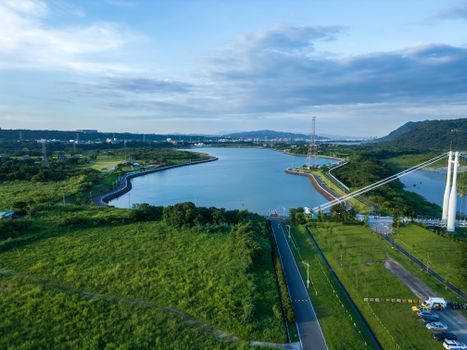
The fifth gate is siting and service. Buoy-style integrated water-quality monitoring equipment is commonly used for in-situ ecological monitoring in natural environments such as oceans and lakes, while micro automatic monitoring stations and supply-network raw-water monitoring systems are designed for plant-side or pipe-side permanent installation [S9]. The site decision — raw-water intake, clarified-water panel, or finished-water header — drives probe life and verification frequency.
Inline matrix effects are non-trivial: a conductivity sensor sized for clean-water CIP verification is not the same instrument as one specified for chemical dosing, and a turbidity meter selection criteria for clean-in-place verification workflow diverges sharply from a raw-water turbidity spec. Power-plant boiler water, recirculating cooling water, and aquaculture water all sit in the vendor product family list as distinct categories with distinct maintenance cycles [S4].
Price points for online water-quality analyzers in 2026 listings range from roughly US$420 to US$1,800 per set for the multi-parameter panel class on Made-in-China.com, with MOQ of one piece or one set depending on supplier type [S8]. That spread is wide enough that a 30% delta between two bids is not, by itself, a reason to disqualify the lower bidder — the parameter list, the matrix compatibility, and the calibration regime are the reason.
Limits, Failure Modes, and Common Specification Traps
The most common trap is to specify detection range without specifying limit of quantification. A 0–1000 mg/L CODcr range with a 50 mg/L LOQ is not the same instrument as a 0–500 mg/L range with a 5 mg/L LOQ, and the published inspection regime for online CODcr analyzers tests both ends of that envelope [S5].
The second trap is to assume all "multi-parameter" instruments cover the same parameters — the W501 product family is published as water/chlorine/ozone with hydrogen peroxide as a related entity, while the SP7 portable family lists COD, ammonia nitrogen, total phosphorus, total nitrogen, turbidity, and copper [S3][S4]. Buyers who need both an oxidant channel and a nutrient channel typically end up with two instruments, not one.
The third trap is to skip the chloride-ion influence test for CODcr analyzers, which is listed as a standalone inspection item in the published method [S5]. Industrial process water can carry chloride concentrations that bias a standard dichromate COD reading, and an instrument that passes indication-error tests at 40 mg/L and 100 mg/L standard solutions will still drift under real chloride loading if this test is not requested.
Sourcing, Standards, and a Trackable Next Signal
Primary reference documents for a 2026 procurement file are the US EPA National Recommended Water Quality Criteria — Aquatic Life Criteria Table and the human-health criteria compilation [S1][S2], the HY/T 126-2009 and HY/T 271-2018 standards for marine and aquaculture multiparameter analyzers [S7], the published CODcr online-analyzer inspection method covering indication error, LOQ, repeatability, drift, memory effect, voltage influence, and chloride-ion influence [S5], and JJF 1565-2016 for heavy-metal online-analyzer calibration [S10].
One trackable signal: a 24-hour low-concentration and high-concentration drift value should be obtained in writing from the vendor for the specific sensor head that will ship, not from a generic datasheet drift figure — this is the single number that separates an analyzer that will pass a regulator's quarterly audit from one that will not. A second signal worth tracking is whether the vendor publishes a memory-effect number, because a high memory effect on a CODcr analyzer will surface as a false-high reading after a high-COD event, which is the exact failure mode that drives most field complaints against online CODcr installations [S5].
For component-level specifications, see online water analyzer, power quality analyzer, and air quality monitor.