
Industrial buyers who skip a written pre-spec end up paying twice: once for the instrument, once for the consumables and validation work that the wrong band or wrong cuvette path forces on the lab. The five gates below — spectral range, bandwidth, photometric accuracy, sample presentation, and a documented consumables path — are the minimum set that survives a process-engineer audit [S1][S3][S5].
For process and QC labs, a spectrophotometer is the workhorse that turns absorbance at a defined wavelength into concentration through the Beer-Lambert relationship; selection is therefore driven by the chemistry, not by brand preference. Match the wrong range to the analyte and the instrument returns noise, not data [S1].
Gate 1: Spectral Range and Source-Detector Architecture
UV-Vis bench units (typically 190–1100 nm) cover roughly 80% of wet-chemistry QC work; instruments limited to 340–1000 nm cut UV-active APIs, nitrite, nitrate, and many transition-metal complexes out of the analytical envelope. Specify the range on the analyte, not the brochure: trace metals, chloride at 450 nm, and DNA/RNA quantification at 260 nm all sit in different windows [S1][S2].
For field or reactor-side work where a bench unit will not survive, a fibre-coupled probe with a deuterium-tungsten source brings the same UV-Vis band into a bypass loop; this is the architecture most often confused with a flow meter on a P&ID, even though its function is optical density, not volumetric flow.
Gate 2: Bandwidth and Stray-Light Performance
Bandwidth (SBW) is the single biggest driver of false absorbance peaks near sharp spectral features: a 1 nm SBW will resolve the 253.7 nm mercury line where a 20 nm SBW unit will smear it into the baseline. Pharmacopoeia-grade UV-Vis work and most environmental methods assume ≤2 nm SBW; colorimetric QC and turbidity surrogates are tolerant up to 5–8 nm [S1].
Stray light, not bandwidth, is what destroys linearity above 2 A; the rule of thumb every spec sheet quietly carries is that absorbance accuracy is only meaningful when stray light is below 0.05%. If the analyte routinely runs above 1 A, this number decides the instrument before the brand does [S1].
Gate 3: Photometric Linearity Under Beer-Lambert
Beer-Lambert linearity — absorbance proportional to path length and concentration — holds only in dilute, non-scattering, non-associated solutions. Above roughly 0.8–1.0 A, real instruments begin to deviate by 1–5% unless the manufacturer publishes a linearity certificate traceable to NIST potassium dichromate or equivalent [S1].
Demand the linearity certificate, the wavelength-calibration certificate (holmium oxide or didymium filter traceable), and a stray-light certificate; an instrument shipped without these three is not QC-grade regardless of price. For reagent-free or sample-limited work, a micro-volume accessory that drops the path length to 0.1–0.5 mm extends the linear range by a factor of 10–50 [S2][S3].
Gate 4: Sample Format and Cuvette Path
Rectangular quartz or optical-glass cuvettes in 10 mm path are the lab default and the only format every published method assumes; the manufacturing standard for cell parallelism and window flatness is tight enough that a mismatched cuvette can introduce more error than the instrument itself [S3].
For DNA/RNA and protein quantification, micro-volume pedestals (0.5–2 µL) eliminate the cuvette and the dilution step, but they require the analyst to clean the upper and lower window between every sample — a hidden operating cost. Micro-spectrophotometry, including the variant used for sub-cellular and tissue-localised assays, is a separate discipline from bench UV-Vis and should not be quoted as a like-for-like swap [S2][S3].
Gate 5: Consumables, Validation, and Total Cost
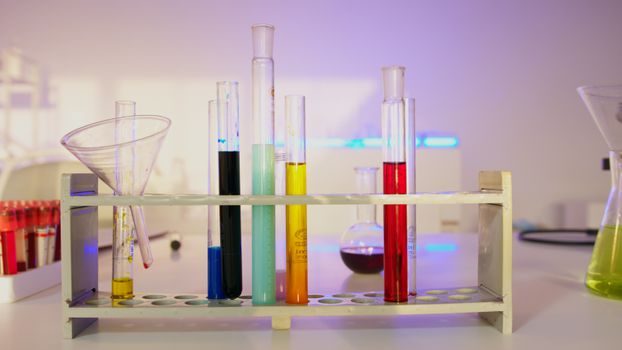
Consumables kill budgets: replacement lamps (deuterium at 800–1500 hours, tungsten at 1,000–3,000 hours), certified cuvettes, reference-standard solutions, and the validator/software licence must be priced into the quote, not added later as a surprise [S3]. A unit sold cheap with no consumables path is a 12-month contract, not a capital purchase.
For routine colorimetric QC, the same instrument platform used for pressure transmitter calibration check solutions is often shared with chloride, iron, and silica wet-chemistry methods; consolidating one validated instrument across methods is the fastest way to amortise the consumables line. Service plans, on-site calibration, and the path to GLP/GMP qualification (IQ/OQ/PQ) are the third leg of this gate — confirm them in writing before PO [S3].
Selection Matrix: Single-Beam vs Array-Detector vs Portable
Single-beam scanning UV-Vis remains the cheapest route to validated pharmacopoeia work; the lamp flicker and source drift it carries force frequent baseline re-zeroing, but the optics are simple to qualify. Diode-array instruments acquire a full spectrum in milliseconds and dominate kinetic and HPLC-detector use, where the spectrum per data point matters more than the absolute absorbance number [S1][S5].
Portable and handheld units are built for at-line process use, not for sub-ppm QC; their 2–5 nm bandwidth, simplified stray-light filtering, and 340–1000 nm range disqualify them from regulated UV work, but they are the right answer for reactor-side trend monitoring and CIP rinse verification, where the same engineering logic that drives variable area flowmeter selection — six gates before you quote — applies. Choose the array detector when the method requires full-spectrum kinetics, the single-beam when absolute photometric accuracy is the deliverable, and the portable when the question is "is the line drifting?" rather than "what is the concentration?" [S1][S5].
Common Failure Modes and What the Datasheet Will Not Tell You

Three failure modes dominate real installations: lamp ageing that drifts absorbance high at the deuterium end (visible as rising baselines below 230 nm), cuvette window etching from alkaline cleaning that adds 0.02–0.10 A of background, and microbubbles in flow cells that look like absorbance spikes. None of these is captured in a static specification sheet; all three are caught only with a documented daily-check protocol using certified reference standards [S1][S3].
For liquid-handling robustness, the same engineering logic that governs turbidity meter selection for CIP applies: a cleanable flow cell, a defined CIP-compatible wetted material, and a published protocol for verifying zero between batches. A spectrophotometer that cannot be cleaned in place is the wrong spectrophotometer for any line that runs more than one product.
Sourcing, Standards, and What to Demand in the PO
Three documents are non-negotiable on every regulated-laboratory PO: a photometric-linearity certificate (NIST-traceable potassium dichromate or equivalent), a wavelength-accuracy certificate (holmium-oxide or didymium filter), and a stray-light certificate measured with ASTM or pharmacopoeia cut-off filters. Without these, the instrument is research-grade only and cannot be used for release testing [S1][S3].
For general QC where regulatory scope is lighter, the same engineering discipline that drives temperature transmitter selection criteria — sensor, output, diagnostics — translates one-to-one: choose the optical range, the output interface (analog 4–20 mA, Modbus RTU, or USB to LIMS), and a self-diagnostic that flags lamp hours and stray-light drift before they invalidate a result. A well-quoted instrument is one where the consumables, validation, and CIP story are priced in the same line as the hardware.
Two trackable signals to watch over the next reporting cycle: vendor release of LED-based source modules that drop deuterium-lamp replacement from a planned task to a 5-year interval, and supplier-published linearity kits that extend the in-house validation window from annual to quarterly. Both will reshape the consumables line on every QC spec written between 2026 and 2028 [S3].