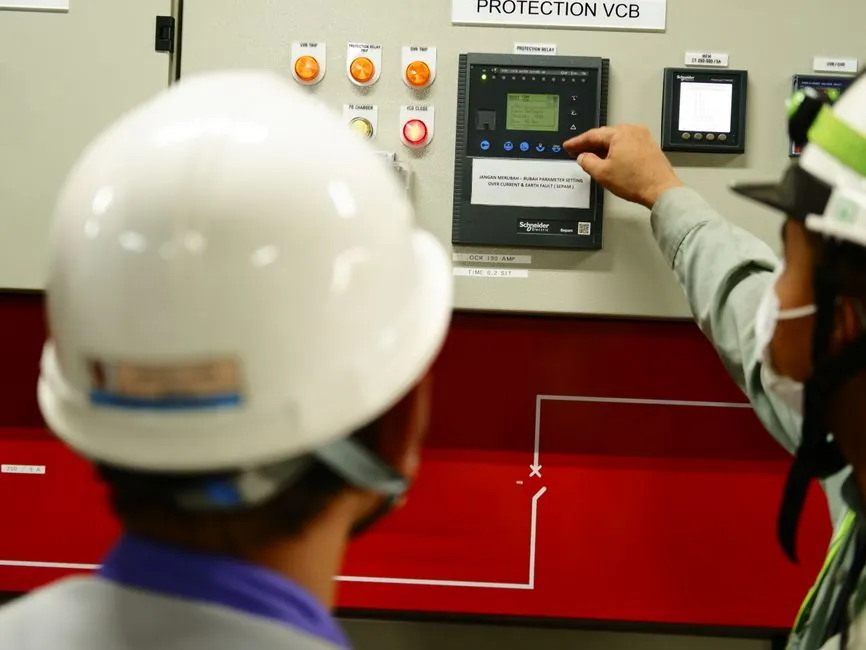
OPC UA FX's second release candidate consists of four specification parts (Parts 80–83), covering communication between automation components using OPC UA Client/Server and PubSub extensions, peer-to-peer connections, and basic diagnostics.
The initiative serves factories and process plants that need deterministic sensor-to-cloud communication, but its practical value still depends on implemented specifications, tested profiles and vendor interoperability rather than the OPC UA name alone [S1][S8].
Four released parts define the initial architecture
The second OPC UA FX release candidate comprised Parts 80–83: Part 80 presents field-level concepts, Part 81 defines the base information model and factory and process communication concepts, Part 82 covers networking services such as topology discovery and time synchronization, and Part 83 defines descriptors and descriptor packages for offline engineering [S2].
OPC 10000-80 is the framework overview, OPC 10000-81 is the base information model, OPC 10000-82 specifies networking services, and OPC 10000-83 defines offline-engineering structures [S2]. These parts established the foundation for controller-to-device and device-to-device extensions after the first release candidate [S3].
The original four-part candidate focused on process data, configuration data, Client/Server and PubSub extensions, peer-to-peer connections and basic diagnostics [S2]. This is a broader communication model than a simple protocol wrapper, which matters when engineers assess whether a field device can exchange configuration as well as live process values [S2].
Working groups define where interoperability must hold
The FLC Steering Committee has 23 member companies that contribute budget and technical experts, and the initiative's technical work is performed in working groups open to all OPC Foundation members.
The Base Facet Working Group defines common interfaces, behaviors and state machines for controllers and devices, including transport-independent state machines and connection management [S1]. The Architecture Working Group integrates sub-group content into the overall framework for controllers and field devices, while the Offline Engineering Working Group addresses deployment of configuration before physical equipment arrives on site [S1].
These boundaries matter because an OPC UA information model can be correct while its transport, timing or commissioning behavior remains incompatible with the installed network [S1].
Controller-to-controller evidence exceeded 20 suppliers

A multi-vendor demonstration involved 20 manufacturers and exchanged process data over UDP/IP on wired Ethernet, Ethernet TSN and a 5G connection, using OPC UA plus OPC UA FX extensions [S2].
A multi-vendor demonstration involving controllers and network infrastructure components from 20 companies showcased cross-vendor interoperability for diverse factory and process automation use cases.
That 20-company test is evidence of ecosystem breadth, not proof that every production profile is interoperable. Project acceptance still needs the exact device models, firmware versions, network design and conformance evidence to be checked against the project scope [S2].
TSN, UDP/IP and 5G solve different constraints
OPC UA FX defines two transport profiles: routable UDP/IP for flexible networking and direct Layer 2 mapping for efficient machine-level communication such as distributed I/O and high-speed motion control [S3].
OPC UA FX defines two communication profiles that map OPC UA information models to UDP/IP for routable, flexible networking and direct Layer 2 mapping for efficient communication inside machines.
OPC UA FX supports UDP/IP as a routable, flexible protocol and direct Layer 2 mapping for highly efficient communication inside machines, such as distributed I/O and high-speed motion control.
Security and timing remain engineering acceptance gates

OPC UA FX implementations are expected to provide authentication, encryption and auditing across connected and isolated networks [S4]. The safety working group addresses interoperability for safety controllers, functionally safe digital and analog I/O, and electric drives with safety functions [S1].
For project design, three measurable checks should be required: the applicable profile and transport, the measured latency or jitter under worst-case load, and the security configuration for client, publisher and subscriber roles [S1][S4]. Vendors describe multi-gigabit-per-second transmission, ultra-low latency and convergence of cyclic and acyclic traffic, but these are product-level performance claims rather than universal OPC UA FX guarantees [S4].
OPC UA FX is also positioned for requirements shaped by the EU Cyber Resilience Act, although the technical standard and the regulation are separate controls [S4]. A secure protocol label does not remove the need for network segmentation, certificate lifecycle management, access control and defined recovery behavior [S4].
Asset discovery and survey tools must enter the design process
The Base Facet approach supports device discovery and connection management, while offline engineering defines deployment of configuration before the physical equipment is delivered [S1]. This creates a measurable interface with field survey instruments such as a laser distance meter, because asset locations, cable routes and device identity should be reconciled during design rather than discovered only after commissioning.
Offline configuration is not the same as backup. The documented scope covers an engineering-tool mechanism for deploying a configuration when field components come online, including simple, complex and modular devices [S1]. Plants still need version control, change authorization and rollback procedures around that mechanism.
Field instrument selection remains a separate workstream. If an installation requires automatic level positioning or checks across vessels, the automatic level equipment specification should be reconciled with asset names and controller configuration. If verification relies on an optical reference line, the laser level accuracy and mounting constraints must also be captured.
FX suits new deterministic architectures, not every legacy retrofit
OPC UA FX is intended for real-time communication, functional safety, instrumentation, motion control and remote I/O, with specifications targeting both factory and process automation [S1]. It is best suited to projects designing a consistent OPC UA architecture across controllers, field devices and enterprise systems rather than plants needing a single-point protocol conversion [S1][S3].
It is not automatically the right choice for isolated legacy fieldbus segments with no migration budget, projects whose cybersecurity certification is incomplete, or vendors unable to expose the required information models and diagnostic services [S1][S2]. Traditional controller-to-edge, cloud, MES and ERP links can remain in place while horizontal controller communications and eventual field-device connections are introduced [S3].
The practical decision is not OPC UA FX versus classic OPC UA alone. It is whether the project needs the additional field-layer capabilities, including peer-to-peer exchange, offline engineering, topology discovery, time synchronization and deterministic transport, and whether suppliers can demonstrate those features on the exact products being specified [S2].
Track two procurement signals before approving an FX architecture: release of the requested OPC 10000-80 through OPC 10000-83 parts with the applicable profile, and a vendor interoperability test covering the intended controller, device, switch, firmware and transport combination [S1][S2].