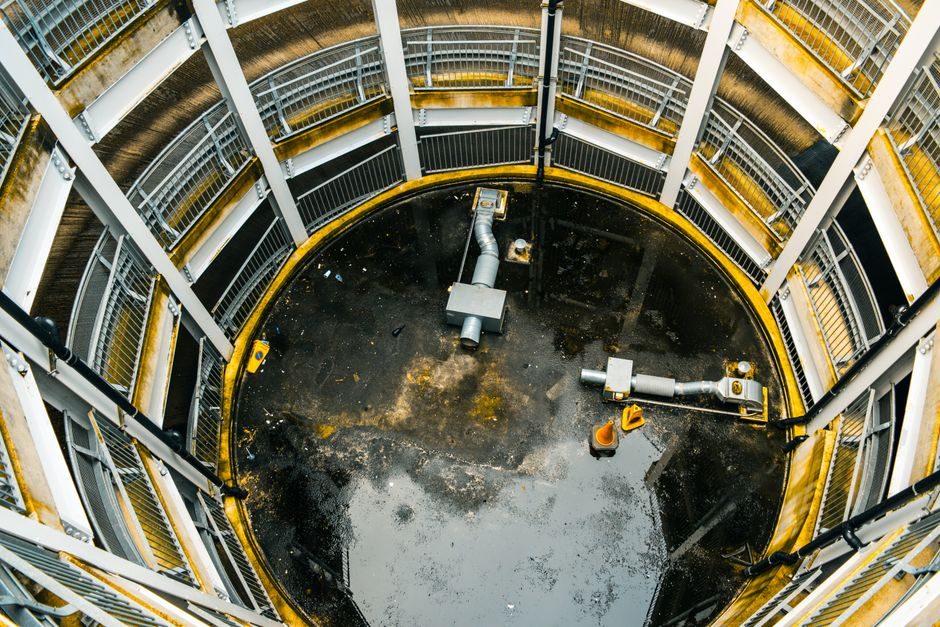
Both technologies measure volumetric flow but solve different problems: orifice plates generate a calculable differential pressure across a machined beta ratio, while vortex meters count shed-frequency pulses from a bluff body [S1][S3].
At 2025-2026 China factory pricing, a stainless-steel orifice plate assembly lists at US$198.52 per piece at minimum order, with documented production capacity of 3,780 units, making it the lower-cost option for clean service [S1]. Vortex meters, by contrast, are usually specified as a complete inline body with a shedder bar and piezoelectric sensor, which lifts unit price but eliminates the manometer, impulse line, and DP transmitter that an orifice installation still requires [S3].
The decision is rarely "which is better" — it is "which installed cost / accuracy / media constraint matches this line." Picking the wrong type on a wet-steam or low-Reynolds service is the most common rework cause in mid-size process plants, which is why a criteria-based comparison beats a brand shootout every time.
Operating Principle and Reference Geometry
Orifice plate flowmeters work by installing a thin, concentric stainless-steel plate with a sharp-edged bore into the pipe; the resulting pressure drop ΔP is fed to a manometer or DP transmitter and converted to flow via the ISO 5167 discharge coefficient equation [S1][S3]. The geometry is fully defined by the calculated beta ratio (d/D) and the tapping arrangement (flange, D and D/2, or corner), which is why two plants with the same plate supplier but different tap locations get different accuracies [S1].
Vortex flowmeters use a non-streamlined bluff body that sheds alternating low-pressure vortices; the shedding frequency is linear with velocity over a wide range, and a piezoelectric sensor behind the body counts pulses and outputs them as 4-20 mA, pulse, or HART [S3]. Because the calibration is essentially a Strouhal-number relationship rather than a plate-to-pipe geometry, the in-situ accuracy is closer to ±1% of reading in the calibrated range, against the typical ±2-3% reading for an installed orifice plus DP transmitter loop [S1].
Media Suitability: Steam, Gas, Liquid, Slurry
Orifice plates are widely used on clean single-phase liquids, saturated steam, and dry gases; they tolerate moderate temperature and pressure as long as the plate material is correctly chosen (typically 304/316 stainless for 2025-2026 standard SKUs) [S1]. They are not specified for slurries, two-phase flow, or fluids with significant solids because plate erosion shifts the beta ratio and breaks the ISO 5167 calibration, which is a chronic pain point in mining and pulp lines [S1].
Vortex meters handle saturated and superheated steam at the velocities the Strouhal regime allows, low-pressure gas, and most clean liquids; however, low-Reynolds operation below the published minimum velocity on liquids causes the shedder to "lock in," and any coating or fouling on the bluff body kills accuracy [S3]. This is the single most common reason a vortex meter is pulled on a chemical-plant survey: a sticky process coats the body, and the pulse count flatlines.
Turndown, Accuracy, and Repeatability
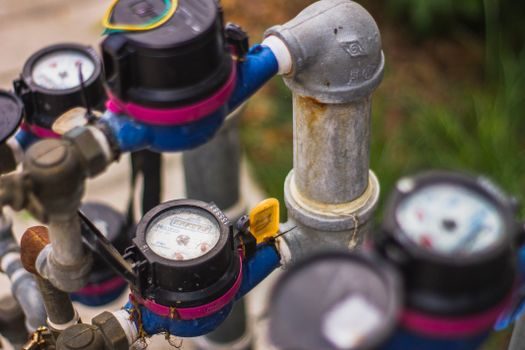
Orifice-plate installations have a practical turndown of about 4:1 because the DP signal is a square-root function of flow, and below roughly 25% of full-scale the differential pressure becomes too small for the DP transmitter's zero stability; vortex meters typically deliver 10:1 to 15:1 turndown in single-pipe calibration [S1][S3].
Accuracy numbers in the public 2025-2026 sourcing data are limited: an SKLD electromagnetic reference unit is published at ±0.5% reading with 150:1 turndown [S4], which is the kind of headline spec an electromagnetic flowmeter supplier will use to anchor the conversation — but that is a different technology and only enters the comparison as a reference for what "good" looks like in clean conductive liquid service.
For an installed orifice + DP loop, the realistic field figure is ±2-3% of rate when the plate is machined to ISO 5167 and the DP transmitter is recently calibrated; for a vortex meter on clean service, ±1% of rate is achievable in the calibrated band. Repeatability is strong on both, but the vortex meter usually wins on turndown, while the orifice wins on interchangeability of spare plates.
Installed Cost and Mechanical Footprint
The 2025-2026 factory MOQ for a stainless-steel orifice plate is US$198.52 per piece with 3,780-unit production capacity from a Made-in-China-listed OEM; payment terms shown are L/C, T/T, Western Union, with Shanghai as the export port [S1]. That figure covers the plate and a basic carrier ring; a working orifice run also needs flanges, bolts, gaskets, an upstream 10D / downstream 5D straight pipe, two valve manifolds, impulse tubing, a differential pressure transmitter, and a manifold — a realistic total of 5-8× the plate price before installation labor.
A vortex meter is supplied as a complete spool body with a shedder, sensor, and electronics, so the line-item cost is higher than a bare plate but the installed cost is often lower on a greenfield run because there are no impulse lines, no manifolds, and no DP transmitter. On existing pipework, however, the requirement to cut in a flanged spool section and respect the manufacturer's upstream straight-pipe guidance (commonly 10-20D) drives the real cost.
Failure Modes, Maintenance, and Spare Strategy
Orifice plates fail in three main ways: erosion of the sharp edge (changes beta ratio and shifts calibration), coating or fouling of the bore (common on hydrocarbon and steam services), and gasket blow-out on thermal cycles when the carrier is not centred correctly [S1]. Spares are cheap — a single replacement plate is sub-US$300 at the documented MOQ [S1] — but a worn plate will not announce itself until the next balance check or proof test fails.
Vortex meter failure modes are sensor-related: piezoelectric fatigue, electronics damage from water hammer, and bluff-body fouling on sticky services. Spare strategy is to keep a hot spare complete meter body rather than individual internal parts, because field repair of the shedder / sensor assembly is usually uneconomic. In plants with many steam or gas custody points, this drives a higher inventory carrying cost than the orifice strategy, even if the failure rate per meter-year is comparable.
Decision Criteria: When to Pick Which
Specify the orifice plate when the service is clean single-phase liquid or gas, the budget demands the lowest hardware cost, the plant already has impulse-line standards and DP transmitters on the same DCS, and a 4:1 turndown is acceptable [S1]. A typical 2025-2026 use case is a 6-inch water main or a low-pressure air branch where the plant owns spare plates and the operations team is comfortable reading DP.
Specify the vortex meter when the service is saturated or superheated steam, the line needs 10:1+ turndown without changing plates, the process fluid is clean but the installation has no DP infrastructure, and a ±1% reading accuracy matters more than absolute minimum hardware cost [S3]. Vortex is also the right call for short upstream pipe runs where an orifice would fail the straight-pipe requirement.
Specify neither when the fluid is two-phase, fouling slurry, very low-Reynolds liquid, or wet steam with entrained condensate; in those services, neither technology will hold calibration, and the Coriolis flowmeter is the typical escalation, accepting higher unit cost for true mass-flow measurement that does not depend on plate geometry or shedder cleanliness. For line-pressure recovery applications, the orifice also has a meaningful unrecoverable ΔP penalty that the vortex does not, which can be a hidden energy cost on long steam mains.
Standards, Sourcing, and Audit Trail
Plate geometry and tapping rules for an orifice meter are governed by ISO 5167; the supplier-side 2025-2026 listing for the SS orifice plate references production under that geometry class and offers L/C, T/T, and Western Union terms for export through Shanghai [S1]. Vortex meters are covered under the IEC 61591 / ISO 12764 family for calibration, and most 2025-2026 OEM datasheets cite ISO 12764 or AGA-style reports as the basis for the published turndown and accuracy [S3].
For engineering traceability, the most useful 2025-2026 data points are: plate unit cost US$198.52, supplier production capacity 3,780 units, export port Shanghai [S1]; an electromagnetic flowmeter benchmark of ±0.5% reading at 150:1 turndown and DN6-DN3000 body sizes for clean conductive liquids [S4]; and confirmed naming conventions — vortex flowmeter maps to vortex flowmeter and orifice flowmeter maps to orifice plate flowmeter [S3]. The dictionary reference [S2] is useful only as a label check and should not be cited as a technical source.
Watch the following in 2026 procurement cycles: (1) China-factory plate pricing has been stable in the US$150-220 band through 2025 with 3,000+ unit monthly capacity, which keeps the orifice option cheap for spare stock [S1]; (2) vortex meter manufacturers are pushing higher-temperature and higher-pressure variants for thermal-power and refinery service, which is where the next spec battles will be. A practical next node is to re-tender both technologies against a shared line list and watch how the bid spread narrows on steam service as vortex-body temperature ratings climb.