
Outdoor-deployed multifunction process calibrators require IP54 ingress protection as the baseline, NEMA 3R or 4X enclosure equivalence for North American sites, and an NIST-traceable or ISO/IEC 17025-accredited calibration certificate issued within the past 12 months before they enter service [S1][S3].
Field data from industrial calibration labs shows recurring failure modes trace back to three gaps: skipped gasket checks, missing traceability on the certificate, and no scheduled 6-to-12 month recalibration interval tied to actual environmental exposure rather than calendar convenience [S1][S6][S8].
Ingress Protection Baseline: IP54 Minimum, NEMA 3R/4X Equivalence
Outdoor-rated switchgear and instrumentation share a common specification floor: IP54 for protected outdoor locations and IP65–IP66 for exposed or coastal sites, with NEMA 3R (rainproof) or NEMA 4X (corrosion-resistant, typically 304/316 stainless) equivalence required for UL-listed North American installations [S1].
For a portable multifunction process calibrator that travels between indoor racks and outdoor cabinets, IP54 protects against splashing water and dust ingress but does not survive hose-down or prolonged UV; field users should treat the carry case as a secondary enclosure and store the unit in it between measurement runs, then verify gasket integrity on the case every visit [S1]. A documented gasket inspection, anti-condensation heater verification, and corrosion inspection on fasteners and hinges are the three outdoor-specific line items that catch the most field failures early [S1].
Certificate Evidence: NIST-Traceable, ISO/IEC 17025, and IEC 61298 Compliance
Three certificate levels appear in audit evidence for multifunction process calibrators: a manufacturer NIST-traceable certificate (e.g. Extech 412400-NIST, Reed R5850-NIST) ships with the unit, while a separate ISO/IEC 17025-accredited lab certificate (SAC-SINGLAS, NABL, A2LA) provides the legally defensible traceability chain required for ISO 9001 and pharma audits [S3][S4][S5][S8].
For process signals specifically, IEC 61298 is the working standard: NABL-accredited labs in India calibrate 4–20 mA, TC, RTD, voltage and frequency functions of Fluke 754, Druck DPI 620, and Beamex MC6 multifunction calibrators against IEC 61298 with reported accuracy of ±0.01% on mA/TC/RTD/V/Hz signals and ±0.02% mA accuracy at the process-loop tier [S6][S8]. A typical 12-month calibration cycle is standard, with 6-month cycles recommended for heavily used units in oil & gas upstream or chemical processing where field exposure accelerates drift [S4][S7].
Comparison of Common Multifunction Process Calibrators on Outdoor Suitability
Common multifunction process calibrators diverge sharply on the specifications that matter for outdoor corrosion exposure; the table below lines Extech 412400, Reed R5850-NIST, Fluke 754, Druck DPI 620G, and Beamex MC6 against the four criteria an outdoor audit actually checks. [S8]
Extech 412400-NIST sources and measures thermocouples (J, K, T), mA, mV, and V with a 24 V loop supply driving current loads up to 1000 ohm, ships with a NIST-traceable certificate, and runs on six AA batteries, a portable but not ruggedized build [S3]. Reed R5850-NIST (ID092) handles 5 processes (DC voltage 50 mV–50 V, DC current 0–24 mA, loop current, resistance 500/5000 ohm, frequency 100 Hz–100 kHz) at ±0.02% output/measurement accuracy, with 10 RTD and 12 TC types, and ships with a NIST-traceable certificate plus carrying case and rechargeable Ni-MH battery [S5]. Fluke 754 and Druck DPI 620G are the workhorses calibrated at NABL-accredited labs against IEC 61298 at ±0.01% accuracy, with documented support for HART communicators on Fluke units [S4][S8]. Beamex MC6 rounds out the high-end tier with similar IEC 61298 compliance and integrated documentation [S8]. The outdoor audit-relevant deltas: battery type (AA primary vs Ni-MH rechargeable vs Li-ion), enclosure rating (most portable units rely on a carry case for IP equivalence, none are field-rated to IP65 without the case), and whether the certificate scope explicitly lists the functions used in the field.
Selection Criteria: Who Outdoor Corrosion Specs Apply To, and Who Can Skip
Plants that should apply the outdoor corrosion checklist include oil & gas upstream and midstream sites (calibration of pressure transmitters, temperature sensors, and flow instruments in exposed yards), chemical processing with outdoor analytical cabinets, marine terminals with salt-spray exposure, and any site where the unit moves between conditioned and unconditioned spaces within a single shift [S1][S7].
Plants that can skip the outdoor-specific items are limited to fully conditioned control rooms, indoor rack-only metrology labs, and any site where the calibrator never leaves a sealed instrument shop. For mixed-use units, the practical rule is: treat the case as a NEMA 3R enclosure for storage and transit, and require a NIST-traceable certificate with stated uncertainty on every function the field team actually uses, not a generic factory cert covering the full range [S1][S3][S4]. Stated measurement uncertainty is the second key audit item, since results reported without uncertainty cannot be used as evidence in a quality-system calibration chain [S4].
Outdoor Maintenance Cadence and Failure Modes
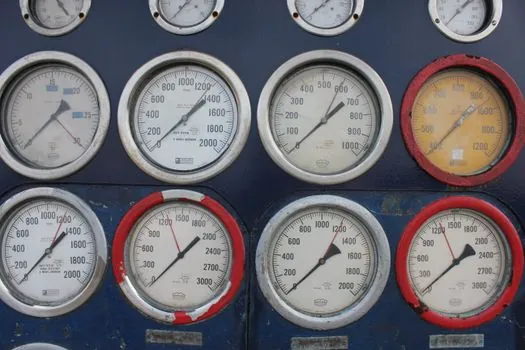
Outdoor switchgear maintenance runs at higher frequency than indoor, with gasket integrity, anti-condensation heater function, and fastener/hinge corrosion as the three recurring line items, and the same cadence translates directly to portable instrumentation that lives in the same environment [S1].
For a multifunction process calibrator, the failure modes the checklist should catch are: (1) corroded test-lead banana jacks causing mA loop errors of 0.02% or more, visible as green/white oxide on the nickel-plated posts; (2) TC mini-connector pins oxidized after salt exposure, producing open-circuit readings rather than drift; (3) battery compartment gasket compression-set after 18–24 months, allowing humid air into the case and condensing on the reference-junction sensor; (4) display delamination under UV if the unit is stored outside its case. Practical cadence: visual inspection of gaskets and connectors every site visit (weekly to monthly depending on exposure), battery compartment gasket replacement every 24 months, full 12-month accredited recalibration, and case replacement if the gasket channel is deformed [S1][S4][S5].
Supplier Verification: How to Read a Real Certificate vs a Factory Sheet
A factory-issued NIST-traceable certificate (the type bundled with Extech 412400-NIST or Reed R5850-NIST) lists the unit's as-shipped accuracy with full data and uncertainties, and is acceptable for working-standard use on the plant floor, but does not replace an accredited lab certificate when the audit asks for ISO/IEC 17025 traceability [S3][S5][S8].
To verify a supplier's certificate is real and in scope: (1) confirm the issuing lab's accreditation number against the relevant national body (NABL CC-2480 in India, SAC-SINGLAS LA-2023-0845-C in Singapore, A2LA in the US, UKAS in the UK); (2) confirm the certificate lists each function and range you actually use, with a stated measurement uncertainty (e.g. ±0.01% on mA/TC/RTD/V/Hz for IEC 61298-scoped work); (3) confirm the calibration date is within the past 12 months and that the as-found condition is recorded before any adjustment; (4) for process-loop work, confirm IEC 61298 is named on the certificate, not just a generic ISO 9001 reference [S4][S6][S8]. Multifunction process calibrators cover more than 5 process signal types in most vendor catalogs, so a cert that only covers voltage and current is out of scope for TC or RTD field work even if the instrument itself supports those functions [S5][S8]. Borescope Sourcing Checklist: Certification Evidence for Maintenance Spare Parts covers the same supplier-verification logic for a different instrument class and is worth cross-reading for plant auditors building a single SOP across calibration tools.
Standards Mapping and Sourcing for the Audit Trail

The audit trail for an outdoor-deployed multifunction process calibrator should reference IEC 60529 (IP rating definitions, first digit dust/second digit water), NEMA 250 (Type 3R rainproof, Type 4X corrosion-resistant), IEC 61298 (process control instrument calibration), ISO/IEC 17025 (lab accreditation), and IEC 60584 (thermocouple tables) for any TC function in scope [S1][S6][S8].
Per process loop calibration work, NABL-accredited CC-2480 labs in India cite IEC 61298 as the governing standard, with stated accuracies of ±0.02% mA and ±0.01 mV TC, and NPL-traceable certificates accepted in pharmaceutical and Gujarat-state regulated sites [S6]. For pressure transmitter and temperature sensor work in oil & gas, calibration of those field instruments against the multifunction calibrator should be referenced to NACE MR0175 for sour-service compatibility checks and to API 6D for pipeline valve work where the calibrator is used to verify positioners, with IEC 61298 governing the calibrator itself [S7]. Encyclopedic reference for safety certification and the broader process calibration workflow provide additional cross-links for plants building a unified instrument-quality SOP. Best Oil Seal and Mechanical Seal Choices for Water Treatment Pumps addresses the same corrosion-driven maintenance logic for a different equipment class on water treatment sites, where portable calibrators also see outdoor exposure.
Trackable signal to watch over the next 12 months: NABL and SAC-SINGLAS schedule updates expanding accredited ranges for Hart/Foundation Fieldbus carry signals on multifunction calibrators, since most current certificates still scope only 4–20 mA and HART separately, and combined-scope certs would cut field workflow steps for HART positioner verification in outdoor cabinets [S4][S6][S8].
Component reference pages worth checking: multifunction process calibrator.