
In a municipal or industrial water-treatment plant, the rotating equipment that handles intake, clarification, filtration, dosing, and sludge handling runs across a wide chemical and solids envelope, and the seal on the pump shaft is the single component that decides whether the station stays online or spends the week on a maintenance call.
The Orbit Fluid Solution LLP guidance issued on 2026-06-09 ranks the four seal architectures most commonly seen on water-treatment rotating equipment: single cartridge seals for clean-water service, double mechanical seals for chemical dosing and abrasive slurry, and split mechanical seals for large-diameter shafts on mixers and aerators where disassembly is impractical [S1]. Material selection runs in parallel, and QM Seals' 2026-05-12 chemical-compatibility matrix pairs face, elastomer, and metal options against the process fluid [S3].
Seal architecture: single cartridge, double, split, and where each wins
Single cartridge seals are factory-assembled units set on a single shaft sleeve, with the seal face pre-set and the whole cartridge dropped in as one piece; in water-treatment service they are typically specified on clean-water booster pumps, transfer pumps, and clarified-water service where the pumped fluid is below roughly 40 deg C and solids are below 50 mg/L [S1]. Double mechanical seals carry two seal faces with a barrier fluid between them, so any leakage from the inboard face is captured by the barrier and any leakage from the outboard face is contained, which is why they are the default on chemical dosing skids (hypochlorite, ferric chloride, polymer), vacuum pumps, and any pump handling hydrocarbons, solvents, or toxic fluids; the trade-off is higher cost and the requirement for a barrier or buffer fluid system that must be pressurised and cooled [S1]. Split mechanical seals are built in two halves that bolt around the shaft without full disassembly of the equipment, and they are the practical answer for large mixers, aerators, and slow-speed agitators in aeration basins where pulling the shaft is a multi-day excavation job [S1].
The decision is not architectural alone. For a horizontal end-suction pump in a sand-filter backwash line, a single cartridge seal with a silicon-carbide vs carbon face pair, EPDM elastomer, and SS316 hardware covers roughly 90% of municipal applications; a double seal only earns its premium when the OSHA or EPA risk class on the pumped chemical demands a second barrier, and a split seal only earns its premium when the equipment cannot be uncoupled.
Face material selection: carbon, silicon carbide, tungsten carbide, ceramic
Seal faces are the primary sealing surfaces, and the four face materials used in water-treatment duty are carbon graphite, silicon carbide, tungsten carbide, and ceramic, each with a defined operating envelope per the 2026-05-12 QM Seals selection matrix [S3]. Carbon vs silicon carbide is the most common pair: carbon is self-lubricating and forgiving on dry-run events but has lower wear resistance; silicon carbide gives high hardness, high thermal conductivity, and superior corrosion resistance, and is the face of choice on chemical dosing pumps. Tungsten carbide is the standard for abrasive slurries such as sludge, lime, or polymer-laden flows because of its toughness, while ceramic (alumina) seal faces are the economic pick for clean water-based applications but have lower thermal-shock resistance than silicon carbide and crack if the pump runs dry even briefly [S3].
For a typical influent pump, a carbon vs silicon carbide pair handles water with up to roughly 2% solids; for a primary sludge pump at 3-6% Total Suspended Solids, tungsten carbide faces extend MTBM (mean time between maintenance) from a typical 3-6 months to 9-12 months. Ceramic faces remain in play only on clean-water ends of the plant (filtered water, demineralised water, potable booster) where dry-running is part of the operating profile and cost pressure is high.
Elastomer selection: the single most leveraged decision on water-treatment seals

Elastomers are the secondary sealing elements (O-rings, bellows, gaskets) that keep fluid from bypassing the seal faces, and on water-treatment pumps they fail faster than the faces do, so the elastomer is the single most leveraged material choice. The compatibility table from the 2026-05-12 QM Seals reference lines up four common elastomers with their best-fit service and limitations: Viton (FKM) for oils, fuels, and many chemicals but poor with strong alkalis (caustic, sodium hydroxide); EPDM for water, steam, dilute acids, and CIP chemicals but not suitable for hydrocarbon oils; Nitrile (NBR) for petroleum fluids but with limited chemical resistance; and PTFE for aggressive chemicals but with reduced flexibility [S3]. The selection rule of thumb that holds on most municipal tenders: EPDM for clean water, clarified water, sodium hypochlorite below 12% active chlorine, ferric chloride, and alum; Viton for diesel, fuel oil, oily skimmings, polymer emulsions, and any hydrocarbon-bearing stream; PTFE only when both EPDM and Viton are ruled out by the chemistry.
A common failure mode on hypochlorite dosing pumps is Viton O-rings that swell and lose compression after 4-8 weeks because free chlorine attacks FKM at concentrations above roughly 10%; switching to EPDM typically pushes the same O-ring life to 6-12 months. The reverse mistake (EPDM in oily skimmings) produces a different failure: the rubber absorbs oil, loses hardness, and extrudes through the gland within days. Where the stream swings between water and oil (wastewater treatment plant headworks with grease loads), a Kalrez or perfluoroelastomer O-ring is the conservative choice, at roughly 4-8x the price of EPDM.
Metal hardware: SS304 vs SS316 vs Hastelloy vs titanium
Metal parts hold the seal assembly together, and water-treatment service spans the full range from clean freshwater to aggressive chlorides. The 2026-05-12 reference lists four common metal choices: SS304, SS316, Hastelloy, and titanium [S3]. SS304 is acceptable for clean, low-chloride, indoor service but fails by pitting in chloride-rich environments, which in practice means almost any stream downstream of a sodium hypochlorite dosing point or any seawater-influenced intake. SS316 is the workhorse for municipal water and wastewater and tolerates the chloride levels encountered in treated effluent (typically below 200-300 mg/L Cl-); it is the default hardware in roughly 80% of plant installations. Hastelloy C is reserved for concentrated acids, bleach above roughly 15% active chlorine, and hot SO2 scrubber liquor, while titanium is used in hot, concentrated chloride brines and seawater desalination reject.
For dosing pumps handling 12.5% sodium hypochlorite, SS316 hardware combined with PTFE or Kalrez elastomers and silicon carbide faces is the conservative industrial spec; in practice, the seal gland studs and set screws are the first metal parts to corrode, so specifying SS316 throughout (including springs and set screws) is worth the small cost premium. The oil seal selection spec guide walks through the same SS304/SS316 split for elastomer-bound rotary lip seals, and the same logic applies: SS304 is acceptable on freshwater shafts below roughly 30 deg C, SS316 is the default elsewhere.
Static elastomer and "oil-based vs water-based" confusion in seal selection
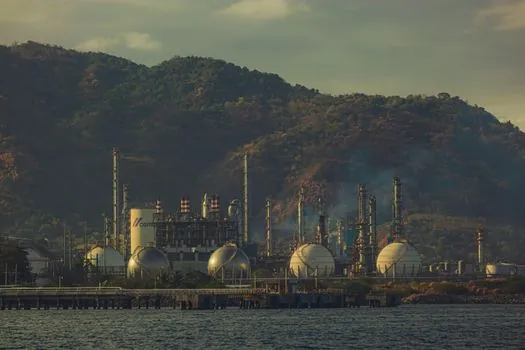
Specifiers regularly confuse the pumped fluid (water vs oil) with the seal lubricant or flush plan (water-flushed vs oil-lubricated barrier), and the 2026-07-09 Angi driveway-sealer comparison is a useful analogy even though it is a different product class: oil-based treatments penetrate deeper and last longer (up to six years) but cost more in VOC, odor, and removal ($1-3 per square foot) [S2]. A water-flushed single seal, used in roughly 70% of water-treatment installations, is mechanically simpler but exposes the seal to the process fluid; an oil-lubricated double seal with a barrier fluid isolates the process from the seal faces and tolerates upset conditions, at the price of a barrier reservoir, a heat exchanger, and routine barrier-fluid sampling.
The architectural choice between water-flushed single and oil-lubricated double follows the rule: single seal when the process fluid is benign (clean water, low-pressure effluent) and the plant can tolerate a weep-rate leak detector; double seal with a food-grade white-oil or glycol barrier when the process fluid is hazardous (chlorine, polymer, hydrocarbon) or when the seal environment is dry-running prone. The Orbit guidance explicitly recommends double seals on chemical dosing and any pump handling solvents or hydrocarbons, which is the same logic as picking an oil-based driveway sealer: you pay more upfront for a longer mean time between rebuilds and lower environmental release.
Application map: which seal goes where in a typical water-treatment plant
Reading the architecture and material sections together produces a service-by-service seal map. Raw-water intake and screens wash pumps take single cartridge seals with carbon vs silicon carbide faces, EPDM O-rings, SS316 hardware. Coagulation dosing (ferric chloride, PAC) takes single seals with silicon carbide faces, EPDM or Viton (check the specific coagulant), and SS316; a flushing plan with water or dilute chemical is mandatory because the abrasive solids in the coagulant shorten seal life. Clarifier and thickener drives (slow, large-diameter shafts) take split mechanical seals with silicon carbide vs carbon faces, nitrile or Viton elastomers, and SS316 hardware; the split design avoids lifting the drive. Filtrate and backwash pumps (sand filter, carbon filter, multimedia) take single cartridge seals with ceramic vs carbon faces, EPDM, and SS316, and the seal life is typically longer than on raw-water pumps because the fluid is clean. Sludge and dewatering pumps take double seals with tungsten carbide faces, Viton (for polymer-conditioned sludge) or PTFE (for high-pH or high-TDS sludge), and SS316. Chemical dosing skids (hypochlorite, bisulphite, antiscalant) take double seals with silicon carbide faces, EPDM for hypochlorite below 12%, Viton or Kalrez above 12% or for antiscalant, and SS316 minimum, with Hastelloy C for the seal springs and metal parts on hot, concentrated hypochlorite [S1][S3].
For concrete basins, pump pads, and chemical containment areas, the seal-class problem is different: it is a coating and sealer question, not a rotary-shaft question. The 2026-08-06 Concrete Sealer Review guide highlights silane/siloxane penetrating sealers as the longest-lasting exterior option, with application between 50 deg F and 85 deg F on clean, fully dry concrete, and epoxy or urethane coatings for indoor and high-traffic areas lasting 7-10+ years [S4]. The same surface-prep rule (dry, clean, mild weather) applies to rotary-shaft seal glands: a damp or gritty housing face is the most common cause of an early O-ring extrusion.
Failure modes, limits, and a comparison pass for spec sheets

The most common water-treatment seal failures, by frequency, are: elastomer swelling or hardening (chemical attack on EPDM or Viton), face scoring from solids ingress (no flush plan), spring corrosion (SS304 hardware in chloride service), gland plate distortion (over-tightening, uneven bolt torque), and dry-running cracks on ceramic faces. The cap on each architecture is real: single seals leak process fluid to atmosphere and are not acceptable on toxic or carcinogenic chemicals regardless of cost; double seals require a barrier-fluid system that must be commissioned and sampled, and they are not a drop-in replacement for single seals; split seals have a higher initial cost (typically 1.5-2x a single cartridge) and require careful alignment to avoid face distortion [S1].
For a spec sheet, the comparison on the four main options against four decision criteria is: (1) Cost: single cartridge is lowest, split is highest (1.5-2x single). (2) Chemical compatibility: double with barrier fluid wins for hydrocarbons and toxics, single with EPDM wins for clean water. (3) Solids tolerance: split with tungsten carbide faces and a flush plan handles slurry best. (4) Maintenance time: single cartridge is fastest to change (typically 30-60 minutes per pump), split is slowest (4-8 hours because of alignment). For a deeper dive into rotary lip seals, the oil seal selection spec guide is the closest match in the related-articles list, and a wider look at static sealing budgets is in the gasket price and cost guide. The mechanical-seal encyclopedia page on mechanical seals and the oil seal encyclopedia page cover the architectural and material terms in more depth.
The two trackable signals to watch in the next 6-12 months are: any update to the QM Seals chemical-compatibility table (2026-05-12 is the current revision [S3]) and any new Orbit Fluid Solution LLP guidance on barrier-fluid monitoring intervals for double seals, which has been the main remaining specification gap on 2026 chemical-dosing tenders [S1].
For component-level specifications, see heat treatment furnace.