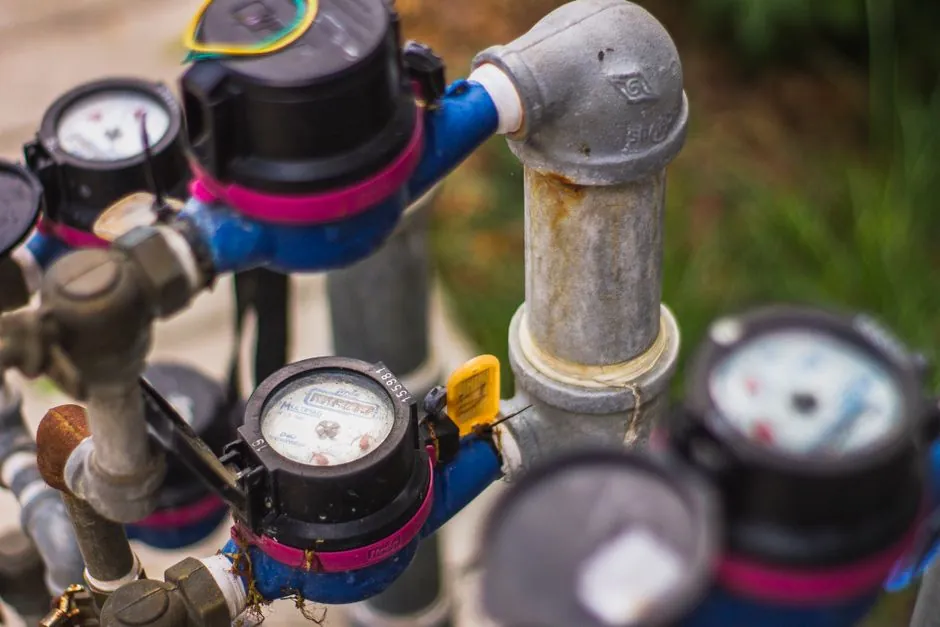
A magnetic level gauge (MLG) for a Zone 1 or Zone 2 sump is fully specified when the requisition line carries six data points: chamber pressure class, wetted material, float density window, indicator accuracy, switch / transmitter output, and the ATEX/IECEx protection code, because all six drive the float design, magnet strength, and chamber wall thickness the vendor must engineer [S1][S3][S4].
The minimum data the buyer must write on the RFQ line, in this order, are: service fluid name and minimum density, design pressure and temperature, process connection size and rating, indicator accuracy class, number of switch points, and hazardous-area classification with gas group [S1][S3][S4].
Chamber Pressure Rating and ASME Construction
The chamber is a pressure vessel and must be quoted against a recognised code; the 2026 Middle East instrumentation supply market references magnetic level gauges built to ASME Sec VIII for refinery and tank-farm service, with a working pressure envelope that scales from 1.0 MPa light-service chambers up to 16.0 MPa high-pressure chambers [S3][S4].
For an atmospheric or low-pressure sump, 1.0 MPa rated chambers with stainless-steel flanges are normally adequate and keep float cost down. For a pumped discharge sump downstream of a separator, lift the chamber to at least 2.5 MPa, and add 1.5× the maximum credible surge pressure to the design pressure before sending the RFQ, because the float body is the weakest part of the assembly and burst risk scales with pressure square [S1][S3].
Float Density, Material, and Process Connection
Standard MLG floats are designed for fluids at minimum density 0.5 g/cm³ and viscosity ≤ 0.05 Pa·s; below 0.5 g/cm³, vendors must switch to a larger-displacement or bimetallic float, which adds lead time and cost [S3].
Wetted materials are commonly stainless steel, PVC, or titanium, with stainless 316L covering the bulk of hydrocarbon, caustic, and amine service and titanium specified for chloride-rich sump water above 60 °C [S3]. The process connection is typically flanged, with size and rating (150#, 300#, 600#) carried as separate RFQ fields so the chamber schedule and float OD both line up with the existing sump nozzle.
Indicator Accuracy and Visual Readout

Standard MLG visual indicators are quoted at ±10 mm display accuracy, with ±5 mm available on precision-build chambers for refinery and tank-farm service [S3][S4].
For a sump where level is read mostly by the operator on the catwalk rather than the DCS, ±10 mm is fine and trims cost; for a sump feeding a custody or interface measurement, push for ±5 mm and a continuous HART or 4-20 mA transmitter rather than a switch-only package. The visual flag column should be marked in 100 mm increments with the process centre-line, NWSL, and HWSL clearly etched, because the indicator is the layer of protection when the transmitter is offline [S1].
Switch and Transmitter Outputs for Hazardous Areas
Switch and transmitter options for the same MLG are explosion-proof Ex d IIC T4 to T6 or intrinsically safe Ex ia IIC T6, with the magnetostrictive and reed-chain transmitters both giving 4-20 mA with HART superimposed on a 24 VDC loop [S3].
Alarm switches are typically reed-based with contact capacity AC220V 0.2 A or DC110V 0.5 A, electrical life over 100,000 cycles, and selectable normally-open or normally-closed outputs [S3]. On the RFQ, write the protection concept (Ex d or Ex ia) and the gas group (IIA / IIB / IIC) and temperature class (T4 / T5 / T6) explicitly. Specifying only "flameproof" without the gas group causes requotes, because vendors cannot match the certification string to your area classification.
RFQ Parameter Checklist and Common Requote Triggers
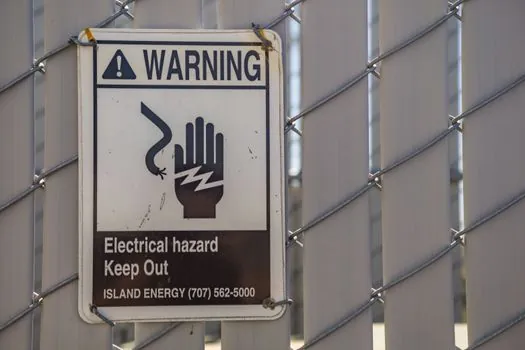
A clean MLG line item for a hazardous sump carries: (1) service fluid and min density kg/m³, (2) design pressure MPa and design temperature °C with upset figures, (3) chamber material and ASME code, (4) process connection size and rating, (5) indicator accuracy ±5 or ±10 mm, (6) number and type of switch points, (7) transmitter protocol 4-20 mA / HART, (8) hazardous-area zone and gas group, and (9) optional continuous HART + local display [S1][S3][S4].
The five most common requote triggers on MLG RFQs are omitting minimum fluid density, leaving process connection blank, writing "Ex proof" instead of the Ex d / Ex ia and IIC code, ordering a float for a fluid below 0.5 g/cm³ without flagging it, and asking for ±5 mm without accepting the longer lead time. Locking these in the first round typically halves the bid cycle, because the float, chamber wall, and certification string can all be designed in one pass [S1][S3].
MLG vs Sight Glass vs Radar in Sump Service
MLG against a tubular sight glass gives better readability from a distance, no fouling, and the option of an independent reed-chain transmitter for DCS tie-in, at a cost premium of roughly 1.5 to 2.5× [S1].
MLG against an 80-GHz non-contact radar, which is now CSA, ATEX and IECEx approved intrinsically safe for liquid or solids level in hazardous areas, is the more interesting trade-off: radar is non-invasive and immune to coating, but an MLG still wins where operators need an unambiguous local readout during upset or transmitter outage, which is the textbook independent-layer case [S1][S2]. For most sumps the practical answer is both: a radar as primary, an MLG with a reed-chain 4-20 mA output as the safety layer. Background on the magnetic level gauge and a typical sump pump interface specification sits in the encyclopedia and is worth cross-checking before the RFQ is sent. For comparison cases where the chamber and float are repurposed as a flow element, the engineering overlaps with variable-area flowmeters, although the geometry is different.
Trackable signals to watch over the next two bid cycles: vendors rolling out reed-chain HART modules with built-in Ex ia IIC T6 certification as a stock SKU rather than a custom build, and more EPCs moving the sump MLG into a unified tank-farm I/O marshalling panel to cut the loop count on Zone 1 conduit runs.
This topic is covered further in Hydrogen Fuel Cell Procurement: Spec-First Buyer Guide for Fleet and Stationary Builds.