
Industrial oxygen detectors split into seven core sensor families: electrochemical, zirconia, optical, infrared, paramagnetic, ultrasonic, and laser, each sized to a different range, accuracy, and cost envelope [S2].
Across the categories, the typical measurement window is 0 to 25% O2 by volume for ambient or breathable-air work, with specialised cells extending to 100% O2 for medical, pharmaceutical, and diving-gas applications [S2]. On the safety side, the atmospheric baseline of 20.9% O2 sets the reference for every confined-space instrument, with under-19.5% flagged as oxygen-deficient and over-23.5% treated as enriched [S4]. Engineers shopping for an oxygen detector should match sensor type to these thresholds first, then to cost, lifetime, and maintenance.
Electrochemical Oxygen Sensors: Pros, Cons, and Real Failure Mode
Electrochemical oxygen sensors generate a current proportional to O2 partial pressure through a chemical reaction, which lets the cell run self-powered at very low draw, useful for portable safety, medical, and underwater units [S2]. Purchase cost is the lowest of the main families, detection limits drop into the ppm range, and most cells are user-replaceable with a 1 to 3 year service life, depending on the design and exposure profile [S2][S1].
The trade-off is temperature dependence, output drift, and a consumable electrolyte: readings need active temperature compensation, recalibration cadence shortens as the cell ages, and storing the cell in an oxygen-free atmosphere does not extend life [S2]. Stated service life is typically 1 to 3 years; storing them in an O2-free environment will not extend life, so spares planning and bump-test routines are non-negotiable for safety fleets [S2].
Zirconia, Infrared, and Paramagnetic Cells for Process and Stack Gas
Infrared O2 cells are non-invasive, compact, and not consumed by the sample, giving long service life, low drift, and stable readings in process and packaging lines, but they read pressure-based partial pressure and need reference-gas or pressure compensation for trace work [S2].
Paramagnetic cells exploit oxygen's high magnetic susceptibility, so they are inherently selective, do not burn out, and suit percent-level O2 in medical, laboratory, and process streams; they are mechanically larger and more vibration-sensitive than solid-state types [S2]. For a process engineer weighing process-control oxygen detector options, the practical ranking on cost-vs-life is usually electrochemical (lowest cost, shortest life), zirconia and infrared (mid-to-high cost, multi-year life), and paramagnetic (highest cost, longest life, narrowest footprint).
Optical, Ultrasonic, and Laser Oxygen Sensing

Optical (fluorescence-quenching) O2 sensors change light output from a fluorescing material exposed to O2, giving fast response, no oxygen consumption, and good behaviour in dissolved-oxygen and headspace analysis; accuracy is generally lower than zirconia or paramagnetic in high-temperature process gas [S2]. Dissolved-oxygen meters built around these optical membranes offer portability, low maintenance, and immunity to H2S interference, with the trade-off being higher purchase cost and membrane replacement [S3].
Ultrasonic O2 sensors measure the speed of sound in a gas mix, are non-invasive, and tolerate harsh, corrosive, or wet samples where contact cells would fail, but accuracy drops in dust-laden or foam-laden streams. Laser (TDLAS) O2 sensors read a sharp absorption line with high selectivity and sub-second response, well suited to percent-level process O2, though cost is the highest of the family. A dissolved oxygen meter built on optical sensing typically pairs a 0 to 200% saturation range with a 0 to 50 mg/L concentration range, useful for wastewater and aquaculture.
Confined-Space Selection: 19.5% / 20.9% / 23.5% Thresholds Drive Sensor Choice
Confined-space O2 detectors combine a sensor, audible/visual/vibration alarms, battery, and data logger to give continuous, real-time concentration readout [S4]. Three reference points govern every specification: 20.9% O2 normal air, under 19.5% O2 deficient, and over 23.5% O2 enriched, the last raising fire and ignition risk [S4].
For the working envelope, an electrochemical O2 sensor is the default: lowest cost, easy bump-test, and adequate accuracy for safety alarms, with the caveat of a 1 to 3 year service life and drift near end-of-life [S2]. For hazardous-area and wastewater service, a fixed multi-gas detector spec should pair the O2 cell with an H2S and LEL cell, calibrated to the same interval, and the device's IP rating should match wash-down or corrosive atmospheres, similar to the requirements laid out in our Fixed Gas Detector Certification Checklist for Wastewater Plants.
Sensor-Type Comparison on Cost, Life, Range, and Best-Fit Application
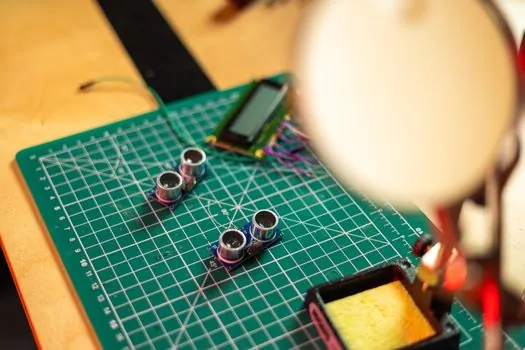
The decision grid below lines up the main O2 sensor families on the four criteria that drive most specifications: typical cost tier, service life, useful O2 range, and the application where each excels. [S1]
Electrochemical: lowest cost, 1 to 3 year life, 0 to 30% O2 typical, ambient-air and confined-space safety [S1][S2]. Zirconia: mid-to-high cost, multi-year life with hot-cell care, 0 to 100% O2, combustion and flue gas [S2]. Infrared: mid cost, multi-year life, 0 to 100% O2, headspace and process packaging [S2]. Paramagnetic: high cost, multi-year life, 0 to 100% O2, medical and laboratory [S2]. Optical/fluorescence: mid cost, multi-year membrane life, 0 to 50 mg/L dissolved O2 plus percent-level headspace, water and bioprocess [S2][S3]. Ultrasonic and laser: high cost, multi-year life, percent-level O2, harsh and high-speed process [S2]. For a safety-instrumented confined-space spec, this is the shortlist logic most engineers will apply, just as we mapped it in the RFQ Spec for Multi-Gas Detector in Emissions Sampling Systems.
Common Failure Modes and Sourcing Standards
Sensor failures cluster around three patterns: signal loss when the cell is fully depleted, slow response and negative bias when the electrolyte is partially spent, and false low readings when the membrane is fouled by condensate, oil, or particulates [S2][S3]. Bump-testing before each confined-space entry, scheduled calibration with a certified O2 span gas, and stocking replacement cells with a printed expiry date are the cheapest mitigations.
On the standards side, the main references for oxygen detector selection in industrial and safety service are IEC 60079-0 and IEC 60079-29 series for explosive-atmosphere gas detection performance and testing, ATEX 2014/34/EU and IECEx for hazardous-area equipment certification, and confined-space entry practice generally aligned with OSHA 29 CFR 1910.146 in the US and equivalent national rules elsewhere. Alarms at 19.5% and 23.5% are the practical conventions used in vendor literature and should be verified against the local occupational-safety code before commissioning [S4]. The next node to track is supplier-side publication of 2026 sensor-life test data and any revision of the 1910.146 O2 alarm thresholds, both of which will reshape the spec grid above in 2027.
For component-level specifications, see construction machinery and equipment.