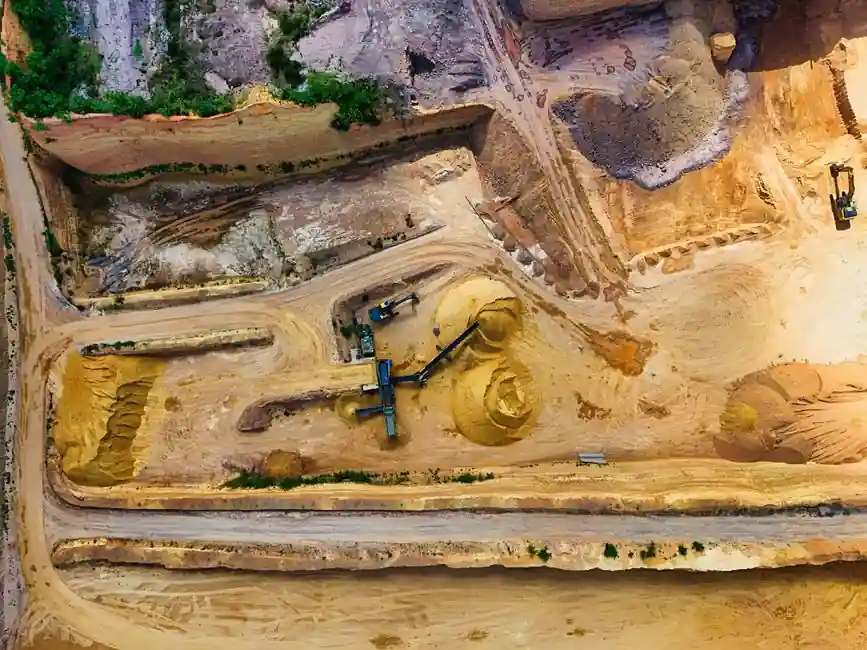
Buyers running heavy assembly bays should write the mining dump truck RFQ around five binding lines: payload class, engine power, frame type, body volume, and tyre/axle configuration, each pinned to a measured duty cycle [S3]. Mining dump trucks in the 90-400 t payload class, paired with engines above 1,500 hp, dominate the current open-pit fleet, and the spec must state which class the bay actually receives [S3].
A "heavy assembly bay" context shifts the RFQ from generic site hauler to a controlled-throughput intake: tonnes per shift, loader matchup, floor load limits, and the gradient between dig face and drop point. Volvo CE guidance on rigid versus articulated selection makes clear that haul-road investment is a separate line from truck choice, and both belong on the RFQ [S2].
Operating Requirement Block: Write It Before Pricing
Lead every mining dump truck RFQ with the operating brief: destination, material bulk density, target payload in tonnes, one-way haul distance, sustained gradient percentage, loading tool model, and shifts per day [S1]. For a heavy assembly bay, add floor load rating (typically 5-15 t/m² for reinforced concrete), overhead crane clearance, and door opening dimensions so the receiving geometry is verifiable before quote review.
Separate confirmed items from items under technical evaluation; a procurement checklist that mixes them produces comparison errors when suppliers price optional equipment as standard [S1]. Volvo CE notes rigid haulers require a stable, firm, meticulously maintained haul road, a capital line the buyer, not the supplier, must own on the RFQ [S2].
Rigid vs Articulated vs Electric: Decision Criteria
Rigid dump trucks use a fixed frame and are specified for large open-pit mines with good road conditions, long-distance heavy-duty transport, and high overall transportation efficiency [S3]. Articulated dump trucks (ADTs) carry an articulated joint, run on permanent all-wheel drive, and handle soft ground, steep grades, and rough terrain at the cost of smaller payload per cycle [S2][S3]. Electric-drive mining dump trucks are now in OEM catalogues as a lower-emission option, with reduced energy consumption at the operating point [S3].
Side-by-side on the four RFQ-relevant criteria, a buyer's selection logic reads: rigid wins on payload-per-cycle and cost-per-ton on a maintained road; ADT wins on haul-road capex avoidance and weather resilience, with payload in the 25-45 t class typically; electric-drive wins where site power is available and emission limits are enforced, with operating economics still maturing. Volvo CE frames this as "which truck is best for my unique situation" rather than a category-level winner, and the RFQ should mirror that framing by scoring each bidder against the four criteria above [S2].
For a heavy assembly bay, ADTs are often the right answer because the receiving apron is a controlled surface, not a long haul road, and the articulated joint simplifies the in-bay positioning cycle. Rigid haulers above 90 t only earn their place when the bay feeds a long-distance ore haul, not a localized assembly workflow [S3].
Configuration Lines That Must Appear on the RFQ

Lock the chassis, engine, transmission, axles, tyres, body, and tipping system as named lines; require each supplier to identify the exact part numbers and refuse quotes that use a model name without the component breakdown [S1]. Engine power above 1,500 hp is the current production floor for 90-400 t rigid mining dump trucks, and the RFQ should reject any sub-1,000 hp quote for that payload class as a configuration mismatch [S3].
Specify the dump body with steel grade, floor plate thickness (commonly 12-25 mm on production rigid haulers), side wall height, and tailgate type. Hydraulic tailgate for rapid unloading is now standard on most OEM offerings and should be listed as a required feature, not an option [S3]. The braking and steering systems, including retarder capacity and park-brake holding grade, are safety-critical lines; the RFQ should ask for the OEM-published holding grade percentage and ISO 3450 or equivalent compliance statement.
For related heavy-equipment procurement patterns, the line-by-line discipline mirrors a wheel loader RFQ: matching loader bucket capacity to truck body volume is what closes the cycle-time loop.
Commercial Boundary: What the Headline Price Hides
Record exclusions with the same care as inclusions, because freight, insurance, local preparation, spare parts, and inspection arrangements routinely differ between quotations and can flip a low headline number into a higher landed cost [S1]. For a heavy assembly bay, explicitly state whether the supplier delivers to the floor or to the dock, who offloads, and who commissions the truck on bay power (480 V three-phase is common for bay tie-ins).
Use a comparison table that lists, for each bidder, supply scope, trade terms (Incoterms 2020 code), exclusions, and the inspection record format. The lower headline price frequently reflects a different supply boundary, and the only defence is a like-for-like table the procurement team signs off before award [S1].
Inspection, Acceptance, and Handover Records
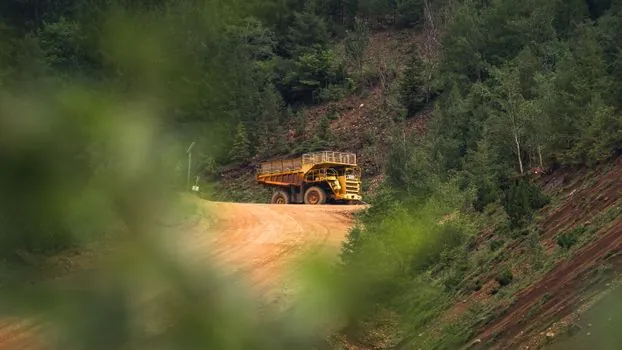
Define the inspection scope, responsible parties, location, and record format before the truck is ready for dispatch; qualified personnel should run functional checks under suitable conditions, and discrepancies must be logged with an agreed action, not a verbal promise to resolve later [S1]. Do not substitute destination-market registration or compliance review for factory acceptance, since those are separate jurisdictional steps that belong on the RFQ as a separate line.
For fleet orders, keep a dated specification revision, obtain written acceptance of every change, and confirm how substitutions will be proposed and approved; a photograph does not prove that two trucks in the same order carry identical equipment [S1]. The handover package must include operator manuals, parts identification, service contact, and an outstanding-item list that the maintenance team signs at commissioning.
Documentation That Survives the Audit
Keep the procurement checklist with the final specification, the correspondence trail, and the handover records, because future maintenance staff need the same baseline the buyer priced against [S1]. A reference to a dump truck configuration guide within the file helps new planners re-derive the spec when the next order cycle starts.
For bay-side material flow, the receiving-end spec often overlaps with a truck scale integration; if axle weights are billed by the tonne on outbound, the RFQ should ask for the OEM axle-load distribution data so the scale calibration matches the truck.
When This RFQ Pattern Does Not Fit
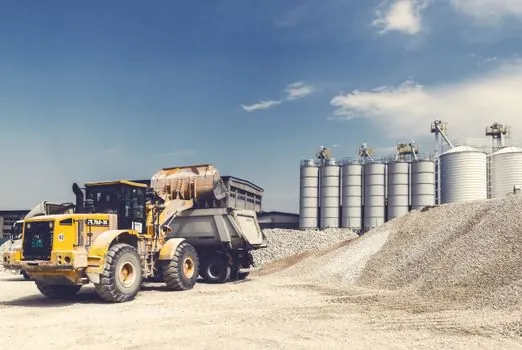
A mining dump truck RFQ is the wrong instrument for municipal haul-only work, where a 10-20 yd on-highway end dump or transfer truck is the correct spec, and where the operator pool, prevailing wage, and drug-testing regime dominate the commercial terms, as EBMUD RFP PUR108 illustrates for California public-sector work [S4]. Operators on that contract must hold a valid Class A or B commercial licence with air-brake endorsement and at least one year of experience on trucks above 26,000 lb GVWR with three or more axles, lines that have no equivalent on a private mining-dump-truck procurement [S4].
Similarly, if the assembly bay is feeding a process line at 50 t/h or less, a reach truck class solution is the wrong category entirely; the RFQ discipline transfers, but the equipment does not.
Track two signals on the next order cycle: whether bidders disclose engine power and body steel grade as standard lines or only on request, and whether the haul-road capital line is appearing as a separate bid item or being absorbed into truck pricing. Both reveal how mature the supplier's mining-dump-truck configurator is, and both predict the number of requote cycles the next RFQ will need.