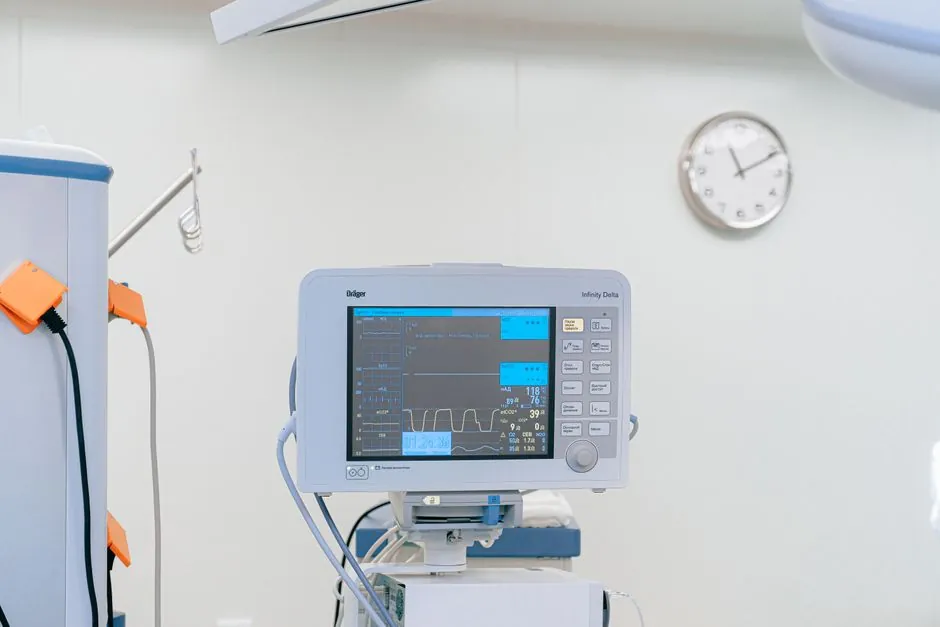
Oxygen (O2) gas detectors are specified in three sensor families, electrochemical, zirconia, and optical/IR, and three form factors, fixed, portable single-gas, and multi-gas, with the OSHA-mandated low-oxygen alarm point at 19.5% volume [S1].
The 19.5% threshold is not a designer's choice: it is the OSHA "minimum safe level" for human exposure, sitting below the 20.954% O2 concentration of clean air and well above the 17% level where impairment of judgment becomes evident, the 12-16% band where muscular coordination degrades, and the <6% level where respiration ceases [S1]. Above 23.5% volume the air is considered OSHA "maximum safe level," and oxygen-enriched atmospheres raise fire risk, which is why two-direction O2 monitoring (both depletion and enrichment) is now standard on most fixed transmitters.
Sensing Principles: Electrochemical, Zirconia, and Optical/IR
Electrochemical cells are the dominant technology for ambient-air O2 monitoring because they are low-power, room-temperature, and inexpensive per channel, and they are offered as plug-and-play smart sensors on fixed transmitters such as the Dräger PointGard 3100 [S2]. The same electrochemistry is built into portable single-gas units and into 4-gas multi-gas monitors that bundle O2 with combustibles and toxic gases.
Zirconia (zirconium dioxide) cells operate at high temperature (typically 600-700 °C) and respond to oxygen partial pressure, which makes them the reference choice for combustion-gas analysis, boiler trim, and process streams where direct in-situ measurement is required. They are fast, absolute (no calibration gas required in many configurations), and rugged, but the heated element rules them out for portable personal monitors.
Optical and infrared (IR) detection is used where the atmosphere contains gases that poison or cross-sensitise electrochemical cells, or where the same head is asked to read O2 alongside CO2. Dräger's fixed-point IR line, including the PIR 7200 listed in the same product family, targets CO2 but is paired with electrochemical O2 channels in multi-channel fixed systems [S2]. Optical O2 sensors using fluorescence quenching are increasingly used in medical and laboratory settings because they are non-consuming and stable over years rather than months.
Form Factor: Fixed, Portable, and Multi-Gas
Fixed oxygen detectors are wall- or column-mounted transmitters that provide continuous monitoring at a single point and feed 4-20 mA, HART, or digital bus signals to a controller; the Dräger PointGard 3100 series, for example, ships as a complete 1-channel gas detection system in an IP66 housing with ATEX, IECEx, CSA, UL, and GOST (EAC) approvals [S2]. Fixed units are the right answer for plant rooms, laboratories, cryogenic storage areas, and any process where a release of inert gas (N2, Ar, CO2) can displace breathing air.
Portable single-gas O2 detectors are worn on the lapel or carried by hand, run on rechargeable or disposable cells, and are built for confined-space entry, where the worker must sample the atmosphere before entry and continuously monitor after entry [S1]. Industrial Scientific's GasBadge Pro single-gas monitor and Dräger's handheld line are representative; the typical 24-month operating life, two-button interface, and event logging are now baseline.
Multi-gas monitors add O2 to a sensor array that typically includes LEL (combustibles), CO, and H2S, so the same device covers both the oxygen-depletion hazard and the toxic-gas hazard in one entry ticket. The Industrial Scientific Ventis Pro5, Ventis MX4, MX6 iBrid, and Radius BZ1 area monitor are the OEM reference points [S1]. For life-safety compliance in confined space under OSHA 1910.146, a 4-gas monitor is the de-facto minimum spec.
Specialised Variant: Oxygen Depletion Sensors (ODS)
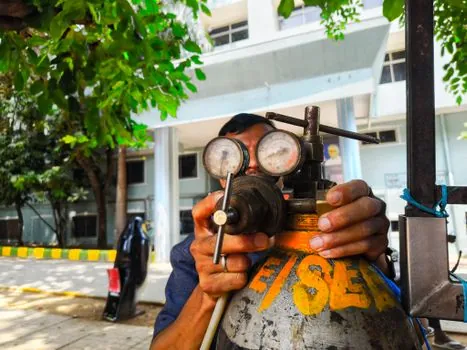
An oxygen depletion sensor (ODS) is a safety shut-off, not a life-safety alarm: it is wired to the gas valve of a vent-free heater or fireplace and trips a thermocouple when room O2 drops from 21% to 18.5% by volume or below, cutting fuel [S4]. ANSI has required ODS on all certified vent-free units since 1980, and ODS-equipped heaters carry a record of no recorded deaths attributed to oxygen depletion in those appliances [S4].
The catch is logic, not sensor quality: for room O2 to fall from 21% to 18.5%, 2.5% of another gas must take its place, and that gas is usually CO2 or CO, with CO levels above 400 ppm being dangerous in hours and above 1,600 ppm fatal within minutes [S4]. The CDC reports more than 10,000 CO poisonings and 438+ deaths annually in the US, which is why a separate CO detector, not an ODS, is the load-bearing life-safety device in any space with combustion appliances [S4].
Selection Criteria: Matching Sensor to Environment
The selection starts with three questions: is the hazard oxygen depletion, oxygen enrichment, or both; is the atmosphere clean or corrosive/toxic-laden; and does the device also need to read other gases? For clean ambient air in warehouses, labs, and confined spaces, electrochemical cells are the lowest-cost, lowest-power answer and are available in every form factor [S1][S2].
For combustion-gas streams, engine intakes, or any application where the gas is hot, wet, or low in O2, zirconia is the right family because it reads partial pressure directly and is absolute in many configurations. For medical, pharmaceutical, or laboratory use where long calibration intervals and non-consuming operation matter, optical fluorescence-quenching O2 sensors are now widely specified, and the broader oxygen detector category page covers the cross-cutting certification picture.
Where the same site also needs dissolved-oxygen or process-water monitoring, the dissolved oxygen meter family uses a separate membrane-electrode or optical-luminescent probe designed for liquids rather than gas, and the two should not be cross-substituted: a gas-phase O2 transmitter will give nonsense in a sample line full of condensate.
Approvals, Ratings, and Compliance Anchors
Fixed O2 detectors for hazardous areas ship with ATEX, IECEx, CSA, UL, and often GOST (EAC) markings, and the entry-level Dräger fixed line is rated IP65, IP65/66/67, IP66, or IP66/67 depending on housing, with operating-temperature windows from -40 °C to +65 °C (-40 °F to +149 °F) up to -40 °C to +77 °C (-40 °F to +170.6 °F) for the IR and ultrasonic variants [S2]. These numbers are not marketing: the -40 °C floor is what lets the same detector sit in an unheated LNG vaporiser enclosure, and IP66 is the minimum to survive hosedown in a food-and-beverage plant.
For US plant-floor compliance the underlying standard is OSHA 29 CFR 1910.146 (permit-required confined spaces), which drives the 19.5% low-O2 alarm point [S1]. For US process-safety and general-industry gas detection, NFPA 69 and NFPA 72 govern inerting and the fire-alarm interface respectively, and any O2 detector tied into a fire panel must carry the listing. For European builds, ATEX 2014/34/EU equipment categories are paired with IEC 60079-x for explosive atmospheres, and IEC 61508 SIL ratings are increasingly requested for safety-instrumented-function roles.
Comparison: Three Sensor Families Against Four Decision Criteria
Lining the three families up against the four decision criteria that drive most purchase orders: (1) Electrochemical wins on cost per channel and on portable/battery operation, but cells typically last 18-36 months and a few gas species (acid gases, strong solvents) shorten that. (2) Zirconia wins on response time, absolute reference behaviour, and suitability for hot/wet combustion streams, but the 600-700 °C heater rules out portable use and consumes significant power. (3) Optical/IR (including fluorescence quenching) wins on long-term stability, non-consuming operation, and immunity to many electrochemical poisons, but the sensor head and the optoelectronics carry a higher unit cost. [S1]
Form-factor rule of thumb: fixed where the hazard is geographically fixed and the asset is critical (plant rooms, cryogenic tanks, gas cabinets); portable single-gas for short-duration confined-space entries where weight and simplicity matter; multi-gas (4-gas minimum) for routine confined-space work and turnarounds where O2, LEL, CO, and H2S all need to be read from one device. Where dust is the primary hazard rather than gas, the dust detector family is a different sensor stack entirely (optical scattering, beta attenuation) and is governed by a separate set of ATEX/IECEx rules, a useful contrast when justifying sensor-platform spend.
Linked Reading and Engineering Takeaways
For engineers building a wastewater-plant detector specification, the Fixed Gas Detector Certification Checklist for Wastewater Plants pairs cleanly with O2 monitoring in digester rooms and wet wells, where H2S and CH4 are the parallel hazards. For sites where dust and oxygen-depletion coexist (grain elevators, flour mills, combustible-dust processes), the Dust Detector Selection 2026: Sensing Tech, Ranges, and ATEX Rules article covers the particulate side of the same hazard tree. [S3]
The next two trackable signals on oxygen-detector specification: (a) the migration of SIL-capable electrochemical O2 sensors into SIL-2 safety-instrumented-function roles on burner-management systems, which is currently driven by IEC 61508/IEC 61511 demand rates; (b) the convergence of 4-gas portable monitors with wireless mesh (Bluetooth and Wi-Fi 6E) so that a single attendant can supervise multiple entrants in a permit space. Both are visible in current OEM datasheets and will tighten the spec language on confined-space tenders over the next 12-18 months.