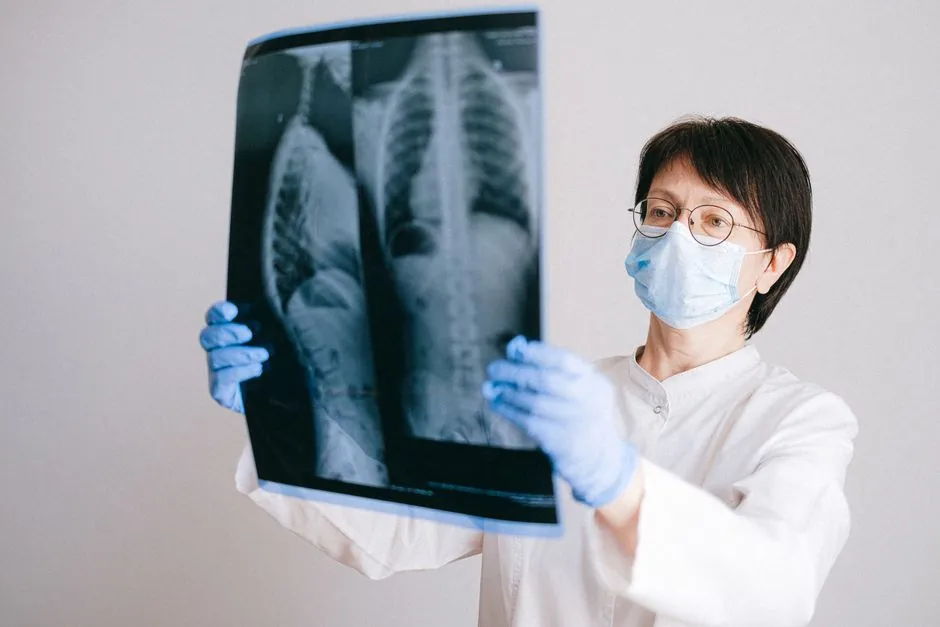
A panoramic tube is the better choice for a large-diameter pipeline girth weld when full circumferential coverage in one exposure outweighs the extra geometric-unsharpness penalty associated with its larger effective focal spot.
Panoramic X-ray radiography was applied to welded joints of the natural-gas pipeline from Khoms to Tripoli at kilometer 42 and kilometer 60 [S1].
Where Panoramic Geometry Gains an Advantage
The field application inspected welded joints of the natural-gas pipeline from Khoms to Tripoli at kilometer 42 and kilometer 60 [S1].
The practical benefit is coverage rather than merely a different image format. An automated pipe crawler travels through a pipe, carries an X-ray source, positions itself at weld joints or areas of interest, triggers an exposure, and advances to the next inspection point [S2].
Directional vs Panoramic: Decision Criteria
Directional radiography gives the operator control over the beam direction, while panoramic radiography obtains circumferential coverage from a centrally positioned source [S1][S3].
Where Directional Tubes Are Better
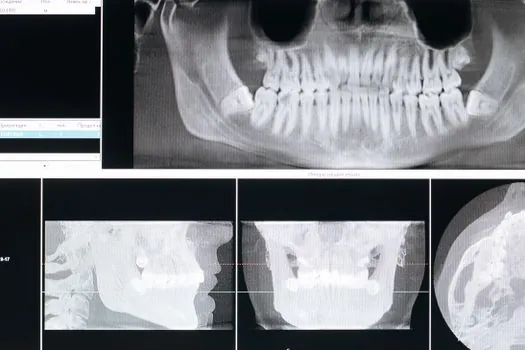
A directional tube is better when one weld section can be placed in a favorable beam path, or when the inspection specification depends on the highest attainable spatial resolution rather than one-shot circumferential coverage.
Image quality is not decided by tube type alone. A directional setup can use a compact source, an external detector, and controlled source-to-object distance to examine a defined portion of a weld. The trade-off is that several views may be needed to cover the full circumference.
Directional radiography also fits welds with practical access constraints around the pipe, inspection of smaller-diameter components, and programs where the specified image quality or geometric unsharpness is stricter than the coverage benefit of a panoramic exposure. The selection should follow the approved radiographic procedure, material thickness, pipe diameter, and acceptance criteria rather than the equipment category alone.
Wall Thickness and Exposure Control
Wall thickness remains the controlling variable in both geometries because it sets the radiographic penetration requirement. The documented study applied panoramic radiography to specimens of welded joints from the natural-gas pipeline extending from Khoms to Tripoli [S1].
An accepted panoramic image must still be evaluated for penetration, contrast, geometric sharpness, and the applicable weld acceptance requirements.
The 2008 industrial radiography reference warns that establishing the effective focal-spot size of a panoramic X-ray tube is more complicated than for a conventional stationary arrangement [S5]. That matters because source-to-film distance changes around the circumference, and an off-axis detector receives a different geometric relationship than a point directly opposite the source.
Safety, Standards and Acceptance
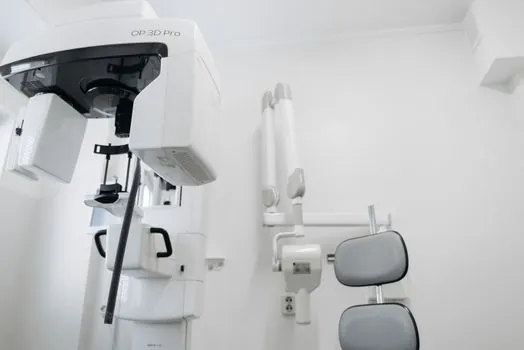
The panoramic pipeline evaluation used ASTM radiography standards and API 1104 for radiographic-image analysis [S1]. API 1104 is the governing weld acceptance reference named in that work, while the article identifies the inspection method as ASTM radiography rather than assigning one specific ASTM document number [S1].
Directional and panoramic exposures are subject to the same core radiographic controls: qualified tube voltage and current, verified exposure time, correct source-to-detector geometry, material-appropriate filtration, suitable image quality indicators, and documented evaluation of the resulting image. The panoramic-radiography study analyzed X-ray images according to API 1104 quality specifications [S1].
Radiation safety is a separate selection constraint. Industrial X-ray equipment requires controlled access, shielding, warning arrangements, and permissions appropriate to the jurisdiction and energy range. The planning requirements for an industrial X-ray generator radiation license should be reviewed before field deployment rather than treated as an administrative afterthought.
Practical Selection Rule
Choose a panoramic tube when the pipe is larger than 250 mm, one circumferential image is required, internal crawler access is available, and field productivity matters more than the best possible geometric sharpness [S1]. Choose a directional tube when the weld can be accessed from outside, only selected sections require examination, or the procedure requires sharper spatial resolution than the panoramic effective focal spot can deliver [S2][S3].
For borderline applications, compare exposure count, source positioning, film or detector format, focal spot, kV, mA, exposure time, and required geometric unsharpness on the same worksheet. A directional tube may need several exposures but can be easier to optimize; a panoramic system can replace that sequence with one circumferential view [S1].
Do not equate panoramic coverage with automatic acceptance. The detector strip, penetrameters, beam-angle limit, voltage range, and developed-image quality still have to satisfy the approved inspection procedure and API 1104 evaluation [S1]. For field planning, verify pipe diameter, wall thickness, internal access, focal-spot data, and exposure parameters before selecting the tube configuration.