
A tuned remote seal system is preferable to a balanced system when the installation needs to cancel seal-temperature effects against head-temperature effects, particularly on shorter vertical spans and high-pressure vessels [S4][S5].
The decision depends on capillary geometry, ambient-temperature variation, fill-fluid density, response requirements, and vessel arrangement, rather than on a universal preference for one seal architecture [S1][S2].
Why the Two Seal Architectures Behave Differently
Remote-seal temperature error has two defined components: seal temperature effect, caused by backpressure on the sensing diaphragm as fill fluid expands or contracts, and head temperature effect, caused by fill-fluid density changes in the vertical capillary section [S4].
A balanced system uses equal seals and equal capillary lengths on the high- and low-pressure sides. This geometry cancels the seal-temperature component, but it does not cancel the remaining head-temperature effect [S1][S4].
A tuned system deliberately introduces asymmetry. In the described vertical arrangement, the high side is direct-mounted and the low side uses a capillary, allowing the two opposing temperature effects to offset one another [S4]. The error is reduced, not eliminated, and capillary dynamics still limit response speed [S4].
DP level calculation depends on differential pressure and liquid specific gravity, so these seal-induced pressure shifts propagate directly into calculated level [S4]. For a differential pressure transmitter, selection of the complete remote-seal assembly is therefore part of the measurement accuracy calculation, not an installation accessory.
Decision Criteria: When Tuning Wins
A tuned remote seal is stronger when the installation has a material vertical capillary contribution, the ambient temperature can vary enough to change fill-fluid density, and the required turndown or error budget leaves little room for seal-generated zero shift [S4][S5].
Emerson identifies indoor applications, shorter spans, and high-pressure vessels as suitable applications for tuned-system assemblies [S5].
The comparison below turns the architecture choice into a practical engineering decision:
Tuned systems are not automatically the right answer for every vessel. A balanced arrangement remains defensible where symmetry is required, thermal variation is modest, dimensional matching is easier to verify, and the remaining head-temperature contribution fits the project’s zero-error allowance [S1].
Where Balanced Seals Still Make Sense

A balanced remote seal system is better suited to applications where matched high- and low-side seal assemblies and capillary lengths simplify procurement, installation, and verification, provided its residual head-temperature error is acceptable [S1].
Wet-leg and dry-leg arrangements have different failure mechanisms. A wet leg can suffer fill-fluid evaporation, while a dry leg can accumulate condensate and produce measurement error; both are maintenance-intensive compared with a sealed capillary arrangement [S4].
A balanced remote seal therefore wins over impulse piping when keeping process media out of the transmitter is more important than eliminating fill-fluid hydraulics.
Vertical Geometry, Fill Fluid, and Response
Capillary length and vertical elevation determine how much fill-fluid density contributes to the head-temperature effect. Tuning depends on system asymmetry, so the assembly must be specified for the actual geometry rather than treated as an interchangeable pair of seals [S1][S4].
Remote-seal systems typically respond more slowly than impulse lines because the fill fluid must move through the capillary and compliant elements to equilibrate after a level change [S3].
Fill-fluid selection must match the process temperature, diaphragm material, and fluid compatibility requirements. Rosemount documentation supports direct-mount or capillary connections with multiple fill fluids, process connections, and materials, which makes the seal configuration an engineered subsystem rather than a generic kit [S2].
Installation details also affect safety and performance. All four flange bolts must be tightened before pressure is applied, and flange bolts must not be loosened while the transmitter is in service [S1]. For DP installations requiring independent upper and lower pressure sensing, a level transmitter comparison can help establish whether the vessel geometry justifies remote seals or another architecture.
Limits of the Tuned Approach
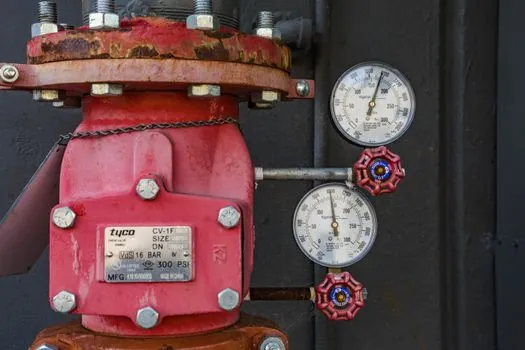
Tuned remote seals do not remove capillary errors or deliver impulse-line response speed. The design reduces measurement error by balancing opposing temperature effects, while the fill-fluid column continues to introduce dynamic lag [S4].
Long spans and widely varying temperatures can exceed the practical advantages of a capillary-based tuned assembly. The Rosemount 3051S Electronic Remote Sensor architecture places a transmitter on each pressure side and links the pair electronically, removing long capillaries and their associated response limitation [S4][S5].
That alternative is particularly relevant to distillation towers, tall vessels, storage tanks, pulping vessels, and fermenters [S4]. It also avoids the evaporation and condensation problems associated with wet-leg and dry-leg systems, but it changes the architecture rather than merely tuning a remote seal [S4][S5].
Remote seals also carry installation constraints. Process leakage can cause injury, and incompatible replacement parts can reduce pressure-retaining capability [S1]. The selection package therefore needs to cover seal diameter, capillary length, fill fluid, materials, pressure rating, temperature range, orientation, and vessel pressure before the tuned-versus-balanced decision is final.
Specification and Sourcing Requirements
The system specification should identify the seal arrangement, high-side and low-side connections, capillary lengths, mounting orientation, fill fluid, diaphragm material, maximum working pressure, and expected ambient-temperature range [S1][S2]. These parameters define both the thermal correction and the hydraulic response.
Rosemount’s 2026 reference material, revision FD from March 2026, covers DP level transmitters and diaphragm seal systems, while the associated 2026 product data sheet, revision UD, covers level, flow, pressure, interface, density, extreme temperatures, corrosive or viscous processes, hygienic requirements, and special process connections [S1][S2].
The broad distinction between remote and direct-mounted equipment is covered in Remote Seal vs Direct-Mount Pressure Transmitter. For a tuned installation, however, the final choice must be based on the actual seal-capillary geometry and vessel duty, not only on the transmitter model or generic remote-versus-direct comparison.
Trackable procurement signals are the completed dimensional schedule and confirmed fill-fluid specification. If either is missing, the claimed temperature cancellation remains an assumption rather than a verifiable tuned-system design [S1][S4].