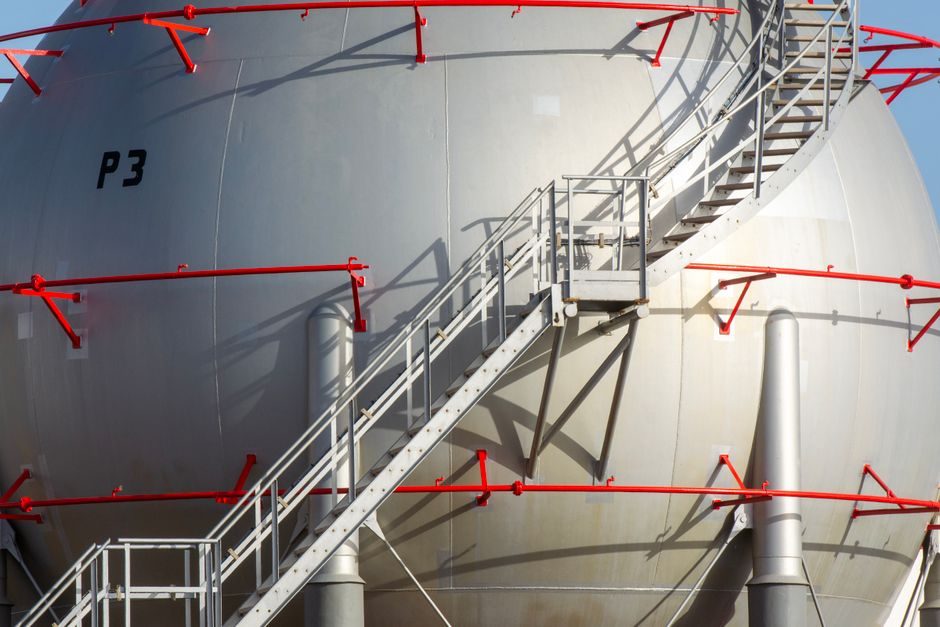
The global fuel cell market is valued at USD 7.1 billion in 2026 and is forecast to reach USD 18.2 billion by 2036, with the broader fuel cell vehicle segment projected to USD 14,409.71 million by 2026 at a 55.3% CAGR (2018-2026) per Allied and PR Newswire baselines [S4][S1]. Stack-level decision points — chemistry, cell count, BoP, monitoring electronics — are now the dominant sourcing gates, not the membrane alone.
Two chemistries define almost every commercial stack spec: Proton Exchange Membrane (PEMFC) and Solid Oxide (SOFC). PEMFC is the workhorse of fuel cell electric vehicles because the membrane and catalyst reach operating temperature within seconds and tolerate the dynamic load of a passenger car or forklift drive cycle. SOFC runs at 600-1000 °C and is built for stationary prime power and CHP, where the high-grade waste heat offsets the slower startup. The SOFC market alone was USD 1.0 billion in 2024, is estimated at USD 1.4 billion in 2026, and is forecast to reach USD 4.7 billion by 2033 at a 15.7% CAGR [S6].
PEMFC vs SOFC: Decision Criteria Side-by-Side
Stack selection reduces to four criteria: operating temperature, startup time, electrical efficiency, and balance-of-plant (BoP) cost share. PEMFC runs at 60-80 °C with cold-start in seconds, pairs with low-grade stainless or aluminium BoP, and is the default for transport duty [S4]. SOFC runs at 600-1000 °C, needs hours to ramp, and demands high-temperature alloys (typically 310S / Inconel-class) in the hot BoP, pushing that portion of the bill of materials to roughly 45-55% of stack + BoP cost on stationary builds [S6]. PEMFC's BoP (humidifiers, DC/DC converters, cell voltage monitors) is comparatively lighter; in stationary PEMFC builds BoP still sits in the 30-40% range because of reformer and heat-recovery skids. The choice cascades downstream: a pressure transmitter on the hydrogen inlet is shared, but a SOFC anode gas train needs industrial valve bodies rated to 800 °C, not the 80 °C bodies a PEMFC anode uses.
Electrical efficiency stacks differently as well. Fuel cell bike and forklift platforms all sit on the PEMFC side of that line [S3].
Stack BoP Accessories and What They Actually Cost
Cell voltage monitoring is the single most differentiated line item on a multi-cell stack. Commercial cell voltage monitors ship in 48-channel and 96-channel formats, reflecting common stack sizes of 30-90 cells per module for 1-10 kW class stationary units and up to 400+ cells for automotive stacks [S2]. The Cell Voltage Monitor 48 lists at USD 3,250 and the 96-channel version at USD 5,750, which gives a procurement engineer a hard reference: monitoring electronics alone run USD 60-70 per channel at small-batch catalog pricing [S2]. For stack integrators, this number feeds straight into the per-kW BoP cost and explains why a 96-channel CVM is a near-mandatory order on any stack above ~5 kW.
DC/DC conversion is the second BoP line item that scales with stack power. A 3 A buck converter module ships at USD 8 and accepts 5-32 V input to a stabilised 12 V rail — the right part for a 50-100 W stack [S2]. A Boost Buck DC Converter that holds 12 V output across 5/12/32 V inputs lists at the same USD 8 catalog price point. Above that power class, a 1 kW+ stack integrator stops buying catalog converters and specifies a custom IGBT or SiC-based DC/DC stage, with the flow meter on the hydrogen inlet and the load cell on the reformer feed adding their own line items to the BoP. The load cell module reference is worth checking for any skid where hydrogen mass-flow verification is contractually required. Water management accessories — moisture traps, automatic water removal — list at USD 475 catalog, and H-TEC's Fuel Cell Monitor Pro 4.0 lists at USD 990 to compute efficiency and electrical characteristics on a bench setup [S2].
Where the Volume Is Going: Transport, Stationary, Light Mobility

Three demand pockets dominate 2026 stack orders. First, automotive PEMFC: the Worldwide Automotive Fuel Cell market is on track for USD 14,409.71 million by 2026 at 55.3% CAGR, with the fuel cell in a high-pressure tank feeding the stack where hydrogen and atmospheric oxygen react to generate electricity [S1]. Second, stationary SOFC and PEMFC: the global fuel cell market across transport, stationary, and portable reaches USD 7.1B in 2026 and USD 18.2B by 2036 [S4]. Third, light mobility: the global fuel cell bikes market is modelled at USD 6.0B in 2030 and USD 24.7B by 2040 at 15.2% CAGR (2030-2040), segmented by max load (less than 100 kg / 101-125 kg / more than 125 kg), power output (less than 250 W / 250-400 W / 401-750 W / above 751 W), max speed (less than 50 km/h / more than 50 km/h) and range class [S3].
For spec engineers, that demand split means three different stack geometries. Automotive stacks chase 90-120 kW peak in a single module with water-cooled bipolar plates. Stationary SOFC stacks chase 1-10 kW modules that get paralleled into 50 kW-1 MW skids. Fuel cell e-bike stacks live in the 100-750 W band and pair with a small Li-ion pack or super-capacitor to buffer transient load [S3]. Each geometry drives a different cell voltage monitor count, a different DC/DC topology, and a different oxy-fuel cutter or laser-cutting step in plate fabrication.
Standards, Safety and Sourcing Constraints
Two non-market constraints decide which vendor wins a stack contract in 2026. First, hydrogen handling: SAE J2601 fueling protocols and UN GTR 13 hydrogen vehicle safety ruleset govern the on-vehicle side, while ISO 14687 sets the hydrogen quality grade for PEMFC feed — the impurity envelope that determines how often a stack sees a recovery purge. Second, BoP electrical safety and EMC: stack auxiliary electronics — the CVM, DC/DC, and the controllers above them — fall under general industrial electrical codes rather than any single fuel-cell-specific standard, which is why BoP boards are routinely specified to IEC 61010 / industrial-grade EMC envelopes even when the stack itself is qualified to a vehicle standard. [S1]
Sourcing constraint number three is real estate. Fuel cell stack supply chains in 2026 still suffer from platinum-group-metal allocation for PEMFC catalyst and from nickel-alloy plate stock for SOFC interconnects, and these bottlenecks compress into 18-30 week lead times on stack orders that would have shipped in 8-12 weeks in 2022. A working brake resistor spec is also worth holding against the BoP shortlist because the regenerative energy path on a fuel cell vehicle still needs a hard-dump resistor during fuel-cell shutdown transients. Sister pieces on bag filter selection and self-cleaning filter selection matter at the air intake, where particulates shorten MEA life.
Technology, Software and Test Stack in 2026
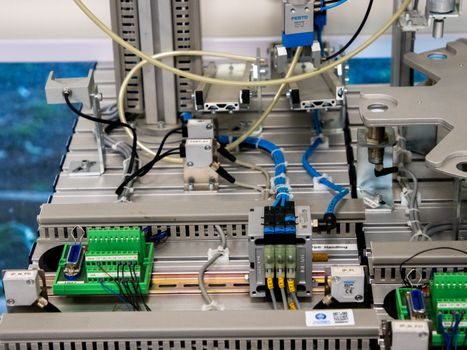
Real-time stack simulation is now a standard pre-build step. A V1.0 PEM fuel cell real-time simulation model (登记号 2024SR0589665) is registered as a software copyright in China, with first publication 2023-11-16 and registration approval 2024-04-30, indicating that a domestic vendor (上海熠速信息技术有限公司) has shipped a tool used for HIL test of the stack before any cells are produced. [S2]
On the technology side, IDTechEx's 2025-2045 fuel cell EV programme covers unit sales, fuel cell MW demand, GWh battery demand, and market value across passenger cars, light commercial vehicles, trucks, and city buses, and the headline use-case split is buses and trucks, not passenger cars, because of the depot refuelling economics [S5]. City bus deployments are the clearest volume signal in 2026 because bus routes match depot-based hydrogen refuelling, and stack duty cycles on buses are predictable enough that a 30-90 cell SOFC range extender can hit its design hours without aggressive load-following.
Who Should Specify What, in 2026
For OEM passenger car programmes, the default remains a PEMFC stack in the 80-120 kW class with water-cooled metal plates, a 96-channel CVM, and an IGBT-based DC/DC stage; SOFC is wrong for this duty. For stationary prime power above 100 kW, SOFC is the right call if heat recovery is monetised, otherwise a stationary PEMFC with reformer is the lower-risk path. For light mobility (e-bikes, forklifts, last-mile three-wheelers), a small PEMFC stack below 1 kW paired with a Li-ion buffer is the dominant 2026 architecture, and the BOM there is dominated by the CVM and DC/DC catalog items, not the stack itself [S3][S2].
Vendors to watch in 2026-2027 are the ones who can deliver stack + BoP as a skid with the CVM, DC/DC, hydrogen pressure transmitter and industrial valve package already integrated, because the bottleneck has moved from the membrane to system integration. A working checklist of brake resistor tiers and the BMS supply picture remains relevant to any BoP spec where the load-dump path and the battery buffer need to clear sourcing gates in parallel with the stack itself.