
A bench or portable pH meter is selected by lining the chemistry, the install location, the electrode fill type, the signal stack, and the calibration discipline against each other — not by buying the highest-resolution display on the datasheet [S2][S5].
Process engineers routinely conflate laboratory meters, field-portable testers, and inline analyzers; each class has a distinct electrode, reference system, and enclosure spec, and crossing the lines produces sensor failure inside one shift, not one quarter [S5]. The 2026 published selection frame from Hach and Mettler-Toledo treats pH as one node inside a broader aqueous-ion measurement workflow, with the conductivity meter and ion-selective electrode covering the adjacent parameter set [S2][S5].
Gate 1 — Define the measurement environment before touching a datasheet
ATEX/IECEx zone classification, process temperature ceiling, and solids-loading percentage are the three environmental inputs that decide whether a sealed gel-filled laboratory probe or a refillable KCl flowing-junction probe survives the first month of service [S2][S5]. Hach's 2026 water-quality handbook frames pH as hydrogen-ion activity in a solution, and explicitly routes high-solids, high-temperature, or coating-prone samples toward refillable double-junction reference designs rather than sealed gel probes [S5].
Engineers who skip the environment pass and jump to mV resolution or display digit count typically over-spec a bench meter for a dirty application, or under-spec a process-grade sensor for a clean laboratory loop — both failure modes are documented in field-return data the major instrument vendors publish annually [S2].
Gate 2 — Electrode chemistry: glass body vs epoxy, refillable vs sealed, single vs double junction
Glass-body refillable double-junction electrodes are the default for aggressive chemistries and high-temperature work because the operator can replenish reference electrolyte and replace the salt bridge when poisoned; sealed gel epoxy-body probes fit low-maintenance portable work where the probe is treated as a consumable [S2][S5]. Mettler-Toledo's 2026 pH-buffer product family datasheet calls out temperature-dependent buffer tables (pH 4.01 sachet, 30×20 mL format) as the calibration reference that any refillable-vs-sealed decision must be checked against — temperature compensation is automatic only with vendor-matched instruments [S2][S4].
For ion-specific work adjacent to pH, ion-selective electrodes (ISE) and ion meters use composite and half-cell ISE designs that share the same high-impedance mV front end as a pH meter but require a separate reference half-cell and calibration slope check; Hach and Mettler-Toledo both market the ISE line as a sibling to the pH meter family rather than a replacement [S5]. Specifying ISE hardware where simple pH glass will do adds cost and slope-management burden; specifying pH glass where an ammonium, nitrate, or fluoride ISE is required produces nonsense readings [S5].
Gate 3 — Output, connectivity, and how the reading reaches the control room
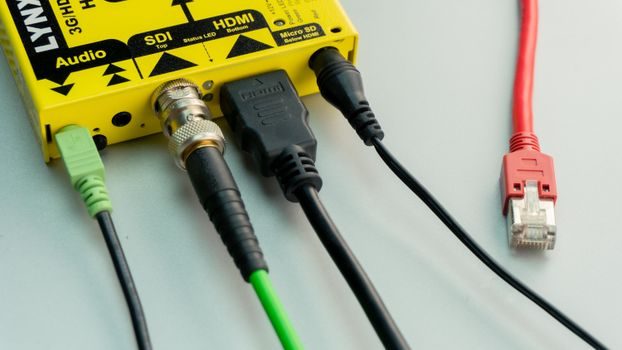
Portable and bench meters typically expose only a local display, USB, or RS-232 to a logger, while process and panel-mount meters add 4-20 mA with HART, or Foundation Fieldbus/PROFIBUS PA digital outputs for direct DCS integration; the two digital fieldbus stacks are not interchangeable with a HART-only analog loop, so the I&C architecture must be confirmed before the meter output is fixed [S2][S5].
For a side-by-side decision against an online pH analyzer, the meter side wins on flexibility, multi-parameter use, and lab-grade accuracy; the analyzer side wins on continuous duty, automatic cleaning, and digital signal to the DCS — the engineering tradeoff is documented explicitly in the 2026 spec comparison pH meter vs online pH analyzer. If the application is a grab-sample QC station rather than a continuous process line, the bench or portable pH meter is almost always the lower-cost correct answer [S5].
Gate 4 — Accuracy class, resolution, and what the calibration slope actually delivers
Manufacturer-stated 0.001 pH resolution on a bench meter is meaningless if the electrode slope is below 92 % of theoretical Nernst response, the reference junction is poisoned, or the buffer used is past its expiry date; slope and offset are the real accuracy gates, and they should be logged on every calibration [S2][S4][S5]. The Mettler-Toledo pH 4.01 sachet datasheet (2026) anchors its certified buffer value to a temperature table, and the automatic temperature-compensation claim applies only when the meter firmware recognises the matched buffer family — third-party buffers require manual entry of the temperature coefficient [S2][S4].
For trace-level work below pH 1 or above pH 12, specify a meter with a separate high-impedance mV input for differential measurement; for routine 0-14 pH work, a standard two-channel meter with a stored multi-buffer set (typically 4.01, 7.00, 10.01) covers the operating range without adding cost [S2][S5].
Gate 5 — Maintenance, cleaning, and consumable lifecycle cost
Sealed gel probes are replaced on a 6-12 month cycle in clean service; refillable probes are rebuilt on a 3-6 month cycle with fresh KCl electrolyte and a junction sleeve, and the total cost of ownership over three years usually favours the refillable design in any application running more than one shift per day [S2][S5]. Hach's 2026 pH product page groups the cleaning solutions, storage solutions, and buffer sachets into the same selection workflow as the meter itself, on the explicit rationale that maintenance chemistry drives measurement quality more than meter brand does [S5].
Inline installations that need automatic wash should be specified as a pH meter plus ultrasonic or chemical cleaning accessory only when grab-sample verification is also instrumented; without periodic grab verification, the cleaning cycle masks electrode decay rather than preventing it [S5].
Comparison: bench meter vs portable tester vs inline pH analyzer
Bench meters win on accuracy (typically ±0.002 pH with fresh slope), multi-channel flexibility, and ISE add-on capability; portable testers win on ruggedness, battery life, and field grab-sample throughput; inline analyzers win on continuous 4-20 mA/HART or digital fieldbus output, automatic cleaning, and minimal operator handling [S2][S5]. The selection is rarely between all three — it is driven by install location (lab bench, field walk-down, or process pipe) and by the downstream consumer of the reading (operator log, LIMS, or DCS) [S2][S5].
Engineers who treat the three as substitutes routinely overpay by a factor of three to five, or under-engineer the signal stack so the data never reaches the control system cleanly; the standard fix is to fix the install location and I&C consumer first, then pick the meter class that fits [S2][S5].
Standards and calibration discipline that bind the selection
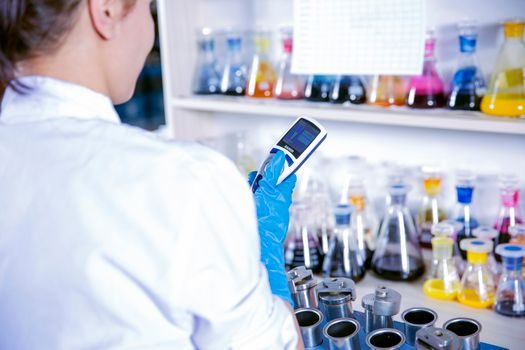
Calibration should always be performed with certified, traceable buffers matched to the meter's auto-recognition table, and the slope/efficiency percentage recorded on every calibration event for traceability under ISO 17025 lab accreditation or equivalent internal QA schemes [S2][S4][S5]. Buffer sachets in the 4.01 / 7.00 / 10.01 triplet, stored sealed and used within the manufacturer's shelf life, are the baseline; expired buffer is the single most common source of bias found in field-return data [S2][S4].
Watch the buffer lot and expiry on every reorder: the Mettler-Toledo 2026 datasheet for pH 4.01 sachets (30×20 mL, certified value at 25 °C) is the reference to cite in procurement documents when the audit asks for traceability of calibration consumables [S2][S4].
Who the pH meter is — and is not — for
A bench or portable pH meter is the correct instrument for laboratory QC, environmental grab sampling, effluent verification, and any point where a technician is present to change electrolyte, run a slope check, and log the result; it is the wrong instrument for unattended continuous pH on a process pipe, where an online analyzer with automatic cleaning and a 4-20 mA/HART output to the DCS is the engineering-correct answer [S2][S5]. Engineers who deploy a bench meter on a continuous process line end up replacing the probe monthly and lose the DCS data link entirely; engineers who deploy an inline analyzer on a lab bench overpay five-fold for capability that never gets used [S5].
For adjacent process work, the conductivity meter, the energy meter for utility billing, and the electricity meter for sub-metering all sit in the same instrument selection workflow but solve unrelated measurement problems — pH and conductivity together are a common pair for water and wastewater work, while energy and electricity meters are power/utility quantit