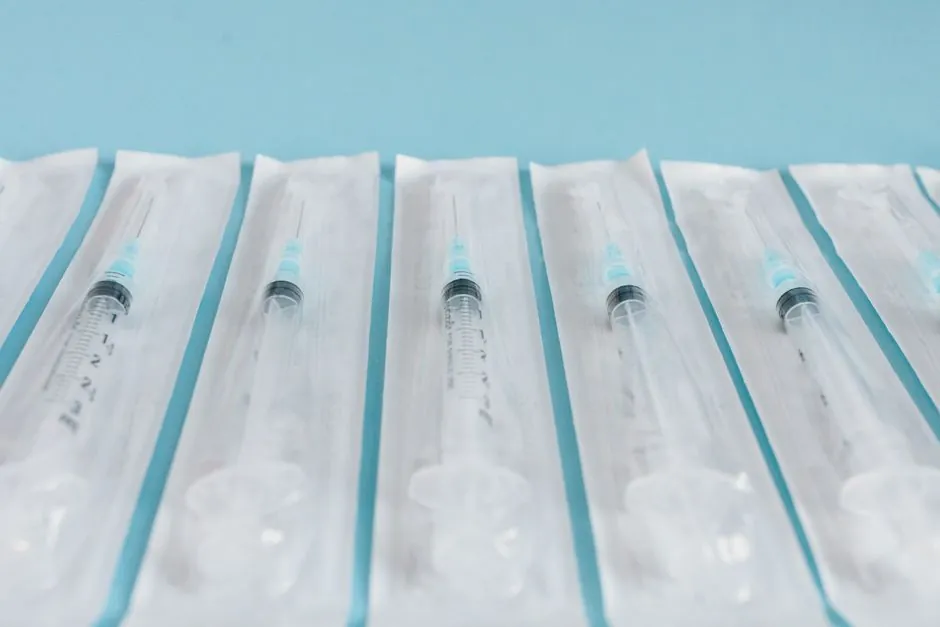
Global pharmaceutical cold chain demand is forecast to reach USD 6.9 billion in 2026, up from USD 6.6 billion in 2025, as biologics and temperature-sensitive medicines expand the need for controlled storage and transport [S3].
The global cold chain equipment market is valued at USD 46.52 billion in 2026 and is projected to reach USD 152.06 billion by 2034 [S2].
Biologics and vaccines define the 2026 demand base
Biologics, vaccines and insulin remain core products for pharmaceutical cold chain equipment because their usable condition depends on both temperature control and elapsed time [S6]. Vaccines and many biologics, including insulins, are identified as common cold chain medicines, creating demand for refrigerated storage, validated packaging and monitored shipment lanes [S6].
The pharmaceutical cold chain market is forecast to expand from USD 6.9 billion in 2026 to USD 9.6 billion by 2035, a 3.8% compound annual growth rate [S3]. A separate cold chain pharmaceuticals forecast places the market at USD 6.93 billion in 2026 and USD 9.71 billion by 2035, with biologics and cross-border trade identified as growth drivers [S1].
Cold chain demand is not limited to drug transport. The system also covers manufacturing, storage, handling and delivery, and can include cryogenic conditions for advanced therapies [S4]. For procurement teams, this means the relevant equipment scope can extend beyond a refrigerated truck or refrigerator to sensors, data loggers, insulated containers, freezers and packaging systems [S3].
Temperature ranges determine the equipment architecture
The dominant pharmaceutical condition is refrigeration at 2–8 °C, while some products require sub-zero, frozen or cryogenic holding [S4]. Pharmaceutical cold chain requirements can include 2–8 °C, –35 to –15 °C, –65 °C, –120 °C and –150 °C, each requiring a different thermal design and qualification basis [S4].
This concentration makes 2–8 °C equipment the practical baseline for many facilities, but it does not remove the need for frozen and ultralow-temperature systems used by specific products [S4].
Temperature excursions can reduce medicine potency or force product disposal, so refrigeration capacity alone is not enough to preserve product quality [S4]. Equipment selection should therefore include the approved storage condition, excursion alarm capability, logging interval, recovery performance, backup power and the product-specific packaging configuration.
Active refrigeration versus passive packaging

Active systems use powered refrigeration to maintain a defined storage or transport condition, while passive systems rely on qualified insulated packaging, phase-change materials, refrigerants, cold boxes or vaccine carriers to protect products for a defined duration [S3]. The pharmaceutical cold chain uses both approaches for storage and distribution of temperature-sensitive materials [S3].
Active refrigerated storage is suitable for continuous holding of inventory at a controlled set point, while passive packaging is suited to transport and temporary containment where the payload is known and the transit duration is bounded [S3]. Connected sensors and embedded data loggers add shipment visibility, and hybrid systems combine packaged products with electronic monitoring [S3][S5].
Data loggers, connected sensors and documented procedures are used to identify temperature excursions, while digital traceability and smart packaging are listed as 2026 cold chain logistics trends [S5]. This shifts comparison beyond compressor capacity: data access, alarm handling and documented evidence now belong in equipment specifications for biologics and vaccines.
Storage, transport and packaging have different buying criteria
Storage equipment should be judged by temperature band, usable volume, temperature uniformity, recovery after opening, alarm integration and backup-power provision. Transport equipment adds payload capacity, duty cycle, route duration, door-opening frequency and transfer conditions to the evaluation [S5].
Packaging equipment is selected around the approved temperature range, transport duration, product presentation and qualification evidence rather than nominal package volume alone. The pharmaceutical cold chain packaging segment is expected to grow with demand for temperature-sensitive biologics, vaccines and specialty medicines [S8].
A 2–8 °C active refrigerator is the primary option for continuous refrigerated inventory, insulated containers are suitable for controlled shipment intervals, and cryogenic storage serves products assigned to much lower temperatures [S4]. Passive packaging offers a lower-infrastructure route for bounded shipments, but it does not replace active warehousing, and active refrigeration does not eliminate the need for qualified outer packaging.
Reliability and compliance determine total operating value

Equipment breakdown and excessive heat exposure can interrupt a pharmaceutical cold chain, while inadequate packaging or temperature control can compromise drug effectiveness [S3]. This figure should be treated as a market assessment rather than a universal failure rate, but it demonstrates the financial exposure attached to cold chain excursions.
Logistics costs vary with required temperature, storage duration, shipment distance, handling complexity, monitoring requirements and compliance needs [S5]. Comparing two bids at purchase price alone can therefore mislead: the lower-cost cabinet or container may have greater energy consumption, shorter validated service intervals or weaker monitoring integration.
Regulatory control includes national pharmaceutical regulators and international requirements for registered medicines. The U.S. Food and Drug Administration and the International Conference on Harmonisation are identified as principal regulatory forces, with ICH covering the United States, Japan and the European Union in the cited regulatory context [S4].
Monitoring turns temperature control into verifiable evidence
Temperature monitoring devices, including data loggers and indicators, support real-time monitoring and tracking of packaged products during shipment, improving the efficiency and visibility of pharmaceutical cold chain operations [S3]. Loggers integrated into cold chain shippers and insulated containers provide a hybrid approach for electronic tracking without removing the need for validated passive packaging [S3].
Connected sensors, digital traceability and cybersecurity were identified as operational trends for 2026, alongside energy-efficient refrigeration, resilient distribution networks and smart packaging [S5]. A practical specification should define the recorded variables, reporting interval, local alarm response, data export method, clock synchronization and access to historical records.
For vaccine programmes, the operating model dates to the World Health Organization smallpox campaign launched in 1966 and its Expanded Programme on Immunization, which assessed delivery of six antigens: tuberculosis, polio, diphtheria, pertussis, tetanus and measles [S4]. Modern biologics extend that model to larger and more varied payloads, but the core requirement remains unchanged: controlled continuity from production through delivery to the healthcare facility [S4].
Market forecasts support capacity planning, not blind expansion

The cold chain equipment market is projected to move from USD 46.52 billion in 2026 to USD 152.06 billion by 2034 [S2], while the narrower pharmaceutical cold chain market rises from USD 6.9 billion to USD 9.6 billion between 2026 and 2035 [S3]. These forecasts cover different scopes and should not be added together, but both indicate sustained investment across temperature-controlled infrastructure.
The most defensible 2026 procurement approach is to segment demand by product and temperature band, then match each segment to the required equipment. Biologics and vaccines favour 2–8 °C capacity, validated sensors and traceable packaging, while frozen and cryogenic biologics require dedicated low-temperature systems [S4][S6].
Trackable market signals include the pharmaceutical cold chain reaching USD 6.9 billion in 2026, the broader equipment market reaching USD 46.52 billion and the forecast expansion of pharmaceutical cold chain spending to USD 9.6 billion by 2035 [S2][S3]. Equipment buyers should also monitor the share of refrigerated logistics operating at 2–8 °C, recorded at 44% in 2026, because it remains the largest temperature-range segment [S9].