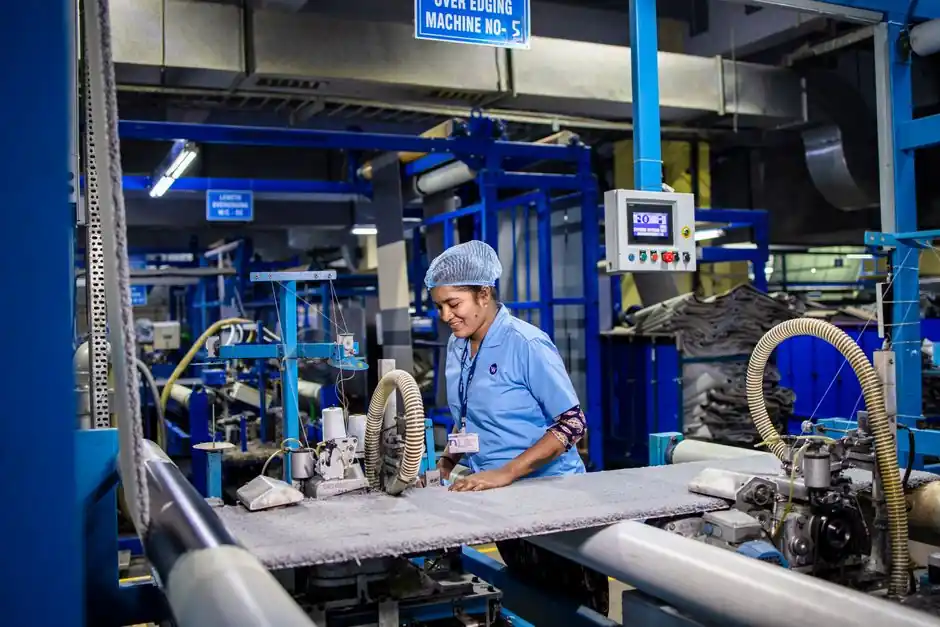
Pharmaceutical packaging lines serialize every saleable unit under the US Drug Supply Chain Security Act (DSCSA) and the EU Falsified Medicines Directive (EU FMD), so the conveyor that feeds printers, cameras and aggregation stations is a regulated asset, not a generic piece of material handling [S4][S5].
Integration scope covers print-and-verify stations, vision-based aggregation, reject handling, line controller software, and the WMS handover downstream, and any firmware or configuration change typically needs a documented validation cycle before it can run in production [S4]. Conveyor builders increasingly design around cleanable stainless frames, tool-free guides, and stable spacing so that the line keeps its DSCSA and EU FMD audit trail intact across format changes [S1][S2].
Scope and Regulatory Anchors
DSCSA and EU FMD require a unique identifier on every saleable unit, normally a GS1 2D Data Matrix encoding product code, serial number, batch and expiry, and a documented parent-child hierarchy from unit through carton, case and pallet [S4][S5]. The conveyor is the physical carrier of that hierarchy: if a unit wobbles, mis-orients, or arrives at the wrong pitch at the printer, the downstream vision station reads a grade-C code, the reject mechanism fires, and a good pack is scrapped.
Conveyability cites three failure modes that show up at the inspection station but originate two or three conveyors upstream: drifting pitch at the printer, false rejects from camera-side wobble, and cleaning or changeover windows that eat shift time [S1]. Span Tech builds its pharma line around accumulation, merging, dividing, incline, vertical conveying, deposit, reject and reclaim primitives, each chosen so that buffers can absorb upstream disturbances without breaking the chain of custody at the line controller [S2].
Selection Criteria: Mechanical, Vision, and Data
Three criteria separate a pharma-grade conveyor from a general packaging conveyor: (a) stable spacing and orientation past printers, cameras and checkweighers, (b) cleanable stainless or washdown-rated construction with tool-free guides, and (c) controls and documentation that survive a GMP validation audit [S1]. Spantech's accumulation, transfer and chain modules are sized to keep pitch error inside the vision system's field of view across the full line speed range, and modular chain formats such as 25mm supertight, 50mm pillow top, and closed-top chain are commonly selected when small cartons or vials are the unit being serialized [S2].
For data integrity, the line controller must package serialization events and forward them to the site and enterprise repository, with redundant storage and tamper-evident audit logs to handle both real-time regulatory reporting and after-the-fact audit queries [S4]. Pineberry's CartonTrac and Compact CartonTrac systems automate print, label, verify and handling of serialized cartons, including flat cartons, which is the typical level-2 aggregation step that the conveyor has to present at a known orientation and pitch [S3].
Comparison of Conveyor Subsystems for Serialization
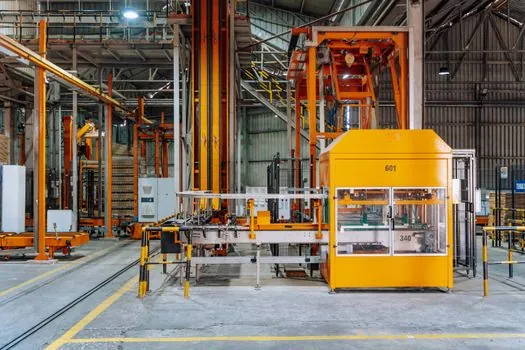
Four conveyor subsystem decisions drive line behaviour: chain type, accumulation method, reject routing, and transfer geometry. Side-by-side against four criteria (cleanability, pitch stability, changeover speed, validation burden), the picture looks like this: [S1]
Modular plastic chain (Microspan, Minilink, Monospan, Multispan) scores well on cleanability and tool-free changeover but needs careful tensioning to hold pitch at high speed [S2]. Flat-top or pillow-top chain gives a more positive product register at the printer and camera but exposes more surface area to product contact, which raises the cleanability burden [S2]. Zero-pressure accumulation absorbs upstream stoppages without back-pressure damage to serialized product, while minimum-pressure accumulation is simpler to validate but transfers a stoppage wave downstream [S2]. Reject routes need a dedicated lane that the line controller can flag and audit, because a pack that is physically removed but not digitally updated breaks the parent-child record [S4][S5].
Aggregation Stations and the Parent-Child Hierarchy
Vision-based aggregation stations scan units going into a carton and cartons going onto a pallet, building the parent-child data hierarchy in real time, so the conveyor at each merge and diverge point has to keep unit identity intact through the transition [S4]. Pineberry's CartonTrac and Compact CartonTrac platforms handle the print, label, verify and physical handling of serialized cartons, and they assume the upstream conveyor presents each unit at a known position and orientation with a verified readable code [S3].
OPTEL's Carton Station product, marketed as an all-in-one serialization station, targets the same level-1 to level-2 hand-off and is typically dropped into a packaging line between the cartoner and the case packer, which again pins the conveyor geometry around the station's expected pitch and trigger [S8]. The hard rule is that any unit that fails print-quality verification has to be rejected through a controlled lane that is recorded in the same event log as the print, otherwise a physical reject without a digital update creates an orphan in the aggregation tree [S4][S5].
Validation, Change Control, and the Cost of Modification
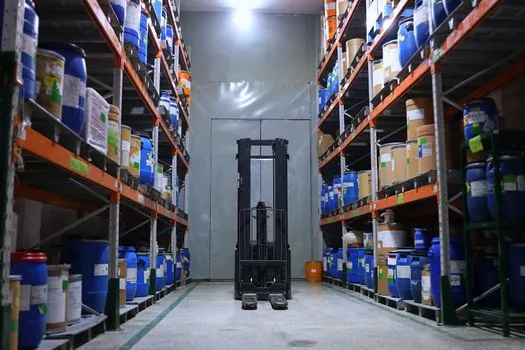
A serialization line sits inside a validated manufacturing environment governed by good manufacturing practice (GMP), and any software or hardware change, including a printer firmware update or an aggregation logic tweak, typically requires a documented validation cycle before going live, which is a primary reason pharmaceutical serialization projects run longer and cost more than a functionally similar labeling line in another industry [S4]. Conveyability makes the point bluntly: on a qualified line, every modification carries paperwork, so getting the mechanical and controls design right before qualification, and planning changes around the site's change control process, is the cheap path [S1].
Audit requirements push specific technical choices: redundant data storage, tamper-evident audit logs, and interfaces to track-and-trace networks that handle both real-time reporting and after-the-fact audit queries from health authorities investigating a suspected counterfeit or diversion incident [S4]. Facilities that treat serialization as a packaging-line-only concern, disconnected from warehouse operations, frequently discover gaps at the point of shipment where a serialized unit cannot be matched to its expected aggregation record, triggering a manual investigation that automation was supposed to prevent [S4].
Use Cases and Common Failure Modes
Typical integration use cases line up with the four levels of the packaging hierarchy: bottle and vial handling into a print-and-verify lane, blister and carton lines feeding a top-load cartoner, labeling and serialization at the unit carton, and case packing and palletizing at the end of line [S1][S7]. Each level has a characteristic failure: bottles tip on transition curves if the side guide is set for vials; blister cards skew on the merge into the cartoner if the upstream belt speed is not matched; cartons arrive at the camera with a tilted label that fails a grade-C threshold; cases are sealed before the aggregation scan registers, leaving the pallet scan unable to resolve the parent-child tree [S1][S4].
For the controls side, line controller software packages serialization event data and forwards it to the site-level and enterprise-level repository, and ultimately to the relevant government reporting system, with reject and rework handling for any unit that fails a print-quality check routed automatically to avoid an unreadable code reaching the market [S4]. Integration partners such as NCCA cover the full mechanical and controls scope, offering conveyor systems, fully integrated turnkey packaging lines, and the line-design work that ties the filler, labeler, vision, checkweigher and palletizer into one validated system [S7]. For a deeper look at how line-level OEE breaks down across module lines, see the module-line OEE benchmarks piece.
Limitations, Constraints, and What to Plan Around

Three constraints are non-negotiable on a serialization line: cleanable geometry that survives the site's washdown or wipe-down regime, pitch control tight enough to keep code readability in the vision system's acceptance band, and a controls architecture that supports both real-time event reporting and retrospective audit queries [S1][S4]. High-speed precision conveyor builds are explicitly marketed to support serialization, barcode scanning and product traceability systems that help manufacturers meet FDA and GMP requirements, and the mechanical scope is usually the easier part of the project compared to the validation and change control burden [S6].
For plants expanding an existing qualified line, the realistic planning window needs to include the validation paperwork, not just the mechanical install, and any new aggregation station or printer has to be commissioned under change control rather than as a plug-in upgrade. On the electrical side, packaging-line controls in a regulated environment tend to land in the same conversation as machine safety standards such as NFPA 79 and IEC 60204-1, covered in this comparison of NFPA 79 and IEC 60204-1 for machinery, because the line controller, E-stops and guarding guards all have to be re-validated when a new station is added. For a typical pharma or conveyor sorting line project, the next trackable signal is the line controller's ability to bind each serialized event to a reject lane event in the same audit log.
For component-level specifications, see molding line, and automatic molding line.