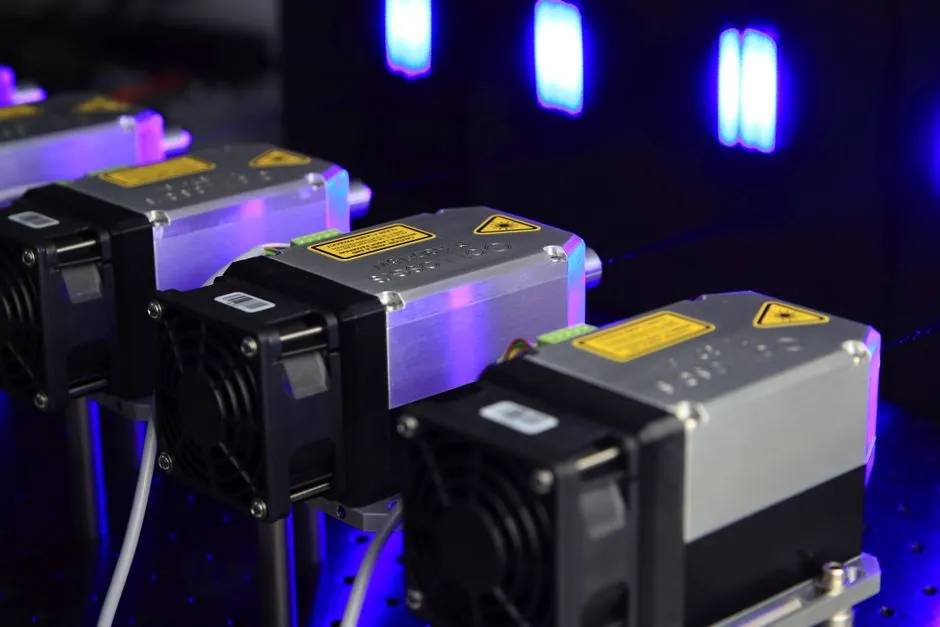
Photoelectric sensor TCO includes the initial purchase price as well as installation, calibration, maintenance, downtime, and replacement expenses [S2].
This framework applies to industrial photoelectric detection, including through-beam, retroreflective, and diffuse sensors used in automation, where installation method, application duty, and failure consequences determine the economically correct specification.
What belongs in a photoelectric sensor TCO
Photoelectric sensor TCO is the discounted or nominal cost of acquiring, installing, operating, maintaining, and retiring a sensor over its service life. The calculation includes direct costs and indirect costs incurred over ownership and use [S1][S2][S5].
The purchase price is only one line in the model. Sensor ownership also encompasses cabling, connectors, signal conditioning, mounting hardware, scheduled downtime, field service, and calibration equipment [S3]. A practical model should separate each cost into a fixed cost and a variable cost, attach a frequency to recurring items, and identify which costs disappear when a failed sensor is replaced quickly rather than removed for laboratory calibration [S2].
For industrial automation, an application-level photoelectric sensor comparison is more useful than a catalog-price comparison. It can connect optical performance, mounting method, output interface, environmental exposure, and service strategy to lifecycle cost.
Selection criteria that drive lifecycle cost
Four variables usually dominate photoelectric sensor TCO: installation effort, application match, serviceability, and failure exposure. Installation effort includes bracket fabrication, wiring length, connector selection, and the skill level required for commissioning.
Application match starts with the detection geometry. Through-beam systems separate transmitter and receiver and can suit high-contamination or long-range arrangements, while retroreflective systems reduce the number of installed components. Diffuse sensing simplifies installation but depends on target properties and background conditions. The appropriate limit switch may be superior where a rugged mechanical position signal is sufficient, while a photoelectric sensor is justified where non-contact object detection is required.
Serviceability affects both repair time and inventory. A permanently installed sensor that must be removed for recalibration can create longer downtime than a replaceable unit that can be exchanged with a ready-to-use spare [S2]. That difference affects technician labor, access equipment, production loss, and the number of standby units required.
Through-beam, retroreflective, and diffuse options

Through-beam, retroreflective, and diffuse photoelectric sensors should be compared across installed component count, installation effort, contamination tolerance, target requirements, and service impact. These criteria determine whether a lower sensor price survives the full ownership period. [S2]
Through-beam designs use separate emitter and receiver positions, increasing field wiring and mounting work but supporting controlled detection across the beam. Retroreflective designs combine the emitter and receiver in one housing and use a reflector at the target, reducing installed components while adding a reflector to the bill of materials. Diffuse designs usually require only one sensor position, but their performance depends more directly on target reflectance and ambient conditions.
The comparison should also include alignment. Through-beam and retroreflective arrangements demand optical alignment, while diffuse arrangements require an acceptable target contrast. Poor alignment can cause nuisance outputs, unplanned resets, diagnostics, and downtime. This makes commissioning time and repeatability relevant cost variables even when the sensor price difference is small.
Selection rules for detection mode, sensing distance, output type, and environmental fit are covered in Photoelectric Sensor Types and Selection Criteria. The TCO model should use those engineering choices as cost inputs rather than treating sensor type as a purchasing preference.
Installation and operating costs
Installation can shift from a modest labor charge to the dominant cost when a sensor requires special brackets, long cable runs, signal conditioners, or qualified commissioning labor. The sensor invoice may omit cable, connectors, mounting hardware, and signal-conditioning equipment, all of which belong in the acquisition budget [S3].
Commissioning should be costed by task rather than by sensor count. Include bracket fabrication, hole preparation, cable pulling, connector termination, target setup, sensitivity adjustment, electrical checks, and functional verification. If installation is performed during a planned machine shutdown, the labor cost may remain while the lost-production cost falls sharply.
Energy consumption is usually less material than downtime for a low-power photoelectric sensor, but it still belongs in a complete ownership model. An energy term should use the actual supply voltage and measured or specified current draw, including controller and indicator loads where applicable. Do not assign a wattage without the device datasheet, because the research material does not establish a universal figure for photoelectric sensors.
Calibration, drift, and maintenance
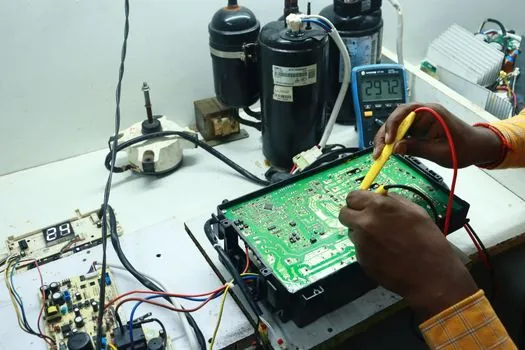
Calibration and maintenance must be modeled as application-specific events because sensor accuracy, drift, environmental exposure, and acceptable process tolerance determine the interval between adjustments [S2]. The research gives no universal calibration interval for photoelectric sensors, so a maintenance date copied from another device class is not a defensible input.
For a photoelectric sensor, check intensity margin, alignment, contamination on the emitter or receiver lens, target alignment, and ambient-light rejection. Weak excess signal increases sensitivity to dirt and vibration; excess signal can make a stable application appear unstable if operating characteristics are not matched correctly.
Sensor lifetime cost can exceed the purchase price, with initial purchase costs potentially below 20% of total lifetime costs [S3]. That range is a warning about incomplete models, not a promise that every installation reaches it. A defensible worksheet lists one calibration event, one cleaning event, and one replacement event with its own frequency and labor requirement, then tests whether the result changes when a spare is available.
Downtime, failures, and replacement strategy
Downtime should be calculated from the time required to detect the fault, replace or repair the sensor, restore the target and wiring, and restart or verify the process. The resulting hours multiplied by the applicable lost-production rate usually matters more than the replacement sensor price. [S2]
Unscheduled downtime can be substantial in factory automation and other capital-intensive applications [S3]. Three cost cases should be modeled: no spare, a local spare with a trained technician, and a vendor-supported exchange program. Each case needs a different replacement time, labor rate, shipping term, and production-loss rate.
Inventory policy belongs in the calculation. Carrying several spare sensors reduces recovery time but consumes capital, shelf life, and storage space. A replaceable sensor that can be swapped quickly supports a spare-stock strategy; a permanently installed probe that must be removed for service imposes a different downtime path [S2]. The proximity sensor alternative should also be checked where its sensing distance and environmental requirements meet the application.
Purchase price, certification, and total cost

The cost drivers for a photoelectric sensor are ranked as follows: application fit and failure exposure usually outweigh unit price; installation labor and engineered mounting follow; required approvals and environmental capability add acquisition cost; volume purchasing affects price; and production volume can distribute engineering and training costs over more units [S2][S4][S5].
Certification cost should be included only when the selected sensor or installation has a documented approval requirement. The research material contains no photoelectric-sensor-specific certificate prices, so assigning a numerical premium would create false precision. Compare certified and uncertified options only where the datasheet or project specification identifies the exact approval basis.
Lead time has two financial effects. It can delay commissioning, and a rushed installation can require premium freight or overtime labor. Volume discounts improve unit price but can increase carrying cost and obsolescence exposure. Purchase-price analysis should therefore report at least 1, 10, and 100-unit scenarios, with each scenario tied to a supplier lead-time band and inventory policy.
Who should buy by TCO and who should not
TCO analysis is for applications where sensor failure, calibration, mounting labor, or process interruption has a measurable cost. It is especially useful when comparing quote prices from different vendors, when replacing sensors across a machine fleet, or when deciding between integrated devices and components requiring external signal conditioning [S3][S4].
TCO is less valuable for a low-risk, single sensor with an established installation and negligible downtime exposure. In that case, a simple purchase comparison may be adequate. Even then, the worksheet should confirm that the device meets the optical, environmental, electrical, and mechanical requirements before ranking price.
The calculation is not valid for comparing a photoelectric sensor with a functionally different device without normalizing the required output. A mechanical limit switch, inductive proximity sensor, and optical sensor may have different detection distances, target materials, switching frequencies, and failure modes. Normalize the duty first, then compare lifecycle cost.
Building a defensible 10-year comparison
A defensible comparison uses a defined service period, installation labor rate, calibration frequency, replacement frequency, downtime hours, and lost-output value. A 10-year horizon is operationally useful, but it is an analysis assumption rather than a published sensor lifetime, and the worksheet must label it clearly. [S2]
Calculate each option as purchase price plus installation, recurring maintenance, energy, downtime, and retirement costs. Discount future cash flows when comparing alternatives with different payment timing, while preserving the total undiscounted burden for maintenance planning. Repeat the calculation with conservative, expected, and optimized maintenance cases to show which assumptions control the result.
The next control point is field evidence. Record installation hours, commissioning adjustments, cleaning frequency, replacement events, and restoration time for at least one operating cycle, then replace assumptions with measured values. Procurement can track unit price, installation hours, calibration hours, unplanned downtime minutes, and replacements per year as separate indicators rather than collapsing them into a single sensor failure rate.