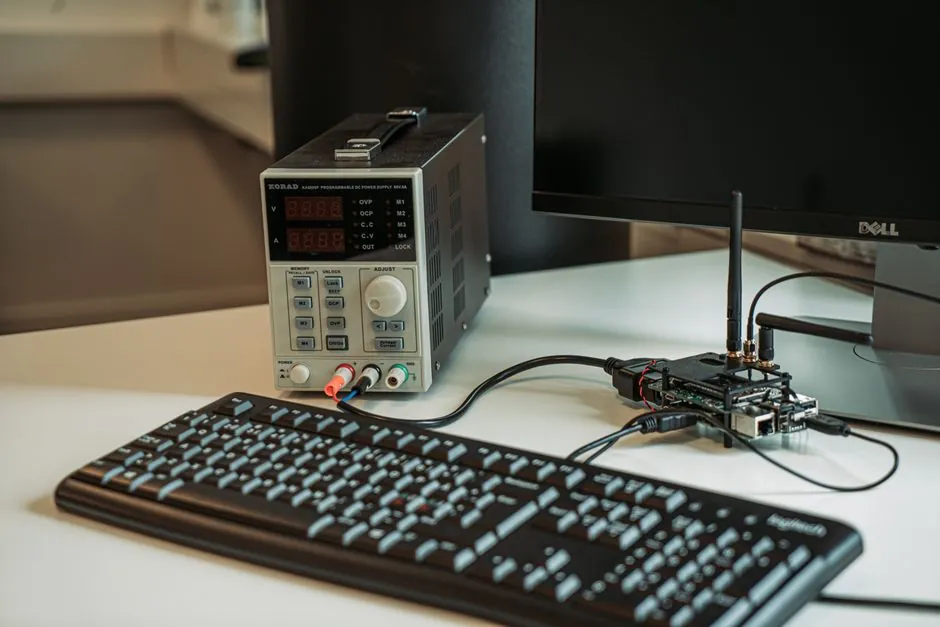
A fieldbus gateway TCO analysis should account for acquisition and operating costs, as well as costs related to replacement or upgrades at the end of the life cycle [S2][S3].
The model applies to plant migrations, brownfield retrofits and greenfield installations connecting fieldbus instruments to supervisory or industrial Ethernet systems [S5].
What Fieldbus Gateway TCO Includes
Total cost of ownership is the sum of current and future capital and operating expenses associated with an asset across its lifecycle [S3][S8]. For a fieldbus gateway, the scope begins with hardware and software acquisition and extends through deployment, operation, maintenance, replacement or upgrades [S2][S4].
Hardware quotations establish fixed capital expenditure, or CapEx, while the same outlay may be booked as fixed operating expenditure, or OpEx [S2]. Neither label changes the economic burden: the comparison should use the same accounting boundary and evaluation period for every gateway proposal [S2][S3].
Cost Drivers That Move Gateway Spending
Gateway price is only one input because TCO includes acquisition and operating costs as well as costs related to replacement or upgrades at the end of the life cycle [S2].
Fieldbus overhead includes gateways and network infrastructure, while hardwired I/O carries different material, labour and installation costs [S5].
Lead time belongs in the model as an economic consequence of project scheduling and inventory policy. The TCO estimate should therefore distinguish equipment price from schedule exposure rather than hiding both in one installation line [S3][S8].
Gateway Options Compared by Decision Criteria

The comparison should separate gateway architecture from its downstream network. If the supervisory path uses Ethernet and the field side uses a legacy serial or fieldbus interface, the gateway is a protocol boundary rather than a general-purpose router.
Who Should Use the Gateway TCO Model
The model is for engineering, procurement, maintenance and operations teams responsible for a gateway fleet, especially where fieldbus devices must connect to industrial Ethernet or control platforms [S5]. TCO supports budgeting and planning, asset lifecycle management, vehicle selection, vendor selection and lease-versus-buy decisions [S4].
It is also poorly suited to procurement that compares unverified gateway quotations while excluding downtime, software, labour or spares, because the resulting ranking can change materially when full lifecycle costs are added [S2][S8].
The model must include the people who install, commission, operate and replace the gateway.
Operating Cost, Downtime and Maintenance

End-of-life replacement or upgrade is also part of ownership, not a separate budget request [S2][S3][S4].
Downtime should be quantified through the gateway's actual failure boundary. The engineering team must define whether an outage stops only data collection, one control island, a production line or a wider process area, then attach the relevant consequence to the gateway investment. The June 2026 fieldbus comparison treats gateway and network overhead as part of the fieldbus cost structure, confirming that network equipment cannot be evaluated as an isolated commodity [S5].
Energy consumption belongs in the operating calculation, but it should not be overstated relative to installation and outage risk without measured load data. For most projects, the larger maintenance issue is restoring the complete configuration: gateway image or firmware, protocol settings, tags, network addresses, user access and diagnostic history [S2]. Standardized configuration and a documented spare strategy can reduce restoration effort and simplify replacement [S3].
Procurement Method and Evidence Standard
A defensible gateway TCO uses vendor quotations for acquisition and fixed operating items, then adds site-specific values for deployment, training, scale-out, downtime, software licensing and management [S2]. The Chaffey model reviews technology and equipment requests, applies a $50,000 purchase threshold to its formal technical review and tracks hardware, software, end-user expense and labour through the equipment lifecycle (2023-08) [S3].
That example is not a fieldbus-gateway price point. It demonstrates an audit method: define a threshold appropriate to the organisation, require comparable evidence, and evaluate replacement or upgrade needs during the lifecycle [S3]. The June 2026 fieldbus cost comparison is the most directly applicable evidence for separating fieldbus gateway and network overhead from hardwired installation costs [S5].
Each cost line should carry an owner, quantity, unit, source, currency, tax treatment, commissioning date and expected service period. Include a scenario for the replacement or upgrade date and document the sensitivity of the result to downtime, protocol mix, software charges and labour rates [S2][S4]. For Ethernet-based architectures, the EtherCAT gateway boundary must also reflect the cycle characteristics and topology of the specific installation rather than a generic fieldbus allowance.
Five-Year TCO Work Sheet
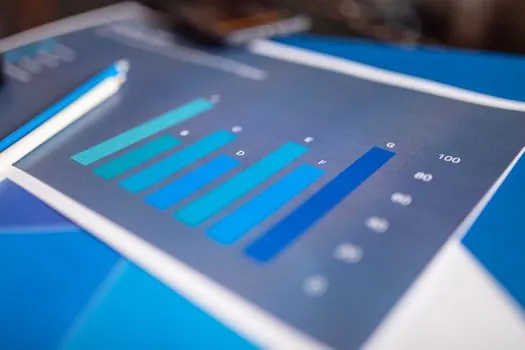
A five-year work sheet can be organized into six lines: acquisition, deployment, operation, risk, lifecycle and disposal. Acquisition covers the gateway, interfaces, mounting, power and quoted software. Deployment covers engineering, wiring or media, commissioning, training and acceptance testing [S2][S5].
Operation covers support, management, licensing, energy, spares and maintenance labour. Risk covers expected downtime and the financial consequence of that downtime. Lifecycle covers refresh, migration, replacement and configuration transfer. Disposal covers removal, data handling and any residual value or recycling credit [S3][S4].
The decision should be based on present total cost over the same period, with quantity tiers, certification requirements, lead time and installed infrastructure shown as separate drivers. A gateway that requires less commissioning labour but carries a longer lead time may still be economical if it avoids rework; the analysis must expose that trade rather than hiding it inside an averaged installation rate. The same method can be applied to adjacent network assets, as shown in the industrial Ethernet switch TCO lifecycle analysis.
For a procurement decision, the next trackable evidence is a completed site worksheet with 3 gateway price quotes, 1 installation labour estimate, 1 software and support schedule, 1 downtime consequence estimate and 1 five-year replacement assumption. A gateway recommendation is defensible only when these 5 evidence sets support the selected lifecycle total.