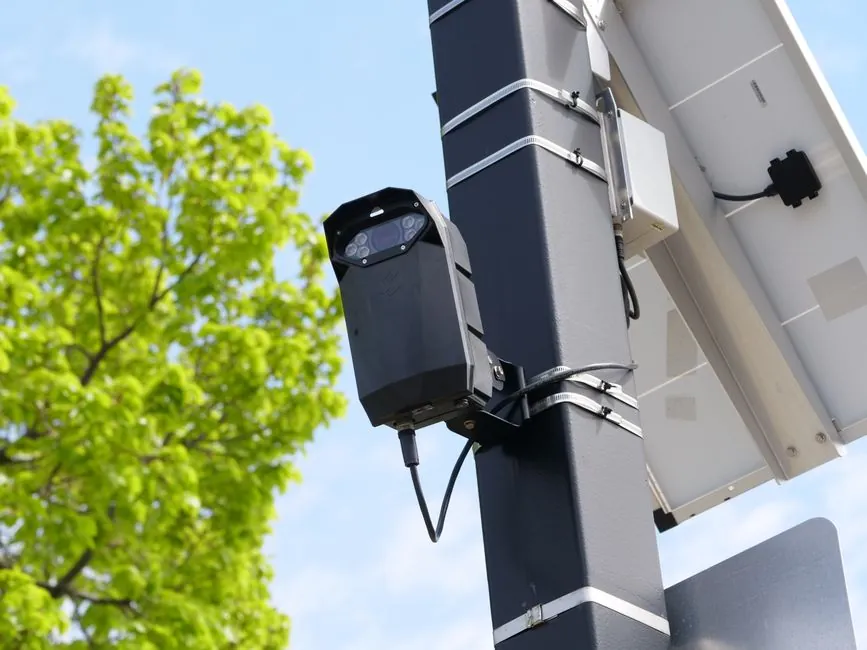
Capacitive sensor total cost of ownership extends well beyond the purchase price, with installation, calibration, maintenance, downtime, and replacement determining the lifecycle result [S9].
The analysis applies to capacitive level, position, liquid-presence, and fuel probes, where dielectric sensitivity, non-contact construction, environmental fit, and signal stability change the cost balance [S1][S2][S5].
Total cost of ownership for a capacitive sensor includes the initial acquisition price plus installation, calibration, maintenance, downtime, and replacement expenses [S9]. A procurement comparison that stops at the invoice therefore misses the costs most likely to differ between a low-cost sensor and a lower-maintenance system.
A capacitance level sensor uses a probe and an electrical circuit to detect changes caused by the dielectric properties of liquids, powders, slurries, or granular materials [S1]. Its basic measurement relationship is C = eA/d, where C is capacitance, e is permittivity, A is electrode area, and d is separation [S8]. That physical relationship explains why target dielectric properties, electrode geometry, and stand-off distance belong in the engineering cost model rather than being treated as installation details.
The model should therefore separate four cost blocks: purchased hardware, commissioning labor, operating expense, and end-of-life expense. For a capacitive sensor, each block should include the sensor and transmitter, mounting and wiring, startup verification, periodic inspection, cleaning or recalibration, spares, failure exposure, and replacement.
Cost Drivers That Move the Purchase Price
Capacitive sensor price is driven by measurement range, sensing principle, housing, electrical output, accuracy requirements, environmental protection, and production volume; these variables determine the electronics, materials, and engineering effort required [S3].
Sensor construction can add cost where the process requires isolation from a corrosive, toxic, or high-temperature liquid, or measurement of a hazardous-area application [S1][S4]. Protected coatings, sealed electrodes, high-temperature construction, and pressure-resistant housings increase material and assembly requirements, but they may reduce corrosion, contamination, and replacement exposure [S1][S4].
Volume tier has a direct commercial effect because tooling, setup, certification, and engineering support are spread across more units at higher production quantities [S3]. These figures come from touch displays rather than industrial probes, but they show why feature gaps should be costed rather than accepted by default.
Level, Leak, Position, and Fuel Probe Comparisons

Capacitive probes have no single cost ranking across applications: a capacitance level sensor can handle liquids, slurries, powders, and granular materials [S1], while a capacitive position sensor provides non-contact measurement but has less configuration flexibility and a higher acquisition cost for active systems [S6]. The [S5] excerpt reports that fleets implementing optimal sensor technology achieve 95% measurement accuracy, an 85% reduction in fuel theft, annual savings of $65,000–$185,000 per 50 vehicles, and a 60% decrease in sensor-related maintenance costs through capacitive-versus-ultrasonic fuel sensor deployment.
This comparison shows why the lowest unit price is not a sufficient selection rule. The relevant test is lifecycle cost per verified function under the specified medium, temperature, contamination level, and mounting arrangement.
Installation, Calibration, and Maintenance Economics
Non-contact capacitive sensing can reduce installation and maintenance exposure by keeping the sensing element away from liquids, particularly when the liquid is corrosive, toxic, dirty, or hot [S2][S4]. A sealed capacitive leak sensor can therefore avoid direct electrode wetting, while a resistive sensor with exposed conductors can suffer corrosion in salt water or corrosive liquids [S2][S4].
That claim must be translated into a site-specific schedule: the owner should price routine calibration checks, residue inspection, electrode or probe cleaning, and replacement spares over the planned operating life.
These are fleet-specific figures, not universal industrial level-sensor specifications, but they demonstrate the variables that belong in a TCO spreadsheet: labor hours, calibration visits, service intervals, and replacement year.
The fiber-optic sensor is a useful boundary case when intrinsic safety, high temperature, or electrically passive detection governs the comparison. Neither technology should be selected from purchase price alone because the correct alternative depends on whether the process risk is dominated by dielectric measurement, combustible atmospheres, wiring, temperature, contamination, or maintenance access.
Use Cases and Failure Modes
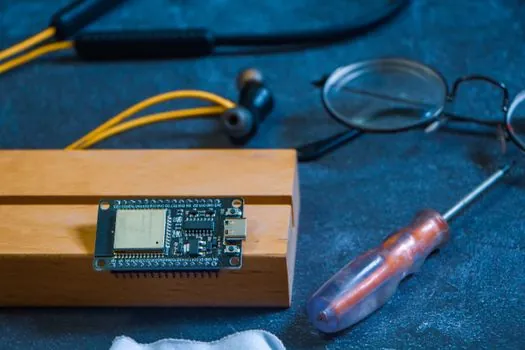
Capacitive sensing fits liquid, powder, granular, and slurry level measurement where the material produces a usable dielectric change [S1]. It also supports water-presence and fill-level detection for water, oil, and paint, including sealed containers, without requiring direct physical contact [S2]. Non-contact capacitive probes are particularly relevant where corrosion resistance, contamination tolerance, or hygiene is important [S4].
The principal limitation is application mismatch rather than a universal sensor failure. Resistive sensors depend on electrical conductivity and therefore perform poorly with pure water or low-conductivity liquids, while capacitive sensors are not constrained by that conductivity requirement [S2][S4]. Capacitive level measurement can still be degraded by coating, bridging, dielectric changes, or probe geometry that weakens the original calibration relationship [S1][S8].
Temperature, humidity, condensation, contamination, and unstable calibration are monitoring risks because they can degrade signal reliability or trigger false maintenance [S2][S4]. A robust TCO model assigns a measurable consequence to each event: technician call-out, process interruption, product loss, inspection labor, or spare replacement. The owner should avoid assigning a zero downtime cost to a continuously operating vessel or vehicle.
Quantifying Downtime and Total Lifecycle Value
Heavy-duty fuel applications illustrate the scale of operating exposure: sensor technology selection can affect measurement accuracy by as much as 40% and annual cost variation by $45,000–$125,000 per 50-vehicle fleet [S5]. The same material also reports 5–15% measurement errors for unsuitable selections, 45% of monitoring breakdowns attributed to environmental vulnerabilities, and a 60% reduction in sensor-related maintenance after optimized deployment [S5].
Those fleet figures should not be transferred directly to a process plant, but they support a defensible TCO equation: annualized purchase cost, installation labor, calibration labor, preventive maintenance, corrective maintenance, energy or signal-system consumption, downtime loss, and replacement cost. Total ownership then equals the sum of all costs over the selected evaluation period, divided by the number of operating hours or measurement points when comparing alternatives on a normalized basis.
The inductive sensor is often the benchmark for robust metallic-target position sensing, while capacitive sensing wins when the target can produce a dielectric response or when contact must be avoided. The comparison should include the transducer, cable, controller, power, commissioning access, protective housing, and replacement labor rather than comparing only two sensor-head prices.
Procurement Checklist for a Defensible TCO Decision

A valid comparison starts with 5 primary operating criteria: measurement accuracy, allowable dielectric range, maximum temperature, ingress or chemical exposure, and required output protocol. The model then adds 5 lifecycle cost items: installation hours, calibration frequency, preventive-maintenance visits, expected downtime per failure, and replacement life [S1][S5][S9].
For the acceptance test, request a written lifetime cost from each supplier and reconcile it against the site’s labor rate, outage cost, and maintenance calendar. The commercial case should retain a higher-cost capacitive probe when its non-contact construction, corrosion resistance, reduced recalibration, or lower downtime burden is supported by application-specific evidence [S1][S2][S4].
Track 3 post-installation signals: calibration drift, failed or false leak or level indications, and hours required for cleaning, inspection, or replacement [S5][S9]. If actual maintenance exceeds the model or diagnostics generate repeated nuisance alarms, revise the installation or media condition before accepting the calculated TCO.
The next procurement checkpoint is a like-for-like trial using the actual medium, temperature range, electrode geometry, mounting arrangement, and controller. That test converts a nominal capacitive sensor price into an auditable lifecycle cost based on measured labor, calibration behavior, failure exposure, and operating availability.