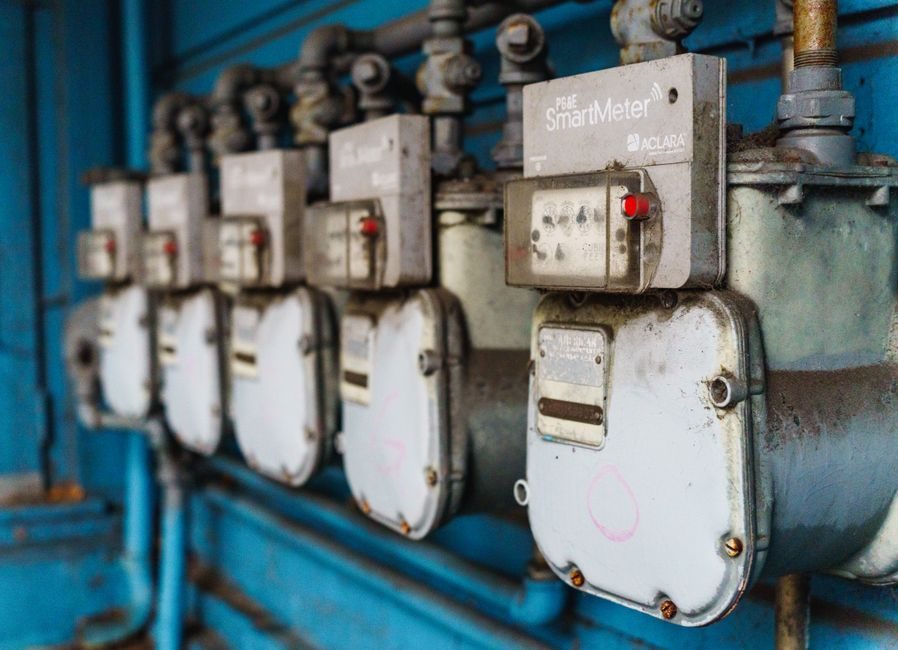
Photoionization detectors (PIDs) are UV-lamp-driven gas sensors that ionize molecules whose ionization potential falls below the lamp photon energy, typically using 9.5 eV, 10.6 eV, or 11.7 eV lamps to produce a current proportional to VOC concentration [S2][S3].
General gas detectors describe the broader instrument family — electrochemical cells for toxic gases, catalytic-bead / pellistor heads for combustibles, NDIR benches for CO2 and refrigerants, plus the PID as one sensing technology among many [S1][S4].
Operating Principle: UV Photon Ionization vs Electrochemical / Catalytic / NDIR
A PID sensor ionizes gas molecules using high-energy ultraviolet light: photons strike the sample between parallel electrodes, eject electrons, and the resulting ion current is measured as a proxy for concentration [S2]. The technique is non-destructive at low energy and is broadly sensitive to aromatic and chlorinated VOCs, but blind to molecules with ionization potentials above the lamp rating [S2][S3].
By contrast, an electrochemical cell relies on a redox reaction at a working electrode, with the resulting current scaled to ppm of the target toxic gas; a catalytic-bead sensor oxidizes combustible gas on a heated catalyst and reads the resulting Wheatstone-bridge imbalance; NDIR uses a tuned infrared source and a dual-detector optical bench [S1]. These four technologies are not interchangeable: a portable gas detector deployed for benzene at the 100 ppb action level is a different instrument than one sized for LEL methane.
Sensitivity Range and Detection Limit Comparison
PIDs commonly resolve VOCs in the 1 ppb–10,000 ppm range, with the low end enabled by 11.7 eV lamps and well-designed ion chambers [S2]. The same research notes that PID sensors are valued for “low concentrations,” making them the bench tool for TWA-grade occupational hygiene, fence-line monitoring, and indoor-air-quality work [S2].
Electrochemical toxic-gas sensors typically span 0.1 ppm–5,000 ppm and degrade in cross-sensitivity as the target list grows; combustible-gas LEL sensors are scaled 0–100% LEL; NDIR CO2 sensors commonly sit at 0–5,000 ppm or 0–5% vol [S1]. A useful rule: pick a PID when the analyte set is dominated by VOCs and the action level is sub-ppm; pick an electrochemical or NDIR sensor when the target is a single, named toxic or IR-active gas with a published TLV.
Target Analytes: What Each Detector Class Sees and Misses
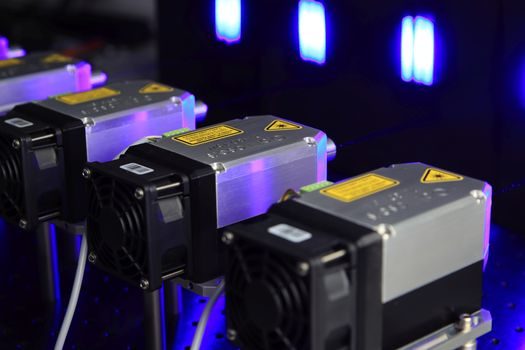
PID responds to VOCs and a few inorganics with ionization potentials under the lamp energy — benzene, toluene, xylene, styrene, vinyl chloride, and many chlorinated solvents are classic hits — but methane, CO, CO2, H2S, and HCl generally need a different sensing principle [S2][S3]. The GrayWolf WolfPack TVOC platform pairs a multi-probe PID with electrochemical sensors, listing NO, H2S, Cl2, CO, and 18 specific electrochemical channels in a single hand-held housing to cover both VOC and toxic-gas envelopes in walk-through surveys [S1].
For a toxic gas detector requirement, the engineering decision is not PID vs gas detector but rather: which sensor technology inside the detector matches the analyte. An H2S-only specification should run an electrochemical cell, not a PID; a benzene-only specification should run a PID, not a generic LEL meter. Mixing the two is a common spec error that produces either false alarms or silent misses.
Deployment Form Factor: Hand-Held Multi-Gas vs Single-Purpose Bench
The WolfPack TVOC is a hand-held, three-probe, six-sensor-each platform that simultaneously reports TVOCs, CO2, %RH, °C/°F, particulates, differential pressure, barometric pressure, and air velocity when paired with add-on probes — 21 parameters total via Windows Mobile / Windows 7 host [S1]. That is the multi-gas walk-through pattern, where a single technician sweeps a room and gets an integrated exposure map.
Single-purpose bench PIDs, by contrast, are sized for laboratory GC detection of biogenic VOCs and trace atmospheric species, where sensitivity and selectivity dominate over ergonomics [S5][S6]. Specifiers should match the form factor to the use case: hand-held multi-gas for industrial hygiene walk-downs; bench / rack PIDs for GC or REA (relaxed eddy accumulation) work in atmospheric research [S6]. A multi gas detector that mixes PID with electrochemical and NDIR channels is often the lowest-friction path for confined-space entry where unknowns span VOC, H2S, CO, and O2.
Decision Matrix: Choose PID When the Analyte Is VOC, Choose Gas Detector Otherwise

Across four selection criteria the split is clean. (1) Analyte: PID for VOC mixtures and unknown organics, gas detector for named toxics, combustibles, O2, CO2. (2) Detection limit: PID wins below 1 ppm for most VOCs; electrochemical wins for named H2S, CO, Cl2 at OSHA / NIOSH action levels [S1][S2]. (3) Selectivity: PID is broad-spectrum by design and is often paired with a separation stage (GC) for speciation, while a single-gas electrochemical sensor is highly selective but narrow [S2][S6]. (4) Cost and lifetime: PID lamps carry a finite service life and need periodic cleaning; electrochemical cells typically run 2–3 years and cost less per channel — a known trade-off in the broader gas detector ecosystem.
The matrix points to one operational rule: where the unknown gas is a VOC, default to a PID; where the unknown gas is a known toxic or combustible, default to an electrochemical / catalytic / NDIR detector; where the unknown spans both, combine a PID with an electrochemical gas detector in a multi-sensor head rather than forcing one technology to do both jobs. Cross-reference selection depth in Electrochemical Gas Detector Selection: Range, Cross-Sensitivity, and Sensor-Life and the lamp-physics companion piece Photoionization Detector Types, Lamp Energies, and Industrial Sourcing Map.
Standards, Calibration, and Known Failure Modes
PID readings drift with humidity because water ionization quenches the sample signal, and a 10.6 eV lamp cannot see methane (IP ≈ 12.6 eV) — these two constraints govern real-world PID deployments [S2][S3]. Calibration gas for PIDs is typically isobutylene at a documented ppm level, with response factors published for the target analytes; field technicians apply a correction factor when reporting benzene or trichloroethylene concentrations to stay comparable with lab GC results [S2].
Electrochemical cells drift on temperature and pressure, lose sensitivity to interferents (e.g., H2S cross-talk on a CO sensor), and are poisoned by silicone vapors; catalytic-bead heads lose response when the catalyst is poisoned by lead, phosphorus, or silicone; NDIR benches fail in condensing or dusty optics without filters [S1]. Whichever technology is specified, the calibration interval, bump-test cadence, and sensor-replacement budget should be written into the procurement spec, not left to the field crew — a point reinforced by industrial-hygiene practice and the Fisher Scientific PID/FID category guidance [S4].
Closing node: specifiers should treat PID and general gas detectors as complementary rather than competing — verify lamp energy matches the highest-IP analyte, request a documented response factor for the target VOC, and reserve at least 20% of the procurement budget for annual calibration gas and consumables. Watchlist signals: PID lamp-life data sheets in the 9.5/10.6/11.7 eV classes, multi-sensor hand-helds pairing PID with 18-electrode electrochemical blocks, and NIOSH / OSHA documentation updates for VOC action levels.