
Pipe fitting selection is driven by six concrete spec gates: working pressure class, base material and hardness, connection style, size range, thread/standard, and the medium's corrosion duty, all of which appear as filterable parameters on active 2026-08 manufacturer listings from QXM, HD-STEEL, and Viratra Metal [S1][S3][S2].
A fitting that passes the pressure gate can still fail at the thread/standard gate: NPT, BSP (BS), DIN, and ANSI threads are not interchangeable, and an NPT male into a BSP female will seat shallow and leak under thermal cycling, which is why each of those three vendors publishes the supported thread standard in line with the part's working-pressure rating (1.6 MPa for malleable iron, 2.4 MPa for SCH 40 steel nipples) [S1][S3].
Pressure Class and Test Pressure
Working pressure and hydrostatic test pressure are the first numbers a buyer cross-checks, because a fitting's rated working pressure is set well below its burst test value to leave a safety margin against surge and temperature de-rating. QXM's malleable iron lateral Y-branch (model NO.165) is published with a working pressure of 1.6 MPa and a test pressure of 2.4 MPa, a 1.5x safety band typical of BS-thread galvanized malleable iron [S1].
For the same vendor's SCH 40 steel pipe nipples (NIPPLE model, BS thread, galvanized or black finish), the published working pressure is 2.4 MPa with a 1/2″ to 6″ size range, and the part is rated to convey water, oil, and air under that envelope [S1]. HD-STEEL's carbon-steel butt-weld line covers higher-pressure process piping, and that product family is the de-rated step up once the service crosses the malleable iron ceiling [S3].
The practical rule: malleable iron threaded fittings are routinely specified up to 1.6 MPa at ambient temperature for water, gas, and oil; carbon steel butt-weld fittings take over from roughly 2.4 MPa upward, and the temperature derating curve from ASME B16.3 / B16.9 must be applied on top of those room-temperature values when the line runs hot. A reading of pipe fitting categories confirms the four manufacturing families (butt-weld with or without seam, socket-weld and threaded, and flanged) all carry their own pressure-temperature envelope.
Material, Hardness, and Tensile Strength
Material selection is the second gate, and the published hardness and tensile numbers are what separate a malleable iron utility fitting from a forged carbon-steel process fitting. QXM's American-standard cast iron line specifies hardness ≤HB180 and tensile strength ≥330 N/mm², paired with a galvanized or black surface and ISO 9001 + BV + TUV certification [S1].
Malleable iron is made by heat-treating white cast iron so that the brittle cementite decomposes into ferrite plus temper graphite rosettes, which raises ductility and lets the part absorb the torque of being screwed onto a steel pipe without cracking. That is why utility-side water, gas, and air lines below 1.6 MPa are dominated by malleable iron fittings rather than cast iron, and why the same factory publishes a separate heavy-band malleable line for oil-and-gas service [S1].
For process and chemical service, the jump is to carbon steel, alloy steel, and stainless steel butt-weld and forged fittings, the three material families Viratra Metal Industries in Mumbai lists as its manufacturing core, with seamless / ERW stainless pipe as the upstream supply [S2]. Buyers running sour service (NACE MR0175), chloride-bearing process streams, or temperatures above the malleable iron ceiling should step up to stainless or alloy and verify the foundry's PMI (positive material identification) and EN 10204 3.1 mill certification before release.
Connection Type and Thread Standard
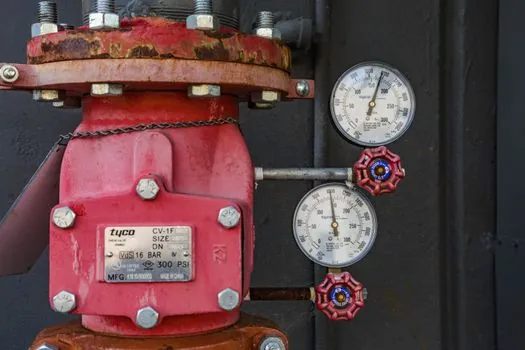
Connection style is the third gate and the one most often mis-specified, because a fitting's connection determines both the pressure ceiling and the tooling required. The four industrial families are butt-weld (with or without seam), socket-weld and threaded, flanged, and the proprietary push-fit / grooved / quick-coupling variants; piping fitting inventory typically splits along those exact lines [S4].
Threaded malleable iron is the workhorse for utility lines, with NPT, BSP (BS), and DIN threads as the three dominant flavors, and QXM's lateral Y-branch lists "Threads standard: NPT, BS" as a published filter while the SCH 40 nipple line lists "standard: BS" only [S1]. Buyers specifying an ANSI B16.4 malleable iron fitting must confirm the thread is NPT (ANSI/ASME B1.20.1) and not BSP, or the seat will not seal at full pressure.
Butt-weld and socket-weld fittings, by contrast, eliminate the thread entirely and are welded directly to the pipe, which is why they take over at higher pressure and temperature and why HD-STEEL positions its carbon-steel butt-weld line as the process-side complement to malleable iron utility fittings [S3]. For instrumentation and small-bore lines, the pneumatic fitting family adds push-to-connect and compression variants that change the disassembly and reuse logic entirely.
Size Range and Manufacturing Form
Size range is the fourth gate and is more constrained in malleable iron than in steel. QXM's malleable iron line is published from 1/8″ to 6″, with the lateral Y-branch narrower at 1/2″ to 1″ because the geometry of a Y-branch is impractical to cast much above DN25 in malleable form [S1]. SCH 40 steel nipples cover 1/2″ to 6″ at the same factory, and HD-STEEL's butt-weld range extends that envelope further into larger DN [S1][S3].
The size gate also interacts with the manufacturing form: small-bore (≤2″) is dominated by threaded malleable iron and forged steel; mid-bore (2″ to 6″) transitions to butt-weld steel; large-bore (>6″) is essentially all butt-weld or flanged steel because casting a sound malleable iron body that size becomes uneconomical. Elbows, reducers, tees, and crosses in the malleable family are typically 90° and 45° standard angles, with the reducing variants published as a separate model number and a smaller pressure envelope than the equal-body version.
Buyers running plastic pipe systems must leave the malleable iron and carbon steel catalogs entirely and step into PE, PP, or PVC-specific fittings, where the connection logic is heat fusion (butt fusion, electrofusion, socket fusion) or solvent cement rather than threading, and the pressure class is set by SDR (standard dimension ratio) rather than by a SCH or class number.
Medium, Corrosion Duty, and Surface Treatment
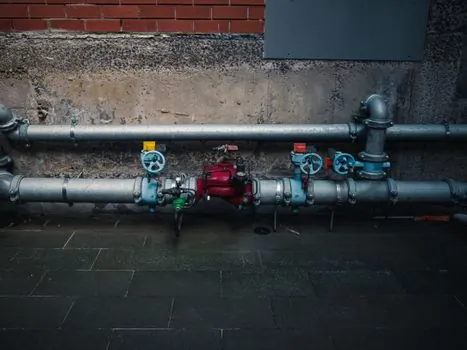
The fifth gate is the medium and its corrosion profile, which drives the surface treatment and the base material. QXM's malleable iron line ships galvanized or black (uncoated), with the galvanized variant specified for water and the black variant for oil and gas where a zinc reaction with the medium is undesirable [S1]. For stainless steel process lines, the choice is between 304/304L for general chemical service and 316/316L for chloride-bearing service, with the L-grade specified when the line goes to welding to avoid sensitization.
Malleable iron and carbon steel will both corrode in wet, chloride-rich, or acidic service, so the practical fallback is either a galvanized or epoxy-coated malleable iron, a lined carbon steel fitting, or a full step up to stainless or alloy. The QXM product library explicitly lists carbon steel pipe fittings alongside a "Lining Plastic" family, which is the in-house answer to corrosion on otherwise steel-bodied fittings [S1].
For pure water and HVAC duty, the working envelope is mild enough that galvanized malleable iron is the cost-optimized default; for chemical, petrochemical, marine, and pharmaceutical service, stainless or alloy is the correct gate. Buyers should also check the pipe clamp and support spec separately, because the support spacing and material interact with the fitting material to set the full system life.
Certification, Standards, and Documentation
The sixth gate is certification and traceability, and it is the one auditors check first. QXM publishes ISO 9001, BV, and (on the American standard line) TUV certification with each malleable iron and steel nipple, and the SCH 40 nipple line is explicitly built to BS thread standard with a 2.4 MPa pressure rating and galvanized/black finish as published filterable options [S1]. HD-STEEL's documentation layer covers the same ISO-family quality system plus material certificates for its butt-weld carbon steel line [S3].
For sour service (H₂S-bearing oil and gas), the relevant material standard is NACE MR0175 / ISO 15156, which restricts hardness, microstructure, and chemistry of exposed metal; buyers should not accept a generic ISO 9001 certificate in place of a NACE-compliant 3.1 mill certificate. For fire-protection service, the gate is UL 213 or FM approval depending on the authority having jurisdiction; for potable water, the gate is typically NSF/ANSI 61 or an equivalent local drinking-water approval on the wetted surface.
The published reference also notes that the standard system covers a multi-axis taxonomy: by use (connection, direction change, diameter change, branch addition, sealing, support), by connection (weld, thread, compression, clamp), by material, and by forming process, which is why a single pipe fitting order line should be cross-checked against all four axes before release [S4].
Selection Logic: Matching Duty to Fitting Family
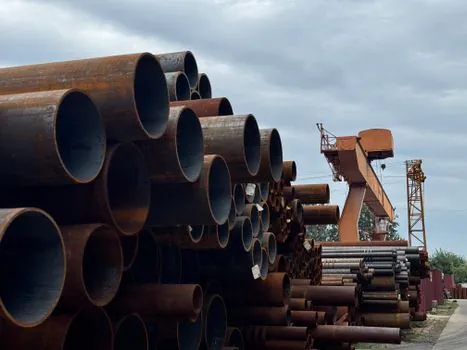
The decision tree collapses cleanly once the six gates are run in order. For utility water, air, and low-pressure gas below 1.6 MPa at ambient temperature, galvanized malleable iron threaded fittings (NPT or BSP) in the 1/8″ to 6″ range are the cost-default and are the bulk of QXM's catalog. For oil and gas distribution at the same pressure class, the same vendor publishes a banded black malleable iron variant with the same 1.6 MPa / 2.4 MPa test pressure envelope [S1].
For process and chemical service at 2.4 MPa and above, or at elevated temperature, the choice is carbon steel, alloy steel, or stainless steel butt-weld fittings (HD-STEEL's line, or Viratra's alloy/carbon/stainless families) with the thread/standard gate replaced by a weld-procedure and PMI gate. Buyers who need a step up in corrosion resistance without leaving the steel family can specify a plastic-lined carbon steel fitting, which keeps the pressure body in steel and isolates the wetted surface in PE/PP/PVDF.
Buyers running plastic pipe (PE, PP, PVC) for water, gas, or chemical service should not try to thread-match into a malleable iron catalog at all, because the pressure class, joining method (heat fusion or solvent), and support logic are different; the correct cross-reference is the plastic pipe and PE-specific fitting family, with SDR controlling the pressure class instead of a SCH or class number. Buyers who have already locked the upstream pipe to a stainless steel line and now need to choose how the fitting is made can read the stainless steel pipe selection map for the parallel material logic on the pipe side, and the pneumatic tubing spec map if the line is small-bore instrument air rather than process.
The shortlist logic for a release-ready order line is: confirm working pressure ≤ vendor's published 1.6 MPa (malleable) or 2.4 MPa (SCH 40 steel nipple) at the design temperature, confirm the thread standard matches the mating pipe (NPT, BS, or DIN), confirm size falls in 1/8″ to 6″ for malleable and the larger DN range for butt-weld steel, confirm material certificate (ISO 9001 minimum, NACE MR0175 for sour, NSF/ANSI 61 for potable), and confirm surface treatment (galvanized for water, black for oil/gas, lined or stainless for corrosive media). Anything that fails one of those six gates should be re-specified before PO release.