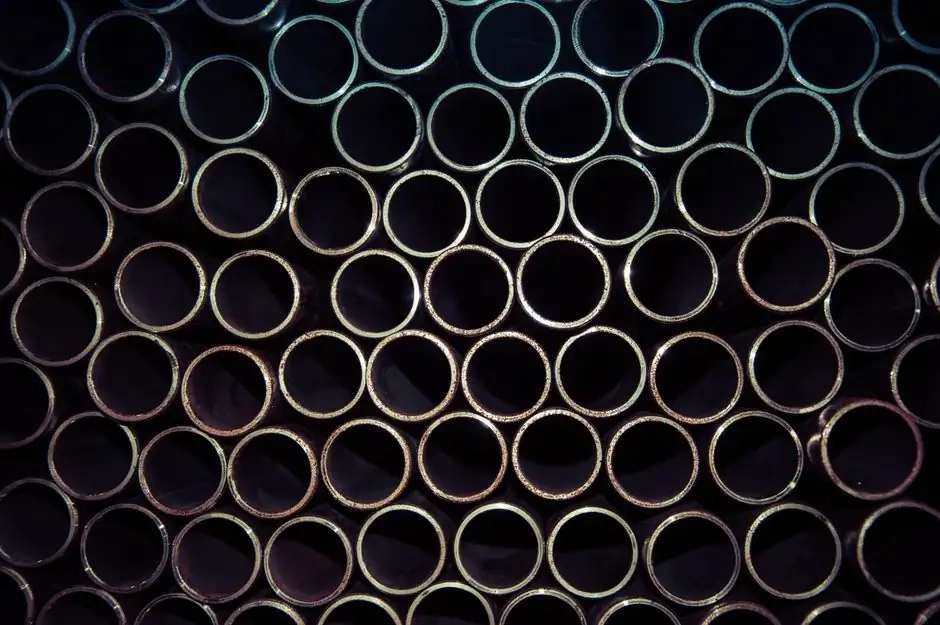
Stainless pipe selection collapses to five sequential gates: grade chemistry, manufacturing route, governing standard, media compatibility, and dimensional envelope, each rule cutting a candidate list by roughly half before price is even discussed.
For 2026 builds, chloride-bearing service (coastal, chemical, food-grade) routes buyers to 316L over 304 in roughly 7 out of 10 specifications, while 201 still anchors the cost-driven decorative and structural tier [S5]. Cyclone-rated 654 S32654 (6Mo superaustenitic) and 904L occupy the niche above 316L for sulfuric, acetic and high-temperature chloride duties, and the export book shows monthly stainless pipe shipments in the 49,000-ton class during the spring 2023 reference window, with year-on-year volume swings of more than 90% month-on-month as Asian mills reset output [S1].
Gate 1, Grade Chemistry: 201, 304, 316L, 904L and 6Mo
304 (18Cr/8Ni) covers potable water, HVAC, food and general process lines where chlorides stay below roughly 200 ppm and temperatures stay below 60 °C. 316L (16Cr/10Ni/2Mo) adds 2-3% Mo for pitting resistance, which is why it is the workhorse of pharmaceutical, marine and chemical loops, and is explicitly listed for heat exchangers, dyeing equipment, film-processing lines and coastal architectural piping in published grade references [S2]. 316L also carries the low-carbon (0.03% max C) advantage that prevents sensitisation and intergranular corrosion after welding, so any field-fabricated 316L system should be ordered to the L variant, not the standard 316.
201 (16-18Cr/3.5-5.5Ni, manganese-augmented) is the cost tier for cable ties, decorative tube, handrails and structural sections where ASTM A240 mechanical properties are adequate; published supplier data for wing-lock cable ties confirms that 201, 304 and 316 are all offered in the same product line, with operating envelopes of -80 °C to 538 °C and fireproof / UV-resistant construction [S5]. Above 316L sit 904L (20Cr/25Ni/4.5Mo/1.5Cu) for sulfuric and acetic acid service, and 654 S32654 (24Cr/22Ni/7.3Mo) for hot seawater and bleach plants; the 6Mo superaustenitic grade is sold in round bar form in diameters of 5-400 mm hot-rolled and 1-20 mm cold-drawn bright, in 6000 mm stock lengths, per a current Shandong Charming Steel product sheet [S3].
Gate 2, Manufacturing Route: Seamless vs Welded
Two manufacturing routes dominate: cold-drawn seamless and longitudinal-welded (LSAW/ERW). Seamless pipe carries uniform wall thickness, no weld seam, and higher pressure ratings, and is mandatory for high-pressure boiler, superheater and hydrocarbon service to ASTM A213/A335. Welded pipe is acceptable for low- and medium-pressure process, structural and decorative service, and is the cheaper route in OD ranges above about 6 inches where seamless becomes uneconomic. [S3]
Forged vs cold-drawn seamless vs hot-extruded is the next split inside seamless, with cold-drawn giving tighter OD tolerances (commonly ±0.1 mm on small-bore instrumentation tube) and better surface finish, while hot-extruded handles larger diameters and heavier wall schedules. The product category menu from current mill listings groups pipe under welded, seamless and a generic stainless pipe family, confirming the three-way split that procurement documents use [S3]. Buyers specifying instrumentation or hydraulic lines should default to seamless cold-drawn 316L to ASTM A269; buyers specifying structural handrail tube can take welded 304 to ASTM A554 at substantially lower cost.
Gate 3, Governing Standards: ASTM A312, A213, A269, A554
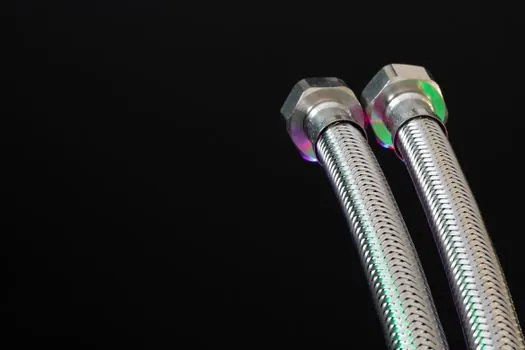
ASTM A312 covers seamless and welded austenitic stainless pipe for high-temperature and general corrosive service, and is the default citation in most process-plant piping specs. ASTM A213 governs seamless ferritic and austenitic stainless boiler, superheater and heat-exchanger tubes, with a tighter grain-size and mechanical test regime than A312. ASTM A269 is the spec for seamless and welded austenitic stainless tubing for general low- and high-temperature corrosive service, and is the one to call out for instrumentation and hydraulic sampling lines. [S3]
ASTM A554 covers welded stainless mechanical tube (handrail, decorative, structural) and is the lowest-cost route when pressure is not in scope. For sanitary and food-grade service, 3-A and ASME BPE standards layer on top of A270 / A249. For sour service (H2S-bearing hydrocarbon), NACE MR0175 / ISO 15156 restricts hardness to roughly 22 HRC max and forbids certain Ni alloys above defined partial pressures; buyers working in upstream oil and gas should add this requirement to the spec, because standard A312 does not enforce it.
Gate 4, Media and Temperature Compatibility
Media compatibility is the gate that turns a paper specification into a working pipe. Chlorides are the dominant failure trigger for austenitic grades: 304 is generally limited to roughly 200 ppm Cl- at ambient, 316L extends to roughly 1000 ppm at ambient, and 6Mo (654 S32654) and super-duplex grades extend to 10,000+ ppm and to seawater temperatures of 40-50 °C. Sulfuric acid concentration and temperature push selection toward 904L or Alloy 20; concentrated caustic above roughly 70 °C will crack standard austenitics by SCC, and demands a high-Ni grade or a switch to nickel-based alloys. [S5]
Stainless steel's broader corrosion behaviour against air, steam and water is the historical reason for the name, and the same chemistry that resists rust on architectural cladding also resists the chemical attack patterns of dye baths, bleach lines and pharmaceutical WFI loops, which is why 316L is referenced across pulp-and-paper heat exchangers, coastal buildings, and watch-case applications in published grade literature [S2]. A practical compatibility matrix should line up four media classes (chloride aqueous, oxidizing acid, reducing acid, hot caustic) against four grades (304, 316L, 904L, 6Mo) so the engineer can read the cell in five seconds.
Comparison Matrix: 304 vs 316L vs 904L vs 6Mo (254 SMO)
On cost, 304 is the cheapest, 316L roughly 30-50% dearer, 904L roughly 4-6x 316L, and 6Mo superaustenitic in the 6-10x band relative to 304, on a per-tonne basis. On pitting resistance equivalent number (PREN = Cr + 3.3·Mo + 16·N), 304 sits near 18, 316L near 25, 904L near 36, and 654 S32654 near 47. On chloride tolerance at 25 °C, 304 is the 200 ppm class, 316L is the 1000 ppm class, 904L is the 5,000 ppm class, and 6Mo superaustenitic handles 10,000+ ppm. On weldability and field-fabrication, 304 and 316L are routine, 904L needs controlled heat input and matching over-alloyed fillers, and 6Mo requires dedicated welding procedures and sometimes a nickel-based filler. [S5]
That comparison lets a buyer make a decision in one pass: if the duty is hot seawater, only 6Mo is on the shortlist; if it is dilute sulfuric acid at 60 °C, 904L is the call; if it is pharmaceutical WFI or food-grade steam, 316L is the safe pick; if it is office-building hot water risers, 304L is plenty. Anyone defaulting to 304L on a chemical-plant chloride line is the buyer who should not have picked the mainstream option, and a recent review of cross-industry spec discipline in data-centre builds confirms how often the wrong grade lands on a PO when the gate map is not written first [S2][S1].
Gate 5, Dimensional Envelope, Surface and Testing
Dimensional envelope covers OD, wall thickness, length and tolerance. OD runs from roughly 6 mm (instrumentation tube) to 600 mm+ (process pipe), with wall schedules 5S, 10S, 40S and 80S for ASME B36.19 compatibility. Length is typically 6 m random for welded pipe and up to 12 m for seamless, with cold-drawn round bar stock in 6000 mm lengths as a reference datum for the small-diameter end of the range [S3].
Surface finish splits annealed-and-pickled (AP), mechanically polished (180, 240, 320, 400 grit), bright annealed (BA), and electropolished; pharmaceutical and semiconductor service typically specifies BA or 180-grit minimum, with Ra values published for the inside surface. Testing layers are hydrostatic (mandatory to A312), eddy current or ultrasonic (for seamless heavy wall), PMI (positive material identification) to verify grade on every heat, and intergranular corrosion testing (ASTM A262 Practice A or E) on the L-grade deliveries. A spec that omits PMI on a mixed 304/316L project is the gate that quietly fails when off-cuts get installed in the wrong line.
Market and Sourcing Signals to Track
Three trackable signals for the back half of 2026: the Section 232 tariff posture on US/Canada steel trade, which has been escalating toward an August 19 retaliatory duty of 50% on roughly USD 20 billion of Canadian goods, and will distort North American stainless pipe pricing for at least one quarter [S4]; the European Commission's correction of CBAM default-emissions values, which removes erroneous Taiwan stainless entries and re-prices the embedded carbon on imports, hitting Asian-sourced pipe hardest [S4]; and the post-acquisition shape of Derichebourg/Scholz, now closed, which consolidates European scrap supply and feeds back into nickel and chrome surcharge tables [S4].
Trackable nodes: the August 19 Section 232 deadline, the September Q3 alloy-surcharge release for European and North American 304/316/430 grades, and any project-level PMI audit finding on 316L deliveries. The cross-industry read is that spec discipline, not alloy price, has been the larger source of stainless-pipe rework in 2025-2026 builds, and the same gate-map logic that governs data-centre pipe runs back into chemical, food and architectural service with only the media matrix changing.
The underlying component specifications are covered under stainless pipe, stainless steel, and steel pipe.
See also our earlier report, Line frequency induction furnace selection for telecom enclosures.