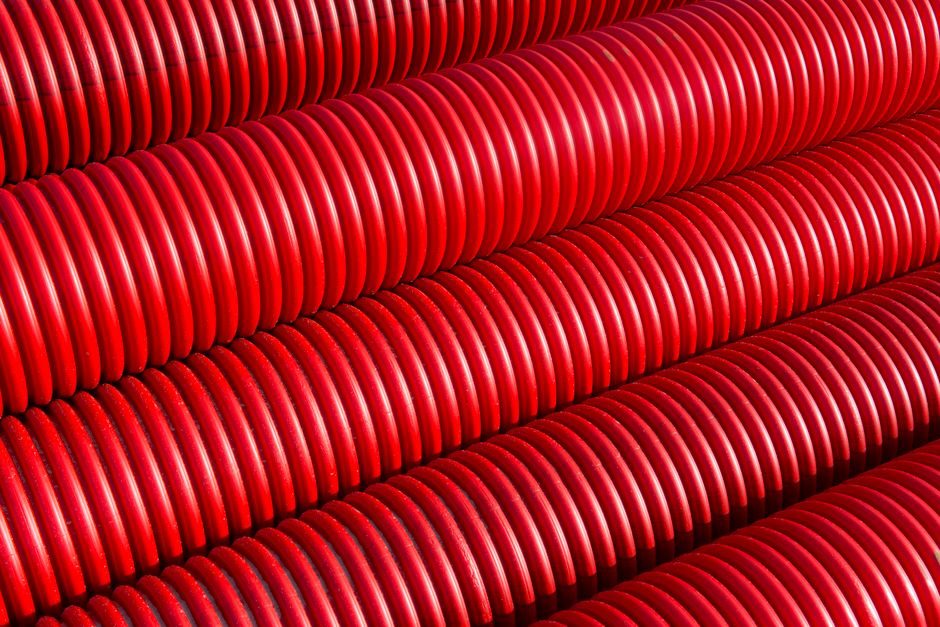
A plastic extrusion profile is specified by four binding variables — base resin, screw configuration, die architecture and post-extrusion tolerance — and skipping any one of them is the single most common reason a custom profile fails its first OEM trial [S1][S2].
Custom-extrusion houses routinely quote one week of tooling for a simple single-material shape and four to six weeks for a co-extruded or WPC profile, while standard catalog dies from established extruders can ship in days for sealing strip, U-channel and rectangular duct geometries [S1][S2][S4].
Resin-to-Process Mapping: PVC, PE, PP, ABS and WPC
Resin selection drives every downstream variable, and Five material families cover roughly nine out of ten industrial profile quotes a sourcing engineer will see in 2026 [S1][S2][S5].
PVC dominates rigid window, door and WPC-wood profile lines because of its low melt viscosity and self-extinguishing behaviour, with the SJYF180 profile line capping out at 80 mm profile width on a 15 kW auxiliary draw and 5 m³/h cooling-water consumption [S2][S6]. PE — typically HDPE — is the default for ducting, core tubes and outdoor profiles, while flexible PP is specified where living-hinge behaviour or repeated flexing is required, as shown in the flexible PP extrusion profile category carried by established custom extruders [S1]. ABS sits in the higher-temperature decorative trim niche, and WPC (wood-plastic composite) blends PVC or PE with wood fibre for door boards, foam sheets and wood-effect profiles, each of which has its own dedicated extrusion line on modern factory floors [S2].
For buyers comparing plastic profiles against metal alternatives, the cost-per-kilogram and machining-energy delta versus aluminum extrusions usually tips the decision below 80 °C continuous service — beyond that, aluminum's thermal stability starts to dominate the life-cycle math.
Single vs Twin-Screw, and Co-Extrusion Architecture
Single-screw extruders are sized for pelletized feedstock and applications needing limited intensive mixing, while twin-screw extruders handle powdered feedstock and any compound where dispersion quality controls the end-property — and this single choice sets the upstream material handling spec [S2].
Single-material profiles run through one extruder into a central die; multi-material profiles — for example a rigid PVC core with a flexible TPE or PVC cap — require more than one extruder feeding a single common die, with output rates from a few pounds per hour on lab lines to several thousand pounds per hour on production profile lines [S2]. Standard profile extrusion line cooling-water consumption sits in the 3–6 m³/h band, with compressed-air supply for vacuum calibrators at 0.6 MPa, the same envelope called out on the SJYF180 specification sheet [S6]. When a profile needs colour or UV-cap stock layered on a cheaper substrate, dual-extruder co-extrusion is the route; the cap layer typically runs 0.5–1.5 mm of the total wall to stay process-stable [S2].
Profile Geometry, Tolerance and Die Cost
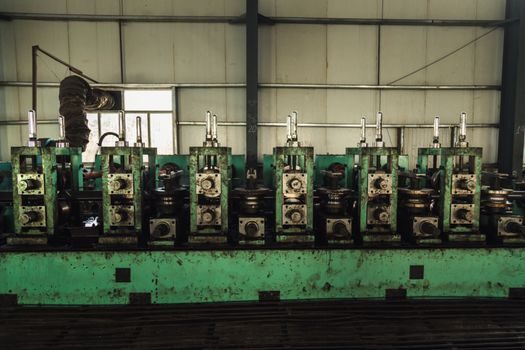
Tolerance on commercial plastic profiles is rarely tighter than ±0.2 mm on small catalog dies and softens to ±0.5 mm on long WPC or foam profiles — a band worth checking against any drawing stamped to metal tolerances [S1][S2].
Closed hollow profiles need a die with a mandrel and vacuum or pressure calibration tank; open profiles (U-channel, T-section, flat strip) need only a plate die and a short calibration/sizing sleeve, which is why they are the typical first articles on any new extrusion program [S1][S2]. Custom tooling is where lead time lives: a simple open-section die can be sampled in 7–10 days at suppliers running in-house design teams, whereas a multi-cavity or co-extrusion die lands in the 4–6 week range and dominates the NRE line on any new product introduction [S1]. Standard shapes — U-channel plastic extrusion profile, flexible PP extrusion profile, twin-row medical-grade hose, half-round pipe cover and rectangular air-flow duct — are kept in continuous production by catalog extruders, which collapses both tooling cost and prototype lead time to near zero for repeat orders [S1].
Buyers weighing whether to bring a profile in-house or contract it out should remember that extrusion tooling is only one of three cost lines; the second is downstream CNC machining, where the supplier's engineering plastic stock-shapes program can either shorten the supply chain or quietly double unit cost if tolerances are pushed into metal-like territory.
Application Segments: Construction, Sealing, Medical, Industrial
Plastic extrusion profiles are not a single market — they split into at least four spec regimes with different testing and documentation requirements [S1][S3][S4][S5].
Construction and architecture use rigid PVC, WPC and cellular PVC profiles for window/door frame, ceiling, wall plate and decking, and these lines run on dedicated PVC WPC profile extrusion lines with calibrator tables, haul-off and cutting saws built into a continuous line [S2]. Sealing and perimeter applications — gaskets, edge trim, refrigerator door seals — drive the soft-PVC and TPE/PVC flexible extrusion category, an application space that established custom profile houses have been running since the 1970s and that today covers automotive, white-goods and architectural curtain-wall interfaces [S4][S5]. Medical and food-contact profiles are typically built from USP Class VI or FDA-cleared compounds with lot-traceable documentation; twin-row medical-and-food-grade hose is one of the standard products on catalog custom-extrusion lines [S1]. Industrial and material-handling profiles — corner guards, cable duct, plastic pallet deck-board edge profiles, conveyor guide rails — tend to use HDPE or PP for impact resistance and chemical compatibility, and suppliers with both extrusion and injection molding under one roof tend to win this work because the end assemblies mix both processes [S1][S3].
The shape-versus-material trap is real: a buyer who specs a profile geometry from a catalog drawing, then expects the same shape in a higher-temperature resin, will often find that the new resin's shrinkage, draft and melt-strength require die re-cut, not just a resin swap [S2].
Surface Finish, Secondary Operations and Assembly
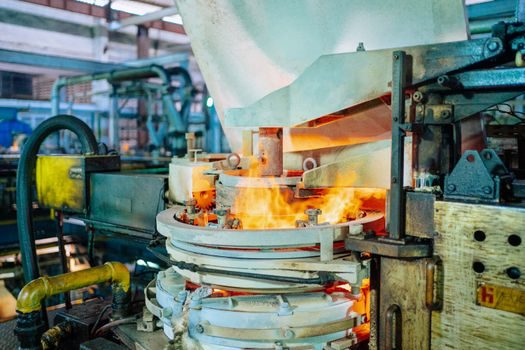
Surface finish on a plastic profile is set in the die and the calibration tank, not sanded in afterwards, so any downstream finish spec belongs in the tooling brief from day one [S3][S4].
Inline operations available on a typical profile line include embossing, printing, hot-stamping, corona treatment, and in-line cutting or coiling; offline secondary operations cover CNC machining, drilling, adhesive-bonding, ultrasonic or hot-plate welding, and corner-key assembly [S3]. CNC machining of plastic profiles is generally done at higher feed rates than aluminum — typically 2× to 4× the spindle rpm and feed per tooth on soft plastics — but requires dust extraction and sharp single-flute tooling to avoid gumming, which is why vertically integrated suppliers running both plastic extrusion and engineering plastic stock-shapes machining tend to quote tighter all-in lead times on small-batch assemblies [S3]. Powder coating, anodizing and most metal-style decorative finishes are not applicable to plastic; the equivalent surface specification on a plastic profile is a cap-layer co-extrusion, an in-line embossed texture, or a post-applied paint or film laminate [S3].
Quality, Certification and Sourcing Signals
Documentation is the cleanest proxy for supplier maturity on a custom plastic profile, and a credible custom extruder should be able to deliver four document types on request [S1][S3].
Look for material certifications to recognised schemes — SGS, RoHS, REACH, MSDS — plus a documented raw-material sourcing trail so a resin change can be traced lot-by-lot; several large custom-extrusion shops list these schemes as standard offering options rather than premium add-ons [S1]. Process capability is typically reported as profile-width tolerance in mm and straightness in mm/m, with tighter numbers on catalog lines and looser on long custom profiles. The strongest sourcing signal in 2026 is a single supplier that owns the die, the extrusion line, the finishing cell and the assembly bench, because the alternative — a buyer coordinating die-maker, extruder, finisher and CNC shop — is the most common cause of tolerance stack-up on a multi-supplier profile program [S3]. For high-volume or safety-critical applications, request a 1-year workmanship warranty in writing and a documented sample-approval gate before mass production; both are routine on established custom-extrusion programs and absent on most trading-company intermediaries [S1].
The next trackable signal is tooling lead time on the first PO: a credible custom extruder will commit to a sample-approval date in writing, not a verbal range, and that date is the cleanest leading indicator of whether a profile program will land its OEM SOP.
For component-level specifications, see linear guide.