
Industrial 6000-series aluminum extrusion stock from Chinese factories was listed at US $3.00–$3.80/kg at a 300 kg minimum order quantity on Made-in-China on 2026-07-09, with the entry-level 200 kg MOQ threshold available at Apextrusion for the same alloy family [S3][S4].
The aluminum-alloy profile is the dominant shape stock for B2B specifiers, with Shanghai Metal's cylinder extrusion explicitly offered in 6061, 6063, 6060, and 6082 tempers T5–T6, mill finish or anodized, as of the 2026-07-03 product listing [S5].
What Drives the Per-Kilogram Price
Per-kilogram quotes for aluminum alloy extrusion sit on a stacked-cost model: billet cost (Al ingot plus alloying elements), die cost (one-off tooling), run cost (energy, labor, press depreciation), and finishing cost [S3][S4].
Chinese vendors flag a structural advantage — Apextrusion states "up to 10% lower raw material costs" driven by bulk ingot order volume, supported by a fleet of 12 extrusion presses rated 500 to 5,000 tons and a 50,000-ton annual capacity [S3]. Shanghai Metal operates the same 6000-series family (6061/6063/6060/6082) under T5 and T6 tempers with mill finish and anodized surface as catalogued options [S5].
Tooling is a separate non-recurring engineering charge on most quotes; it is amortized into piece price on long runs. Apextrusion's 24-hour quotation turnaround and "200 kg MOQ" is engineered for low-quantity prototyping where the per-kg extrusion cost itself matters less than the die cost [S3].
Alloy, Temper, and Finish — Selection Criteria
Alloy 6063 is the architectural default, 6061 is the structural default, and 6082 is the European structural default — each behaves differently under anodizing, welding, and post-machining, and the choice drives price more than press tonnage [S5].
Shanghai Metal catalogs 6063/6061/6082/6060 in T5 and T6 temper with mill finish or anodized surface as standard SKUs, which lines up with the aluminum veneer panel supply chain for architectural façades that require anodized 6063 T5 [S5].
A side-by-side comparison against three decision criteria — typical application, surface readiness, machinability:
• 6063 T5: architectural and window/door profiles, anodizing-ready, low machinability rating. [S5]<br>• 6061 T6: structural, transport, and high-load industrial, mill finish common, higher machinability rating. [S5]<br>• 6082 T6: European-spec structural, weld-friendly, anodizing possible, premium per-kg in the 6000-series family. [S5]
Press Tonnage, Shape Complexity, and Tolerance
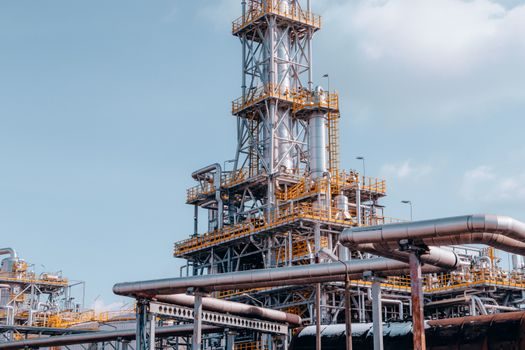
Press tonnage governs both the maximum circumscribed circle of a profile and the achievable dimensional tolerance; Apextrusion's 12 presses span 500 to 5,000 tons, and Jingtai Machinery — a Chinese press builder founded in 1995 — manufactures the production line equipment that delivers those tonnages [S3][S6].
Higher tonnage (2,500–5,000 tons) is required for wide architectural and transport profiles; sub-1,000-ton presses cover heat-sink and small industrial stock. Tolerance is a function of die design and press stiffness, not press size alone — a 5,000-ton press on a poorly machined die will not hold tighter tolerance than a 1,000-ton press on a precision die [S3].
For B2B specifiers evaluating extrudability, the aluminum extrusion selection logic breaks down how alloy family, press size, and tolerance interact when the profile is non-symmetric or thin-walled.
Where China-Warehouse Stock Wins, Where It Doesn't
Chinese mills win on three metrics: lowest MOQ (200–300 kg), fastest 24-hour quote turnaround, and 10% lower raw-material cost on bulk ingot; they lose on shipping lead-time to North America and on engineering support for sub-tolerance failures [S3][S4].
Apextrusion's 24-hour quote loop and integrated Swiss finishing line (anodizing, electrophoresis, wood-grain) compress the time from drawing to finished part for small-to-medium North American importers, which is a counter-argument to the lead-time penalty when freight is consolidated [S3].
EXTRUM, a North American extruder with nearly a decade of operations, positions itself as the domestic alternative for buyers who need shorter transit, tighter PPAP-level quality, and on-shore engineering — typical reasons North American OEMs pay a premium over the Made-in-China $3.00–$3.80/kg baseline [S2][S4].
Hidden Cost Categories That Move the Invoice
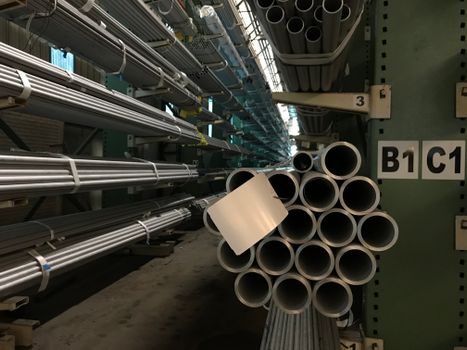
Three line items move a per-kg quote more than press rate changes: CNC machining, anodizing/powder-coat, and packaging/kitting, all of which Apextrusion explicitly lists as in-house services and which scale with part complexity rather than alloy cost [S3].
A reference price benchmark: the Made-in-China listing shows a heat-sink or industrial custom extrusion at US $3.00–$3.80/kg with 300 kg MOQ — but that figure is for mill-finish stock; anodizing adds roughly 10–20% to the unit cost on 6063, and CNC machining on a milled enclosure can exceed the extrusion material cost itself [S4].
For enclosures, machine frames, and ladder components that reuse 6000-series stock, the aluminum window and door supply chain shares the same 6063 T5 temper and anodized finish specifications, which keeps finishing cost down when sourcing from architectural-system mills [S5].
Standards, Certification, and Decarbonization
Apextrusion cites compliance to ISO and EN standards for its Chinese-mill output, and the Aluminum Extruders Council — the North American trade body — promotes ET Seminar technical content and the 2026 Buyers' Guide as the primary sourcing references for specifiers, with the next ET Seminar targeted for 2027 [S1][S3].
Buyers who must certify material to EN 12020 (European architectural tolerance) or EN 755 (mechanical property) should confirm mill certification at RFQ stage, since catalog quotes from Chinese portals rarely specify the EN sub-class — a quote at $3.00/kg is not the same product as a $3.00/kg profile certified to EN 12020-2 [S3][S4].
Quoting Logic for B2B Specifiers
A defensible RFQ for custom extrusion should specify alloy (e.g. 6063-T5), profile drawing with tolerance, annual volume, finish (mill, anodized, powder-coat), secondary ops (drilling, CNC, welding), packaging, and required mill certs — Apextrusion's 24-hour quote loop is built around this exact RFQ data set [S3].
Rule of thumb: under 1 ton per SKU, the die cost dominates; 1–10 tons, finishing and packaging dominate; over 10 tons per SKU on a stable die, the alloy cost itself is the moving variable — the $3.00–$3.80/kg baseline is the third-tier number on a multi-ton run, not a prototype quote [S3][S4].
The next verifiable node is the ET Seminar in 2027, where AEC technical sessions will likely publish revised 2026/2027 cost benchmarks, and Chinese mills will continue to release Q3 2026 capacity updates through 12-press, 50,000-ton lines of the type Apextrusion operates [S1][S3].