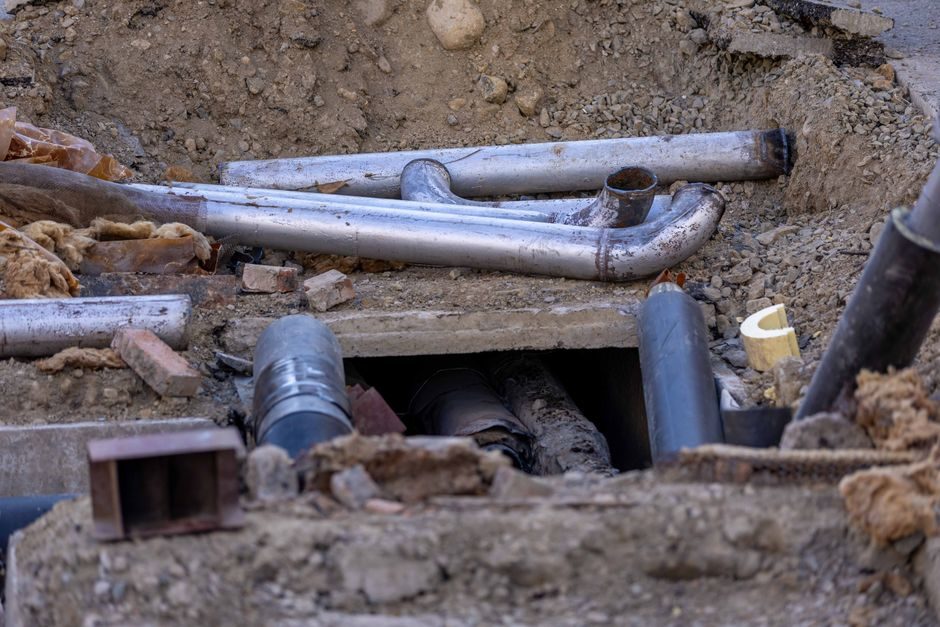
Plastic pipe joint failures and flame arrester element seating failures are routinely diagnosed in parallel on the same skid: a chemical feed line in CPVC or PEX couples into a vessel fitted with an in-line deflagration arrester, and a leak at either interface is a process-safety event. Independent failure-analysis work published 2026-07-18 catalogues CPVC, PVC, and PEX as the three plastic systems most often involved in joint-leak root-cause investigations [S3]. Biaopu Plastic Additives (Jiangsu) Co., Ltd. — established 2012, registered capital RMB 8 million, headquartered in Xinbei District, Changzhou — supplies SAN-type acrylic processing aids and phosphorus-nitrogen/silicon flame-retardant synergists that allow 0.5–1.0 part Sb2O3 substitution while maintaining UL94 V-0/V-1 ratings, a data point that frames how compounders hit both pipe and arrester-housing flammability targets [S1]. Yuhuan Xushi Plastic Industry Co., Ltd. (Zhejiang, account registered 2012) ships PVC valves, bibcocks, and fittings into the same industrial-equipment channel that buys arresters, which is why the joint spec must be written once, not per vendor [S2].
For a working definition, see plastic pipe for the polymer systems covered below, and flame arrester for the deflagration-element hardware referenced throughout. Both topics also intersect with engineering plastic selection where UHMW-PE and glass-reinforced grades enter the discussion as wear or chemical-resistance upgrades over commodity PVC.
CPVC Joint Failure Modes — Where the Leak Actually Starts
CPVC piping is not chemically compatible with many esters and amines, and joint failures are routinely traced to incidental contact rather than to the carrier fluid [S3]. Documented incompatible exposures include hand lotion, fire caulk, electrical wire insulation, computer network cables, solder flux, spray foam insulation, impure glycerin antifreeze, and pipe-thread sealant paste; certain steel-pipe transitions have also been confirmed to leach incompatible chemicals into the CPVC — the firm names Allied ABF steel pipe as one such incompatibility it first identified [S3].
On the joining method side, CPVC solvent-cement joints fail when the cement is below the specification's minimum viscosity or the cure time is shortened in cold weather; threaded transitions fail when thread sealant is applied to the wrong side of the joint or when a non-CPVC-compatible paste is used. For threaded joints, only sealants explicitly listed by the pipe manufacturer for CPVC service are acceptable — generic PTFE paste is not a substitute for a CPVC-rated formulation when the line carries esters, amines, or antifreeze-grade glycerin [S3].
PVC and PEX — Distinct Failure Signatures, Same Inspection Discipline
PVC pipe failures concentrate at the pipe wall and at the joint, and root cause is most often a manufacturing defect or an installation defect rather than chemical attack [S3]. Verification uses ASTM D2152 and ISO 18373 to determine whether the pipe was extruded properly to withstand the rated pressure; PVC C-900 pressure pipe must also be checked for compliance with the applicable ASTM and AWWA standards before sign-off [S3].
PEX failures are dominated by installation defects: inadequate minimum bend radius and pipe kinking concentrate stress and accelerate oxidative degradation, and the failure mode is well documented enough that subdivision-scale replumbs have been required where defective PEX was installed [S3]. PEX also has a known chemical-permeation envelope — contact with hydrocarbons and certain disinfectants will shorten service life even when the joint is mechanically perfect, which is why source-water chemistry is the first item on any PEX joint-integrity checklist.
Flame Arrester Joint Integrity — Element Seating, Gasket Flatness, Dimensional Stack-Up

Deflagration-type flame arresters hold their flame-element integrity through three concentric interfaces: body-to-element gasket, element-to-element crimp or spacer, and end-connection gasket to the mating pipe flange. Loss of seal at any of these three surfaces re-routes the leak path around the element, and the element itself is only as tight as the dimensional stack-up of the element pack, the spacer, and the housing recess. [S1]
Materials for the element pack in offshore and chemical service are typically 316L stainless or aluminium; gaskets for hydrocarbon service are typically flexible graphite or PTFE-based, while nitrile or EPDM is common on low-temperature gas service. The most common field failure is uneven torque on the end-connection bolts — uneven torque tilts the element pack and lets a leak path open on the low-pressure side. A second common failure is gasket re-use: compressed gaskets do not return to their original thickness and never seal a second time. A third is flame-element fouling by polymer or salt deposits, which raises the pressure drop and changes the flow profile across the element, indirectly loading the gaskets unevenly.
Comparison Matrix: Plastic Pipe Joints vs Flame Arrester Element Seating
Side-by-side, the two leak paths look different but resolve to the same four-criteria checklist. On material compatibility, plastic-pipe joints fail on incidental contact (lotion, flux, sealant paste) [S3], while arrester gaskets fail on media attack (aromatic hydrocarbons swell nitrile, oxidisers degrade EPDM). On installation discipline, plastic-pipe joints are governed by cure time, insertion depth, and support spacing, while arrester seating is governed by bolt torque pattern, gasket compression, and element-pack stack-up. On inspection, plastic-pipe joints use ASTM D2152 and ISO 18373 for PVC and visual plus bend-radius checks for PEX [S3], while arresters use bubble-leak testing at 1.0× design pressure and a differential-pressure check across the element. On service life, plastic-pipe joints are de-rated by UV, temperature cycling, and chemical-permeation envelope, while arresters are de-rated by thermal cycling, element fouling, and gasket compression set.
For chemical-feed lines that transition from plastic pipe into a vessel with an arrester, write the joint spec once: a CPVC-rated threaded transition on the process side, a 316L arrester body with flexible-graphite gaskets on the equipment side, and a single isolation valve between the two to keep arrester maintenance off the plastic-pipe joint. Practical guidance on tank-side compatibility is covered in the HDPE vs XLPE vs PP cost guide, which sets out the same material-pairing logic for storage tanks that you apply at the arrester flange. Where the line carries a chemical that attacks both CPVC and standard arrester gaskets, the substitution is dual: switch the pipe to PVDF or UHMW-PE — the latter is documented as an engineering plastic with high impact strength, abrasion resistance, self-lubrication, and good low-temperature performance [S6] — and switch the arrester gaskets to PTFE with a 316L element pack. Process-skid layout trade-offs in adjacent skids are treated in the stainless steel pipe vs sight glass cleanability map, which applies the same leak-path-first logic to a different interface pair.
Cutter and Tool Compatibility — A Sub-Source of Plastic-Pipe Joint Failure

A common root cause of PEX and PVC joint failure that is often missed at the bench is a poor cut at the pipe end: a mis-matched cutter leaves a bevelled or ovalised end, the joint sees uneven insertion depth, and the leak path opens at the next pressure cycle [S4]. Fit verification is a four-step sequence — confirm the cutter opening covers the pipe diameter, confirm the jaw style and blade material match the pipe (ratchet shears for PEX, rotary cutters for PVC, scissor-style for small-bore CPVC), check for oversize mismatch, and inspect the cut for burrs and ovality [S4]. The cut quality is the cheapest joint-integrity insurance available, and it is the variable most often outside the pipe-vendor's documentation envelope.
Sourcing and Standards Discipline
For PVC pressure-pipe joints, the inspection spec should reference ASTM D2152 (extrusion quality) and ISO 18373 as the two baseline QC methods, with AWWA C-900 compliance checked for municipal water service [S3]. For PEX, the relevant checks are minimum bend radius (typically 5× outside diameter for cold bending, 8× for hot), oxidative-stability classification under ASTM F876, and a documented disinfectant-resistance check against the actual source water. For CPVC threaded transitions, only sealants explicitly listed by the pipe manufacturer for CPVC service are acceptable [S3]. For deflagration arresters, the spec should call out the element material, the gasket material, the maximum allowable pressure drop across the element, and the bubble-leak test pressure; the body-to-pipe flange should be a matched standard (ASME B16.5 Class 150 is the most common for chemical service).
Where the line carries a flammable gas and the arrester is a deflagration type, the relevant US installation practice is NFPA 30, and the relevant equipment standard is UL 525; for EU sites, the equivalent is ATEX 2014/34/EU for the arrester and EN 13480 for the piping. Where the gas mixture has a MESG greater than the arrester's certified grouping, the arrester must be re-selected — an MESG mismatch is a silent failure mode that does not show up in joint-integrity testing at room temperature but does show up under ignition.
Decision Logic — Which Fix, and When
First, identify the leak path. If the leak is at the plastic-pipe joint, the four-candidate fixes are: re-make the joint with the correct cement or sealant and the correct cure time, re-cut the pipe end with a matched cutter, re-route the line to avoid incidental contact with an incompatible chemical, or up-rate the pipe material (CPVC to PVDF, PEX to PE-RT II, PVC to CPVC). If the leak is at the arrester body, the four-candidate fixes are: re-torque the end-connection bolts in a star pattern to the specified value, replace the gaskets with fresh compression-set-free material, clean the element pack to remove fouling, or re-rate the arrester for a gas group with a wider MESG window. [S3]
Second, write the joint spec as a single document covering both interfaces: pipe material, joint method, cure time, cutter spec, arrester body material, gasket material, bolt-torque pattern, leak-test pressure, and inspection interval. This is the only way to keep the two leak paths from being owned by two different vendors with two different documentation sets. The compounders who supply the additives behind the pipe resin and the arrester housing — for example, the phosphorus-nitrogen/silicon synergists that hold UL94 V-0/V-1 while cutting Sb2O3 loading by 30–50% [S1] — are part of the same spec chain, even though their name rarely appears on the P&ID.
Track the following signal nodes over the next two quarters: any revision to ASTM F876 (PEX oxidative-stability classification), any new edition of NFPA 30 chapter on arrester spacing, and any vendor technical bulletin on CPVC chemical compatibility with the new generation of low-VOC thread sealants. Each of these is a known-leak-path variable, and each moves on a documented revision cycle.