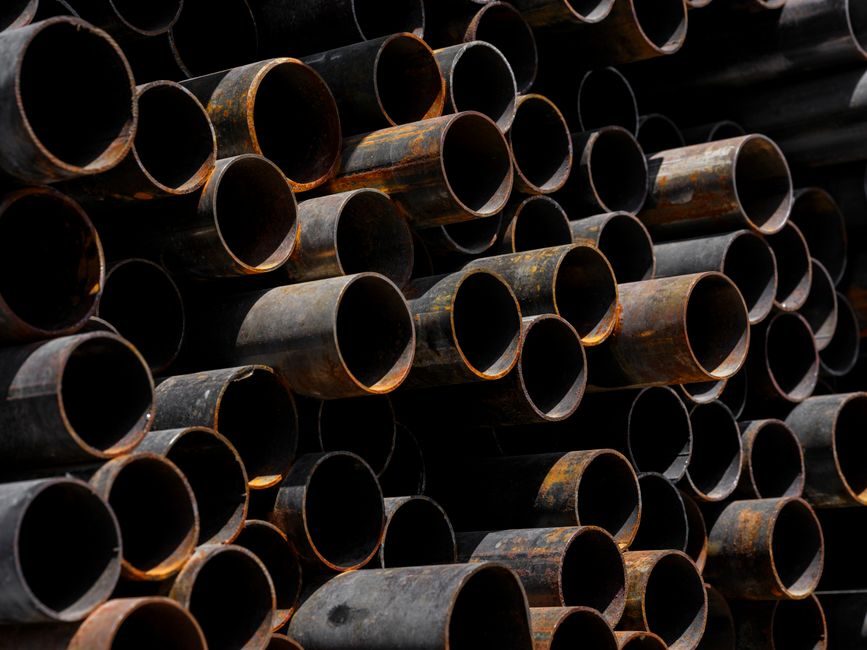
In sanitary and hygienic process lines, stainless steel pipe (chiefly ASTM A270 / A312 TP316L) and a sight glass are not competing items — they are complementary, and the cleanability question breaks into "what is being conveyed" and "what can be visually confirmed."
Per published 2026 supplier catalogues, seamless austenitic stainless steel pipe is offered in OD 6–710 mm with WT 0.6–48 mm, in grades 304, 304L, 316, 316L, 321, 2205, 2507, 904L and S31254, finished annealed & pickled, bright annealed, or polished [S3]. Stainless steel pipe resists oxidation, tolerates high-temperature chemical service, and is "easily cleaned and sanitized," which is why food, beverage, and pharmaceutical plants standardise on it [S3].
What "cleanable" actually means in a sanitary skid
Cleanability is the ability of an internal surface to be freed of product residue, biofilm, and cleaning chemistry within a defined CIP (clean-in-place) cycle, and then to be visually verified as clean. Stainless steel pipe achieves the first half through material chemistry (≥10.5% Cr passive layer, with 16–18% Cr and 10–14% Ni in 316/316L giving added chloride resistance) and through controlled surface finish [S2].
A sight glass — a borosilicate or soda-lime optical glass disc clamped between two flanges or welded into a sanitary ferrule — achieves the second half: the operator looks through the disc and confirms that the CIP flow has actually wetted, scrubbed, and rinsed the wetted surface. Without a sight glass, "clean" is inferred from conductivity, temperature, and turbidity data alone. With one, residue films, foam pockets, and spray-ball shadowing are visible in real time.
Material and surface criteria that drive cleanability
Three numbers dominate cleanability specs on the pipe side: grade (316L over 304 for chloride-bearing CIP), surface roughness (Ra ≤0.8 μm mechanically polished, Ra ≤0.5 μm electropolished for pharmaceutical skids), and weld treatment (orbital TIG, full-penetration, dye-penetrant or borescope-examined, with the internal weld ground flush and re-passivated). The 316L composition in current supplier tables caps C at ≤0.030%, Cr at 16.00–18.00%, Ni at 10.00–14.00%, Mo at 2.00–3.00%, with P ≤0.045% and S ≤0.030% [S3].
On the sight glass side, the criteria are different and largely mechanical: pressure rating (typically PN10/PN16 for process lines, higher for hydraulic service), temperature rating (borosilicate to ~280 °C thermal-shock resistant, soda-lime to ~150 °C), gasket material (EPDM, FKM, or PTFE-faced for pharmaceutical duty), and connection type (weld ferrule to DIN 11850 / ISO 1127 / ASME BPE, or flanged to EN 1092-1 / ASME B16.5). The glass disc is the wetted surface; if it is laminated, fused, or has a sight-light port, that geometry is what the operator is judging.
A useful comparison: stainless pipe owns the bulk of the wetted area, costs less per metre, and survives CIP chemistry indefinitely, but it hides residue inside elbows, dead legs, and vertical rises. The sight glass owns zero conveyance volume, costs more per fitting, and is a known mechanical weak point (glass can etch, craze, or shatter under thermal or chemical abuse), but it exposes residue that a polished pipe never will.
Where a sight glass earns its place — and where it does not

Specify a sight glass at every point where cleanability cannot be inferred from upstream instrumentation: downstream of the CIP spray ball on a tank return, at the suction and discharge of any positive-displacement pump, immediately before and after heat exchangers, at the inlet of a filler bowl, and on any line where product changes occur (e.g. CIP-to-product, product-to-product). In these positions, the operator can watch the transition from foam (dirty) to clear rinse (clean) without breaking the line. [S1]
Do not specify a sight glass as a substitute for sanitary pipe — it is not a flow conductor and will not pass an orbital weld. Do not put a soda-lime sight glass on a line that sees repeated hot-CIP-to-cold-rinse cycles; thermal shock will craze it. Do not rely on a sight glass to verify the inside of a long horizontal run; sight glasses verify the few centimetres of pipe they are clamped to, nothing more.
Standards and ratings that anchor the spec
For the pipe, anchor on ASTM A270 (seamless and welded sanitary tubing), ASTM A312 (seamless and welded austenitic pipe for general corrosive service), ASTM A213 (boiler/superheater/heat-exchanger tubes), and ASTM A789 for duplex grades [S3]. For the sanitary ferrules that the sight glass welds into, ASME BPE remains the dominant pharmaceutical-grade geometry standard; for food and dairy, DIN 11850 and ISO 1127 are common. Material traceability under EN 10204 3.1 is the documentation floor in EU pharma builds.
Surface-finish verification is typically done to ASME BPE SF1 (Ra max 0.51 μm / 20 μin), SF2 (0.64 μm / 25 μin), SF3 (0.76 μm / 30 μin), or SF4 (0.89 μm / 35 μin) on the internal wetted surface. Anything rougher than SF4 is not considered hygienically cleanable per current 3-A and EHEDG guidance — though for the exact threshold the engineer should consult the latest edition directly, not paraphrase it.
Quick selection logic for process and project engineers
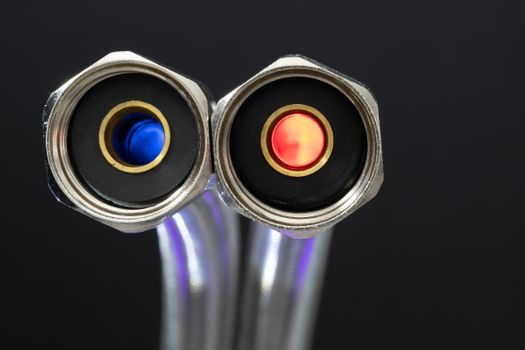
Rule of thumb on a new hygienic skid: build the run in 316L sanitary tube to ASTM A270, Ra ≤0.8 μm, orbital-welded and passivated; then place a borosilicate weld-ferrule sight glass with an EPDM or PTFE gasket at every transition that CIP cannot otherwise prove clean. The pipe does the cleaning; the sight glass proves it. [S3]
If the line is non-sanitary (utility water, compressed air, hydraulic) or the product is opaque and dark enough to make a sight glass useless anyway, skip the glass and spend the budget on a polished pipe and a downstream conductivity probe instead. If the line carries a hot caustic or strong acid at >120 °C, derate the sight glass to a fused/quartz disc or a light-port-only design.
On related plant decisions, the same cleanability logic shows up in PEEK pros and cons: spec-driven selection logic for engineers, where the polymer-versus-metal trade-off mirrors the stainless-versus-glass trade-off here, and in screw pump selection for corrosive chemical transfer: spec map and material logic, where the suction-side sight glass is the cheapest real-time check on cavitation and clean-out. Storage-side trade-offs appear in plastic storage tank selection guide: resin, SG, and duty match — a stainless skid feeding a plastic tank still needs a sight glass at the transfer point.