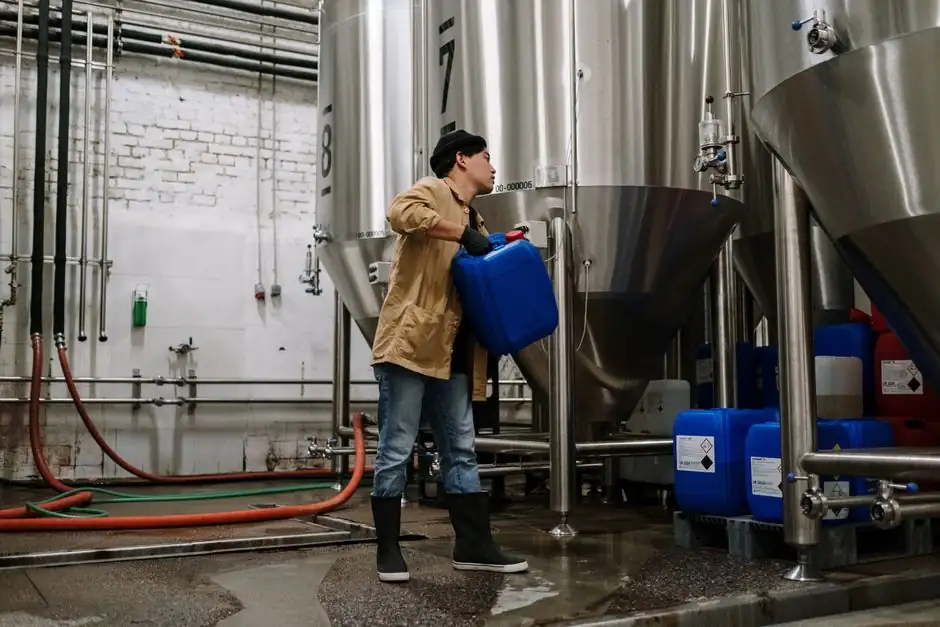
US plastic storage tank manufacturers delivered rotational-molded HDPE vessels in sizes from 15 to 20,000 gallons in 2026, with leading suppliers Snyder Industries, Poly Processing, Norwesco, USA Tank, and custom fabricators like Miller Plastic Products covering potable water, chemical, septic, and IBC applications [S3][S5][S6][S8].
Industry catalogs published in 2026 list 100+ US plastic tank manufacturers, with HDPE and cross-linked polyethylene (XLPE) dominating chemical storage, and polypropylene (PP), CPVC, and Kynar PVDF specified for higher-temperature or aggressive-acid service [S5][S9].
Leading US Manufacturers and Product Lines
Snyder Industries, headquartered in Lincoln, Nebraska, manufactures poly tanks, IBC totes, bins, containers, pallets, and custom products, with more than 50 years of industry experience and brands including Bonar Plastics, Stratis Pallets, and waterandseptictanks.com [S3]. The company supplies plastic, steel, and composite IBCs rated for hazardous-material transport, and its Snyder Custom division designs engineered products for demanding applications.
Poly Processing is an established polyethylene chemical storage tank manufacturer focused on fittings, accessories, chemical compatibility, and tank longevity for industrial chemical service [S8]. NTO Tank's 2026 catalog lists Norwesco and Ace Roto-Mold as top-rated polyethylene tank manufacturers, with most plastic tanks backed by a 3-5 year manufacturer warranty [S6]. USA Tank, based in Texas, produces HDPE vertical and horizontal tanks, cisterns, septic systems, and spill-containment products with a stated 3-year warranty and UV additive for outdoor service [S4].
Standard Capacity Range and Configurations
Plastic tank capacity spans from 15 gallons for small chemical feed and applicator tanks to 20,000 gallons for bulk industrial storage, with vertical, horizontal, rectangular, circular, and square configurations standard across US catalogs [S5]. Tank-Depot's 2026 product tree lists vertical, horizontal, cone bottom, open top, polypropylene, portable, and double wall tank types, plus chemical IBC totes up to 330 gallons and forkliftable liquid transport tanks [S1].
Norwesco low-profile hauling and storage tanks entered the market in 2012 and are stocked in 500, 750, 1,000, 1,250, and 1,500 gallon sizes for transport and bed-mounted applications [S7]. Double wall storage tanks and cone bottom configurations are common for chemical service where full drain-down and secondary containment are required, and Snyder's chemical IBC line and Snyder Custom division cover the high end of the engineered-tank range [S1][S3].
Material Options and Temperature Limits
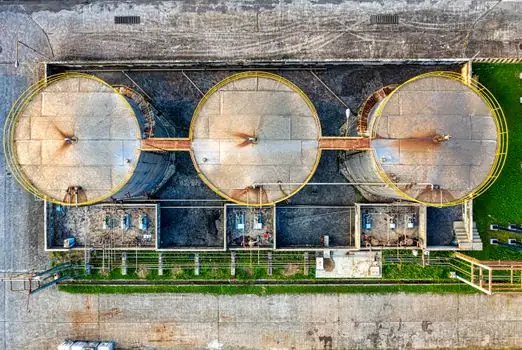
Custom fabricator Miller Plastic Products publishes the following continuous working temperature limits for plastic tank materials: Polypropylene 200°F, PVC 200°F, CPVC 200°F, Lexan (polycarbonate), and Polyethylene (LDPE/HDPE/UHMW) 180°F, with Kynar PVDF rated to 235°F for harsh acids, solvents, and bases [S2]. These limits apply to welded, custom-fabricated vessels rather than rotationally molded tanks, and the fabricator specifies 100% virgin American-made materials with CNC-cut edges, plastic-encapsulated steel band reinforcement, and internal baffles for self-supporting designs [S2].
HDPE is the dominant material across rotomolded tanks because of its chemical resistance, FDA approval for potable water, UV stabilization options, and seamless one-piece construction, with manufacturer-stated service life of up to 25 years under proper installation and exposure conditions [S5]. Cross-linked polyethylene (XLPE) is widely specified for sodium hypochlorite and other aggressive oxidizing chemicals where standard HDPE is rated as marginally compatible [S8]. Poly Processing's product line targets chemical compatibility as the primary design driver, with fittings and accessories matched to specific stored media [S8].
Manufacturing Process: Rotational Molding
Most plastic storage tanks are produced by rotational molding, in which PE powder is heated inside a rotating mold so the molten resin coats the interior to form a seamless, leak-resistant vessel; wall thickness is controlled by the charge weight loaded into the mold [S5]. This process produces uniform wall thickness, eliminates seam welds that are common failure points, and supports large-capacity designs up to 20,000 gallons while maintaining structural integrity under hydrostatic load [S5].
Custom fabricators supplement rotationally molded standard tanks with welded thermoplastic construction for non-standard sizes, fittings, and integrated process piping; Miller Plastic Products builds single tanks and integrated systems with process piping and ancillary features for specific manufacturing processes [S2]. Welds are ground smooth and burr-free to minimize sediment buildup and allow easy clean-in-place cycles, and all edges are CNC cut to eliminate saw-cut marks and sharp edges that can become crack initiation sites [S2].
Application Segments and Typical Use Cases
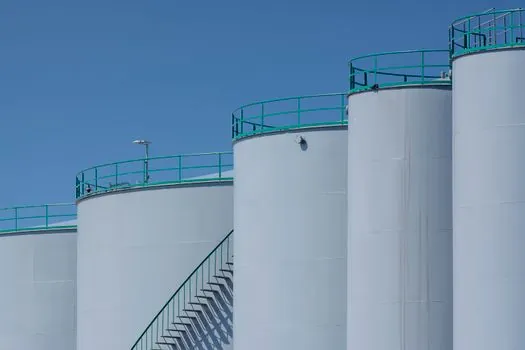
US plastic tank manufacturers segment their product lines into five primary applications: water storage (potable, rainwater, fire suppression), chemical storage (acids, bases, sodium hypochlorite, fertilizers), septic and wastewater (septic tanks, pump tanks, ATUs, grease traps), fuel and oil (DEF, waste oil, pickup-track fuel tanks), and marine/RV (holding tanks, bait wells, fresh/grey/black water) [S1]. IQS Directory's 2026 buyer guide lists chemical storage, water treatment, sewage systems, fertilizer and feed storage, car-wash reclaim, oil collection, and petroleum or gas storage as the dominant industrial use cases [S5].
Specialty applications documented in 2026 catalogs include hydroponic tanks, galvanizing tanks, firetruck tanks, blackwater and greywater tanks, freshwater cisterns for potable water, restroom trailer tanks, pickling tanks, plating line tanks, acid tanks, semi-conductor wet process systems, commercial marine water tanks, and yacht holding tanks [S2]. Snyder Industries' specialty fluid solutions division targets bulk lubricant and equipment-fluid storage and dispensing, while its Bonar Plastics brand markets material handling bins, insulated containers, and portable hoppers [S3].
Selection Criteria: Material, Capacity, Configuration, Compliance
Specifying a plastic storage tank reduces to four decision criteria, in order of failure consequence: chemical compatibility, temperature, capacity/configuration, and regulatory compliance. HDPE is the default for water and mild chemicals at temperatures up to 180°F; XLPE upgrades oxidizer service; polypropylene and CPVC extend to 200°F continuous; and Kynar PVDF at 235°F covers aggressive acids, solvents, and bases at the cost of significantly higher unit price [S2][S5][S8].
Capacity selection starts at the application level: 15-500 gallon tanks cover chemical feed, applicators, and small batch service; 500-1,500 gallon low-profile tanks support transport and bed-mount hauling [S5][S7]; 1,500-20,000 gallon vertical tanks serve bulk water, chemical, and process storage. Configuration follows installation geometry: vertical tanks minimize footprint, horizontal tanks suit trailer and skid mounting, cone bottom tanks enable full drain-down for solids or precipitating media, and double wall tanks provide integral secondary containment that satisfies spill-containment regulations in many US jurisdictions [S1][S5].
For a deeper comparison of tank types across these criteria, see the Plastic Storage Tank Types spec-driven buyer map. Warranty terms vary by manufacturer: 3-year (USA Tank), 3-5 year (NTO Tank-distributed Norwesco and Ace Roto-Mold), and longer terms on custom-fabricated welded tanks, though field service life of UV-stabilized HDPE routinely reaches 25 years regardless of stated warranty [S4][S5][S6].
Installation, Accessories, and Limitations
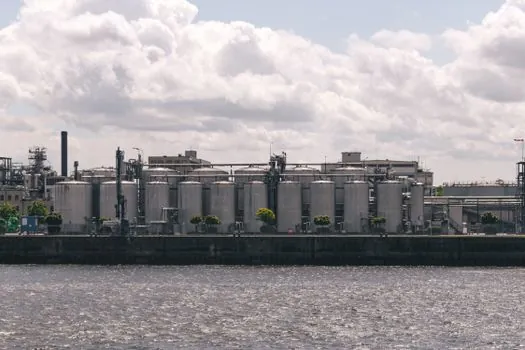
Plastic tanks must be installed on flat, stable bases such as concrete pads or compacted engineered fill; improper support is the most common cause of premature failure in rotationally molded tanks, and correct pipe sizing plus secure fittings are required for long-term performance [S5]. Standard accessories specified in 2026 catalogs include valves, hoses, vents, float valves, rainwater adapters, pumps, tie-down kits, gauges, containment basins and trays, and chemical feed stations for proportioned injection [S1][S5].
Key limitations to flag in a spec: HDPE and LDPE are not rated for continuous service above 180°F, which rules out hot CIP loops above that threshold; UV-stabilized tanks still degrade under prolonged direct sunlight if the UV additive package is omitted; and rotationally molded tanks cannot match the pressure ratings of welded steel or fiberglass vessels, so any application above atmospheric or modest internal pressure requires a different vessel class [S2][S5]. Custom fabricators also note that self-supporting tanks under high hydrostatic load may need plastic-encapsulated steel bands or internal baffles to minimize sidewall bowing, a detail that must be specified at the quote stage rather than retrofitted [S2].
Trackable signals for the next sourcing cycle: (1) confirm XLPE vs HDPE selection with the chemical compatibility chart for sodium hypochlorite, sulfuric acid, and ferric chloride at the project's actual concentration and temperature; (2) verify whether the chosen manufacturer's warranty terms cover the installed configuration (vertical above-ground, horizontal, double wall) or only the tank itself.