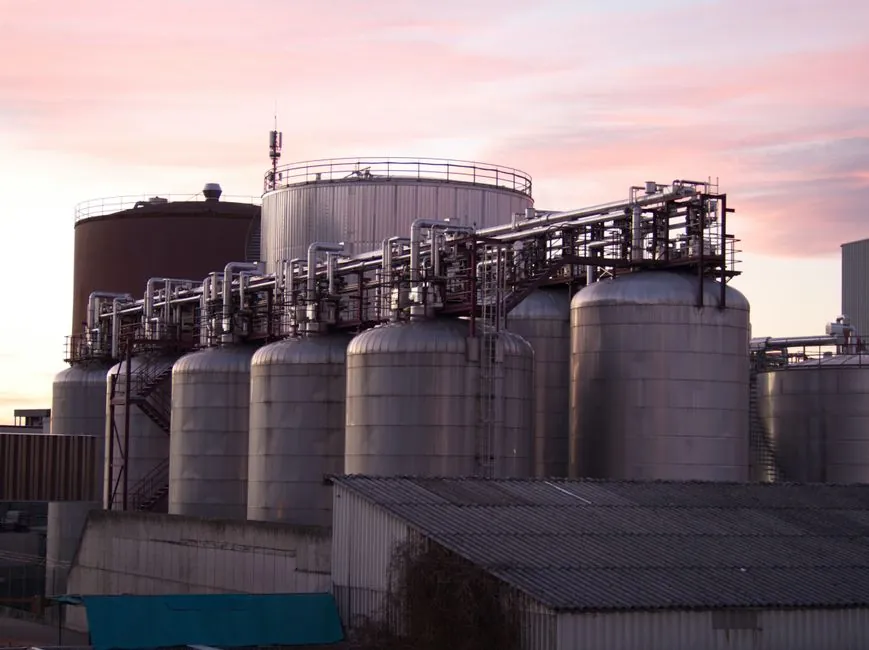
Plastic storage tanks cover 5 to 20,000 gallon poly formats in rotomolded HDPE, LLDPE, and polypropylene, plus XLPE for chemical service, and last 20 to 30+ years when chemical compatibility, UV, and temperature limits are respected [S1][S2][S5].
Selection hinges on four axes: stored media, capacity, configuration (vertical, horizontal, underground, double-wall), and process (rotomolding vs blow molding vs injection molding), with HDPE dominating the potable and rainwater market and XLPE taking most chemical service [S1][S2][S7].
Resin Family and What Each One Will and Will Not Hold
High-density polyethylene (HDPE) is the workhorse resin for water, rainwater, and many dilute chemicals, with linear low-density polyethylene (LLDPE) used in flexible-wall formats and cross-linked polyethylene (XLPE) reserved for chemical service because XLPE is not commonly rated or approved for potable water storage [S2]. Polypropylene extends the upper temperature envelope for hot chemical service, while PVC and CPVC appear in smaller process vessels and linings rather than large rotomolded tanks [S7].
Resin density is more than a label change. HDPE, MDPE, and LDPE are different density types of the same base plastic and behave differently under stress and permeation, which is why most plastic water tanks are fabricated from HDPE rather than LDPE or XLPE for potable service [S2]. Ultraviolet stabilizing compounds such as carbon black or titanium dioxide are added to the resin along with optional color pigmentation, and these stabilizers are what give outdoor poly tanks their typical opaque, UV-resistant shell [S2].
Where HDPE stops being the right answer, XLPE typically takes over. XLPE plastic tanks are most used to store chemicals, and that is the practical dividing line buyers should apply: if the fluid is drinking water, rainwater, or a mild agricultural chemical, HDPE is the default; if the fluid is a stronger oxidizer, solvent, or acid and the manufacturer has published a compatibility rating, XLPE is the next step up [S2].
Process and How It Constrains Geometry
Rotational molding, blow molding, and injection molding are the three primary production techniques used to make plastic tanks, and the chosen process is the single biggest determinant of size, wall stiffness, and price [S1]. Rotomolding uses low pressure, sustained high temperature, and a multi-axis rotating steel mold, which is why it is the most popular choice for large, seamless plastic tanks used in chemical storage, wastewater, and agricultural water service [S1][S2].
Blow molding produces semi-flexible wall products, including the 275 gallon IBC tote and 330 gallon cage-style portable tanks, and is the standard process for DOT-transportable poly containers [S2][S5]. Injection molding is reserved for smaller fittings, caps, and process components rather than the tank shell itself. Powdered raw resin is the rotomolding feedstock, and the mold is heated to the resin melting point and rotated in a mechanical pattern designed to distribute molten plastic to a certified wall thickness before the part is cooled and released [S2].
Process choice cascades into configuration. Rotomolded products dominate the rigid vertical, underground cistern, and double-wall tank categories, while blow-molded products dominate portable and transportable formats [S1][S2]. Buyers who need a single 10,000 gallon vertical poly tank for a permanent installation are almost certainly buying a rotomolded HDPE part, while buyers who need a 275 gallon tote they can move on a forklift are buying a blow-molded HDPE bottle inside a steel cage [S2][S5].
Structural Configurations and the Footprint Trade-Off
Plastic tanks ship in vertical, horizontal, underground, silo, double-wall, cylindrical, and stackable structures, and the structural choice is set by site geometry and hazard class rather than capacity [S1][S4]. Vertical tanks have thick walls and are used for general aboveground liquid storage where frequent access is needed; horizontal tanks have a low center of gravity and are built for trailer and truck transport [S4].
Underground tanks require special construction to handle soil load and hydrostatic pressure, and they are commonly used for sewage, septic, and concealed storage where surface footprint is limited; silo tanks lift the base off the ground for under-tank loading; double-wall tanks put a tank inside a tank and are the standard for hazardous chemicals because the outer shell acts as a secondary containment barrier [S4]. Cylindrical horizontal tanks are widely used in pharmaceutical and chemical service for corrosive liquids, while stackable tanks form a modular system that locks in various ways and ranges from 30 gallons to several hundred gallons per module [S4].
Poly tanks have a low footprint-to-volume ratio relative to steel and fiberglass, and that is one of the practical reasons they win on tight sites [S5]. The same Clarion Municipal comparison shows poly tanks ranging 5 to 20,000 gallons with 2 to 4 inch fittings, which is a narrower fitting range than steel or fiberglass (2 to 12 inches) and reflects the rotomolding limit on large flanged connections [S5].
Application Categories by What the Tank Holds
Plastic tanks sort into five use-case buckets: water, fuel, chemical, septic, and general storage, and each bucket carries a different resin and wall-thickness expectation [S4]. Water tanks are the most common sight and cover potable, non-potable, rainwater, and emergency water service in vertical, underground, and pillow formats [S4][S5][S6].
Fuel tanks exploit the airtight, corrosion-resistant properties of plastic and are specified for both consumer and commercial use; pillow and onion tanks extend portable diesel storage to 250 to 210,000 gallons and are also approved for waste oil service [S4][S5]. Chemical tanks require the highest level of compatibility checking because thousands of chemicals react differently with HDPE, XLPE, polypropylene, and PVC, and cross-linked polyethylene is the default for many of those service fluids [S2][S4]. Septic tanks are almost always HDPE rotomolded units in the poly underground format, and general storage covers silo, stackable, and utility tanks for dry goods and agricultural liquids [S4][S6].
For potable and rainwater use, the practical decision tree is short. Poly tanks (5 to 20,000 gallons), pillow and bladder tanks (250 to 210,000 gallons), and onion tanks (250 to 10,000 gallons) cover the portable water side, while fiberglass and welded steel take the larger permanent water storage jobs above 40,000 gallons [S5]. Underground burial is permitted for poly, welded steel, and fiberglass but not for corrugated steel, pillow, onion, or frame tanks, which is a hard physical constraint on tank format [S5].
Material Comparison: Poly, Steel, Fiberglass, Flexible
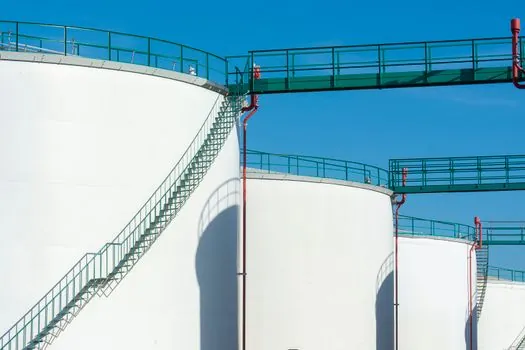
Side by side, poly tanks compete with corrugated steel, welded steel, fiberglass, pillow/bladder, onion, and frame tanks on diesel, waste oil, gasoline, pressurized service, underground burial, DOT transport, size, fittings, lead time, and longevity [S5]. Poly tanks are not approved for diesel, Jet A, kerosene, or gasoline service in the comparison matrix; welded steel is the only format rated for gasoline, pressurized service, and underground burial of fuel products, while poly septic tanks are the standard for residential and light commercial underground burial of wastewater [S5].
On size, poly tanks top out at 20,000 gallons, fiberglass at 40,000 gallons, welded steel at 40,000 gallons, and corrugated steel at 4,000,000 gallons, which is the structural reason municipal water projects larger than ~40,000 gallons almost always go to bolted or welded steel rather than rotomolded poly [S5]. On lead time, poly wins at the small end (stock to 6 weeks), with corrugated steel at 2 to 6 weeks, fiberglass at 4 to 12 weeks, and welded steel at 2 to 16 weeks for the same duty [S5]. On longevity, all four rigid formats (corrugated steel, welded steel, fiberglass, poly) are rated at 20+ years, while flexible formats (pillow, bladder, onion, frame) range 3 months to 5+ years depending on material and UV exposure [S5].
On cost, poly spans the full low-to-high band depending on size and fittings, which means a small HDPE vertical at 500 gallons is cheap and a 20,000 gallon double-wall chemical tank is not, and that spread is wider than steel or fiberglass in their own size ranges [S5]. Buyers comparing formats should also weigh DOT transport suitability, which only poly tanks carry in the rigid category; welded steel, fiberglass, and corrugated steel are all listed as not suitable for DOT transport in the same matrix [S5].
Service Life, Failure Modes, and Sourcing Signals
A properly specified and installed plastic tank lasts 20 to 30 years, and the lifespan is governed by installation methodology, chemical compatibility, UV resistance, temperature exposure, contents, venting, and the selection of pipe fittings, accessories, and support structures [S1]. Buyers evaluating a quote should treat each of those seven factors as a separate line item to confirm, because a tank that fails early almost always fails on one of them rather than on the resin itself [S1].
Typical operating constraints to verify with the manufacturer include upper temperature limits for HDPE (commonly below the boiling point of water, well under polypropylene's ceiling) and chemical compatibility for XLPE in acid, base, or solvent service. Sourcing signals worth tracking: published NSF/ANSI 61 or equivalent potable-water certification for HDPE tanks going into drinking water service, written chemical compatibility statements for the exact fluid name and concentration, and a documented resin density designation (HDPE vs MDPE vs LDPE) rather than a generic "poly" label [S2].
For a deeper walk-through of the buyer's checklist on resin, fittings, and structural class, see the related How to Choose a Plastic Storage Tank: Spec-Driven Selection Guide; for the broader containment conversation including pressure-coded steel vessels, the Pressure vessel types, codes, and industrial applications reference covers the adjacent steel side of the same spec table. Track the next node by monitoring OEM-published NSF/ANSI 61 listings for new HDPE rotomolded models above 10,000 gallons, and watch for any manufacturer retraction on XLPE potable ratings, since XLPE is currently not commonly rated for potable water storage and that status is what most affects the chemical vs drinking-water dividing line [S2].