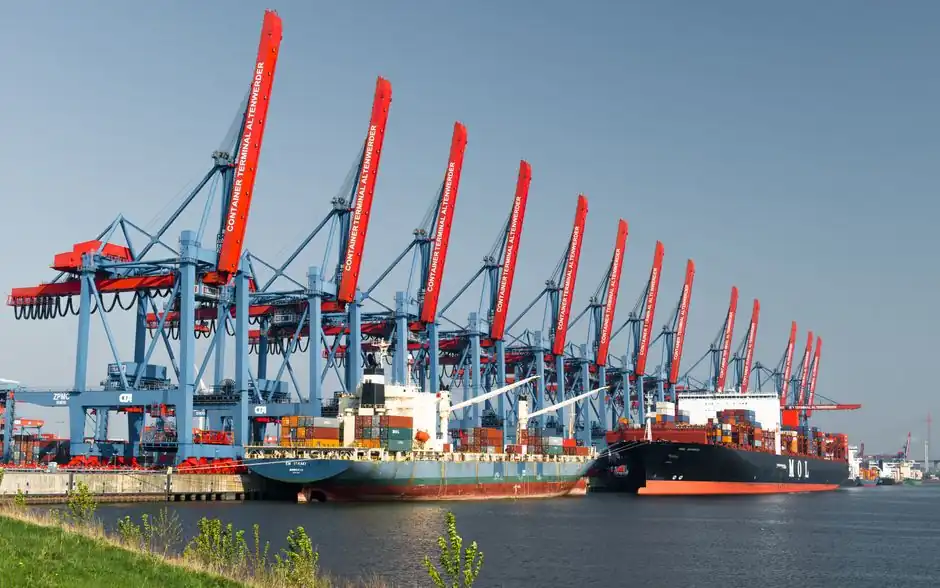
A platform trolley in a port yard is not a warehouse cart with a bigger wheel, and treating it that way is the single most common cause of mid-shift wheel failure, bent frames, and damaged ISO cargo. Selection should start from three numbers: deck load rating, wheel diameter, and whether the trolley needs a third-party certified brake. The [S2] warehouse guide classifies heavy-duty platform trolleys as the right tool for bulky items versus lightweight folding models, but the port adds a salt-air, ramp, and tow-tractor coupling layer the warehouse guide does not cover [S2].
Two 2026 reference points frame the buying case. On 2026-07-02 the Maputo Port Development Company awarded a Port Community System to Kalé Logistics, integrating vessel, truck, rail, customs, and warehouse movements on one digital layer, which shortens dwell time and pushes more ground moves per ship call [S3]. On 2026-06-02, a freight-side survey of the seven most-used logistics trailer types ranked the platform or flatbed alongside dry box and refrigerated units, with platform trailers singled out for machinery, metal structures, coils, and oversized cargo that must be loaded from multiple angles [S5]. More ground moves per ship and more flatbed-style cargo both raise the per-shift duty cycle on quayside platform trolleys.
Deck load and frame: 500 kg vs 1000 kg vs 2000 kg port classes
Deck load rating is the first filter, and port work rarely fits the 150–300 kg ratings that dominate general warehouse catalogues [S2]. Linde's 2026 ASEAN port briefings describe a "complete power platform" for heavy port trucks, where chassis, BMS, and thermal controls are sized as one unit, and the same logic applies to a trolley: deck, frame, castors, and brake are a matched set, not independent line items [S1]. For break-bulk and CFS parcel moves a 500 kg deck with a 2 mm steel deck and 30 mm box-section base is the practical floor; for pallet jacks feeding flatbed trailers and for bagged agricultural product a 1000 kg deck with a 3 mm chequer-plate deck is the common spec; for steel coils, engine blocks, and project cargo a 2000 kg deck on a reinforced 50 mm box frame with cross-bracing is the minimum, and any of these should be checked against the actual single-pallet weight plus a 1.5× impact factor for ramp drops.
Wheelbase and deck size are coupled: a 1200×800 mm deck at 500 kg can run on four 160 mm castors, but a 1500×1000 mm deck at 1000 kg should run on six wheels, not four, to keep the per-castor load under roughly 170 kg and avoid premature bearing failure. Material handling trolley guides consistently push heavy-duty platform trolleys toward larger decks for bulky items, while lightweight folding models stay under 600×400 mm for tight-aisle work, and the port falls on the heavy-duty side of that line [S2].
Wheel diameter, tread, and bearing class for quayside duty
Wheel choice is where most port trolleys fail. The [S2] trolley guide treats wheel type as a secondary differentiator, but in a port environment it is the first differentiator, because castors below 200 mm diameter will hammer themselves to death on concrete expansion joints, cable covers, and the rolled unevenness of an apron slab. The practical port floor is 200 mm polyurethane-on-iron, with 250 mm reserved for tow-tractor-coupled trains that cross rail tracks and speed bumps. Polyurethane gives 80–95 Shore A, rolls quietly on smooth concrete, and resists salt-air corrosion better than rubber, which softens and swells; phenolic wheels are harder and more chemical-resistant but transmit shock into the deck and into any loose cargo.
Bearings matter as much as tread. Plain bore is acceptable only on sub-300 kg warehouse units; port-class trolleys should specify roller bearings or, better, sealed ball bearings rated for the calculated equivalent radial load, including a 1.3× dynamic factor for tow-coupled use. A third frequently missed data point is temperature: refrigerated cross-dock apron work in cold-chain terminals can drop polyurethane below its rating, and a polyamide or rubber-treaded wheel is the correct swap in that specific case. For an overview of the platform trolley family and where quayside-class units sit inside it, the duty-curve and material map on the encyclopedia page is a useful cross-check.
Braking: parking brake, dead-man brake, and when each is mandatory

Brake selection is the area where port procurement most often copies warehouse specs by mistake. A static parking brake on each swivel castor is the minimum on any trolley used on a gradient, including a 2° yard slope that looks flat to the eye, and is the default spec for the platform trolley category. A dead-man or fail-safe brake, which engages automatically the moment the operator releases the handle, is required wherever the trolley is coupled to a tow train, works near a quay edge, or handles pallet loads above 750 kg on castors. [S3]
For tow-tractor-coupled trains of three or more trolleys, a third brake tier appears: a positive mechanical parking brake on each unit plus a service brake on the tow tractor, and a documented brake test before each shift. The relevant reference points are the EN ISO 3691-series principles for industrial trucks, which govern braking, stability, and operator controls for the tow tractor, and the general duty-of-care requirements for manual handling aids; the trolley itself typically falls under a load-test standard such as EN 1757 for hand-powered vehicles, which sets the 1.5× to 2× proof-load factor used to qualify the deck and frame, with braking as a separate functional test. The decision rule is simple: parking brake for gradient work, dead-man brake for coupled or edge-of-quay work, and a documented brake test for any tow train, regardless of deck size.
Tow coupling, deck height, and interface with tow tractors and flatbed trailers
A platform trolley that will be towed must match the tow tractor's pin height, drawbar geometry, and train-control logic, and this is the interface that the warehouse trolley literature barely mentions [S2]. Most electric tow tractors in port service use a 150–250 mm pin height with a spring-loaded drawbar, and a trolley drawbar set to the same height with a positive latch (not a spring pin alone) is mandatory. Mixed-height trains load the front trolley's front axle and the rear trolley's rear axle, which is exactly the loading pattern that destroys castors first.
Deck height is the second interface. Standard warehouse decks sit at 280–300 mm, but tow-coupled port trains usually run lower, at 250–270 mm, so the loaded deck top sits close to the flatbed trailer bed height and the operator is not lifting 1000 kg of cargo over a 200 mm step on every cycle. Where the trolley has to serve both a warehouse and a flatbed trailer, a fixed-height deck is a maintenance win, but where the height gap is more than 75 mm, a scissor-lift or detachable-ramp deck is the correct spec. The flatbed trailer side is well documented in the 2026 logistics trailer survey, which lists the platform or flatbed trailer alongside dry box, refrigerated, cage, ISO container, dump, and tanker units as one of the seven most-used types, with platform trailers specifically assigned to machinery, metal structures, coils, and oversized cargo loaded from multiple angles [S5]. The same operational logic drives the trolley: where the trailer needs side or angled loading, the trolley must be able to roll up to it from the side, which constrains deck height, corner radius, and wheel placement.
Surface and environment: salt, water, chemical, and cold-chain exposure
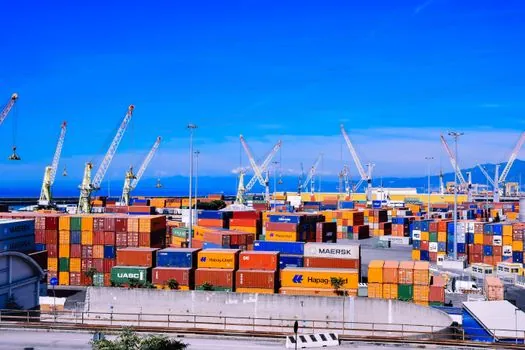
Port environments degrade trolleys in three identifiable ways: chloride-driven corrosion on ferrous parts, water-ingress failure in bearings, and chemical attack on polymer wheels. The first fix is finish: hot-dip galvanised frames outperform powder-coated frames inside six months of quayside duty, and 304 stainless hardware is the practical ceiling unless the trolley works a chlor-alkali berth, where 316 stainless becomes mandatory. The second fix is sealed bearings: a 2RS or 2RSR seal keeps salt spray out and extends grease life from roughly 3 months to 12 months on quayside routes. [S1]
Wheel and deck material then follow exposure. Polyurethane on iron is the all-round port default, but in chemical terminals handling acids and caustics, polyamide or phenolic wheels plus a stainless or HDPE-lined deck is the correct combination, because polyurethane swells and softens in contact with some solvents. In cold-chain terminals, the same low temperature that drops polyurethane below its rating also embrittles standard grease, so a cold-rated grease and a rubber or polyamide wheel is the better spec. A useful side-by-side check for the logistics packaging side of the yard, where trolleys feed and clear pallet loads, is the pallet footprint compatibility between the trolley deck and the warehouse racking; the encyclopedia entry covers the interfaces that the trolley spec has to honour.
Selection matrix: trolley class vs port duty
Putting the options against the same four criteria is the cleanest way to choose. On deck load, a 500 kg warehouse-class unit is rated below 500 kg and fails on quayside, a 1000 kg industrial unit covers CFS and break-bulk, and a 2000 kg heavy-industrial unit covers steel and project cargo. On wheel diameter, sub-160 mm castors fail on apron slabs, 200 mm polyurethanes cover general yard duty, and 250 mm wheels cover tow-coupled and rail-crossing work. On brake class, a parking brake is the minimum on any gradient, a dead-man brake is required for tow-coupled or edge-of-quay work, and a documented brake test per shift is required for any tow train of three or more units. On finish, powder coat is acceptable only in covered warehouses, hot-dip galvanise is the quayside default, and 304 or 316 stainless is required for chemical or food-grade berths. [S5]
The same matrix rules out three common mis-specs. A 300 kg folding trolley from a general warehouse catalogue is undersized for any port duty regardless of how many trips per shift it makes. A tow-coupled trolley without a dead-man brake is unsafe on any gradient above 1°. A trolley with phenolic wheels in a cold-chain terminal is a wheel-failure risk the first time ambient drops below roughly -10 °C, because phenolic hardens and cracks rather than grips. The cross-checks against related gear matter too: a platform scale used to weigh palletised cargo on a trolley must share the same deck height and footprint, or the weighing step introduces a manual lift that the rest of the spec is trying to remove.
What to verify on a quote before signing a port-trolley PO

Five checks catch the majority of port-trolley mispurchases. First, ask for the deck load with a 1.5× dynamic factor applied and a 2× static proof-load test certificate, not just the nominal rating, because nominal ratings on their own do not survive a 1000 kg pallet dropped 50 mm onto a steel deck. Second, ask for the castor part number and bearing type, and confirm the wheel diameter in millimetres, not the catalogue name, because suppliers routinely substitute a 160 mm wheel where a 200 mm was specified. Third, ask for the brake test method and a documented cycle count, and require parking brake plus dead-man brake on any unit used in a tow train or near a quay edge. [S5]
Fourth, ask for the finish specification in writing: hot-dip galvanise to ISO 1461 with a minimum coating mass, or 304/316 stainless with a declared alloy, and reject generic "galvanised" or "stainless" claims. Fifth, ask for the tow-coupling geometry: pin diameter, pin height, drawbar material, and latch type, and check it against the tow tractor's interface plate. For further context on how this spec map lines up with the logistics packaging side of a port terminal, the related apparel-distribution platform trolley spec map is a useful read on deck capacity and wheel selection in a less aggressive duty environment, which makes the contrast with port duty concrete.