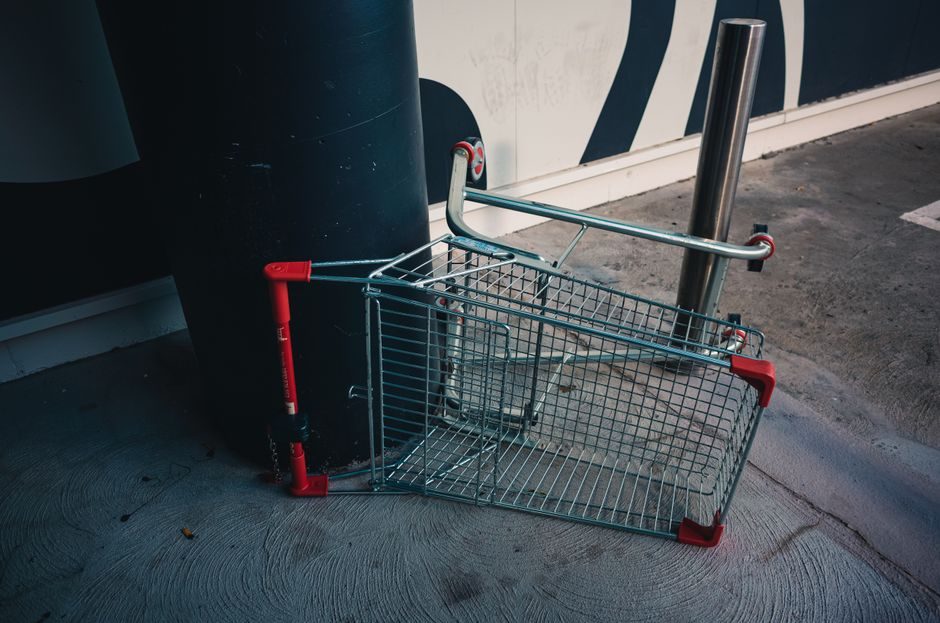
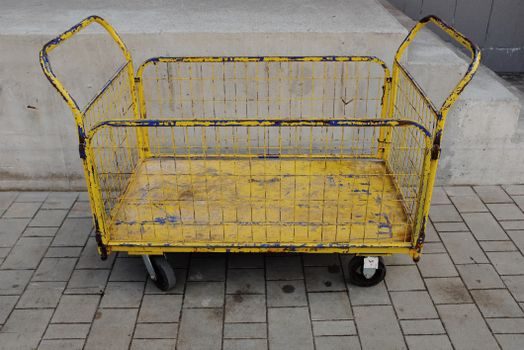
A foldable steel-deck platform trolley in the 150-300 kg load class is the lowest-cost carrier for batch-level certificate and CoA movement, while an electric order picker on a 100-150 mm chassis covers bin-level traceability at picking heights up to roughly 2.5-3.0 m [S4].
Certificate traceability in a regulated warehouse is the chain of custody for mill certs, calibration sheets, and CoA paperwork that follows every load from receiving to dispatch; choosing between a manual platform trolley and a powered order picker is fundamentally a load-class and working-height decision, with the traceability protocol layered on top.
Load Class and Deck Geometry as the First Spec Gate
Hand-pushed platform trolley units in the Goldsupplier catalogue show 150-300 kg rated load on a foldable steel deck, with rubber-tread casters sized in the 100-125 mm range for floor protection and noise control on warehouse tile [S4][S5]. The caster supplier Wintwo lists 3-5 inch (75-125 mm) grey-rubber light-duty casters as the standard trolley wheel, paired with brake castors on at least one corner for parking stability on grade [S5][S6].
Electric platform lift trucks on the same sourcing channels jump to 200 kg hydraulic-lift capacity with lithium battery packs, shifting the unit from a paper carrier to a low-level workbench at adjustable height [S7]. For pure certificate-document movement (CoA binders, sealed envelopes, traceable bin tags) the manual foldable trolley remains the dominant spec; once a picking line forces a bin-level scan, the order picker enters the comparison.
Working Height and Picking Architecture
An order picker is a class of powered industrial truck that elevates the operator with the load, typically to 2.5-3.0 m on a low-level platform and beyond on high-level models, so the picker can reach a specific bin and confirm a SKU against the certificate pack at the point of pick. By contrast a platform trolley keeps the deck at fixed 150-250 mm height; CoA movement is a horizontal transport problem, not a vertical-pick problem. [S5]
For a warehouse running paper-based certificate traceability — physical CoA binder, signed receiving log, handwritten batch card — the trolley is the right physical spec. For a warehouse running RF pick-to-bin or pick-to-light, the order picker is the only equipment that keeps the operator at the bin face, which is where the certificate scan event must be registered to close the audit trail. Beijing local standard DB11/T 650-2009 (Specifications for bus/trolleybus platform) shows the regulatory pattern of pinning a "platform" definition to a specific physical interface and a defined scope of use; the same scoping logic applies when an SOP names a platform trolley versus an order picker for a particular paper-trail step [S9].
Criteria Comparison: Manual Trolley vs Electric Platform Cart vs Order Picker
Three equipment options line up against the four decision criteria that govern a certificate-traceability spec:
1. Rated load. Foldable hand trolley: 150-300 kg; electric hydraulic platform cart: 200 kg with battery; low-level order picker: 1000-1500 kg including operator [S4][S7].
2. Working height. Trolley deck sits at 150-250 mm; electric platform cart lifts to roughly 700-1000 mm scissor height; order picker elevates operator to 2.5-3.0 m on low-level models and 4.5-6.0 m on high-level models [S7].
3. Traceability event location. Trolley = in-aisle hand-off at receiving or dispatch; electric platform cart = packing-station scan zone; order picker = at-bin scan event at the moment of pick.
4. Cost and infrastructure. Hand trolley is the lowest capex and needs no charging station; electric platform cart requires a lithium-battery charging point; order picker needs a battery room, operator training, and a documented pre-shift inspection log per typical OSHA 1910.178-style practice (general industry forklift rule, exact clause names not asserted here).
The decision rule is mechanical: if the audit trail closes at the packing station, a manual or electric platform trolley is the right spec; if the audit trail must close at the bin face, only the order picker puts the operator at the correct working height and in the correct orientation to scan, confirm, and pick in a single motion.
Certificate Traceability Protocol Layer
Certificate traceability is independent of the carrier hardware, but the hardware determines where the scan/confirm event can physically happen. Paper-based systems (signed CoA binder, batch card, two-receipt handover) ride on any of the three carriers and require only that the binder travel with the load; the platform trolley is purpose-built for that role because the flat deck accepts a sealed document pouch without ergonomic penalty [S4].
Digital systems (RF pick-to-bin, pick-to-light, WMS barcode at the bin) require the operator to be at the bin face with hands free; this is the working envelope of the order picker, not the trolley. Open-source traceability modules such as the biodiv-platform/cropcert-traceability GitHub repository document the data-side chain-of-custody pattern (event log, signed handover, time-stamped location) that the warehouse WMS then mirrors [S1]. The consumer-goods analogue Lait-Nacre Traceability System (LNTS) from Polish dairy brand莱那珂 enforces raw-material-to-powder time-stamping (6-hour fresh-milk-to-powder claim) on a parallel paperwork-to-batch-code chain [S2]. The two examples show that whether the substrate is crop certification or dairy, the trace data model is the same — event, time, operator, batch ID — and the warehouse carrier must put the operator in the right place to record it.
Selection Rules: Who It Is FOR vs Who It Is NOT For
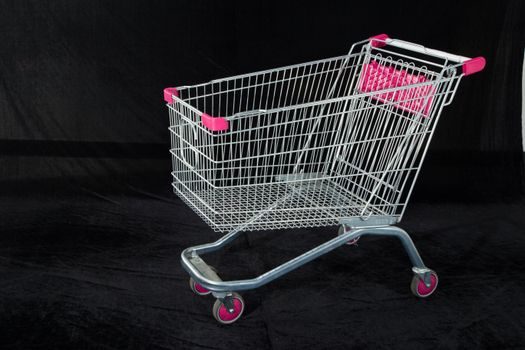
The manual platform trolley is the right spec for receiving docks, CoA binder circulation between QA office and staging lane, and any warehouse where the audit trail closes at a fixed scan gate rather than at the bin face. It is the wrong spec for high-bay narrow-aisle picking, cold-storage bin picking above 2 m, or any operation where OSHA 1910.178-class truck training is already mandatory. [S7]
The order picker is the right spec for distribution centres running pick-and-pass at heights of 2.5-6.0 m, pharmaceutical and food-grade warehouses enforcing bin-level expiry and lot capture at pick, and any operation where the certificate scan must happen in the same physical motion as the product pick. It is the wrong spec for a flat-floor receiving loop where a 150-300 kg hand trolley moves the same paperwork at a fraction of the capex and zero charging infrastructure [S4].
The electric hydraulic platform lift cart occupies the middle: roughly 200 kg lifted load at variable working height, single lithium-battery pack, no operator ride-along. It fits packing-station and kitting cells where a fixed-height trolley forces the operator to bend, but a full order picker is over-spec [S7].
Failure Modes and Constraints
The most common platform-trolley failure mode in a traceability context is a binder left on a parked trolley in a shared aisle, breaking the chain of custody between QA release and dispatch. Specifying a brake castor on at least one corner of every certificate-carrying trolley, and a defined parking bay, is a low-cost mitigation; Wintwo's brake-castor line is the typical sourcing path [S5][S6].
The most common order-picker failure mode in the same context is the operator logging a pick before the load is fully on the platform (picking ahead of the certificate scan), which closes the audit trail at the wrong event. Specifying a pick-confirm deadman switch and a WMS step that gates the next pick on a successful CoA scan is the standard mitigation; the hardware enforcement is the same picker's platform deadman, the software enforcement is the WMS event-log schema. ASP.NET Core's 2026 commit chain around HTTPS certificate accessibility on Mac OS illustrates the parallel data-side problem: a certificate whose key is inaccessible is treated as invalid, and the same logic applies to a paper certificate whose physical custody chain has a gap [S3].
Sourcing and Specification Discipline
Three concrete spec lines belong on the purchase order for either carrier class. First, load class with a published test certificate (150-300 kg for hand trolley, 200 kg for electric platform cart, 1000-1500 kg for low-level order picker). Second, caster spec with diameter, tread material, and brake configuration (grey rubber, 100-125 mm, brake on at least one corner for the trolley) [S4][S5][S6]. Third, working height or lift range, with the corresponding operator-platform standard referenced (for the order picker, the relevant truck-safety standards are well-established in general industry, but the exact clause number is not asserted here).
For a sourced view of how deadman and step-gate logic is enforced in the safety-instrumentation layer, see Safety Barrier Buying Guide 2026: Zener vs Isolated, Spec Gates, Sourcing.
Component reference pages worth checking: platform scale.