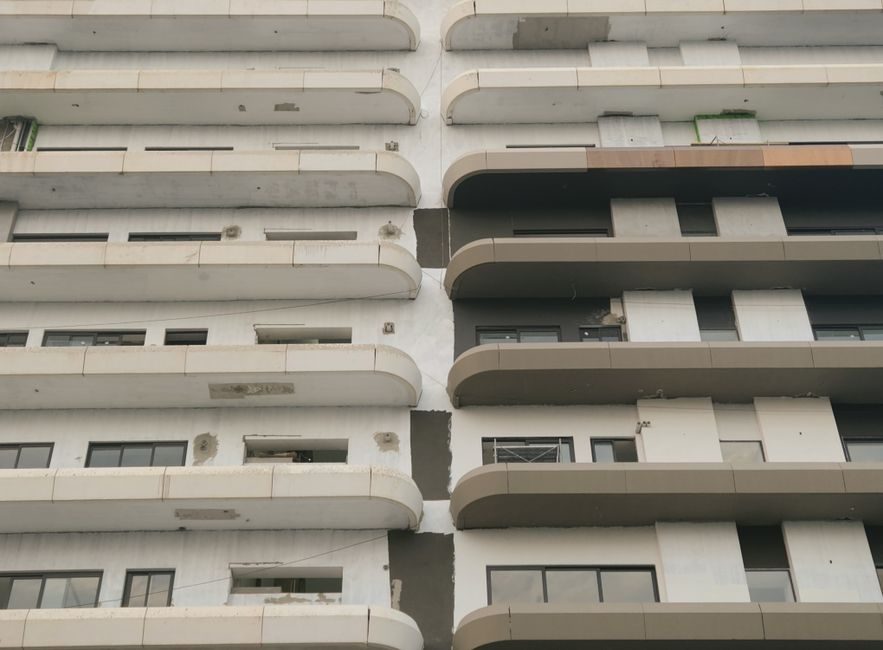
AAC/ALC wall panels from Chinese factories are listed at US$8.00–35.00 per square metre with a 100 m² MOQ, and US$120.00–150.00 per cubic metre with a 22 m³ MOQ as of 2026-07-11 listings on Made-in-China [S2][S10].
The headline FOB spread is roughly 4× because suppliers price by panel thickness and density grade, not by face area — a fact most procurement teams miss when they compare ALC panel quotes on square-metre-only terms.
What an ALC Panel Actually Is, and Why It Sits Beside AAC
Autoclaved Aerated Concrete (AAC) and Autoclaved Lightweight Concrete (ALC) are the same cured-cement-cellulose aerated material; ALC in Asian catalogues is almost always the reinforced panel variant of AAC [S4][S9]. Density is B04–B06 (400–600 kg/m³) for typical wall panels, with compressive strength around 3.5–5.0 MPa on the B05 grade [S10].
Standard wall thicknesses run 50/75/100/125/150/175/200 mm; thicker panels raise the per-piece price non-linearly because the autoclave batch holds fewer pieces, and freight cost per m² roughly doubles between 100 mm and 200 mm [S2][S10]. Standard panel face size is 600 mm wide × variable length, which dictates how many panels a 20 ft container will swallow and therefore the delivered price.
Cost Drivers: What Actually Moves the Quote
Five levers change an ALC panel quote more than the factory name on the invoice. Reinforcement — anti-crack steel mesh, polypropylene fibres, or none — is the next biggest line item and is mandatory for any panel above 100 mm if the wall is structural [S10].
Surface finish drives a third of the spread: plain-cut panels sit at the bottom of the US$8–12/m² band, plaster-ready or sanded panels sit in the US$12–22/m² band, and pre-finished / pre-painted panels can reach US$25–35/m² [S2]. Order volume and MOQ also bind: 100 m² MOQ listings are common for cut panels, while 22 m³ MOQ listings dominate the cubic-metre pricing [S2][S10].
Lead time is a hidden cost driver — Jiangsu and Shandong factories quote 15–25 days for stock grades and 30–45 days for non-stock densities, and freight from Shanghai or Qingdao to a US Gulf port adds roughly US$25–40/m³ in 2026 H1 container rates (range to be confirmed at RFQ).
Comparison: ALC vs the Three Alternatives a Specifier Will Be Tempted By
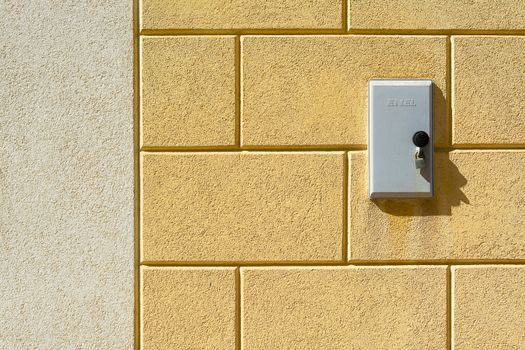
A procurement engineer comparing a B05 100 mm ALC partition against three realistic substitutes sees this on a like-for-like 1 m² installed basis. ALC (B05 100 mm, plain) lands at US$13–18/m² ex-factory, US$25–32/m² delivered to a Southeast Asian port, and US$38–48/m² installed with joint mortar and skim coat [S2][S10].
Compared with that, hollow concrete block (190 mm equivalent wall area after plaster) is roughly 15–25% cheaper on materials but 40–60% slower to install because of the wet-trade masonry. Precast concrete panels are 60–90% more expensive on the panel line and only win on a tight programme for high-rise cores — see metal curtain wall panel for the steel-and-composite option used on commercial façades, which is a different cost class entirely from a partition wall.
The right read is: ALC wins on speed + thermal + fire rating for residential and light-commercial partitions up to about 6 storeys; metal curtain wall wins on the envelope above that height; AAC blocks (not panels) still win on raw material cost for low-rise loadbearing walls where speed is not critical.
Who ALC Wall Panels Are For, and Who Should Walk Away
ALC panels are specified for non-loadbearing partition walls, external wall infill behind curtain-wall frames, fire-rated service cores, and floor-edge infill where the structural slab already exists [S4][S9]. They are not the right call for below-grade foundations, retaining walls, or anywhere a 100% waterproof immersion rating is required — AAC is vapour-open by design.
Buyers who should walk away are projects below 2,000 m² of panel demand (MOQ penalty kills the unit price), coastal sites with chloride-driven exposure (use a fibre-cement or metal-clad alternative), and high-rise loadbearing cores above 12 storeys where structural precast or glass curtain wall systems dominate the structural and aesthetic brief.
Total Cost of Ownership: What the FOB Price Leaves Out
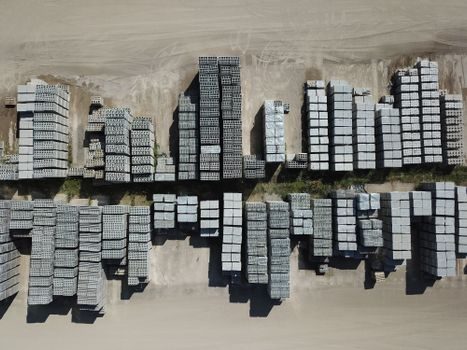
The unit price in a Chinese catalogue is the line item; the real spend on a 10,000 m² ALC partition programme is roughly 55% panel, 18% reinforcing steel and joint mortar, 12% skim-coat and paint, 8% labour, and 7% scaffolding and access — based on a typical multi-storey residential budget where ALC is the inner-leaf wall [S2][S10].
Maintenance over a 30-year service life is low (no routine recoating if the skim coat is intact), but the first-year defect exposure is real: shrinkage cracking at panel joints is the most common callback and is controlled by leaving a 10–15 mm expansion gap at the top of every panel run and using mesh-reinforced skim coat. For procurement teams building cost models, the rule of thumb is: ex-factory FOB × 2.2–2.6 = delivered-and-installed cost on a normal mid-rise Asian or Middle East project.
Standards, Certification, and the Sourcing Checklist
Verified AAC/ALC panel suppliers in Jiangsu and Shandong carry ISO 9001 quality management and ISO 14001 environmental management certifications, and most will provide a third-party test report for density, compressive strength, and fire rating on request [S4][S9]. Chinese national standard GB 15762 governs autoclaved aerated concrete slabs in the domestic market; for export projects, the equivalent reference is EN 12602 in the EU market, which the buyer should confirm is on the mill certificate.
Pre-shipment inspection on MOQ orders above US$50,000 is the norm; less than that, buyers typically rely on the supplier's own QC report. For related building-envelope cost breakdowns outside the wall-panel scope, see the Static VAR Generator Price 2026 guide — same spec-driven format, different equipment class.
The next trackable signal for ALC panel sourcing is the 2026 Q4 freight rate reset from Shanghai and Qingdao, which will move delivered prices by ±8–12% on full-container orders; the second is any new EN 12602 amendment on fire classification, which would shift specifier preference toward B05 panels in EU commercial builds.