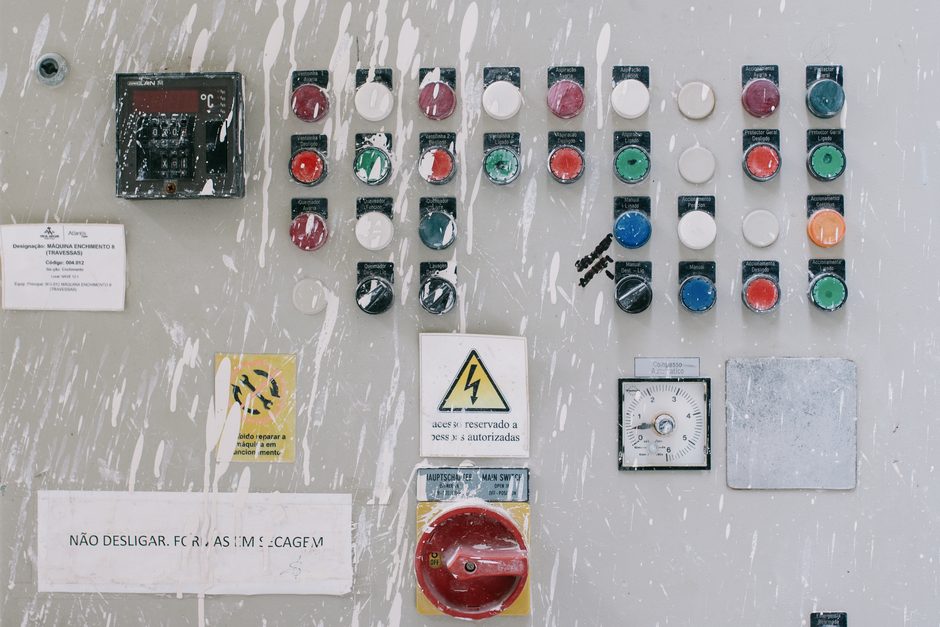
Cast-aluminum Ex d IIB/IIC distribution boxes from Chinese OEMs commonly land at USD 80-260 per unit at 50-piece MOQ, while stainless 304/316 equivalents run USD 220-650 before certification mark-up [S3][S4]. The dominant cost drivers are enclosure alloy, Ex-mark group (IIB vs IIC), current bus rating (16A-630A), and whether the build carries ATEX, IECEx, or CCC certification documentation.
Buyers comparing explosion-proof distribution box quotes should normalize on the same protection concept (Ex d flameproof, Ex e increased safety, Ex p pressurized), zone rating, and gas group before treating any unit price as comparable. A 16-circuit IIB box at $120 and a 16-circuit IIC box at $260 are not the same product — the IIC enclosure tolerates hydrogen atmospheres and uses tighter flamepath tolerances that raise machining cost.
Enclosure Material: Where the First 30-50% of Cost Lives
Die-cast aluminum alloy (ADC12 / A383 equivalents) is the default low-cost platform for Zone 1 / Zone 2 distribution enclosures, with Feice's PBb series positive-pressure boards using this construction for offshore, refinery, and grain-storage service up to T4/T5/T6 [S3]. Aluminum cuts roughly 40-50% versus 304 stainless on raw material, and another 10-20% on machining time because of shorter cycle rates.
Glass-fiber-reinforced polyester (GRP) enclosures sit at the bottom of the cost stack for corrosion-heavy sites such as chemical plants and offshore decks, but they are limited to roughly 160 A continuous rating before wall-thickness drives the box beyond ergonomic size. Stainless 316L is reserved for pharmaceutical, coastal, and chlorine-cell service where aluminum pitting is unacceptable; the same 16-circuit footprint in 316L typically doubles the ex-works price versus aluminum. For a power distribution box specified to IIB + IP65 in cast aluminum, 304 stainless adds USD 80-150; 316L adds USD 140-260 at the same circuit count.
Ex-Mark Tier, Gas Group, and Temperature Class Premiums
Group IIC enclosures (hydrogen, acetylene) demand tighter flamepath gaps and longer path lengths than IIB, which translates into higher machining scrap rates and 100% helium-leak test routines on the flamepath joints [S3]. Feice's PBb series lists IIA / IIB / IIC as a single configurator option with T1-T4 / T5 / T6 temperature group, meaning each step up the gas or temperature ladder is a separate price line item.
Temperature class directly forces material selection: T6 (≤85°C surface) on a 400 A bus requires derated current density or larger enclosure volume, and T5/T6 builds often add thermal-compound-filled terminal blocks. The explosion-proof electrical certification chain itself — sample destruction testing, type-test reports, and 3-year audit cycles — contributes a fixed USD 3,000-8,000 amortized cost that is spread across the production run, hitting small batches harder than 500+ piece orders.
Configuration Levers: Circuits, Bus Rating, and Accessories
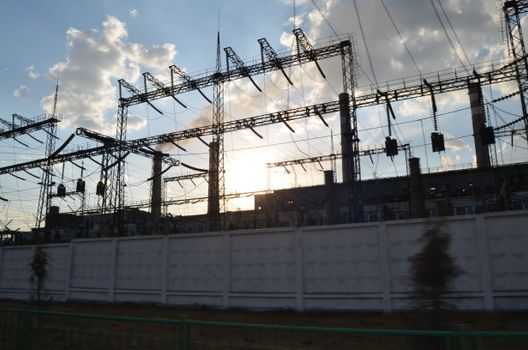
Circuit count scales the bus bar cross-section, the number of certified entries, and the gland plate area; each additional 4-circuit row typically adds 12-18% to the unit price on a standard IIB board. Current rating moves the bus from 63 A copper to 250 A or 630 A tinned copper, where conductor copper content alone can swing USD 25-90 per unit at 2026 copper prices. [S3]
Common accessories that move the quote line-by-line include explosion-proof cable glands (brass single-compression type around USD 0.80-1.20 per piece in brass-body form [S1]), breather/drain fittings, viewing windows, and padlockable door interlocks. Adding a viewing window plus an inspection-meter cutout can add USD 35-70 to a base enclosure, while a positive-pressure self-control system with alarm and air-supply manifold — the heart of Feice's PBb architecture [S3] — adds USD 180-420 depending on sensor count.
Certifications, Standards, and Import Tariff Stack
Ex d / Ex e distribution boards sold into the EU, IECEx markets, and China domestic carry overlapping but non-fungible marks: ATEX 2014/34/EU (EU), IECEx (international), and CCC for the China domestic market. Feice's BXX8050 corrosion-proof socket box line lists IIC + DIP coverage (dust ignition protection) alongside IIB, indicating dual-environment testing that adds 8-15% to the certification cost versus IIB-only gas certification [S4].
Import duty for "other power control or distribution devices" classified under HS 8537109090 carries a Chinese MFN rate of 8% on the CIF value plus 13% VAT [S2]. Buyers using HS 3926909090 (plastic articles) or 3923100090 (plastic transport boxes) for ancillary enclosures should note the MFN rate jumps to 10% with 13% VAT, and US-origin goods face an additional 30% Section-301-style tariff on the 8537109090 line [S2]. The MFN vs general-rate spread (50% vs 8% on 8537109090) is the single largest landed-cost swing on a single line item and is a frequent surprise on first-time China-direct purchases.
Total Cost of Ownership: Installation, Maintenance, Energy
Ex d cast aluminum enclosures dissipate internal heat through the wall, so steady-state losses are negligible and energy cost is essentially zero over a 20-year service life. The real TCO swing is installation labor: a 100-200 A IIB board typically needs 6-10 hours of certified electrician time at USD 45-90/hour, while an IIC pressurized (Ex p) board such as the Feice PBb adds a tubing run for the protective gas plus a leak-down test, adding another 4-8 hours [S3].
Maintenance intervals on Ex d boxes are usually 12-18 months (visual + torque check on the flamepath), whereas Ex p boards require quarterly valve and pressure-switch checks plus annual protective-gas supply verification. Over a 15-year horizon, Ex p TCO can run 1.6-2.2x Ex d TCO at the same circuit count, but Ex p accepts larger and cheaper internal components, partially offsetting the premium. For buyers evaluating [explosion-proof junction box](/encyclosion-proof-junction-box.html) integration, junction-box selection rarely moves the project cost line, while the main distribution board is typically 70-85% of the total bill of materials.
Price Benchmarks by Configuration (2026 Mid-Year)
Entry-level 4-circuit IIB / T4 cast aluminum distribution boards in small MOQ lots list around USD 75-130 ex-works, with most Tier-2 Chinese OEM brochures in the 50-100 piece MOQ range clustering between USD 110-220 [S3][S4]. Mid-range 8-12 circuit IIB / T4 with breaker cutouts and a viewing window sit at USD 220-380, while 16-24 circuit IIC / T5 with full positive-pressure control rise to USD 650-1,400 per unit depending on bus rating [S3].
Stainless 316L re-builds of the same footprints run 1.8-2.4x the aluminum price before the certification mark-up. Bulk B2B platforms show generic "explosion-proof boxes" starting around USD 0.57-0.99 per piece at 1,000-piece MOQ, but those listings are typically paper/cardboard gift boxes mis-tagged, not certified enclosures — any quote under USD 60 for a genuine IIB box should trigger a certificate-validity audit before PO release [S5]. For a how to select an explosion-proof distribution box decision, the cheapest compliant box is rarely the lowest-cost project; a 20% unit-price premium for a shorter lead-time Chinese OEM with stocked IECEx certificates often beats a cheaper Indian or Turkish unit once expedited freight and re-test costs are added.
Two signals to track through Q4 2026: copper LME pricing (drives 63-630 A bus bar cost) and IECEx OD 024 sample-test cycle time at the main Chinese certification bodies (currently 14-22 weeks and extending, which lengthens delivery on new configurations). Buyers placing orders before end-September 2026 typically lock 2026-H1 copper pricing; orders after that move to a Q1-2027 price review on the bus components.