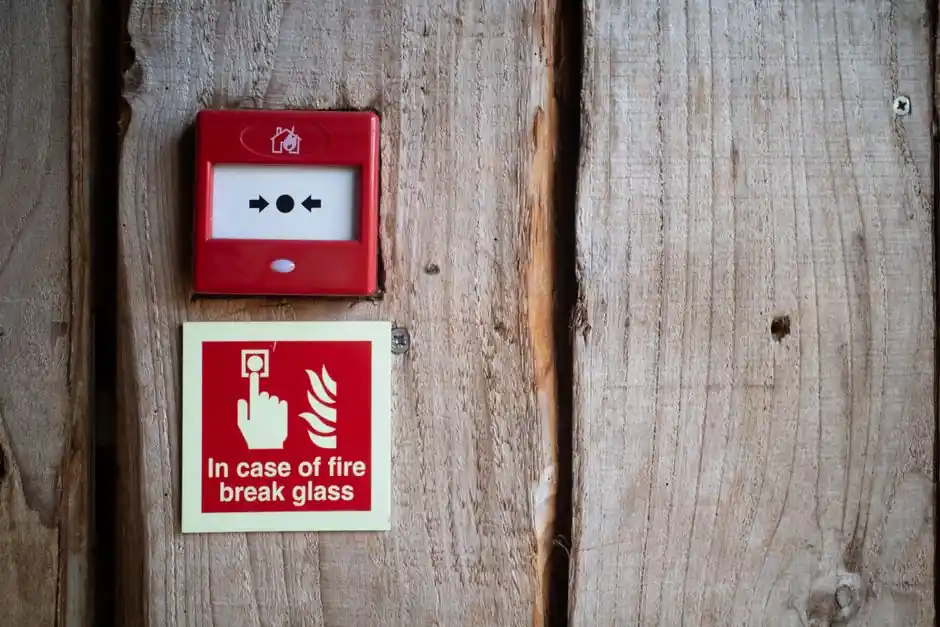
Plug-in heat detector heads detach from a permanently mounted base, so a facility can replace just the sensing element and reuse the wiring, base, and backbox, a configuration that defines most addressable commercial fire-alarm installs [S1][S2].
The Notifier FST-851 intelligent plug-in heat detector is now discontinued, with the manufacturer directing replacements to the FST-951 (white) or FST-951-IV (ivory) head; the B210LP, B710LP, B501, B200S, B200SR, B224RB, and B224BI bases remain compatible for the upgrade path [S2]. For routine service, distributors still stock legacy heads including System Sensor 5251B (also sold as Mircom MIX-5251B) and Potter 5151, and an ADI Global distribution catalog indexed 201 heat-detection SKUs as of 2026-07-28 [S5][S7].
How the Head-and-Base Architecture Works
Addressable plug-in detectors separate the sensing element (the head) from the mounting and wiring interface (the base); the head twists into a base that is fixed to an electrical backbox, which on Notifier 851 Series components must be at least 1.5" (3.81 cm) deep [S2]. The two parts share a protocol and an electrical pin map, so the head-base pair is a single engineering choice, not two independent ones. Honeywell's commercial heat detector line, including the Eclipse Series plug-in head and the legacy 5809 Series, follows the same head-twists-into-base convention that defines the heat detector category [S1].
This split is what makes head-only replacement practical: a failed thermistor, an outdated sensing algorithm, or a discontinued model number can be resolved by twisting one head off and another on, with no need to disturb the field wiring. Notifier's FST-851 to FST-951 swap is a textbook example: the heads change generation but the B210LP and B501 bases carry forward [S2]. Detector base replacement parts for Simplex, System Sensor, Edwards, Hochiki, and Apollo are stocked as a separate catalog category at distributors such as Protegis, which confirms that bases are treated as long-life infrastructure and heads as the consumable layer [S9].
Replacement Triggers: Discontinuation, End-of-Life Date Codes, and Failure Modes
Three triggers drive head replacement: manufacturer discontinuation, expiration of a date-stamped service window on the head, and a field failure. Notifier FST-851 is the clearest discontinuation case, marked "out of stock" with a 90-day warranty on remaining inventory and a published migration to FST-951 / FST-951-IV [S2]. Date-code expirations are more common on residential units: owners of Ei141 surface-mounted bases discuss whether to replace the base plate when a head reaches its stamped replace-by date, with the date code typically printed on the side of the head [S4]. Field failures on commercial addressable loops are usually a trouble signal at the panel pointing to a specific head address, after which the head is swapped without touching the base or the SLC wiring.
Failure modes specific to fixed-temperature and rate-of-rise (ROR) heat elements include drift of the fixed-temperature set point (commonly 135°F / 57°C or 194°F / 90°C depending on SKU), contamination of the thermistor by dust or oil mist in commercial kitchens, and mechanical damage from impact or painting over the head. The System Sensor 5251B is sold explicitly as an OEM replacement head for commercial fire alarm systems, indicating that the head-only aftermarket is a recognized segment rather than an ad-hoc workaround [S7]. For residential smart-home equivalents, the ADT SSHE5R0 ships as a complete kit with back cover, two Phillips-head screws, two drywall anchors, and two CR123A batteries, which is a different design pattern aimed at owner replacement rather than panel-managed addressable loops [S3].
Compatibility Constraints Between Heads and Bases

Head-base compatibility is governed by three concrete constraints: electrical pinout, digital protocol (on addressable loops), and physical base depth. The Notifier 851 Series compatibility list, B210LP, B710LP, B501, B200S, B200SR, B224RB, and B224BI, is paired with the explicit "all base types require an electrical backbox which is at least 1.5" (3.81 cm) deep" requirement, which is the kind of depth callout that gets missed when a head is upgraded but the original backbox is shallow [S2]. The B200SR sounder base is specified as a replacement for B501BH series bases in retrofit applications, which is a documented legacy-bridge case, not a universal cross-compatibility [S2].
Not every head fits every base even within one manufacturer's family. The 851 Series heads are listed as compatible for replacing 751 Series plug-in detectors in legacy applications, but the reverse, dropping an 851 head onto a 751 base, is not stated as supported, and Notifier's own migration pairs new heads with the B210LP / B501 / B200S family rather than the older bases [S2]. Silent Knight's SK-HEAT-W is sold as an addressable 2-wire fixed heat detector that includes the base in the box, which is a different procurement model where head and base arrive as one SKU and head-only service is not the intended path [S5]. Bosch and Simplex detector bases stocked by Life Safety Consultants cover a separate ecosystem with its own base part numbers, so a head from one brand will not drop into another brand's base even when the form factor looks identical [S8].
Decision Criteria: Fixed-Temperature, Rate-of-Rise, or Combination
Selection comes down to three technical criteria plus one installation criterion. Fixed-temperature heads, often designated with a "T" or a temperature suffix such as H365 (135°F) or H365HT (high-temperature), alarm when the sensing element reaches a calibrated set point and are the right choice for spaces with normal ambient swings, including most offices and storage rooms [S5]. Rate-of-rise heads, designated "ROR" in SK-HEAT-ROR-W and SS-HEAT-ROR, alarm on a rate of temperature climb, typically around 12-15°F per minute, and are preferred where fast-flaming fires are a concern but ambient temperature is stable, such as mechanical rooms [S5]. Combination fixed/ROR heads, sold as H365R-IV, merge both criteria and are the default spec in mixed-use commercial spaces where neither criterion alone is conservative enough.
Installation criterion is base depth and conduit entry. The Notifier 1.5" minimum backbox depth is a hard floor, not a guideline: shallow backboxes will not seat the head properly and will compromise the electrical connection [S2]. Procurement should also confirm the panel-side protocol (CLIP vs. FlashScan for Notifier, classic vs. advanced for System Sensor) before ordering, because a generation-mismatch head on a legacy panel can pass initial communication but fail the analog sensitivity drift check, a failure mode covered alongside other detection-loop troubleshooting in alarm flood causes and rationalization steps for process plants. For ceiling geometry, install height, and spacing limits, NFPA 72 spacing rules apply; this article does not cite a specific spacing number because the research did not return a verifiable figure for that parameter.
Procedure: Replacing the Head Without Re-Pulling Wire
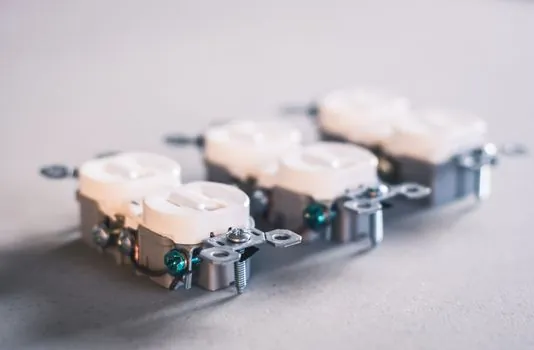
Step 1, verify the part: confirm the head model is on the panel's compatibility list and that the base part number is approved for that head. For the FST-851 to FST-951 swap, Notifier explicitly approves the B210LP, B710LP, B501, B200S, B200SR, B224RB, and B224BI bases, so any base outside that list is grounds to stop and re-spec the base as well [S2]. Step 2, isolate the loop: put the fire panel in detector maintenance or walk-test mode for the affected address, and document the head's address label so the new head is reinstalled to the same point. Step 3, twist and remove: most plug-in heads rotate roughly 10-15 degrees counter-clockwise against a spring-loaded base contact, then drop out of the base without tools [S2].
Step 4, inspect the base: check the spring contacts for pitting, the base shell for cracks from a base that was screwed too tight against a ceiling tile, and the backbox depth against the 1.5" minimum [S2]. Step 5, seat the new head: align the index mark on the head with the mark on the base, rotate clockwise until the detent clicks, and confirm the head is flush against the ceiling. Step 6, verify: clear the walk-test mode, run the panel's detector test, and confirm the new head returns an analog value within the manufacturer's expected range. Detector head condition and loop health are adjacent to the broader condition-monitoring alarm discussion in alarm fatigue in condition monitoring, since repeated "dirty detector" troubles on the same address are a legitimate signal to replace the head rather than just clean it. Step 7, document: update the as-built drawings with the new head model and the head's manufacture date, which becomes the next replace-by anchor for the unit.
When a Head Swap Is Not Enough
Three situations make head-only replacement the wrong fix. First, recurring nuisance alarms with no environmental cause typically indicate a sensitivity problem on the loop, not a bad head, and require a panel-level calibration review before any head is swapped. Second, a model that has been end-of-life long enough that no compatible head is in production forces a base replacement as well; for the FST-851, the FST-951 is the direct swap, but older families like the 751 Series may require both head and base change when migrating to a current-generation platform [S2]. Third, code-driven upgrades, such as a jurisdiction moving to a newer edition of NFPA 72 with revised spacing or a mandate for sounder bases in sleeping rooms, require a base change, and a head swap alone will not meet the new requirement.
For owner-replaceable residential units the protocol is different. On the Ei141, replacing just the head on an expired date-coded unit is a documented owner action, but owners debate whether to also replace the surface-mounted base plate when a ceiling has been repainted or the base has yellowed, which is an aesthetic and seating concern rather than a functional one [S4]. The ADT SSHE5R0 kit is designed for full-unit replacement, head and base together, with two CR123A batteries as the consumable that drives a 10-year typical service interval [S3]. In commercial settings, the existence of dedicated heat treatment furnace sensing categories is unrelated; that encyclopedia page covers industrial process heating, not life-safety heat detection, and the two should not be conflated when sourcing.
Track these signals over the next two quarters: stock availability of FST-951 relative to FST-851 at major distributors, any announced end-of-life on the B200S / B200SR sounder base family, and NFPA 72 edition adoption by the major U.S. AHJs, which will set the next round of head-and-base migration pressure.
Component reference pages worth checking: mold base.