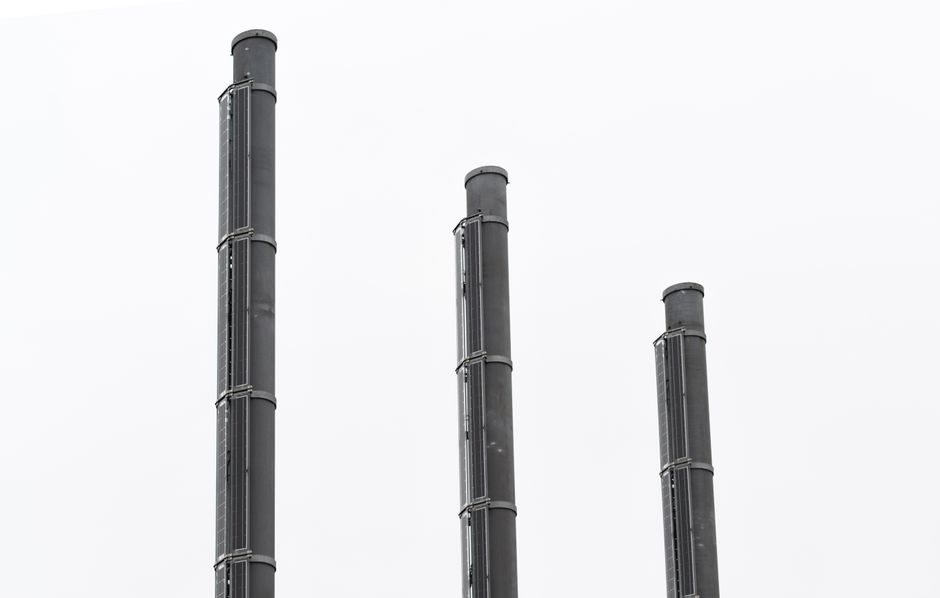
Industrial pneumatic silencers (also called exhaust mufflers) are specified first by port thread/OD and then by the noise-versus-backpressure trade-off they impose on the exhaust port of valves and pneumatic cylinders [S2][S3].
Selection is rarely about one number: a unit that drops exhaust noise by 20-30 dB typically adds measurable backpressure, and that penalty grows with cycle rate and line pressure. Sizing the silencer to the exhaust port — not just the price tier — is what separates a quiet plant from one that chokes its pneumatic actuators on every shift change.
Port Matching: Thread, Tube OD, and NPT Family
Silencer port families cover metric, inch BSP, and NPT threads in tube sizes 04-16 mm (M5 up to 1/2"), per standard manufacturer SKU sheets [S2]. The same supplier data lists three thread conventions — Metric, Inch, NPT — as the primary spec delimiter; choosing the wrong family is the single most common field rejection cause [S2]. For panel-mount exhaust manifolds, both pneumatic fittings thread pitch and silencer port must be verified before bulk order, since parallel BSPT and tapered NPT are visually similar but not interchangeable.
Quick-connector exhaust silencers (push-in 4-8 mm OD) are the default for compact valve terminals; threaded brass mufflers dominate where the port is already drilled. Confirming tube OD against the silencer's push-in collet dimension avoids the chronic leak seen when 6 mm tubing is forced into an 8 mm silencer nose.
Body Materials Compared: Sintered Bronze, PE Plastic, Brass, Stainless
Four materials dominate the 2026 catalog set: sintered bronze, PE plastic, brass, and 303/316 stainless [S3][S4]. POREX sintered-polymer bodies and molded PE plastic silencers are the everyday picks for general factory air — light, cheap, and replaceable, with sound reduction in the 20-30 dB range and modest backpressure [S3][S4]. Brass (often nickel-plated) and stainless units cost more but tolerate water-in-line, oil mist carryover, and ambient temperatures that would age or embrittle plastic [S3].
On the four criteria buyers actually weigh, the options line up as follows. (1) Noise reduction: all four reach 20-30 dB at rated flow; sintered bronze is the benchmark, plastic is within 2-3 dB, brass and stainless depend on internal geometry more than alloy. (2) Backpressure: sintered bronze is the lowest; plastic rises with cycle rate; brass/stainless sit between, unless fitted with a flow-path insert. (3) Media tolerance: plastic fails on oil-free aggressive solvents; bronze handles lubricated air; brass is fine for most factory compressed air; stainless is required for food, pharma, or washdown [S3][S4]. (4) Cost-per-unit at M5-M10 port: PE plastic is the cheapest, then sintered bronze, then brass, with stainless 4-8x the plastic price at the same port size.
Noise Reduction vs Backpressure: The Real Trade-off

POREX's product literature explicitly positions pneumatic silencers as a balance between "noise reduction and backpressure in the pneumatic system," favoring designs that "deliver durability, fast assembly, and cost efficiency" over absolute maximum attenuation [S4]. A 20-30 dB drop is the practical ceiling for off-the-shelf silencers; pushing further requires longer flow paths, which raise exhaust-side backpressure and slow actuator retraction [S4].
For high-cycle solenoid valves driving pneumatic conveyor lines, the operating metric is exhaust mass flow per minute, not just port size — undersized silencers become a hidden cycle-time throttle. If cycle time is the priority and noise is secondary, a flow-optimized silencer with lower dB reduction is often the correct pick over a "quieter" model that starves the actuator.
Threaded vs Push-In vs Flow-Through Variants
Three mechanical variants sit on the shelf. Threaded mufflers (M5, M7, 1/8", 1/4", 3/8", 1/2", NPT equivalents) thread directly into the exhaust port and dominate the MISUMI Thailand catalog at 67 SKUs across 16 brands, priced from ฿12.13 to ฿3,916.80 [S1]. Push-in silencers accept metric tubing directly — convenient for OEM builds but require collet spares. Flow-through / in-line silencers install in the exhaust line itself when the valve port is inaccessible or shared among multiple actuators.
Specialty models — high-temperature (up to 150°C) stainless, flame-arrestor exhaust silencers for hazardous-area skids, and water-resistant units for outdoor washdown — round out the catalog. For hazardous-area service adjacent to hydraulic power units, spark-resistant stainless and certified flame arrestors are mandatory rather than optional.
Cycle Rate, Pressure Rating, and Sizing Logic

Standard pneumatic silencers are rated for compressed air at 0-10 bar (some up to 16 bar) and continuous-duty cycle rates in the tens-per-minute band [S2]. Above 60 cycles/minute, the backpressure penalty compounds and a sintered-bronze or brass body outperforms plastic on thermal mass. Below 10 cycles/minute, the cheap PE plastic option is almost always the correct pick — the noise benefit dominates and the backpressure cost is invisible.
Quick sizing rule: silencer nominal port size should equal or exceed the valve exhaust port; never downsize, even by one thread step. For pneumatic tubing runs longer than 3 m between valve and silencer, switch to in-line silencer placement and oversize one port step to recover the line-volume penalty.
Application Fit: Solenoid Valves, Cylinders, and Hazardous Areas
The dominant end-use is exhaust ports on 3/2 and 5/2 solenoid valves, followed by single-acting cylinder exhaust ports, and finally air-blow / pneumatic conveyor purge applications where silencers double as contamination barriers [S2][S3]. The AN40-N04 series from SMC, for example, is a standard threaded silencer sized for NPT 1/4 ports and remains widely stocked in the global MRO channel [S5].
For hazardous-area skids, silencer selection overlaps with Hazardous-Area Skid Hydraulic Valve Selection logic: stainless body, certified flame arrestor, and a documented temperature class (typically T4-T6) are required, not just "stainless looks good." Food, pharma, and outdoor washdown also force stainless 316 over 303 for chloride resistance. For non-hazardous general factory air, PE plastic or sintered bronze remains the cost-effective mainstream.
Supplier Landscape: Japan, China, Europe, USA
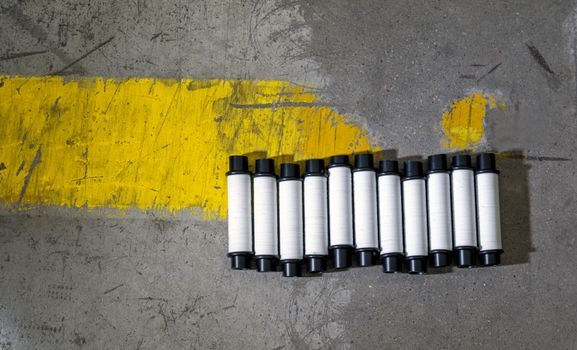
The global SKU set is dominated by four supply clusters: Japanese majors (SMC, CKD, KOGANEI, PISCO, CHIYODA, NIHON SEIKI, TAIYO, MYOUTOKU), Taiwanese/Chinese volume makers (AIRTAC, CHELIC, EASUN, plus Zhejiang-based NPPC, Ningbo Maosheng), European specialists (FESTO, IFM), and USA polymer-pioneer POREX [S1][S3][S4][S6]. The MISUMI Thailand listing alone spans 16 brands at 67 SKUs in the silencer family, with Japanese brands occupying the mid-to-premium tier (฿100-฿3,916) and AIRTAC occupying the value tier (฿12.13 entry price) [S1].
China-origin OEM/ODM suppliers — Zhejiang Pneupid Technology (founded 2009) and Ningbo Maosheng Pneumatic Machine, among others — handle custom branding, with sample service available and minimum order quantities starting around 50 pieces at supply capabilities of 50,000 pieces per day [S2][S3][S6]. Lead time from China Main Port is 10-15 days on standard pneumatic fitting silencers [S2].
Common Failure Modes and What to Avoid
Three failure modes account for most field returns. (1) Clogged silencer from oil aerosol and dust — symptom is slow actuator retraction; fix is regular replacement on a 6-12 month interval, not cleaning. (2) Cracked plastic body from oil-free aggressive solvent exposure; switch to brass or stainless. (3) Port thread mismatch on import spares — metric fine thread mixed with NPT in a field-rebuild is a known failure pattern [S2][S3].
Do not use a silencer as a flow-restrictor substitute for a speed controller — backpressure spikes with cycle rate, whereas a needle valve gives predictable restriction. Do not use plastic silencers near open flames or in ambient above 80°C; the body softens and the noise reduction collapses. Do not use a single large silencer to serve multiple valve exhausts in parallel — the shared exhaust becomes a pneumatic crosstalk problem.
Standards and Documentation
Pneumatic silencers are not a "certified component" in the ATEX/IECEx sense; they inherit the certification envelope of the valve or pneumatic actuator they attach to. For hazardous-area builds, look for ATEX 2014/34/EU or IECEx certificates on the parent valve, then select a stainless or brass silencer with a documented compatible temperature class, rather than relying on the silencer's own markings. ISO 8573-1 compressed-air purity class governs upstream filtration, which directly affects silencer service life. [S3]
Shortlist rule of thumb: PE plastic for general factory air below 10 cycles/min; sintered bronze for 10-60 cycles/min and oil-lubricated lines; brass for water-in-line or higher temperature; 303/316 stainless for hazardous-area, food/pharma, or washdown. Verify port thread family (Metric/Inch/NPT) and tube OD before placing the bulk order, and size the silencer port equal to or one step above the valve exhaust port [S1][S2][S3][S4].
Trackable signals to watch in the next procurement cycle: tightening of ISO 8573-1 purity requirements in food-grade pneumatic lines (likely to push buyers from PE plastic to 316 stainless silencers), and broader stocking of flame-arrestor exhaust silencers for hazardous-area skid retrofits, mirroring the spec discipline now standard on the Hazardous-Area Skid Hydraulic Valve Selection side.