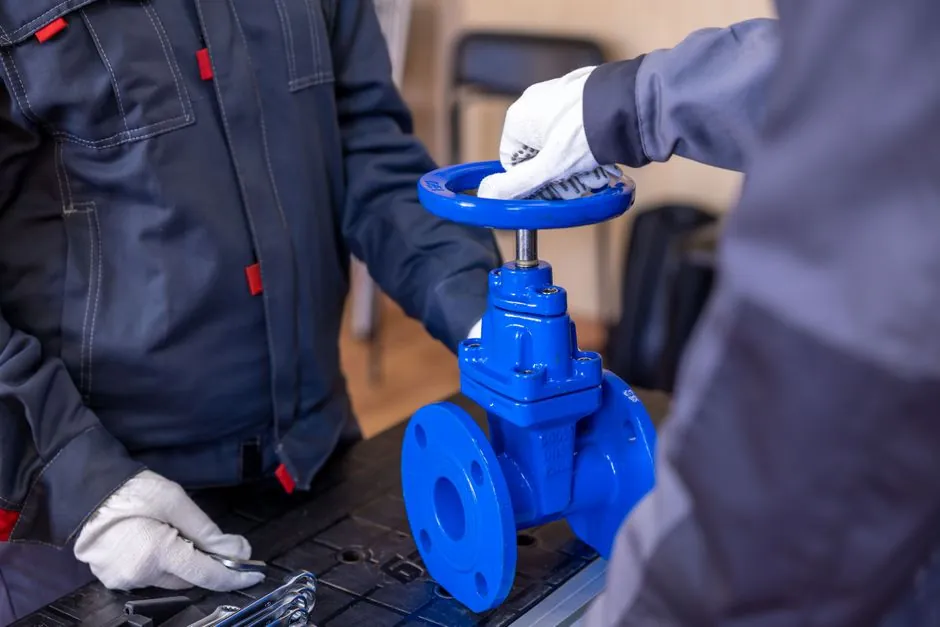
Pneumatic valve actuators commonly deliver quarter-turn rotation through about 90 degrees, making them suitable for automated ball and butterfly valve isolation in chemical processing [S1][S2].
Selection must combine valve torque, actuator air pressure, stem or shaft compatibility, fail position, wetted materials, and chemical concentration, temperature, pressure, and contamination limits [S1][S4].
Match the actuator mechanism to the valve motion
Quarter-turn actuators rotate ball valves and butterfly valves by approximately 90 degrees, while linear actuators move gate and globe valve stems directly; multi-turn actuators suit valve types requiring several revolutions [S1][S7]. Pneumatic mechanisms use compressed air to move a piston or diaphragm and are widely applied where fast remote operation is required [S2].
A rack-and-pinion actuator converts piston-driven linear motion into rotary motion and is generally compact for small-to-medium ball, plug, and butterfly valves. Scotch-yoke mechanisms convert linear motion into high rotary torque and are used for large quarter-turn valves, while diaphragm or piston pneumatic actuators cover lower-to-medium torque duties [S2].
For chemical duty, select the actuator by required output torque rather than valve size alone. The assembly must account for stem or shaft loading, break-to-open and break-to-close torque, operating differential pressure, friction, and the required seating or unseating margin [S1][S3].
Use ISO 5211 as the mechanical selection base
ISO 5211 is identified as a standard relevant to pneumatic actuator valve selection [S3]. Actuator compatibility also depends on shaft diameter, shaft shape, shaft length, and the geometry of the valve top flange [S5].
A mating ISO 5211 interface can simplify actuator interchangeability, but it does not prove that the selected actuator has enough torque or stroke for the service. A spacer or coupling may be required when the valve stem and actuator do not align directly, and that adapter becomes part of the load and failure analysis rather than a minor installation detail [S5].
The chemical-service package should identify the valve interface, required break torque, operating torque, air pressure, allowable travel, and any required adjustment. For pneumatic instruments, verify whether the candidate is a pneumatic valve actuator, a pneumatic diaphragm actuator, or a rack-and-pinion unit rather than treating all pneumatic packages as interchangeable [S2].
Compare the principal pneumatic configurations
Double-acting pneumatic actuation uses air pressure for both opening and closing and generally avoids a stored spring, while spring-return pneumatic actuation drives against a spring to establish a default position after air or power loss [S1][S2]. Fail-close and fail-open functions must be defined from the process-safety requirement, not from whichever actuator is mechanically convenient [S1][S3].
Spring return should not be treated as a universal fail-safe solution. Its stored energy, spring rate, available air pressure, and required seating torque determine whether the valve reaches its specified safe position. Double-acting systems require a defined strategy for loss of instrument air and loss of electrical power to the directional control circuit [S1][S3].
Separate actuator durability from chemical compatibility
The actuator selects the mechanical force; the valve selects the wetted-material system. Acids, alkalis, salts, solvents, oxidizing chemicals, and concentrated process fluids can attack the body, ball, seats, seals, stem, gaskets, or internal lining if compatibility is not checked [S1]. Material selection requires the exact chemical name, concentration, temperature, pressure, and contamination level rather than a generic service label [S1].
Stainless-steel ball valves are commonly considered for chemical plants and solvent service, while PVC ball valves can suit highly corrosive acid lines within their temperature, pressure, and chemical limits [S5]. PTFE-faced butterfly valves are also used for selected aggressive-fluid duties, but the seat, disc, stem, body, and gasket materials must be reviewed as a complete set [S5].
Hard particles and dust are a different selection problem from corrosion. They can scratch sealing surfaces, damage seats, and eventually stop a ball valve from closing reliably [S5]. Hard particles such as dust, dirt, and sand in the fluid can damage ball-valve sealing surfaces and impair closure [S5].
For fugitive-emission-sensitive applications, seat selection and valve testing require explicit review.
Set the pneumatic supply and control package
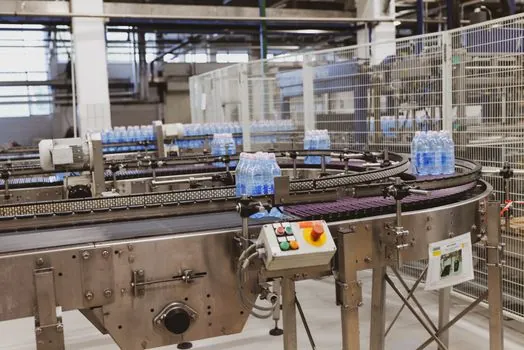
The actuator sizing envelope must be checked across the minimum and maximum available supply pressure, including the pressure drop from the filter regulator and piping. A solenoid valve controls the compressed-air supply, limit switches can provide open and closed feedback to a PLC or DCS, and a filter regulator helps maintain suitable actuator air pressure and quality [S1].
Instrument-air quality is not established by naming “compressed air.” The specification should define the pressure range at the actuator, air supply standard, filtration and condensate requirements, tubing size, and whether the actuator can stroke fully at the minimum specified pressure. Connections should use compatible pneumatic tubing and pneumatic fittings selected for the service environment and pressure rating [S1].
Position feedback needs an explicit failure implication. Open and closed switches confirm commanded endpoints but do not automatically prove that the ball or disc has reached the safe process position under low air pressure, high differential pressure, or seat-sticking conditions. A positioner is more relevant to proportional control than to a simple open-close actuator, and it should not be added without an analog-control requirement [S1][S2].
Apply chemical-service screening before detailed sizing
Use ball valves for tight isolation, chemical transfer, dosing, tank switching, and automated sequencing where low pressure loss and a full-bore flow path are priorities [S1]. Use butterfly valves where compact construction, lower weight, and economical installation outweigh the need for a ball-type full-port flow path, particularly in liquid, abrasive, solids, or vapor shut-off applications [S4][S5].
Do not choose a pneumatic actuator for a valve whose chemical compatibility, pressure rating, temperature rating, torque, or sealing class remains unresolved. A polished actuator specification cannot compensate for an unsuitable seat, body, stem, gasket, or disc. The ball valve selection guide provides the valve-side checks that should precede actuator selection.
ATEX-certified products may be required where the actuator, solenoid valve, switch box, positioner, or associated electrical equipment falls within a hazardous-area duty [S5]. For the valve itself, specify the required leakage class, material evidence, actuator interface, fail action, and available space before requesting a vendor package.
Issue a complete actuator data sheet
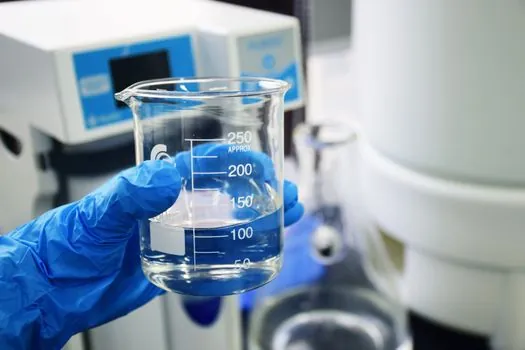
A chemical-service actuator inquiry should list valve type and size, valve model if known, flow path, end connection, stem or shaft details, ISO 5211 interface, break-to-open and break-to-close torque, operating torque, seat type, design pressure, design temperature, fluid composition, concentration, solids content, minimum and maximum supply-air pressure, fail position, stroke time, control signal, hazardous-area classification, required feedback, and installation orientation [S1][S3].
The inquiry should also define actuator material, instrument-air quality, tubing and fitting requirements, manual override, limit-switch arrangement, maintenance access, and applicable valve leakage and fugitive-emission requirements [S1][S4]. For powered accessories, the pneumatic valve actuator package should use components suited to the specified voltage, signal type, and hazardous-area classification rather than inheriting accessories from another valve family [S2][S5].
The shortlist logic is straightforward: reject interfaces that cannot be coupled or safely loaded, reject materials that cannot tolerate the stated chemical and temperature, then compare candidate pneumatic mechanisms by verified torque, stroke, air supply, fail action, feedback, and certification. Obtain manufacturer torque and dimension data against the selected valve before purchasing, because actuator listings are often quoted by nominal valve size rather than by the exact break-torque requirement [S3].