
PC is an amorphous, near-colourless thermoplastic whose installation window is set by four hard numbers: density 1.18-1.22 g/cm³, linear expansion 3.8×10⁻⁵ /°C, heat-deflection temperature ~135°C (unfilled) and a notched Izod impact strength of 600-900 J/m at room temperature [S3].
Two material facts govern every on-site decision: PC is not UV-stable and not alkali-resistant, yet it is intrinsically flame-retardant (UL94 V-2 without additives) and has a dielectric constant of 3.0-3.2 with 120 s arc resistance [S3]. The installation plan therefore separates "dry mechanical assembly" from "outdoor/UV-exposed" and from "chemical-clean" duty before any tool is picked up.
Drying and Pre-Conditioning: The Single Most Common PC Field Failure
PC hydrolyses at temperature, so any moisture above ~0.02% in the resin before processing produces silver streaks, molecular-weight drop and brittle welds [S3]. Drying is non-negotiable for injection-moulded or extrusion-welded assemblies and the recipe is 120°C for 4-6 hours in a desiccant or vacuum dryer; field-fabricated thermoformed sheets need a hot-air pre-heat of 110-120°C until the sheet reaches uniform transparency before forming.
For adhesive bonding, dry the mating surface with isopropanol and a lint-free wipe; residual mould-release or cutting-oil film is the documented cause of cohesive failure within the adhesive layer rather than the joint. A quick acceptance test: after wiping, water should sheet evenly on the PC surface — if it beads, re-clean before any adhesive is applied.
Mechanical Fastening: Drill, Tap, and Don't Crush
PC is notch-sensitive and creeps under sustained load, so bolted joints must use torque lower than steel practice and must include a flat washer or shoulder to spread the clamp force. Drill speeds of 80-120 m/min with slow feed and air-cooling avoid localised heat build-up; countersink the head seat and clear chips after every hole.
Self-tapping screws for plastic (thread-forming, not thread-cutting) are acceptable for panels under 6 mm; for thicker or load-bearing sections, use inserts (ultrasonic, heat-staked brass or moulded-in captive nuts). A practical acceptance criterion: a correctly torqued PC bolt joint should leave a visible, uniform compression mark on the washer but no white stress halos around the hole — halos indicate over-torque and micro-cracking.
Adhesive Selection: Match the Resin Grade to the Joint
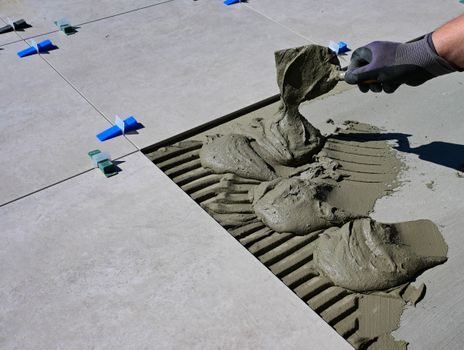
Adhesive grade choice is driven by temperature, water-exposure and bond-area rather than by the substrate identity. For general structural joints, G-933 single-component room-temperature-curing elastic adhesive cures in seconds-to-hours depending on viscosity and tolerates wide thermal swings, including sub-zero service [S3].
For fast tacking, KD-833 cyanoacrylate sets in seconds but the cured layer is hard and brittle and will not survive above 60°C hot-water immersion — do not specify it on dishwasher, steriliser or outdoor-rain components [S3]. Large-area or film lamination goes to QN-505 two-component soft adhesive, again with limited high-temperature resistance, while QN-906 two-component is the high-temperature option. Elastic, waterproof gasketing uses G-988 single-component RTV: 1-2 mm thickness sets in ~10 minutes, reaches handling strength in 5-6 hours and full cure in at least 24 hours with no mixing or heat required [S3]. Transparent cosmetic joints on PC-to-PS use KD-5606 UV-curable adhesive under a UV lamp for a near-invisible bond [S3].
UV, Chemical and Thermal Limits: When PC is the Wrong Material
PC fails in three documented environments and the spec should call this out before fabrication: it does not resist strong alkali, it yellows and embrittles under prolonged UV exposure, and it loses molecular weight in hot water or high-pressure steam — so it is excluded from repeated steam-sterilisation service [S3]. Where outdoor exposure is unavoidable, specify a UV-stabilised or capped grade (anti-UV weathering PC, or a coextruded UV-protective top layer) and accept a yellowing shift as a planned maintenance item.
Thermal service is bounded by ~135°C heat-deflection (unfilled) — glass-fibre reinforced grades push this about 10°C higher — and by a glass transition near 145°C, above which PC begins to soften and creep rapidly. For chemical exposure, the rule is: PC tolerates weak acids, weak bases and neutral oils, and degrades against organic solvents and strong alkalis [S3]. A common in-the-field test for solvent compatibility: rub a hidden area with the proposed cleaner; any tackiness, whitening or crazing within 60 seconds means reject the chemical.
Cutting, Forming and Welding Tolerances

PC can be sawn, routed, laser-cut, cold-bent within limits and hot-formed above ~150°C. Maintain linear-expansion headroom of 3.8×10⁻⁵ /°C when designing long runs of glazing or cladding — a 3 m panel moves roughly 3.4 mm across a 60°C seasonal swing in an unfixed installation. For thermoforming, pre-dry sheet as in section 2 and heat evenly to avoid cold-stretch whitening.
Joining by solvent welding is technically possible with dichloromethane or 1,2-dichloroethane, but industrial practice has moved to adhesive bonding for field work because of VOC, operator-exposure and joint-strength repeatability. Hot-plate welding and ultrasonic welding are preferred for production assemblies; ultrasonic welds typically achieve 60-80% of parent-material strength on thin-walled PC when amplitude, pressure and horn design are tuned to the grade.
Acceptance Test and Field Inspection
A passing PC installation shows no white stress marks around fasteners, no visible silver streaks at bonded or welded lines, panel-to-frame gaps within ±1 mm/m and freedom from tackiness at chemical-clean areas. Document the adhesive batch and cure time, the dryer temperature/time log and the torque values used at each bolted joint — these three records cover the failure modes most often seen in post-installation callbacks [S3].
Where the duty case is outdoor glazing, instrument panels or chemical-plant sight-glasses, escalate to UV-stabilised or chemical-resistant modified PC grades rather than standard bisphenol-A PC, and confirm the service temperature stays below 120°C continuous. Two trackable signals to watch in 2026: revised UV-cap cap-layer formulations extending weathering warranty to 15 years, and tighter hydrolytic-stability grades for medical and food-contact reprocessing.
The underlying component specifications are covered under polycarbonate, industrial pc, and linear guide.
This topic is covered further in Safety Relay Installation: Spec Map, Wiring Rules, and Zone-Specific Acceptance.