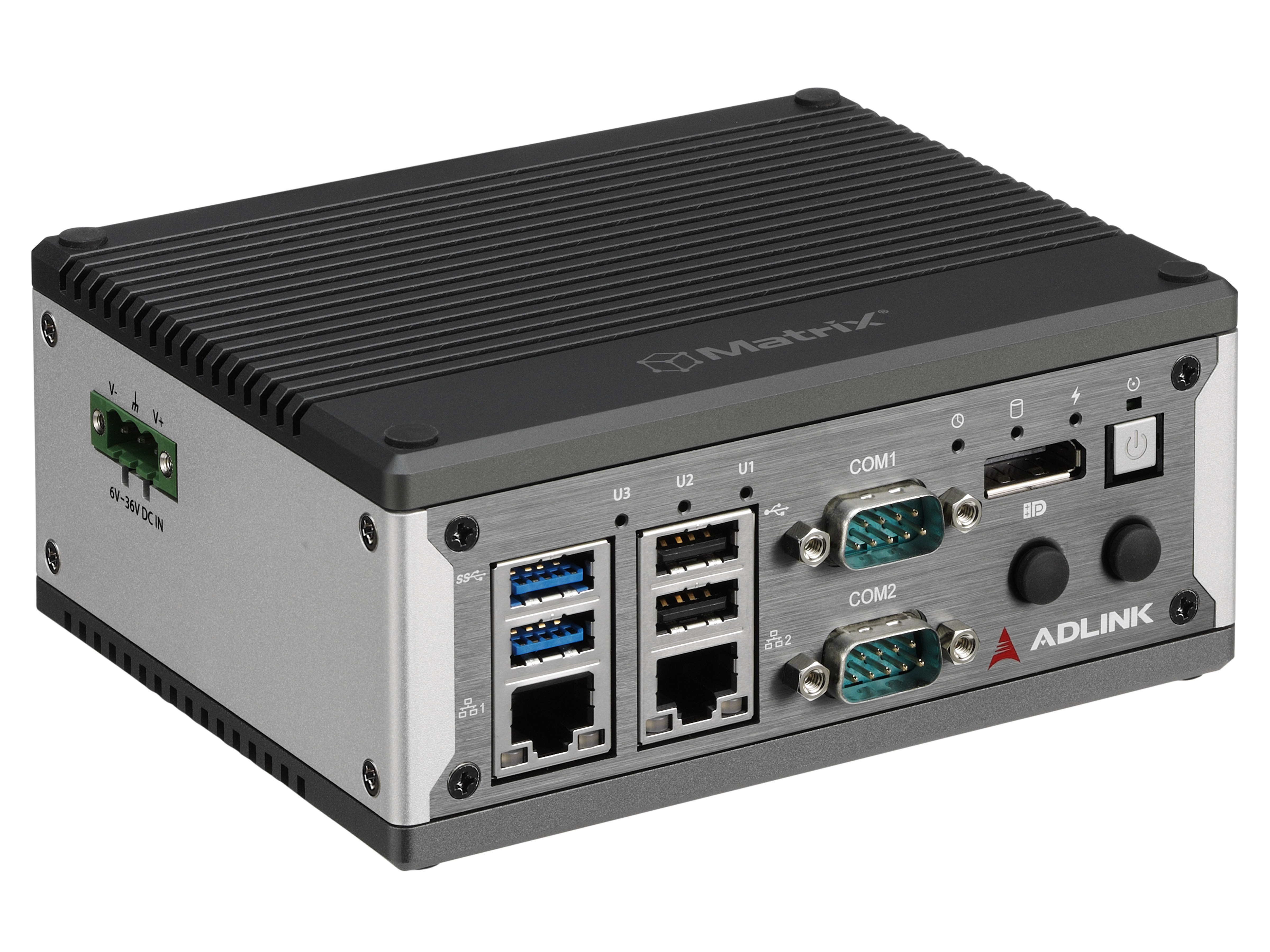
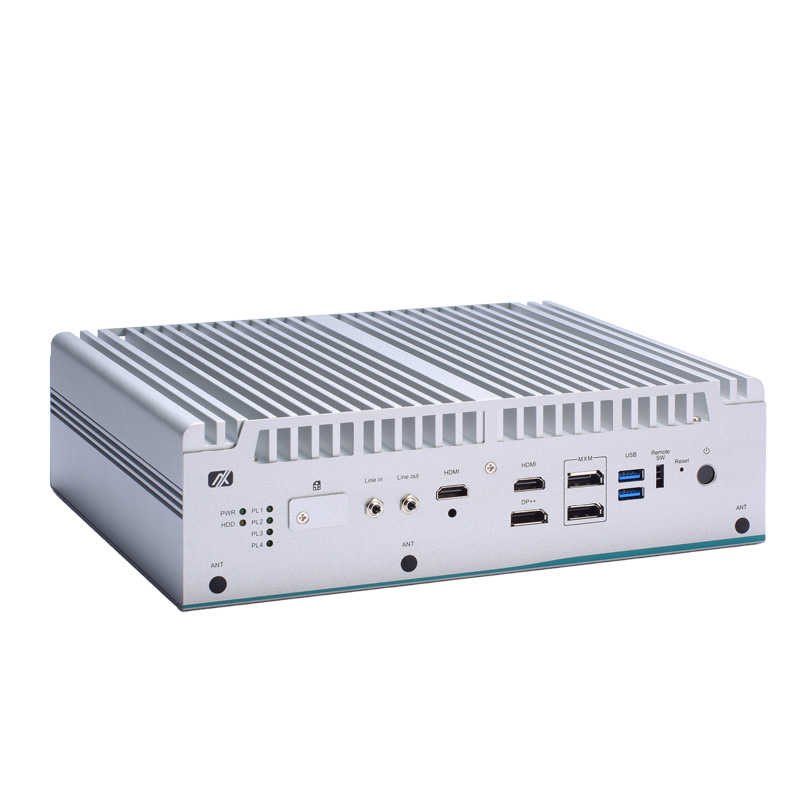
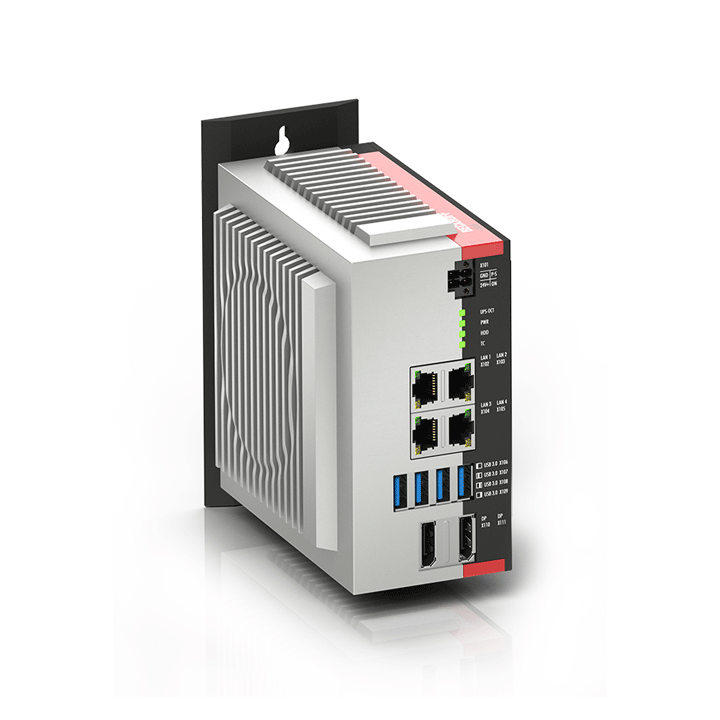
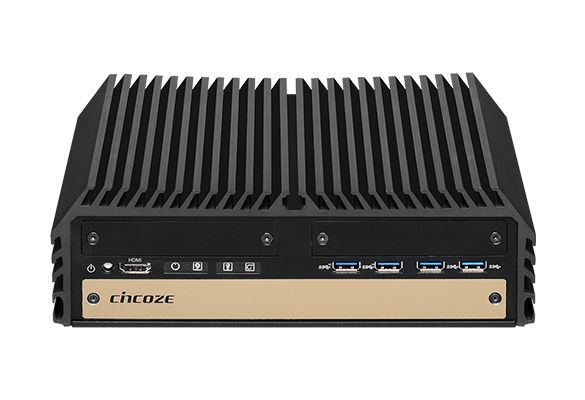
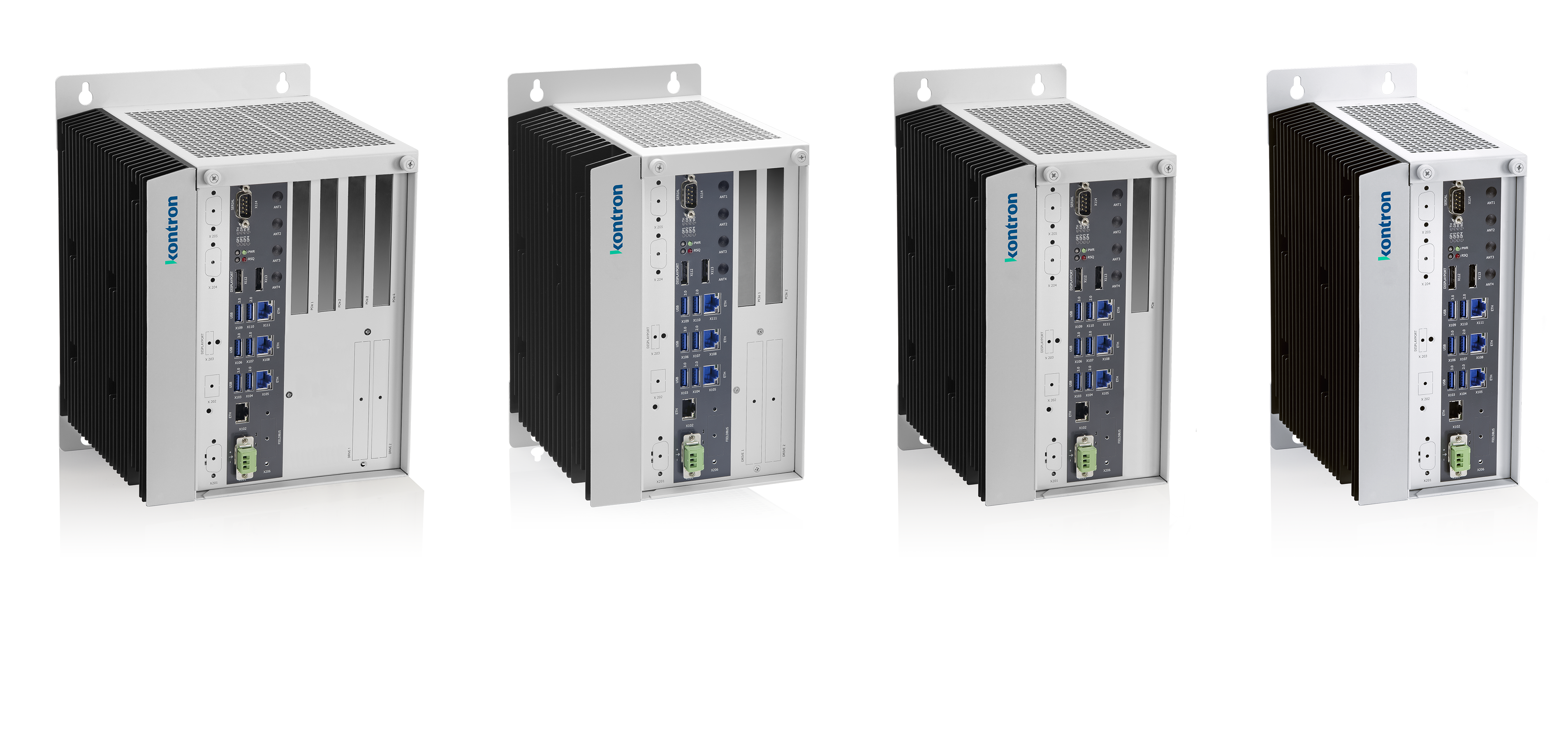
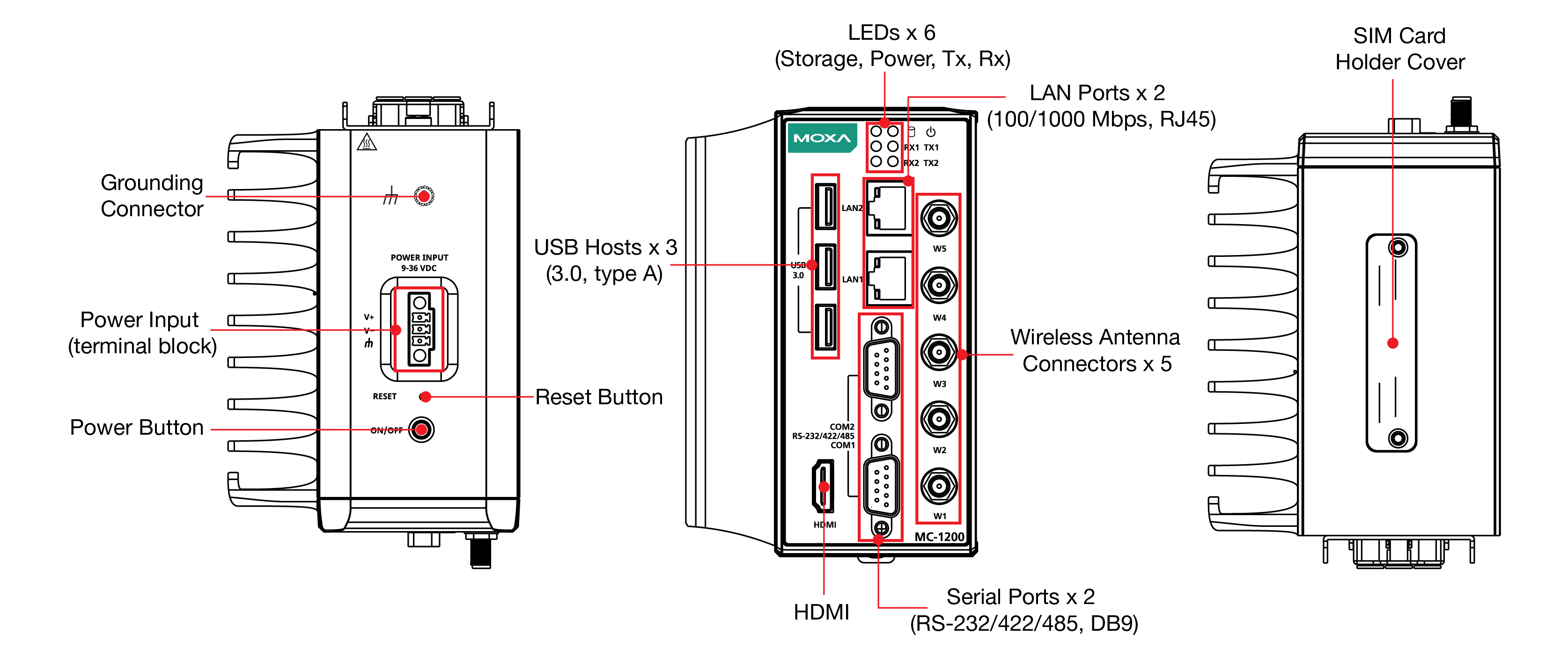
An industrial PC (IPC) is a computer engineered for continuous operation in factories, machines, vehicles, and outdoor edge sites, where dust, vibration, temperature swings, electrical noise, and 24/7 duty would quickly disable an office desktop. It runs the same x86 or ARM software ecosystem as a commercial PC, but its enclosure, cooling, storage, power input, and component grade are chosen for reliability and a long service life rather than peak benchmark numbers.
Industrial PCs sit at the boundary between the control layer and the IT layer. They host human-machine interfaces (HMI), run soft-PLC and motion control, execute machine vision and quality inspection, aggregate sensor data at the network edge, and increasingly run analytics and AI inference next to the equipment they monitor. This guide explains the form factors, the internal architecture, the environmental standards, and the spec-sheet language a buyer needs to select one with confidence.
Photo: David Lippincott for Chassis Plans, CC BY 3.0, via Wikimedia Commons
This guide is written for industrial purchasing engineers and design engineers. It covers 6 chapters, from what an industrial PC is, through form factors, processor and cooling architecture, storage and bus standards, and spec-sheet decoding, to a structured selection sequence, with 7 selection FAQs and a manufacturer overview. Environmental and form-factor references follow public standards including IEC 60068-2-27 and IEC 60068-2-64 (shock and vibration), IEC 60529 (IP ingress protection), EN 50155 (railway), PICMG COM Express, and the SGET SMARC and Qseven module specifications.
Chapter 1 / 06
What is an Industrial PC
An industrial PC is a general-purpose computer hardened for the factory floor. It is built around the same processor families, operating systems, and software toolchains as a desktop, so engineers can run Windows, Linux, or a real-time hypervisor and reuse standard development skills. The difference lies in everything around the silicon: a conduction-cooled or sealed enclosure, wide-temperature components, industrial-grade flash storage, locking connectors, wide-range DC power input, and a documented commitment to keep the exact same board available for years. The goal is not the highest benchmark score, but the lowest probability of an unplanned stop on a line that may run every hour of every day.
The reliability case is structural. A commercial desktop is validated for roughly an 8-hour office day in a clean, climate-controlled room. An industrial PC is validated for 24-hour continuous duty in an environment that may include conductive metal dust, oil mist, condensation, vibration transmitted from nearby motors, voltage sags on a shared DC bus, and ambient temperatures well outside the 0 to +35 degrees Celsius office window. To survive this, IPC builders remove or seal every weak point: the fan becomes optional, the vents disappear, the spinning hard disk becomes a solid-state device, and the screwless RAM and connectors become latched or soldered.
A second defining trait is long product availability, often called longevity or long lifecycle. Consumer motherboards are revised every few months as chipsets and components rotate. Industrial customers cannot requalify a machine that frequently, so embedded platform vendors commit to supplying the identical board for 7 years, and many automation-grade controllers for 10 to 15 years, by buying long-life embedded processor SKUs from Intel and AMD and by controlling component changes through revision management. This availability promise, not raw speed, is often the single most important reason a buyer pays an IPC premium.
The category spans a wide capability range. At the small end sit ARM Cortex or Intel Atom DIN-rail controllers drawing a few watts and running a soft-PLC. In the middle are fanless box and panel PCs with Celeron or Core processors for HMI and machine vision. At the high end are rack-mounted server-class machines with Xeon processors, ECC memory, and RAID storage for SCADA servers, virtualization hosts, and edge data centers. Selecting an IPC is, at root, the act of mapping a specific duty cycle and environment onto one of these tiers.
Major suppliers in this space include Siemens (SIMATIC IPC), Beckhoff (CX and C-series), Advantech, Kontron, congatec, B&R, Pro-face, Axiomtek, and OnLogic, among many regional builders. Each maintains a portfolio that crosses the form factors and processor tiers described in the chapters below, so the same brand may offer everything from a palm-sized DIN-rail module to a four-socket rack server.
Chapter 2 / 06
Form Factors and Mounting
Industrial PCs are classified first by physical form and mounting, because that decision is dictated by where the machine has space and how the operator interacts with it. The five mainstream families are Panel PC, Box PC, Embedded or DIN-rail PC, Rack PC, and the modular computer-on-module (COM) class. They share internal architecture and differ mainly in packaging, display integration, expansion, and how they attach to the equipment. The table below summarizes the trade-offs.
Form factor
Mounting
Display
Typical use
Panel PC
Cabinet cutout / arm
Integrated touch
HMI, operator station
Box PC
Wall / VESA / frame
External, optional
Machine vision, edge analytics
Embedded / DIN-rail
DIN rail in cabinet
None
Soft-PLC, controller
Rack PC
19-inch rack, 1U to 4U
None
SCADA server, virtualization
COM module
Carrier board
Via carrier
OEM custom devices
Panel PC. A Panel PC fuses the computer and a touch display into a single sealed unit installed in a cabinet cutout or on a pendant arm. The operator-facing bezel is typically rated IP65 or IP66 so it can be wiped down or pressure-washed without ingress. Display sizes commonly run 7, 10, 12, 15, 19, 22, and 24 inches, in both 4:3 and widescreen aspect ratios, with projected-capacitive multi-touch now standard. Panel PCs are the default for operator stations and machine HMIs where one device must be both screen and computer.
Box PC. A Box PC is a display-less compute block with dense I/O, mounted to a wall, a VESA bracket, or the machine frame. With no screen it accepts a wider performance envelope and richer connectivity: multiple Ethernet ports, serial COM ports, USB, digital I/O, and PCIe or M.2 expansion for frame grabbers, fieldbus masters, or GPU accelerators. Box PCs dominate machine vision, edge analytics, and any role where the display, if any, lives elsewhere on a separate monitor.
Embedded and DIN-rail PC. These compact controllers clip onto the 35 mm DIN rail inside a control cabinet, sitting alongside PLCs, terminal blocks, and power supplies. They are almost always fanless, accept 24 VDC control power directly, and frequently run soft-PLC, motion, or gateway software. Beckhoff CX-series Embedded PCs and Siemens SIMATIC IPC BX devices are representative; extended operating ranges of -25 to +60 degrees Celsius are common in this class, allowing use in unconditioned cabinets.
Rack PC. Rack PCs follow the 19-inch EIA-310 rack standard, sized in U increments from 1U to 4U, and are deployed in control rooms and server cabinets. They scale to server-class Xeon processors, ECC memory, hardware RAID, and redundant power supplies, serving as SCADA servers, historian databases, and on-premises virtualization or edge-AI hosts. The SIMATIC Rack PC line, for example, spans client, workstation, and server classes within the same family.
COM modules. Rather than a finished computer, a computer-on-module places the CPU, memory, and core I/O on a standardized plug-in board that an OEM mates to a custom carrier carrying the application-specific connectors. This separates the fast-moving processor from the slow-moving product mechanics, so a device maker can refresh the CPU generation without redesigning the whole board. The dominant standards, COM Express, SMARC, Qseven, and the legacy stackable PC/104, are detailed in Chapter 4.
Chapter 3 / 06
Processor and Cooling Architecture
The processor choice sets the performance ceiling, the thermal design power (TDP), and therefore whether the machine can be fanless. Industrial PCs draw from the same x86 and ARM families as the wider market, but favor the embedded SKUs that carry long-availability guarantees and wide-temperature validation. The table below maps the common processor tiers to their typical TDP, cooling approach, and workload.
Processor tier
Typical TDP
Cooling
Typical workload
ARM Cortex / Atom
2 to 12 W
Fanless
DIN-rail controller, IoT gateway
Celeron / Pentium
10 to 25 W
Fanless
HMI, basic edge
Core i3 / i5
15 to 45 W
Fanless or heat pipe
Machine vision, multi-display
Core i7 / i9
35 to 65 W
Active or hybrid
Heavy vision, AI inference
Xeon (server / D)
35 to 150 W
Active, redundant
SCADA server, virtualization
Fanless cooling is the defining mechanical feature of most field-mounted IPCs. Instead of a fan pulling air across a heatsink, the processor is coupled by a heat spreader or heat pipe to the metal chassis, which acts as the radiator through external fins. Removing the fan eliminates the most failure-prone moving part, raising mean time between failures, and removing the vents lets the enclosure be sealed against dust, oil mist, and moisture, which is what makes IP65-class box and panel PCs possible. The cost is a hard thermal ceiling: fanless designs pair naturally with low-TDP Atom, Celeron, and low-power Core parts. Higher-wattage Core i7 and Xeon platforms usually still need a fan or an active heat-pipe assembly to keep the silicon below its junction temperature limit.
The temperature relationship is the heart of selection. A processor has a maximum allowed junction temperature, and the chassis can only shed a fixed amount of heat to a given ambient. As ambient rises, the headroom shrinks, so a fanless box rated to +60 degrees Celsius with a 15 W part may need to throttle, or move to active cooling, if you fit a 45 W part or push the ambient higher. Vendors publish the validated ambient range for each processor option, and that figure, not the chip's marketing speed, bounds what you can deploy. As a real reference point, the Beckhoff CX1010 raises a temperature warning at 80 degrees Celsius internal and shuts down at 85 to protect itself.
Memory and graphics follow the same industrial logic. Field-grade machines use soldered-down or industrial SO-DIMM DRAM with wide-temperature grades, and server-class rack units add ECC memory to catch single-bit errors during long unattended runs. Graphics are usually the processor's integrated GPU, which is enough for HMI and multi-monitor walls; vision and AI-inference box PCs add a discrete GPU or an accelerator through PCIe or MXM, which in turn forces a fan back into the design and raises the power budget.
Conformal coating is a thin protective lacquer sprayed over the populated circuit board to guard against condensation, salt fog, and corrosive or conductive contaminants. It is specified for transportation, marine, mining, and outdoor edge deployments where humidity cycling would otherwise grow dendrites across fine-pitch pins. Coating is a build option rather than a default, because it complicates rework, so it is requested explicitly when the environment demands it.
Chapter 4 / 06
Storage, Memory, and Bus Standards
The storage device is where industrial and consumer PCs diverge most sharply, because flash endurance directly governs how often a drive must be replaced. NAND flash wears out by program-erase (P/E) cycling, and the cell architecture sets how many cycles a block survives before it can no longer hold data. The table below compares the common NAND grades by endurance and cost, which is the single most important storage decision for a write-heavy application.
NAND type
P/E cycles
Relative cost / GB
Typical use
SLC (1 bit/cell)
60,000 to 100,000
Highest
Heavy logging, mil/aero
pSLC (MLC/TLC in 1-bit mode)
20,000 to 30,000
High
Embedded controllers
MLC (2 bit/cell)
3,000 to 10,000
Medium
General industrial
TLC (3 bit/cell)
1,000 to 3,000
Lowest
Read-mostly, consumer
Why endurance dominates. A logging, recipe, or video-buffer workload writes the same blocks continuously, so the 30 to 100 times endurance gap between SLC and consumer TLC is the difference between a drive that lasts a decade and one that fails in months. SLC NAND is the durability gold standard but carries the highest cost per gigabyte, so pSLC, which runs MLC or TLC silicon in one-bit-per-cell mode to reach roughly 20,000 to 30,000 cycles, is the common cost-versus-endurance compromise for embedded controllers. Beyond the cell type, industrial SSDs add static and dynamic wear leveling, power-loss protection capacitors that flush the write cache on a sudden outage, and a wide -40 to +85 degrees Celsius temperature grade. The smallest controllers often use managed eMMC rather than a discrete SSD, applying the same wear-leveling principles in a soldered package.
Memory grading parallels storage. Industrial DRAM is validated across the wide temperature range and sourced from long-availability lines, soldered down on rugged designs to survive vibration that would unseat a socketed module. Capacities range from a few gigabytes on Atom controllers to 64 GB or more on Xeon rack units, where ECC memory adds single-bit error correction for unattended servers.
Open module standards govern the COM class introduced in Chapter 2, and they are maintained by industry consortia rather than any single vendor, which is what makes a module from one supplier interchangeable with another. The table below lists the mainstream standards, their governing bodies, and their dimensions.
Standard
Governing body
Module size
Notes
COM Express Basic
PICMG
125 x 95 mm
Type 6/7, 440-pin
COM Express Compact
PICMG
95 x 95 mm
Type 6, 440-pin
COM Express Mini
PICMG
84 x 55 mm
Type 10, 220-pin
SMARC 2.x
SGET
82 x 50 / 82 x 80 mm
Low-power ARM / Atom
Qseven
SGET
70 x 70 mm
230-pin edge connector
PC/104
PC/104 Consortium
90 x 96 mm
Stackable rugged bus
COM Express, published by PICMG in 2005, is the workhorse for x86 modules: Type 6 and Type 7 use 440-pin connectors, with Type 7 trading legacy display lines for 10 GbE; Type 10 Mini uses a single 220-pin connector for compact low-power designs. SMARC and Qseven, governed by SGET, target lower-power ARM and Atom edge devices through a card-edge connector. PC/104, standardized by the PC/104 Consortium in 1992, stacks rugged boards through a self-supporting bus and persists in aerospace and legacy systems. For external expansion, finished IPCs use M.2, mini-PCIe, full PCIe slots, and the field-bus and Ethernet interfaces described next.
Chapter 5 / 06
Key Specification Parameters
Reading an IPC datasheet means separating the marketing headline (processor model, RAM, display size) from the parameters that actually decide fitness for the environment. Eight specifications drive most selection decisions: operating temperature range, ingress protection (IP) rating, shock and vibration rating, power input, mounting and dimensions, I/O and expansion, EMC and certifications, and product availability. Each is explained below.
Operating temperature range is the validated ambient window, and it is specified per processor option because a hotter chip narrows the window. Three tiers are common: standard 0 to +50 degrees Celsius for climate-controlled rooms; extended -25 to +60 degrees Celsius for unconditioned cabinets and kiosks, which most fanless platforms offer as standard; and wide -40 to +70 or +85 degrees Celsius for transportation and outdoor edge. Specify against the worst-case ambient at the mounting point, remembering that a sealed cabinet in sunlight can sit 15 to 25 degrees above outdoor air. As a public reference, the Siemens SIMATIC IPC427D is rated 0 to +55 degrees Celsius, while the Beckhoff CX9240 and CX7000 carry the extended -25 to +60 range.
Ingress protection follows IEC 60529 and is written as IP followed by two digits: the first (0 to 6) is solids and dust, the second (0 to 9) is liquids. A control-cabinet box PC may be IP20, exposing it to settled dust; a washdown Panel PC front is IP65 or IP66, fully dust-tight and protected against water jets; food and outdoor units may reach IP69K for high-pressure, high-temperature cleaning. Note that many panel devices carry two ratings, a high IP for the operator-facing front and a lower IP for the cabinet-protected rear.
Shock and vibration robustness is proven against IEC 60068-2-27 (mechanical shock) and IEC 60068-2-64 (broadband random vibration), usually stated as a g-force level and frequency band, for example 5 g across 5 to 500 Hz. Railway units add EN 61373 vibration classes, and defense or vehicle units cite MIL-STD-810. A fanless solid-state design with soldered memory is what allows these ratings; a fan and a socketed DIMM would fail them.
Power input on field-grade IPCs is wide-range DC, commonly a nominal 24 VDC with a tolerance band such as 9 to 36 VDC or 9 to 48 VDC, so the unit rides through the sags and surges of a shared control bus or a vehicle battery. Many add reverse-polarity protection and ignition control for mobile use. Rack PCs instead take AC, often with redundant hot-swap supplies for server duty.
The remaining four round out the specification. Mounting and dimensions cover DIN rail, VESA, panel cutout, or rack U-height, and must fit the available cabinet space. I/O and expansion count the Ethernet, serial, USB, digital I/O, and PCIe or M.2 slots, which determine how many cameras, fieldbus masters, or accelerators attach. EMC and certifications confirm the unit meets the emissions and immunity limits and any sector standard (EN 50155, ATEX, DNV) the site requires. Product availability, the years the vendor commits to ship the identical board, protects the machine design from a forced redesign mid-lifecycle.
One subtlety: a single datasheet number can hide a derating curve. A box rated +60 degrees Celsius with a 15 W processor may only reach +45 with a 35 W option, and a +70 wide-temperature rating may assume a specific airflow or orientation. When the environment is near a limit, request the per-processor and per-orientation temperature table rather than trusting the headline maximum.
Chapter 6 / 06
Selection Decision Factors
To turn the preceding chapters into a specific model, follow the decision sequence below. Most selection errors come not from a single wrong parameter but from deciding performance before the environment, then discovering the chosen processor cannot be cooled at the site ambient. These eight steps double as a fixed RFQ template.
Environment first: Establish the worst-case ambient temperature, dust and moisture exposure, and vibration level at the actual mounting point. These set the temperature tier, the required IP rating, and whether shock and vibration certification is needed, and they constrain everything downstream.
Form factor and mounting: Decide Panel PC, Box PC, DIN-rail Embedded, Rack, or a custom COM design based on available space and whether an integrated operator display is required. This fixes the mechanical envelope.
Performance and cooling: Choose the processor tier from the real workload, HMI, vision, or server, then confirm that tier can be cooled, ideally fanless, within the temperature window from step 1. If a fan is unavoidable, plan filter maintenance.
Storage and memory: Match NAND grade to the write workload, SLC or pSLC for heavy logging, MLC or TLC for read-mostly, and size the capacity. Specify ECC memory for unattended server roles and wide-temperature DRAM for field units.
I/O and expansion: Count the Ethernet, serial, USB, digital I/O, and PCIe or M.2 slots the application needs today, plus headroom for one camera, fieldbus, or accelerator more than you think you need.
Power and electrical: Confirm the DC input window covers the site bus tolerance (for example 24 VDC nominal, 9 to 36 VDC range), and add reverse-polarity, surge, or ignition control for vehicle and mobile duty. Rack units instead specify redundant AC supplies.
Certifications and compliance: List the mandatory marks: EMC limits, plus any of EN 50155 (rail), ATEX or IECEx (hazardous area), DNV or ABS (marine), and functional safety where the IPC participates in a safety function. Verify the certificate covers the exact model and revision.
Lifecycle and total cost: Confirm the vendor's product-availability commitment (7 to 15 years) against the machine's expected life, then weigh purchase price plus spares, maintenance, and the downtime cost of an unplanned failure rather than the sticker alone.
One last dimension is commonly overlooked: manufacturer serviceability and software support. Local spare-part inventory, the availability of validated operating-system images and signed drivers, BIOS and firmware update support, and a clear replacement path when a processor generation ends all determine repair response time years after purchase. Siemens, Beckhoff, Advantech, Kontron, congatec, B&R, and OnLogic maintain long-lifecycle programs and regional support for exactly this reason, which is why large projects weight these factors as heavily as the spec sheet itself.
FAQ
What is the difference between an industrial PC and a commercial desktop PC?
An industrial PC (IPC) is engineered for continuous 24/7 operation in harsh environments, while a commercial desktop targets 8-hour office duty. The differences are structural: IPCs use fanless conduction-cooled enclosures, wide-temperature components rated -25 to +60 degrees Celsius or wider, industrial-grade SSDs with high program-erase endurance, locking connectors, and wide-range DC power input (typically 9 to 48 VDC). They carry a long-availability commitment: many platforms guarantee the same board for 7 to 15 years, whereas consumer motherboards change every 6 to 12 months. IPCs also pass IEC 60068 shock and vibration tests and meet industrial EMC limits, so a chassis bolted to a vibrating machine keeps booting where an office PC would fail.
What is the difference between a Panel PC, a Box PC, and an Embedded PC?
A Panel PC integrates the computer and a touch display into one sealed front, mounted in a cabinet cutout, with the bezel typically rated IP65 or IP66 for washdown areas. A Box PC is a display-less compute block with rich I/O, mounted on a wall, VESA arm, or machine frame, and is the workhorse for machine vision, edge analytics, and HMI hosting. An Embedded PC is a compact, often DIN-rail-mounted controller that sits in the control cabinet next to PLCs and power supplies, frequently running soft-PLC or motion software. The three share the same internal architecture and differ mainly in packaging, display integration, and mounting.
What does fanless cooling mean and why does it matter?
Fanless cooling dissipates processor heat by conduction through the chassis to external cooling fins instead of a rotating fan. It matters for three reasons: the fan is the most failure-prone moving part in a computer, so removing it raises mean time between failures; there are no intake vents, so dust, oil mist, and moisture cannot be pulled into the electronics, which supports IP65-class sealing; and there is no acoustic noise. The trade-off is a thermal ceiling. Fanless designs typically pair with low-TDP Intel Atom, Celeron, or low-power Core processors. Higher-wattage Core i7 and Xeon platforms often still require a fan or active heat pipe to stay within junction temperature limits.
What operating temperature range should I specify?
Specify by the worst-case ambient at the mounting location, not the room. Three common tiers exist: standard 0 to +50 degrees Celsius for climate-controlled control rooms; extended -25 to +60 degrees Celsius for unconditioned cabinets and outdoor kiosks, which most fanless IPC platforms offer as standard; and wide -40 to +70 or +85 degrees Celsius for transportation, energy, and outdoor edge sites. A sealed cabinet in direct sun can sit 15 to 25 degrees above outdoor air, so derate accordingly. The rating governs both compute and the storage device, since industrial SSDs and DRAM carry their own temperature grades.
Why do industrial PCs use SSDs with SLC or pSLC NAND?
NAND flash endurance is measured in program-erase (P/E) cycles per cell, and it drives both data-retention life and replacement frequency. Single-level cell (SLC) NAND sustains roughly 60,000 to 100,000 P/E cycles; pseudo-SLC (pSLC), which runs MLC or TLC silicon in one-bit-per-cell mode, reaches about 20,000 to 30,000; consumer TLC delivers only 1,000 to 3,000. For write-intensive logging, recipe storage, or video buffering, this gap of 30 to 100 times determines whether a drive lasts months or a decade. Industrial SSDs also add wear leveling, power-loss protection, and a wide -40 to +85 degrees Celsius temperature grade. pSLC is the common cost-versus-endurance compromise for embedded controllers.
What do COM Express, SMARC, and PC/104 mean?
These are open module standards that put the processor, memory, and core I/O on a plug-in computer-on-module (COM), leaving the application-specific connectors on a custom carrier board. COM Express, published by PICMG in 2005, comes in Mini (84 by 55 mm), Compact (95 by 95 mm), Basic (125 by 95 mm), and Extended (155 by 110 mm) sizes, with Type 6 and Type 7 using 440-pin connectors and Type 10 using 220 pins. SMARC and Qseven are smaller, lower-power module standards governed by SGET, popular for ARM and Atom-class edge devices. PC/104, standardized by the PC/104 Consortium in 1992, is a rugged stackable 90 by 96 mm bus form factor still used in legacy and aerospace systems. Modules let an OEM refresh the CPU without redesigning the carrier.
What certifications matter for railway, hazardous-area, and marine duty?
Each environment has a defining standard. Rolling stock requires EN 50155, which bundles power-supply tolerance, EMC, vibration to EN 61373, and a defined operating temperature class. Potentially explosive atmospheres require ATEX (EU directive 2014/34/EU) or IECEx certification, usually combined with full IP65 sealing and a defined gas or dust zone. Marine and offshore deployments call for DNV or ABS type approval. Shock and vibration robustness is generally proven against IEC 60068-2-27 (shock) and IEC 60068-2-64 (vibration), with defense-grade units adding MIL-STD-810. Always confirm the certificate covers the exact model and revision, since certification is tied to a specific build.
Industrial PC Manufacturers
Source-backed product routes. Open a company dossier for procurement scope and cited evidence.