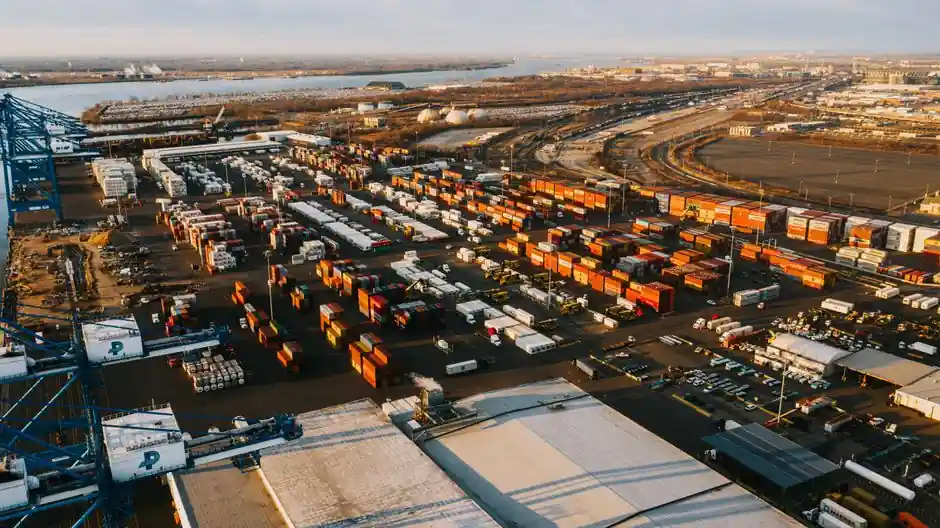
Port terminals handling break-bulk, automotive parts, and cold-chain produce should spec turnover boxes in HDPE or PP, rated for dynamic loads of 1.0-3.0 t, with a usable service window of -30°C to 80°C and foldable or nestable geometry that compresses empty volume by 40-60% [S3][S8].
For ocean-terminal drayage, the same container must satisfy three separate duty cycles in one shift: yard stacking under ISO container reach-stackers, conveyor handoff at CFS sortation, and last-mile roll-cage handling into bonded warehouse. That overlapping duty is why a turnover box is functionally distinct from a generic logistics carton, and why procurement decisions cannot be delegated to a cardboard-vs-plastic shorthand [S1][S5].
Material and Load: HDPE vs PP vs Galvanised Steel for Terminal Duty
HDPE and PP are the two workhorse polymers for returnable port containers, with PP prioritising acid/alkali resistance and impact behaviour while HDPE carries higher static load and wear performance under repeated forklift tine contact [S3][S5]. The XuanSheng XS575-350 example box ships with internal dimensions of 530 x 350 x 140 mm and uses stacking card slots to compress empty volume by 40%, while engineering composites (glass-fibre reinforced PP) push the upper service limit from 80°C to 120°C for autoclave-adjacent operations [S3].
For a port running mixed SKUs, the practical split is polymer containers for everything under ~1.0 t unit load and metal bins (or pallet sleeve boxes) above that threshold, matched to reach-stacker fork geometry. Real port data also shows the polymer box extends service life 5-8x versus a single-wall corrugated carton, and the ratio is what justifies the higher unit cost over 200+ return cycles [S3].
Selection Criteria: Stacking, Folding, Nesting, RFID and Hygiene
Four physical criteria drive the spec for any port turn: stacking method (stacking column, stacking card slot, or sleeve-box), folding ratio (target 40-60% empty-volume reduction), wall style (solid for dust/moisture, ventilated for fresh produce, mesh for visual scan), and traceability hardware (RFID chip slot, QR label plate) [S1][S3][S4][S8]. The foldable crate category is distinct from standard logistics turnover boxes because the empty return trip is the dominant cost driver on short-sea loops, and a foldable 600 x 400 mm footprint can collapse to roughly one-third of its assembled height.
JOIN Plastic and similar OEM product lines list closed designs, pallet bases, wheel kits, label plates, and visual windows as standard options, with custom moulds for non-standard footprints and corporate branding on the sidewall [S4]. A procurement checklist a port logistics engineer can hand to a vendor should therefore lock in: (1) raw material grade and FDA or food-contact status for produce flows, (2) declared dynamic and static load in kg at a stated stack height, (3) empty-box nesting or folding ratio with measured height, (4) RFID/QR slot geometry, and (5) surface treatment and export packing for sea-air re-export [S2][S3][S4].
Comparison: Four Common Port-Logistics Container Types on 4 Decision Criteria
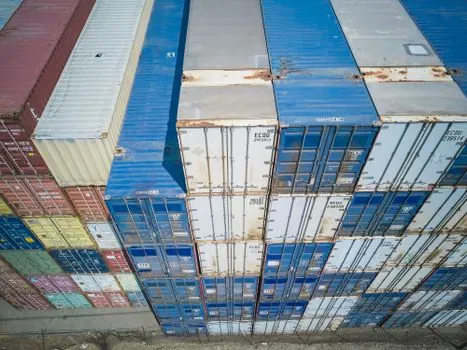
For a port tender, line the four dominant formats against four criteria. Plastic turnover box (HDPE/PP): low unit cost, 5-8x service life vs cardboard, foldable 40-60% return ratio, limited to ~1.0-3.0 t unit load and 80-120°C ceiling depending on grade [S3]. Galvanised steel bin: high unit cost, 10+ year life, non-foldable (returns flat in a stack), tolerant of hot/cold dock environments and rough reach-stacker handling, heavier tare which cuts payload [S2]. Pallet sleeve box (collapsible bulk container): medium cost, sleeve-pack returns at 20-30% of assembled volume, optimised for 600 x 800 or 1200 x 1000 mm footprints, best fit for export palletised cargo [S4]. Open-front plastic box / airport tray: lowest cost per cell, used for small-parts picking, not a primary port container.
On the four-criterion matrix, plastic turnover boxes win on reverse-logistics cost and hygiene, steel bins win on abuse tolerance, sleeve boxes win on cubic utilisation, and open-front trays win on piece-pick ergonomics. Ports running deep-sea automotive or fresh-produce flows typically standardise two of these (HDPE turnover box for parts, ventilated HDPE crate for produce) and reserve steel bins for a smaller heavy-bulk subset [S1][S2][S3].
Use Cases at the Port: Automotive Parts, Cold Chain, E-commerce Cross-Dock
Three port use cases dominate the spec. First, automotive-parts flows between OEM and ro-ro terminal: anti-static HDPE boxes (XS460-125 class) with RFID chip slots carry engine components, fasteners, and modules from supplier to final assembly, supporting full traceability through the bonded warehouse leg [S3]. Second, fresh-produce cold chain: food-grade HDPE 320 series with detachable water-drain plate and FDA certification operates down to -25°C, allowing the same box to be loaded at the packhouse, re-iced at the terminal, and tipped at the distribution centre without re-pack [S3]. Third, e-commerce cross-dock: folding turnover boxes with 60% volume reduction on the empty return, plus custom-printed corporate logos and barcodes, are the de facto choice for high-velocity parcel hubs handling branded retail [S3][S4].
Each of these three flows imposes a different spec anchor: anti-static + RFID for automotive, low-temperature toughness + drainage for cold chain, and fold-ratio + branding for e-commerce. Procurement should map the terminal's actual SKU mix against these anchors before locking a single supplier, because the same OEM often sells all three variants with different mould costs [S4][S8].
Limitations, Failure Modes and Standards to Watch
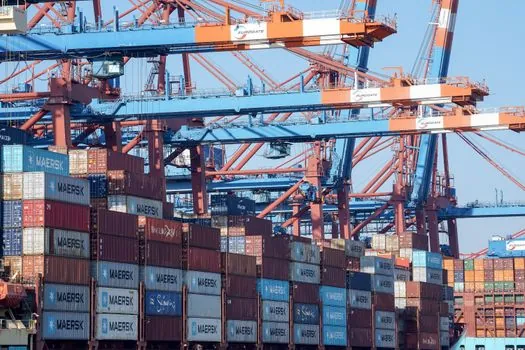
Polymer turnover boxes fail in three predictable modes: UV embrittlement on outdoor yard stacks beyond ~2 years, hinge crack on foldable walls if the empty-box return ratio is forced below 25%, and fork-tine puncture on boxes specified below the actual dynamic load. None of these are solved by buying a thicker wall alone; the fix is a matched raw-material grade, an internal rib pattern, and a stacking cap declared by the OEM in kg, not by generic 'heavy duty' wording [S1][S3].
Standards worth pinning in the RFQ, where they apply, are ISO 9001 for the production quality system at the moulding shop, FDA food-contact status for produce and seafood flows, and any port-specific fumigation or ISPM-15 ruling when wooden pallets are still in the loop (a polymer box itself does not need ISPM-15 treatment). The recent logistics turnover box market sizing puts the segment at roughly USD 11 billion across its core regions in 2026, with projections to USD 12 billion by 2033, which is the scale at which a port tender is now a multi-supplier negotiation rather than a single-source buy [S7]. For the box itself, no single IEC or ISO standard governs the 'turnover box' as a product, so specifications must be written against declared OEM test data plus the four criteria above [S1][S2][S3].
Sourcing and RFQ Process for Port Buyers
A clean RFQ for a port should bundle product type, declared external dimensions, dynamic and static load in kg, surface treatment (galvanised, powder-coated, HDPE raw, or FDA-grade), wheel/castor spec, door/shelf/mesh configuration, label plate geometry, and stacking/folding/nesting method into one sheet, with destination port, HS code, and quantity per SKU. Most major Chinese OEM sites, including the JOIN Plastic and HOPELOG product lines reviewed here, accept a drawing or sample photo alongside that sheet for review [S2][S4].
Trackable signals to watch over the next 6-12 months: whether the major polymer OEMs publish a unified RFID slot standard, whether foldable-crate moulds migrate from 600 x 400 mm to 600 x 500 mm footprints to match new EU pallet pool rules, and whether ports begin publishing reverse-logistics cubic-utilisation metrics in their sustainability disclosures. For a deeper look at the strapping bands that bind folded stacks, see Cold-Chain Strapping Band Selection: PP, PET, Composite Compared; for the picking scales that ride on top of these boxes in cross-dock, see Bench Scale Specs for E-Commerce Fulfillment: Capacity, Readability, Integration.
For component-level specifications, see logistics packaging, and carton box.