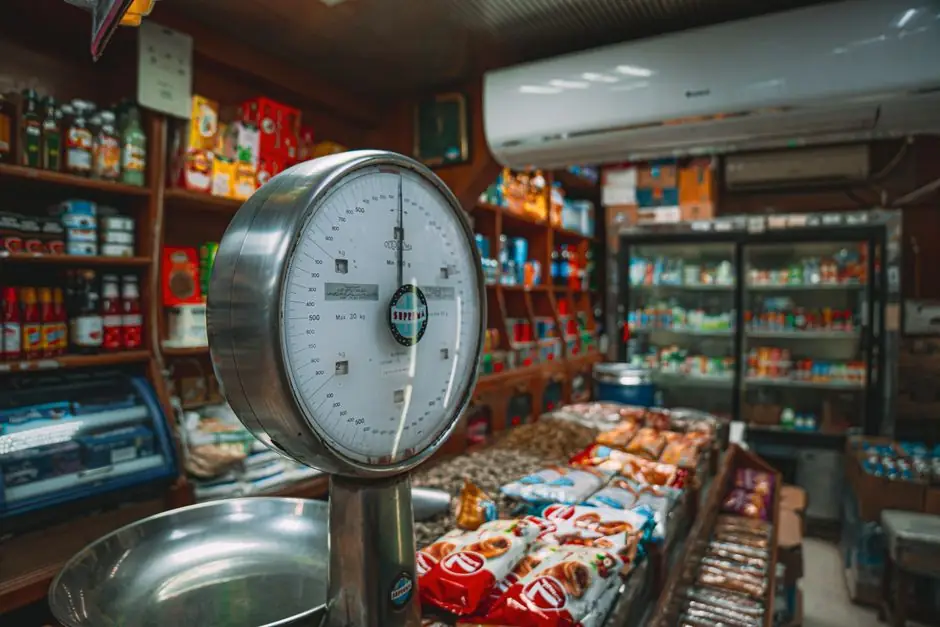
Food and beverage plants select bench scales by anchoring three variables to the process step: working capacity (typically 5–50 lb for portioning and 30–100 lb for receiving), enclosure rating (IP65 minimum, IP69k in direct washdown zones), and load cell class (monobloc or POWERCELL for recipe work, standard strain-gauge for general checkweighing) [S3][S7].
The category sits inside the broader industrial weighing ecosystem covered in the bench scale reference page, which frames selection around accuracy class, hygienic design, and connectivity rather than raw capacity. For processors running flour, dairy, or beverage lines, this means the bench scale is rarely a standalone purchase, it is a node in a weighing chain that also includes checkweighers, floor scales, and load cells [S4].
Capacity Bands Matched to Process Step
Full-service restaurants and small processors typically specify 30–100 lb receiving scales for inbound deliveries, and 5–50 lb portion scales for prep and plating [S7]. Beverage and frozen-yogurt operations add a third tier, the price-by-ounce retail scale, where customers expect to pay exactly for what they consume, driving demand for legal-for-trade bench units with 0.01 lb resolution [S2].
For recipe and batch formulation work in industrial bakeries, sauce lines, and dairy, the operating range is narrower and the resolution tighter. Operators use bench scales for precise ingredient dosing, with micro-weighing variants handling powders and small additives where variance directly affects taste and yield [S5]. A mismatch here is one of the most common sources of batch-to-batch drift, since operators fall back on judgment when scale resolution is too coarse for the target weight.
When a recipe demands a particular accuracy class, the load cell technology becomes the controlling spec rather than the platform size. Premium monobloc and POWERCELL load cells deliver the repeatability needed for formulation, and the electronic scale reference catalogues the trade-off between strain-gauge, electromagnetic force restoration, and vibrating-wire technologies used in this segment.
Hygienic Design and Washdown Ratings
Food and beverage zones are categorized by moisture exposure, and the IP rating on a bench scale must follow that zoning. Hygienic bench scales rated IP65 handle splash and wipe-down cleaning, while IP69k units survive high-pressure, high-temperature washdown that is standard in dairy, meat, and ready-meal facilities [S1].
Stainless steel construction is the default for any unit that touches open product zones, and the surface finish matters as much as the alloy. Sanitary bench scales are designed for easy cleaning, with sloped edges and minimal crevices to prevent bacterial harborage, and they are built to withstand repeated exposure to caustic and acidic cleaning chemicals [S1][S5]. Washdown environments shorten equipment life when the wrong enclosure is specified, and corrosion at the load cell cable entry is the most common failure mode observed in the field [S4].
Beyond the scale itself, the indicator and cabling must carry an equivalent rating. The IND400 indicator paired with hygienic bench platforms is one example of an integrated assembly that maintains data integrity while meeting cleanability targets [S1]. For facilities already running connected production data, this integration step is where the bench scale crosses from a stand-alone instrument into a node on the plant network.
Comparison: Bench Scale Types for F&B Lines

Process engineers weighing options across portion control, checkweighing, and hazardous-area zones can line the main configurations against four decision criteria. [S3]
Portion and prep benches, typically 5–50 lb capacity with 0.01 lb resolution, prioritize compact footprint, simple operator interface, and quick tare for recipe work. They are the lowest-cost tier and are usually specified as general-purpose non-washdown or IP65 units [S3][S7].
Hygienic and washdown benches, IP65/IP69k stainless with sanitary surfaces, cost more but extend service life in wet zones. They are mandatory for direct food-contact prep tables and any area exposed to high-pressure cleaning, and they are the default choice in dairy, meat, and ready-meal plants [S1][S4].
Explosion-proof benches carry hazardous-area certification for zones where flour dust, ethanol vapour, or powdered-milk aerosols create an Ex atmosphere. They are the most expensive tier and the slowest to deploy, but they are non-negotiable inside rated zones and pair with the broader Ex-rated weighing and control hardware families documented across the industrial equipment and machinery reference [S1].
Precision and formulation benches, built around monobloc or POWERCELL load cells, target recipe accuracy rather than washdown endurance. They are the right pick for micro-ingredient dosing, spice blending, and laboratory-adjacent QA work where 0.001 lb resolution is the controlling requirement [S1][S5].
Integration, Calibration, and Data Integrity
Modern food and beverage operations treat weight data as production data, not as a local display. Bench scales increasingly ship with connectivity to plant networks, batching software, and label-verification systems, and they support automated formulation and filling workflows that reduce manual dosing errors [S1][S4].
Calibration discipline is the other half of the spec. In-service bench scale testing is performed at install and at scheduled intervals throughout the scale's life, using test weights owned by the operation and verified periodically by a service technician. The fit-for-purpose selection methodology, GWP (Good Weighing Practice) verification, and the full audit trail sit behind that discipline and are documented in OEM technical guidance [S1].
For plants standardizing on connected weighing, the signal isolator selection guide covers the related decision map for protecting 4–20 mA and digital weight signals between scale, indicator, and PLC, while the food-grade linear module selection piece maps the same washdown-rated logic onto the motion hardware that fills and packages the product being weighed. Both are useful adjacent reading when the bench scale is one node inside a larger hygienic line.
Where Bench Scales Stop Being the Right Tool

Bench scales underperform when the working load drifts above roughly 100 lb, when the platform footprint cannot accommodate the package, or when the application demands in-motion weighing. Palletized inbound, drum fill, and conveyor checkweighing are platform-scale and checkweigher territory, not bench-scale territory, and forcing a bench unit into those roles produces both accuracy and throughput problems [S3][S4].
They are also the wrong tool where the production environment is too harsh for any stainless-and-IP-rated enclosure to survive, such as prolonged immersion, abrasive blast cleaning, or temperatures outside the typical 0–40 °C operating window. In those zones, a platform scale with a remote load cell, or a checkweigher with a washdown-rated IP69k conveyor, is the more durable answer [S1].
The final constraint is certification scope. A bench scale that is accurate and hygienic but lacks the proper hazardous-area certification cannot be deployed in a classified zone, and retrofitting a general-purpose bench into an Ex-rated line is a common audit finding that requires equipment replacement rather than procedural mitigation [S1].
Selection Workflow and Trackable Signals
The shortest path from a process need to a bench scale spec runs through four questions: what is the heaviest routine load, what is the tightest target weight and its tolerance, what is the cleaning regime, and is the area classified. The answers map directly to capacity, resolution, IP rating, and Ex certification, in that order [S9].
Trackable signals to watch over the next procurement cycle include new IP69k-and-above hygienic platforms from major weighing OEMs, expanded hazardous-area bench offerings for grain, sugar, and ethanol-handling facilities, and tighter integration between bench scales, batching software, and label-verification systems. Plants that standardize on this stack report fewer giveaway incidents, more consistent batch quality, and faster audit cycles, which is the operational case for spec-first bench scale selection rather than lowest-cost purchase [S1][S4].