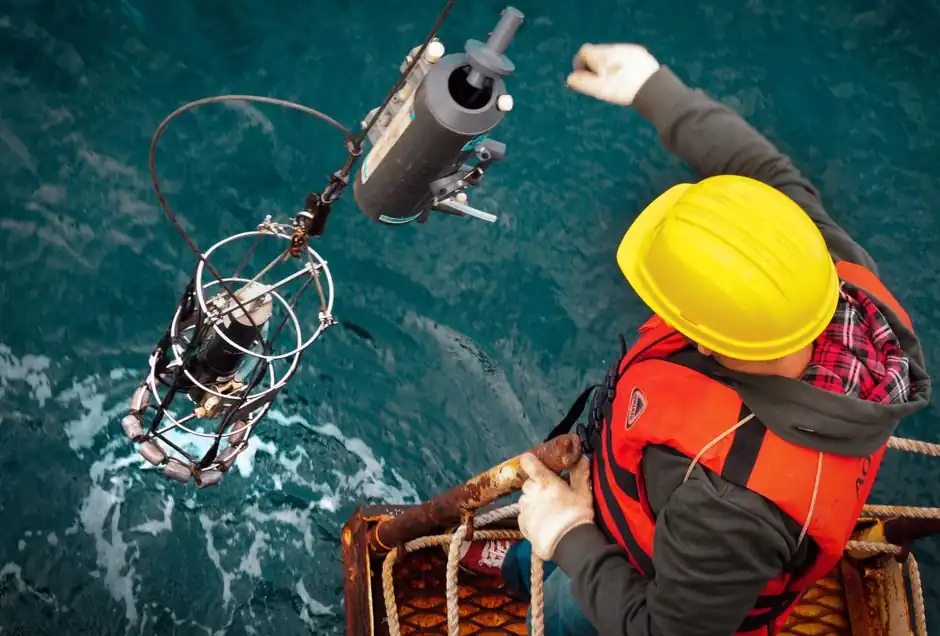
In a portable emissions sampling rig, the dominant failure modes live in the sample train, not the sensor head: sample alteration by condensation, contamination, cooling, delay, or particulate loading is the leading cause of inaccurate analyzer readings, per process-analytics field data [S3].
Sensor-side failures form a second layer. Electrochemical (EC) and metal-oxide-semiconductor (MOS) consumables suffer accuracy drift and cross-sensitivity to interference gases, while catalytic-bead (pellistor) sensors degrade on exposure to poisons, with routine bump testing the only field-level check on depletion rate [S1][S7].
Sample-Handling Failures Drive the Majority of Bad Readings
A gas analyzer can only quantify the sample it actually receives; if that sample is altered, contaminated, cooled, condensed, delayed, or otherwise unrepresentative, the instrument output becomes questionable regardless of sensor quality [S3]. The five sample-train design items that determine whether the portable gas detector reading matches the process are temperature control (typically heated lines held above the dew point of H2O and acid gases), pressure regulation, particulate filtration, moisture management, and fast-loop bypass design that minimizes transport lag.
Landfill-gas field work shows why this matters: portable hand-held monitors are routinely used for soil-gas and near-surface methane checks, but emissions and ambient-air monitoring programs demand tighter sample conditioning because the same instrument under different sample prep can read correctly in one regime and misleadingly in another [S2]. Highmark Analytics notes that combustion, CEMS, power-gen, and compliance stacks each combine high temperature, moisture, corrosive species, particulates, and pressure fluctuation, so condensation in the line, sample contamination, fouled components, long response time, and biased extraction points are the typical recurring failure signatures [S3].
Sensor Drift, Cross-Sensitivity, and Catalytic Poisoning
Inside a portable instrument the consumable sensor bank is itself a wear item. EC and MOS cells generate millivolt, milliamp, or resistance-shift signals that decay with cumulative gas exposure, and cross-sensitivity to interference gases further biases the reading [S1]. The same review reports that routine manual calibration, typically a bump test against a known gas concentration, remains the field method for tracking depletion, but is resource-intensive, time-consuming, and error-prone across large detector fleets [S1].
Catalytic-bead sensors, still common for combustible-gas detection in portable form, fail mainly by performance degradation after contact with certain poisons, which is why bump testing before each confined-space entry is treated as non-optional in many site safety procedures [S7][S9]. The 2025 systematic review on autonomous GDS identifies three open sensor-research problems: long-term drift dynamics from prolonged exposure, time-synchronization of multi-sensor data, and alignment of ambient sensor signals against laboratory reference analyzers, all of which directly apply to portable emissions use [S1].
Selection Criteria: What a Field-Use Portable Analyzer Must Hold
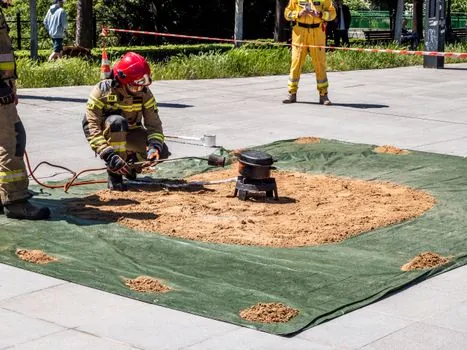
For stack and emissions work the EN 15267-4 / QAL1 / MCERTS benchmark is the meaningful performance gate, because the certification tests the analyzer plus sample conditioning as a system, not just the optical bench; the GT6000 Mobilis portable FTIR explicitly advertises itself as the first and only FTIR portable with that EN 15267-4 certification, with a heated 180 °C corrosion-resistant sample cell that keeps high-H2O and corrosive streams in the gas phase, simultaneous measurement of up to 50 gases, and an O2 channel via PSS Plus [S4]. A field-grade multi-gas detector for emissions work should therefore be evaluated on: (a) heated-cell temperature and wetted materials, (b) certified measurement range per gas, (c) response time at the actual line length used, (d) shock and vibration rating for truck-portable deployments, and (e) self-diagnostic plus pre-run OK/Not-OK status that flags sample-train faults before readings are reported.
For non-stack portable work, such as landfill perimeter checks or post-blast ventilation surveys, the combustible gas detector and toxic gas detector form factors are selected on sensor count, battery endurance, and IP rating, and the field use cases are distinct: CH4 and CO monitoring after blasting or during ventilation changes, versus CH4 plus H2S plus O2 for confined-space entry, versus VOC plus Hg for environmental site surveys [S2][S8][S9].
Active Versus Passive Sampling, and Where Portables Fit
Active sampling pulls a defined gas volume through the sensor with a pump, while passive sampling relies on diffusion to the sensing element. Comparative lab and field studies cited in the gas-detection literature show no significant accuracy difference between the two approaches when both are properly applied, so the failure mode is usually mismatch between sampling method and the gas being measured, not the method itself [S6].
Where fixed gas detection is mandated (ammonia storage in power plants, for example), compliance is the driver; where confined-space entry is the task, portable is the standard because the worker must move with the instrument; for periodic compliance surveys of small or remote emitters, a portable FTIR with EN 15267-4 certification competes with, and increasingly replaces, the older rack of separate portable analyzers [S4][S8].
Operator-Side Failure Modes and Maintenance Discipline
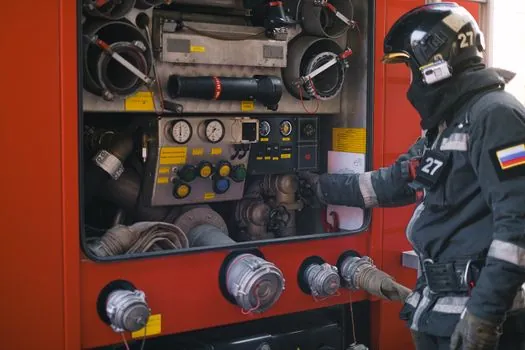
Dräger's portable detection guide and the broader portable-instrument literature converge on a short list of operator-controlled failure causes: missed or shortened bump test, expired calibration gas, depleted filters and sorbents, water-fouled sensors after rain or wash-down, and probe placement that samples a non-representative point (e.g. still air in a duct corner or a wet condensate drip leg) [S3][S5]. The autonomous-GDS review adds that even well-calibrated sensors drift under environmental variability, and the data analytics layer (PCA, SVM, multivariate regression, calibration transfer) is the emerging mitigation, applied on top of, not in place of, a disciplined bump-test schedule [S1].
Trackable signals for the next planning cycle: EN 15267-4 portable FTIR product announcements (one new MCERTS-certified portable analyzer was published 2026-09-11) [S4], and the next wave of self-correcting / autonomous-calibration portable firmware that targets sensor drift and cross-sensitivity without manual gas exposure. Related field-engineering reading on the same maintenance theme appears in Crucible Furnace Failure Modes and Spare-Part Sourcing for Maintenance and on the interlocks that should kill an emissions stream on a detector fault in Safety Interlock Switch Selection for Oil and Gas Facilities.