Foundry operators in 2026 spend the majority of unplanned crucible furnace downtime on five recurring items: refractory lining breach, induction coil or water-cooled cable failure, thermocouple/sensor drift, hydraulic seal leakage, and control-power faults [S1][S3][S5]. A maintenance spare-parts inventory sized to those failure buckets, rather than to a generic OEM bill of materials, typically reduces emergency procurement and cuts repeat breakdowns on coreless and channel induction furnace fleets.
The economic logic is straightforward. Industry guidance notes that catching early warning signs (temperature drift, longer melt times, unusual noise) can cut repair costs by up to 50% versus waiting for an emergency shutdown [S1]. Sourcing strategy should therefore pair physical spares (coils, cables, thermocouples, seals, contactors) with the inspection cadence that triggers their replacement, not treat the spares list as a standalone procurement exercise [S3][S5].
Refractory Lining Breach: The Dominant Failure Mode in Coreless Furnaces
Cracks, erosion, or corrosion in crucibles and furnace linings can cause molten-metal leaks, and a refractory breach is the single most common precursor to a crucible furnace incident [S4]. In a coreless crucible furnace the molten metal sits in direct contact with the refractory, so lining condition drives both safety and melt quality, and operators should plan inspection cycles around that exposure [S3].
Daily visual inspection targets visible cracks, spalling, and discoloration; slag and buildup should be removed after each pour to limit thermal stress and chemical attack on the lining [S4]. Quarterly non-destructive testing (ultrasonic or infrared) catches internal defects before they become leaks [S4]. When sourcing replacement refractory, match the grade to the metal being melted (ferrous vs non-ferrous alloys behave very differently against silica, alumina, and magnesia formulations), and confirm the supplier's recommended preheat ramp, since thermal-shock cracking during a cold start is a leading cause of premature lining loss [S1][S4].
Induction Coil and Water-Cooled Cable Failure: A Water-Into-Melt Hazard
Coil failure that allows cooling water to flow into a crucible full of molten iron is a documented serious-injury mechanism in induction melting, and it is the failure mode that most justifies a dedicated spare-coil inventory [S6]. On a coreless furnace the coil, the water-cooled power cables, and the cooling circuit are the highest-priority spares, alongside the power supply and hydraulic system [S3].
Inspection should verify flow, look for leakage, and check for scale buildup in water-cooled cables; terminal clamps and contact surfaces should be cleaned and re-torqued because loose connections generate the localized heating that precedes a jacket breach [S5]. Plants that operate continuously should keep at least one refurbished coil and a set of water-cooled cable assemblies on the shelf, since lead times on bespoke copper coil rewinds routinely exceed the cost of holding a spare. Hydraulic and pneumatic circuits need the same treatment: pressure balance, seal condition, and filter status checked on a weekly functional-test cadence [S3][S5].
Thermocouple, Sensor, and Control-System Drift
Temperature drift in a melting furnace is often misread as a refractory or burner problem when the root cause is a drifting or misplaced thermocouple, and that misdiagnosis is what drives the avoidable 50% cost premium on emergency repairs [S1]. Modern control systems flag over-temperature, voltage drops, and sensor failure as discrete alarms, and those alarms should be treated as spares triggers, not nuisance events [S1].
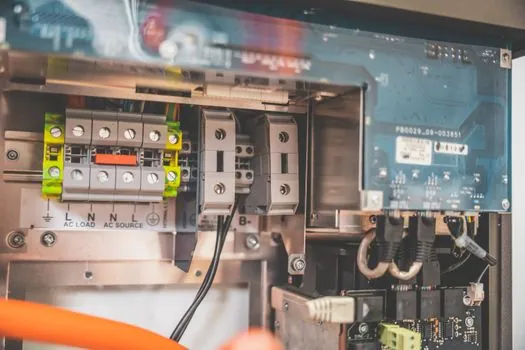
A practical spares list therefore includes at least one spare thermocouple per zone, spare furnace pressure switches, and a small stock of contactors and fuses sized to the power-cabinet bill of materials [S3][S5]. Annual calibration of thermocouples and sensors is the baseline; plants running predictive maintenance programs add continuous thermal-efficiency monitoring and integrate the trend data with plant management software so the spares order is generated by condition, not by calendar [S1].
Channel Furnace Geometry: Inductor and Channel Refractory as Separate Spares Lines
Channel induction furnaces, used for holding and high-volume continuous melting, shift the failure profile: the inductor and the channel refractory become the wear parts, while the coil itself is rarely replaced [S3]. Maintenance priority moves to inductor condition, channel refractory, cooling system integrity, and metal circulation, and the spares list should be rebuilt around those four items rather than copied from a coreless-fleet inventory [S3].
Channel furnaces also tend to operate as a holding furnace or duplex unit paired with a melter, so the holding-side temperature control and seal packages are additional spares lines that a coreless-only plant would not need [S3]. When standardizing inventory across both geometries, keep a single common spares pool for hydraulics, sensors, and electrical consumables, and run two geometry-specific pools for coil/inductor and lining/channel refractories.
Sizing the Spares List: Rebuild vs Replace, and the Spray-Cooled Alternative

The standard foundry approach to furnace spare parts inventories can be compressed dramatically by switching consumable water-cooled panels to a spray-cooled design, where the spare parts inventory drops to thin carbon-steel patch plate, a few spare nozzles, quick-release couplers, and slag retainers [S2]. The mechanism is design-driven: elimination of multiple panel designs removes panel inventories, one-piece construction removes panel-to-panel jumper hoses and valves, and a rebuild-versus-replace philosophy replaces use-and-dispose spare modules with rotational rebuild units [S2].
For foundries that have not adopted spray-cooled panels, the same rebuild-versus-replace logic can be applied selectively to water-cooled cables, hydraulic cylinders, and contactor sets, where a small rotating pool of refurbished units replaces a much larger new-unit inventory. Either way, the sizing principle is the same: stock the consumables and long-lead items tied to the documented failure modes (coil, cable, refractory, sensor, seal), and run a documented inspection cadence that triggers replenishment before the part fails in service [S1][S2][S3][S5].
Inspection Cadence, Documentation, and When to Escalate
A defensible cadence is daily visual checks, weekly functional tests on coils, cables, hydraulics, and clamps, monthly safety-system tests (pressure relief, gas lines, automatic shutoffs), quarterly NDT on the lining, and an annual teardown with replacement of any component showing significant wear [S4][S5]. Every inspection finding should be written down, because the recurring-defect pattern in the log is what justifies the next spares-order quantity, and it is the documentation auditors look for first after an incident [S4].
Escalation rules are equally important. A single hairline crack in a crucible is a watch-and-record item; a crack with accompanying discoloration or metal bleed-out means immediate shutdown and replacement, not repair [S4]. A water-cooled cable that fails a flow or pressure test should be pulled from service, not run to the next planned outage, because the failure mode from a jacket breach is a water-into-melt event with serious-injury potential [S5][S6]. For control-system alarms, treat the alarm as a spare-parts event: if a sensor trips twice in a shift, replace it from stock and send the failed unit for calibration rather than resetting and waiting. The signal to track through Q4 2026 is whether more OEMs publish formal condition-based spares-replenishment triggers alongside their preventive-maintenance schedules, since that would convert today's experience-based inventories into engineered stock levels [S1][S3].
Related analysis: Lab Safety Mat Selection: Type, Material, and Standard Fit.