
Portable laser trackers listed on DirectIndustry in 2026 cover 11 products across 5 manufacturers, with API fielding the Radian CORE, Radian PLUS, Radian PRO, iLT, and Active Target; FARO fielding the Vantage; and CHOTEST fielding the GTS3600, GTS6300, and GTS6800 [S2].
The category is positioned for large-volume dimensional metrology, and the MarketsandMarkets model sizes the global laser tracker market at USD 636 million in 2022, rising to USD 866 million by 2027 at a 6.4% CAGR, driven by aerospace, automotive, and general manufacturing precision-measurement demand [S3].
Definition and Operating Envelope
A portable laser tracker is a laser-interferometer-based, large-volume coordinate measuring system that locks onto a retroreflector (typically a spherically mounted retroreflector, or SMR) held at the point of interest, and reports 3D coordinates back to the head in real time [S2].
Working envelopes on the 2026 DirectIndustry list span short-range shop-floor units through large-scale space-measurement systems, with the CHOTEST GTS3600, GTS6300, and GTS6800 explicitly branded for "Large-scale space measurement" using an integrated measurement head and an on-board CPU in a compact control system [S2]. API positions the Radian CORE, PLUS, and PRO around the claims "Smallest, Lightest", and notes that the company originated the laser tracker category [S2].
A 2026 API accessory, the Active Target, is a battery-powered, self-orienting, motorized 360° rotation SMR that locks onto the laser beam and auto-orients toward it, enabling automated measurements on machine tools, industrial robots, and automation cells where a hand-held SMR cannot physically reach [S1].
Selection Criteria: What Actually Differentiates Units
Selection hinges on five spec axes: working volume (radial reach), static and dynamic accuracy, encoder resolution (ADM/IFM absolute distance measurement vs interferometer-only), target handling (passive SMR vs motorized active target), and environmental tolerance for shop-floor temperature and vibration [S2][S3].
For shop-floor automated cells, target handling dominates the decision: a self-orienting motorized SMR such as the API Active Target removes the operator from the measurement loop and is purpose-built for machine-tool, robot, and automation measurements that a hand-held SMR cannot complete [S1]. For one-off inspection of large parts, a passive SMR with an experienced operator and a FARO Vantage-class tracker is typically specified [S2].
Buyers comparing the API Radian CORE / PLUS / PRO should treat them as a tier ladder of size, weight, and feature set rather than three independent architectures, since all three carry API's "Smallest, Lightest" framing on the 2026 listing [S2]. For integrators specifying CHOTEST GTS models, the 3600/6300/6800 numbering maps to working-volume classes within one platform architecture, with the integrated measurement head and on-board CPU repeated across all three [S2].
Who a Laser Tracker Is For, and Who It Is Not For

Laser trackers are specified for large-volume dimensional metrology on parts and assemblies that exceed the working envelope of a bridge-type CMM, including aerospace tooling, wind-turbine blades, ship-propeller geometry, and on-site machine-tool alignment, and for automation cells that need continuous 6DoF feedback to robots or CNC axes [S1][S2][S3].
They are NOT the right tool for sub-micron surface-finish or form metrology on small features, where a fixed CMM or a laser profiler is more appropriate, and they are not the right tool for a single-axis flatness or slope survey where a laser level or a linear guide alignment check is faster and cheaper. For coordinate scanning of complex freeform surfaces, a portable arm or structured-light scanner typically supplements rather than replaces a tracker, and the laser tracker remains the reference for absolute scale.
Comparison: Main Options Against Decision Criteria
The 2026 DirectIndustry listing sorts the 11 products into a small set of decision-relevant families [S2]. Buyers should weigh each family against four criteria:
1. API Radian family (CORE / PLUS / PRO): billed by API as "Smallest, Lightest" laser trackers, suitable for industrial measurement tasks where portability dominates; best fit when the operator must hand-carry the head to the part on a frequent basis. 2. API iLT: positioned as a compact, portable, integrated tracker for 3D measurement, part inspection, alignment, and reverse engineering, a middle-ground choice when both shop-floor portability and structured inspection workflows are required. 3. FARO Vantage: positioned for on-site measurement, reducing inspection time and removing the need for a dedicated inspection area, strong fit for field service and large-party bring-in jobs. 4. CHOTEST GTS3600 / GTS6300 / GTS6800: positioned for large-scale space measurement using an integrated measurement head and on-board CPU, suited to fixed-site, large-volume metrology labs and tooling floors. 5. API Active Target: an accessory-class motorized SMR, not a tracker head, but a mandatory add-on for automated cells on machine tools and robots [S1][S2].
Across these five, the cost-vs-portability rule is: a hand-portable Radian-class unit with a passive SMR is the entry ticket for general inspection; a Vantage or iLT trades a small amount of portability for richer inspection-software integration; a GTS-class unit is the right pick when the working volume in metres is the binding constraint, not the operator's walking distance; and the Active Target is a forced option once the measurement point moves faster than a human can follow [S1][S2].
Real Use Cases Drawn From the 2026 Listings
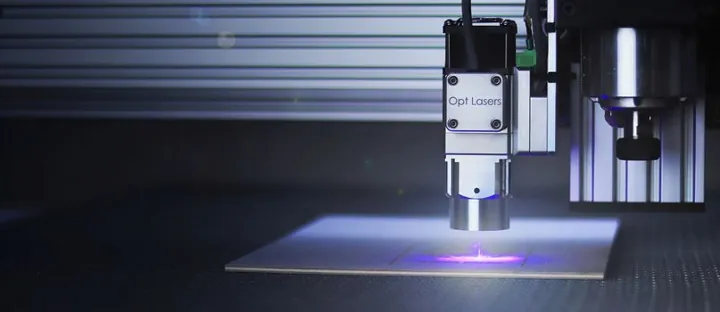
On-machine measurement and robot-cell calibration: the API Active Target is documented for automated tracking and measurement of machine tools, industrial robots, and automation, where a standard SMR cannot perform, and it is sold as a battery-powered 360° motorized SMR that self-orients to the beam [S1]. API is also scheduled to demonstrate the Radian family and Active Target at IMTS 2026 in Chicago, 14-19 September 2026, Hall East Level 3, Stand 134740 [S1].
On-site inspection of large parts: the FARO Vantage is described as making on-site measurement "easy and fast", and the vendor positions it to replace inspection work that previously required a dedicated inspection area, which is the dominant use case for portable trackers in aerospace tooling and heavy-industry service [S2].
Large-scale space measurement: the CHOTEST GTS series is described as a large-scale space-measurement system with an integrated measurement head and powerful CPU processing built into the laser head, with the three models spanning the 3600, 6300, and 6800 working-volume classes [S2].
Limitations, Failure Modes, and What Substitutes Cover
Laser trackers depend on line of sight to a retroreflector, so any operation where the line of sight is repeatedly broken, or where multiple reflectors must be measured simultaneously without re-aiming, will underperform: this is exactly the case the API Active Target was designed to address by motorizing and auto-orienting the SMR [S1].
Substitute technologies include laser radar, which captures both dimensional and surface geometry data in one pass, and which MarketsandMarkets identifies as the principal substitute restraining laser-tracker growth; API itself launched the DYNAMIC 9D LADAR in May 2022 as a competing inspection and calibration product [S3]. For two-axis flatness and slope, a laser level is the conventional tool, and for high-precision linear-axis straightness, a linear guide interferometer setup or a crossed-roller guide alignment reference is used instead. A related but distinct category is laser marker systems, which are marking-class lasers and not metrology instruments, so they should not be confused with laser trackers during procurement.
Calibration of the level axis is a recurring source of error and is treated as a discrete service item by tracker vendors: FARO publishes a knowledge-base procedure titled "Verifying the Accuracy of the Level in the Laser Tracker", which confirms that level-axis verification is a standard field-maintenance step for portable laser-tracker users [S7].
Standards, Sourcing, and Shortlist Logic

Laser-tracker procurement is dominated by a small number of OEM brands; the 2026 DirectIndustry category page lists only 5 companies and 11 products in total, which means specifiers typically compare API, FARO, and CHOTEST head-to-head rather than running a wide RFQ [S2]. For buyers writing an enquiry, the standard specification set should include: working volume in metres, static and dynamic accuracy in µm, target type (passive SMR or motorized active target), controller integration (PC, on-board, or both), and environmental class for the deployment site [S2].
For process plants and adjacent industries that already specify level instrumentation, a parallel buying exercise using the same vendor-evaluation discipline is described in the pressure gauge buying guide 2026, and the TDR level meter buying guide 2026 applies the same spec-first logic to a different instrument family. For buyers evaluating continuous-level instrumentation with a cost lens, the TDR level meter price 2026 article breaks down the cost drivers in a comparable format. The shortlist logic therefore reduces to: pick the Radian family for hand-portable general inspection, the iLT for integrated inspection workflows, the Vantage for field-service and on-site work, the GTS family for fixed large-volume labs, and the Active Target as a forced add-on for any automated cell.
Trackable signals to watch next: API's IMTS 2026 demonstration of the Active Target and Radian family at Stand 134740, 14-19 September 2026 in Chicago, which is the next in-person release window for tracker hardware and accessories [S1]. The MarketsandMarkets forecast to 2027 also gives specifiers a documented demand baseline (USD 636M in 2022 to USD 866M in 2027, 6.4% CAGR) against which any 2026 procurement decision can be sanity-checked [S3].