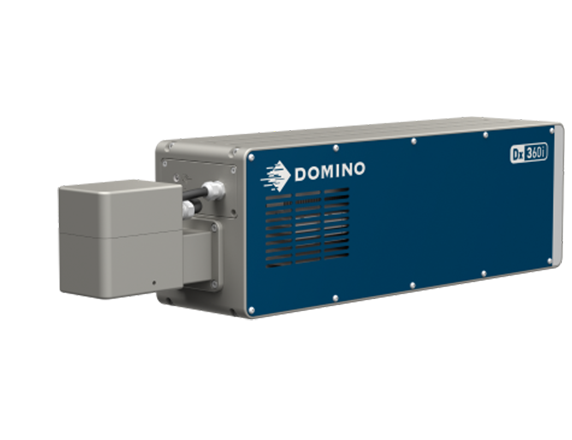
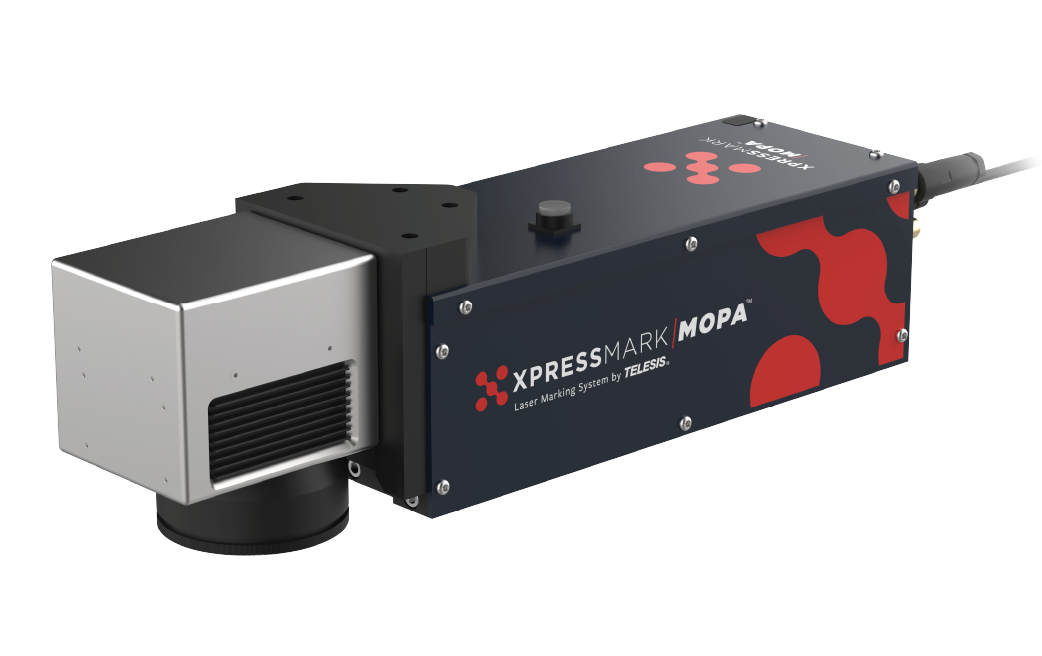
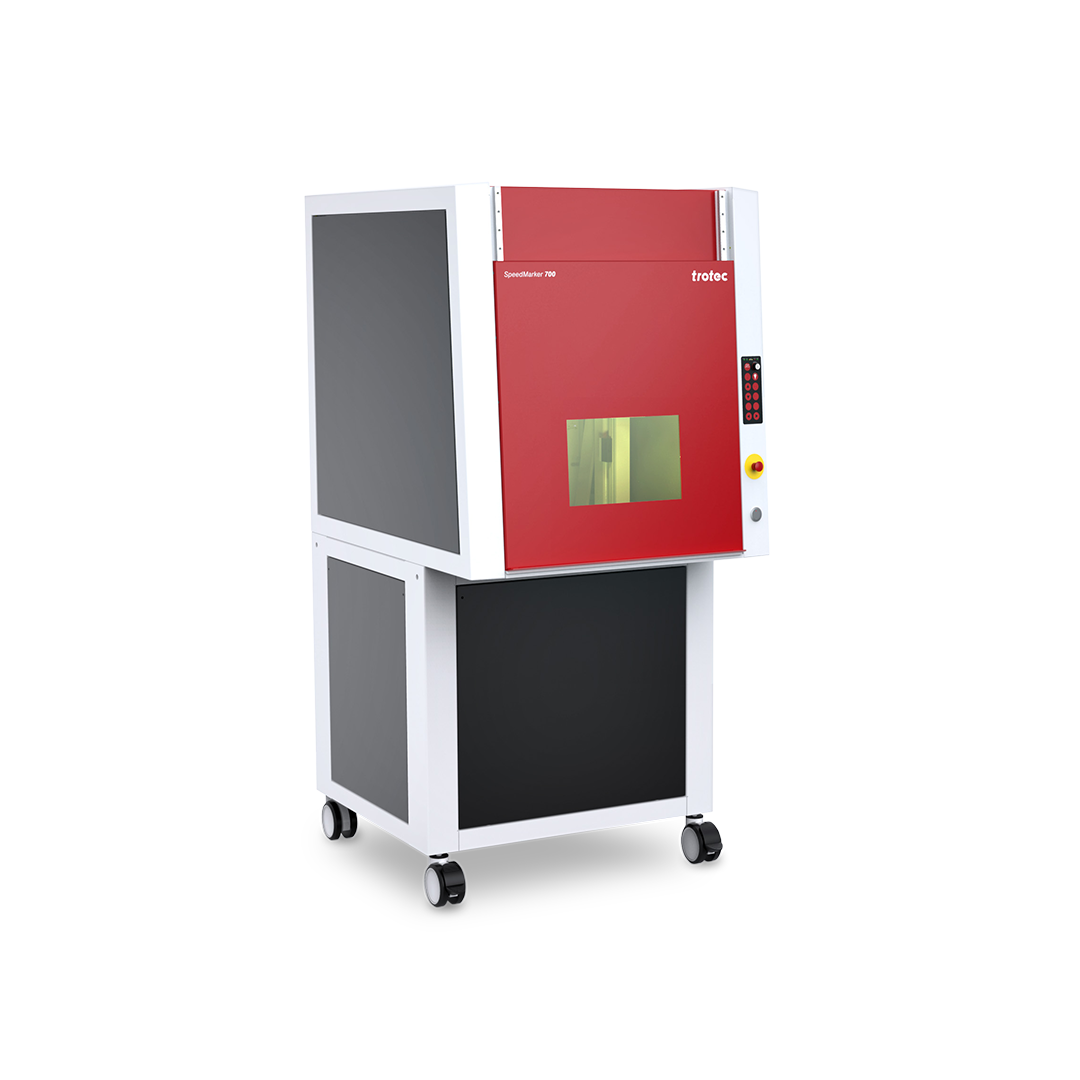
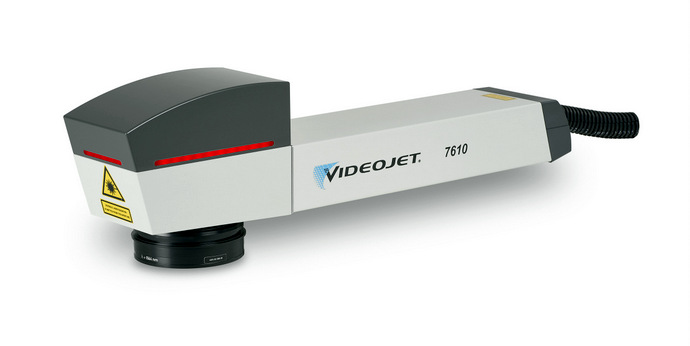
A laser marker is an industrial system that focuses a controlled laser beam onto a part to produce a permanent identifier: a serial number, a logo, a date code, or a machine-readable Data Matrix. Unlike inkjet or label printing, the mark is created by the interaction of light with the material itself, so it carries no consumables and cannot smear, peel, or wash off. Laser markers are a foundation technology for traceability programs in automotive, aerospace, electronics, medical device, and packaging manufacturing.
The term "laser marker" covers a family of machines distinguished mainly by wavelength: fiber, CO2, UV, and green sources, each matched to a different class of material. This guide explains how those sources differ, the physical processes that create a mark, the spec-sheet parameters that govern throughput and quality, the marking-code and safety standards that apply, and a structured selection sequence for procurement.
This guide is written for procurement engineers and design engineers comparing laser marking systems before a capital purchase. It covers six chapters: what a laser marker is, the four wavelength families, source architectures (MOPA versus Q-switched), the physical marking processes and materials, the key specification parameters, and a selection decision sequence, plus seven FAQs. Technical references include IEC 60825-1 and FDA 21 CFR 1040.10 for laser safety, and ISO/IEC 16022, ISO/IEC 15415, ISO/IEC TR 29158, SAE AS9132, and MIL-STD-130 for marked-code quality and traceability.
Chapter 1 / 06
What is a Laser Marker
A laser marker is a non-contact system that converts electrical power into a focused beam of coherent light and steers that beam across a part to write a permanent mark. The beam concentrates enough energy in a small spot, often tens of microns across, to locally heat, oxidize, melt, or ablate the surface. Because nothing physically touches the workpiece, the process applies no mechanical force, generates no tool wear on the part, and needs no ink, foil, acid, or label. The result is a mark that is fast to apply, dimensionally precise, and durable across the life of the component.
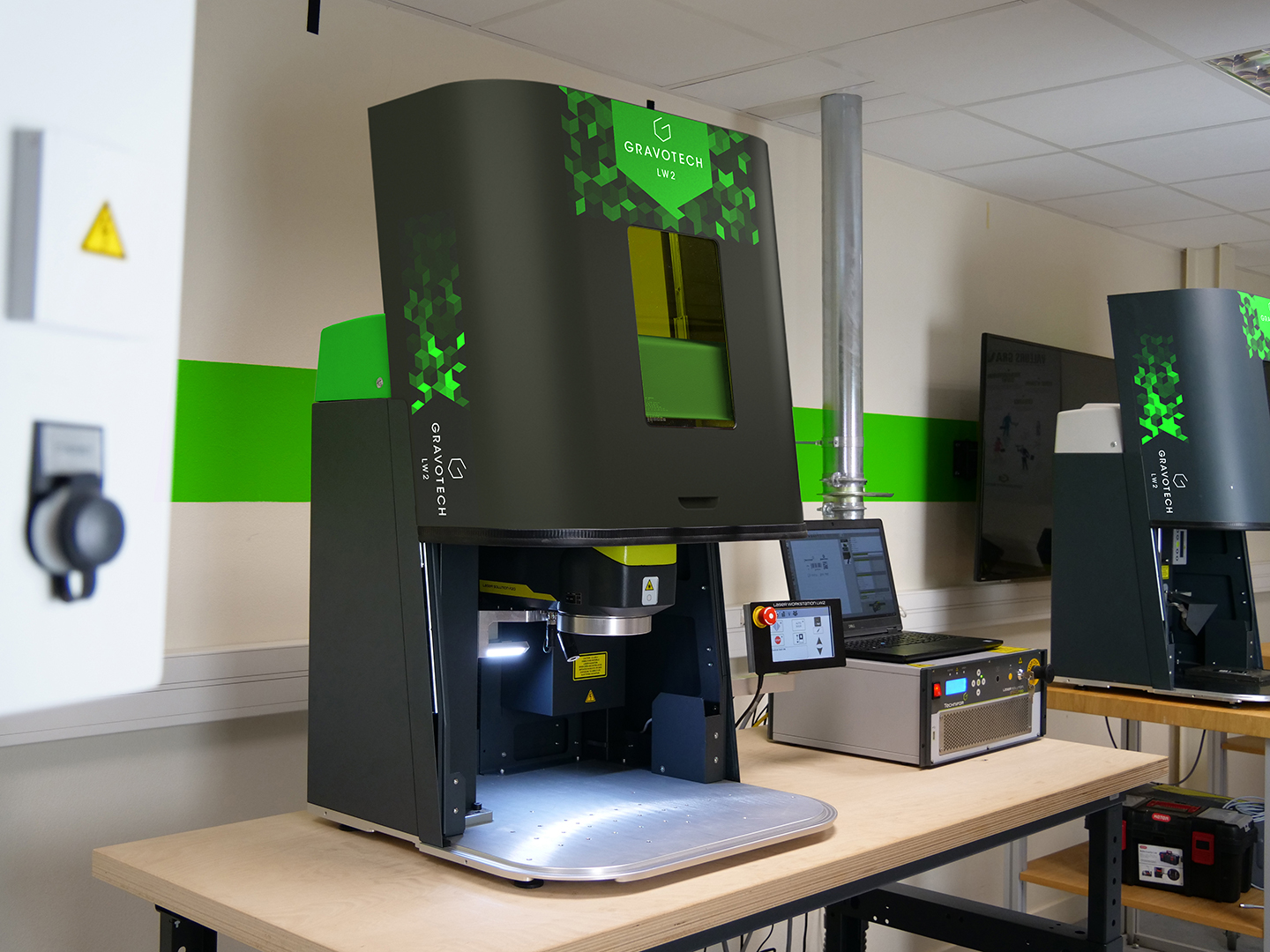
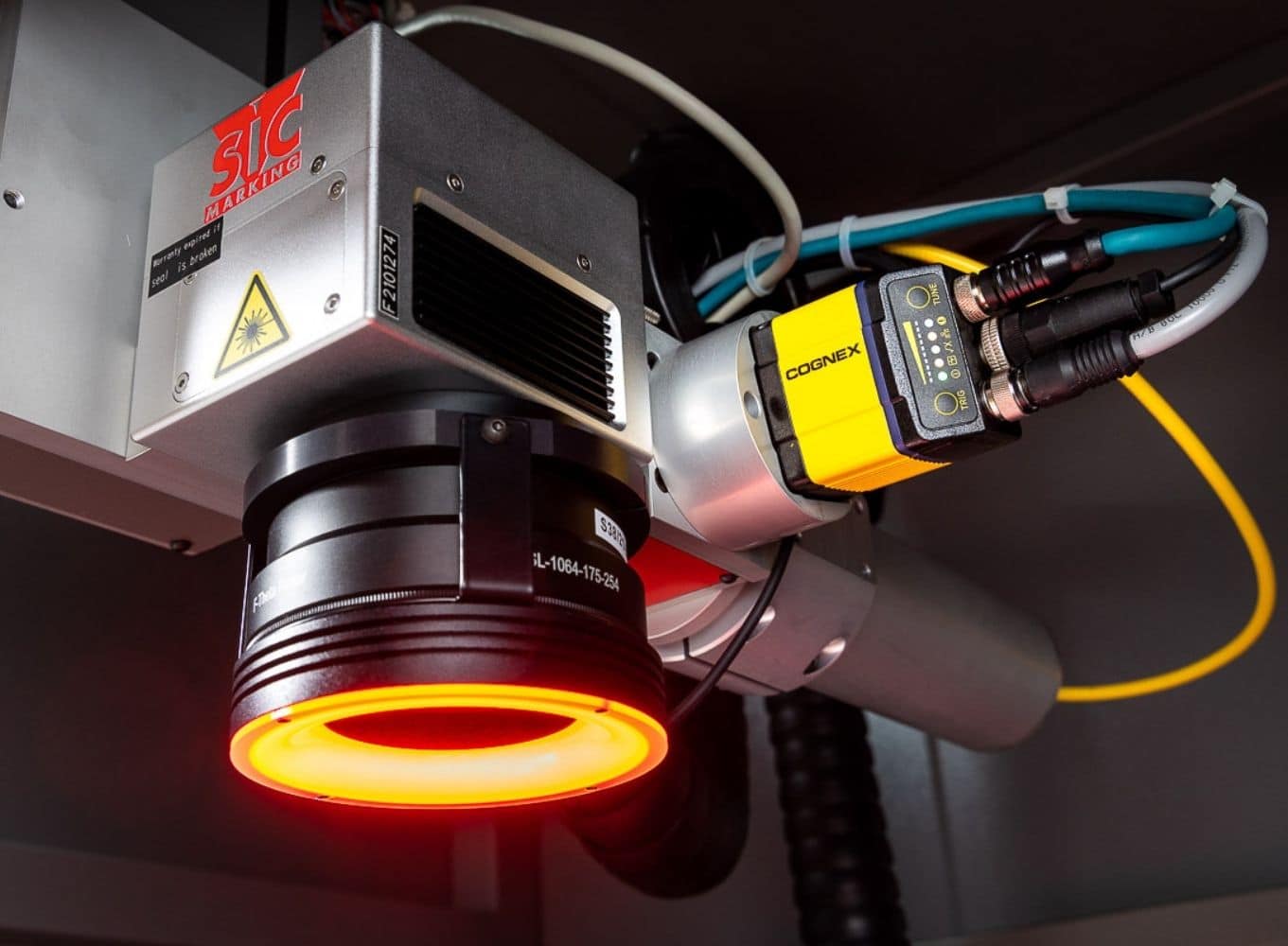
A typical laser marking system has four functional blocks: the laser source, which generates the beam; the beam delivery and scanning head, which steers and focuses the beam through a galvanometer mirror pair and an F-theta flat-field lens; the controller and marking software, which rasterize text, vector graphics, and barcodes into a scan path; and the mechanical platform, which positions the part, provides a safety enclosure, and extracts fume. On a production line these blocks are integrated with vision systems, conveyors, rotary axes, or robots so that parts are marked, verified, and tracked automatically.
It is important to separate "marking" from "engraving" and "etching," terms that describe how aggressively the beam alters the surface rather than three different machines. Marking changes only the surface appearance with little or no material removal, through annealing, carbon migration, foaming, or color change. Etching melts a very thin layer, removing on the order of 0.025 mm (0.001 inch) or less and leaving a slightly raised, frosted mark. Engraving and ablation remove material to form a recessed cavity that survives abrasion and machining. The same source produces all three by changing power, pulse energy, scan speed, and the number of passes.
The laser marker also sits within a wider identification ecosystem. The mark it produces, especially a 2D Data Matrix, becomes the read target for code readers and machine-vision cameras downstream, and a barcode verifier grades the result against a print-quality standard. Procurement decisions therefore rarely involve the marker alone: the wavelength, the contrast it can achieve on a given substrate, and the code grade it can hold all feed directly into whether the rest of the traceability chain will read reliably.
Four engineering attributes determine whether a marker fits a given job: the wavelength (which decides what materials it can mark at all), the available average and peak power (which set throughput and depth), the beam quality and focal spot size (which set the smallest legible feature), and the certified safety class of the integrated enclosure (which decides how it can be installed). A marker that is correct on all four but slow on one is an economic problem; a marker that is wrong on wavelength simply will not mark the part. Chapters 2 through 5 unpack each of these dimensions.
Chapter 2 / 06
Wavelength Families and Types
The single most important property of a laser marker is its wavelength, because a material can only be marked at a wavelength it actually absorbs. Light that the surface reflects or transmits carries no energy into the part. Four wavelength families cover almost all industrial marking: fiber (near-infrared), CO2 (far-infrared), UV (ultraviolet), and green (visible). The table below summarizes the four families and the substrate classes each one serves.
Type
Wavelength
Best Materials
Limitations
Fiber
~1,064 nm (IR)
Metals: stainless, aluminum, titanium, brass; some plastics
Passes through clear materials; weak on bare glass
CO2
10,600 nm (IR)
Organics: wood, paper, cardboard, acrylic, glass, many plastics
Not absorbed by bare metal
UV
355 nm
Heat-sensitive plastics, semiconductors, glass, medical devices
Higher cost; weak on clear plastics that do not absorb UV
Green
532 nm
Reflective metals (copper, gold), silicon, some plastics
Lower power options; higher cost than fiber
Fiber lasers emit at about 1,064 nm; some ytterbium-doped sources are quoted at 1,090 nm. The beam is generated by pumping light through rare-earth-doped glass fiber, which gives an excellent beam quality, a long source life often rated near 100,000 hours, and high wall-plug efficiency. Metals absorb near-infrared light efficiently, so fiber sources dominate industrial marking of stainless steel, aluminum, titanium, and brass, and are the workhorse for high-volume automotive and electronics lines where speed matters most. A fiber beam passes straight through transparent materials, so it cannot mark clear glass or clear plastic on its own.
CO2 lasers emit far-infrared light at 10,600 nm from a gas mixture of carbon dioxide, nitrogen, and helium in a sealed tube. Organic and non-metallic materials absorb this wavelength strongly, which makes CO2 the natural choice for wood, paper, cardboard, leather, acrylic, glass, and many uncoated plastics. It is the standard for date and lot coding on packaging in food, beverage, and consumer-goods lines. CO2 light is poorly absorbed by bare metal, so it cannot mark uncoated steel or aluminum directly without an additive marking spray.
UV lasers operate at 355 nm, produced by frequency-tripling an infrared source through nonlinear crystals. Their short wavelength is absorbed photochemically rather than thermally, so UV marking is often called cold marking: it breaks molecular bonds with very little heat, which prevents charring and micro-cracking on delicate substrates. This makes UV the preferred technology for heat-sensitive plastics, semiconductor wafers, glass, and medical and pharmaceutical packaging where thermal damage is unacceptable. UV systems carry a higher purchase cost and need careful handling of the conversion optics.
Green lasers at 532 nm occupy the visible band between UV and infrared, generated by frequency-doubling an infrared source. They are well absorbed by highly reflective metals such as copper and gold, where an infrared fiber beam tends to reflect away, and they suit silicon and certain plastics. Green sources are typically offered at lower power levels and a higher cost per watt than fiber, so they are specified where reflectivity or a particular contrast requirement rules out a simpler fiber solution.
Chapter 3 / 06
Source Architecture and Beam Delivery
Within the fiber family, the most consequential choice is the pulse architecture: a fixed-pulse Q-switched source or an electronically tunable MOPA source. Pulse duration and pulse energy control how the beam couples into the material, which in turn determines whether you can produce plain black marks, deep engravings, or full color on metal. The table below compares the two architectures on the parameters that drive process flexibility.
Parameter
Q-switched fiber
MOPA fiber
Pulse duration
Fixed, ~80 to 150 ns
Tunable, ~1 to 500 ns
Repetition frequency
~20 to 100 kHz
~1 kHz to MHz
Color marking on metal
Limited
Yes (stainless, titanium)
Black on anodized aluminum
Inconsistent
Strong
Relative cost
Lower
Higher
Q-switched fiber lasers use an intracavity switch that releases stored energy in short, intense pulses whose duration is fixed by the cavity design, typically in the 80 to 150 nanosecond band, with a usable repetition frequency around 20 to 100 kHz. They deliver high peak power for engraving and reliable black marking on most metals at a lower cost. The trade-off is rigidity: because the pulse width cannot be tuned, a Q-switched source struggles with processes that need a specific energy-per-pulse profile, such as color marking or gentle marking of thin parts.
MOPA fiber lasers use a master-oscillator-power-amplifier layout that separates pulse generation from amplification, so the pulse width is set electronically from roughly 1 to 500 nanoseconds and the repetition frequency extends from about 1 kHz into the megahertz region. This pulse-width control is decisive for color marking on stainless steel and titanium, deep and uniform black on anodized aluminum, and clean marking of heat-sensitive or very thin material where a long pulse would burn through. MOPA sources cost more, and the extra capability is only worth specifying when the application genuinely needs color or fine thermal control.
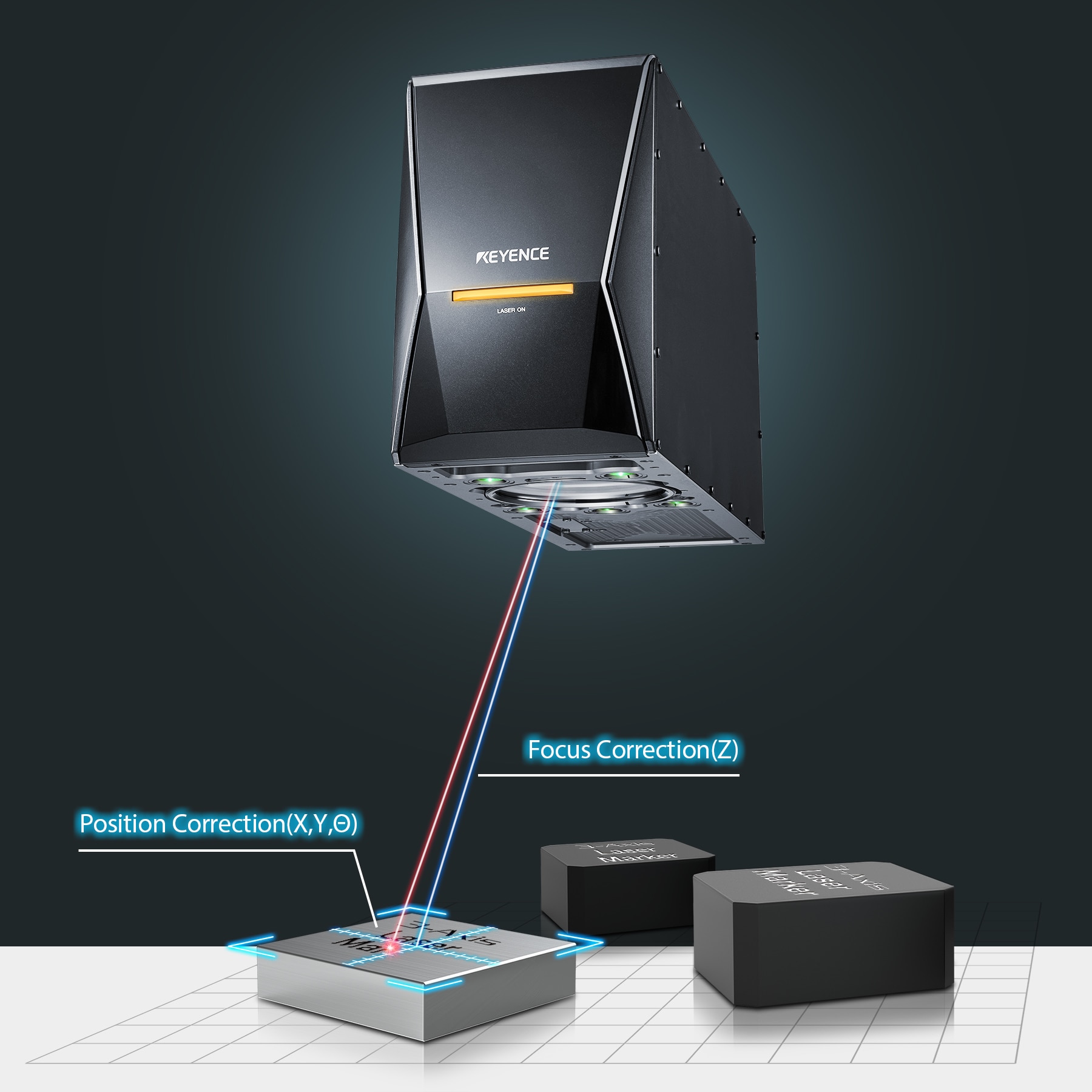
Beam delivery is the second half of the architecture. After the source, the beam enters a scanning head built around two galvanometer-driven mirrors that deflect it in X and Y, followed by an F-theta lens that keeps the focal spot on a flat plane across the whole marking field. The F-theta focal length sets the marking field size: a short focal length gives a small, high-resolution field, while a longer focal length covers a larger area at the cost of a larger spot. A 3D dynamic-focus head adds a movable focusing element so the system can mark curved or stepped surfaces and span multiple focal planes.
Beam quality, expressed as the M-squared value, ties the source and the optics together. An M-squared near 1 represents a near-ideal beam that focuses to the smallest possible spot and produces the sharpest edges and the finest legible features; a higher M-squared spreads the spot and softens detail. Fiber sources are prized partly because they routinely achieve low M-squared values. For applications that mark sub-millimeter text or fine semiconductor patterns, beam quality and a short-focal-length lens matter as much as raw power.
Marking throughput is governed by the galvanometer head rather than the laser source. Typical production scan speeds run from about 2,000 to 7,000 mm per second, and high-speed heads exceed 10,000 mm per second for simple line and code work. Positioning speed between marks, settling time, and the controller's vector-fill efficiency all affect cycle time, so two systems with identical source power can differ substantially in parts per hour. For high-cadence packaging lines, the head and controller specification is frequently the binding constraint.
Chapter 4 / 06
Marking Processes and Materials
A single laser source can produce several visibly different results depending on how the beam interacts with the surface. Understanding the four marking processes plus etching and engraving lets you predict whether a given material will take a high-contrast, durable mark, and whether the process will alter the part geometry. The four classic marking processes are annealing, carbon migration, foaming, and color marking, none of which removes measurable material.
Annealing heats a metal surface just enough to drive oxygen diffusion below the surface; on cooling, a sub-surface oxide layer forms and the metal changes color, typically to black or dark grey. Because the change is below the original surface, the part stays smooth and corrosion-resistant, which is why annealing is the standard for stainless steel and titanium medical devices and surgical instruments that must endure repeated sterilization. It requires controlled heat input, so it generally needs a fiber source and benefits from MOPA pulse control.
Carbon migration applies to carbon-bearing metals and alloys: the beam draws carbon to the surface, producing a dark mark without removing material. Foaming melts a thin surface layer that traps gas bubbles, producing a raised, usually lighter mark on dark plastics, the inverse of the dark marks the same plastic gives under other settings. Color marking, achieved mainly with MOPA sources, tunes pulse frequency and width to build interference oxide layers on metal that appear as a range of colors, or to drive color shifts in pigmented plastics.
Beyond marking, etching melts the surface to leave a slightly raised, frosted mark while removing only about 0.025 mm (0.001 inch) or less, and engraving ablates material to cut a recessed cavity. Engraving depth on metal commonly reaches 0.1 to 0.5 mm in multiple passes, and high-power sources exceed 1 mm in steel for mold and die work. Recessed marks survive sandblasting, painting, and machining, which is why aerospace and tooling parts are often engraved rather than surface-marked. The table below maps common substrates to the wavelength and process that typically deliver the best result.
Material
Recommended Source
Typical Process
Stainless steel, titanium (medical)
Fiber (MOPA)
Annealing, color marking
Aluminum (anodized)
Fiber (MOPA)
Bleaching to black, engraving
Carbon and tool steel
Fiber
Engraving, carbon migration
Copper, gold, brass (reflective)
Green or fiber
Engraving, surface marking
Plastics (pigmented)
UV or fiber
Foaming, color change
Wood, paper, cardboard, acrylic
CO2
Surface marking, engraving
Glass, ceramics
CO2 or UV
Frosting, cold marking
Semiconductor wafers
UV or green
Cold marking
Material and process choices feed directly into traceability standards. When the deliverable is a machine-readable code, the symbology is governed by ISO/IEC 16022 for Data Matrix, and the print quality of the produced symbol is graded under ISO/IEC 15415 for 2D codes, with direct part marks graded by ISO/IEC TR 29158 (formerly AIM DPM) and aerospace marks by SAE AS9132. A mark that looks crisp to the eye can still fail a grade, so for traceability duties the marking process must be validated against the relevant grading method, not judged by appearance.
Chapter 5 / 06
Key Specification Parameters
Reading a laser marker datasheet is a core procurement skill. Different vendors list a dozen or more parameters, but eight truly drive selection: wavelength, average power, peak power and pulse energy, pulse duration and adjustability, beam quality, marking field size, marking and positioning speed, and the integrated safety class. Each is explained below in the order a buyer should evaluate it.
Wavelength is the gating parameter because it decides which materials can be marked at all: about 1,064 nm fiber for metals, 10,600 nm CO2 for organics, 355 nm UV for heat-sensitive and cold-mark substrates, and 532 nm green for reflective metals. No amount of power compensates for the wrong wavelength. Average power in watts, commonly 20, 30, 50, or 100 W for fiber markers, sets throughput and the practical depth ceiling: more average power means faster cycles and deeper engraving, at higher cost and larger footprint.
Peak power and pulse energy describe the intensity within a single pulse, which governs ablation. Two markers can share the same average power yet differ greatly in peak power, and it is peak power, not average, that determines whether a pulse can vaporize material for engraving. Pulse duration and adjustability separate a fixed Q-switched source (roughly 80 to 150 ns) from a tunable MOPA source (roughly 1 to 500 ns); the tunability is what enables color marking and gentle marking of thin parts, as covered in Chapter 3.
Beam quality, the M-squared value, sets the smallest focal spot and therefore the finest legible feature and the sharpest edges. A value near 1 is near-ideal. Marking field size is fixed by the F-theta lens focal length: a small field gives high resolution, a large field covers more area with a larger spot. The field must be at least as large as the longest mark, or the part needs indexing or a larger lens.
Marking and positioning speed come from the galvanometer head and controller. The full output signal of the system is the marked part itself, but the cycle time depends on the parameters below:
Marking speed: about 2,000 to 7,000 mm per second for production heads, exceeding 10,000 mm per second for high-speed line work.
Positioning speed: the jump speed between marks; high jump speed and short settling time cut cycle time on dense layouts.
Repeatability: the placement accuracy of the head over a shift, important for codes that must land in a fixed read window.
Pass count: deep engraving needs many passes, so depth trades directly against throughput.
Safety class closes the list. The bare source is Class 4 under IEC 60825-1, but the integrated machine is normally certified Class 1 by enclosing the beam with interlocked, wavelength-blocking guarding. Class 1 means no accessible hazardous radiation in normal use and is what allows installation next to operators without dedicated laser-controlled-area procedures. Secondary specs worth confirming include source lifetime (fiber sources are often rated near 100,000 hours), wall-plug efficiency, cooling method (most fiber markers are air-cooled), and software support for the fonts, logos, and codes you must produce.
Chapter 6 / 06
Selection Decision Factors
To turn the preceding five chapters into a specific model choice, work through the decision sequence below. Most selection mistakes come not from a single wrong step but from deciding power or speed before settling material and wavelength. These eight steps can serve as a fixed RFQ template.
Material and wavelength: First identify the substrate and any coatings, then pick the wavelength: fiber for metals, CO2 for organics and glass, UV for heat-sensitive plastics and semiconductors, green for reflective metals. This decision is binding; everything else follows from it.
Mark type and depth: Decide whether you need surface marking, etching, or recessed engraving, and the required depth. Surface marking and codes need modest power; deep engraving needs higher peak power and accepts slower throughput. Medical annealing and metal color require MOPA pulse control.
Power and architecture: Choose average power (commonly 20, 30, 50, or 100 W for fiber) from the depth and cycle-time targets, and choose Q-switched versus MOPA from whether color or fine thermal control is needed.
Field size and resolution: Select the F-theta focal length so the marking field covers the longest mark, then confirm the focal spot and beam quality resolve your smallest legible feature, including the smallest Data Matrix cell size.
Throughput: Verify marking and positioning speed and pass count against the line takt time. On packaging lines the galvo head and controller, not the source, are usually the binding constraint.
Code and quality standard: If the mark is a traceability code, specify the symbology (ISO/IEC 16022 for Data Matrix) and the grading method the produced symbol must meet (ISO/IEC 15415, ISO/IEC TR 29158, SAE AS9132, or MIL-STD-130), and pair the marker with a verifier.
Safety and integration: Require a Class 1 integrated enclosure under IEC 60825-1 (and FDA 21 CFR 1040.10 compliance for the United States), with interlocked guarding and fume extraction. Confirm fit with conveyors, rotary axes, vision, or robots, and confirm the certificate covers the integrated system.
Total cost of ownership: Add purchase price, installation, fume extraction and consumable filters, expected source life (fiber often near 100,000 hours), and software and validation effort. A cheaper Q-switched unit that cannot hold a required code grade or color costs far more over the line's life than the price gap.
One last commonly overlooked dimension is manufacturer serviceability: local spare-source inventory, field service and recalibration availability, software updates and font or code libraries, and proven references in your industry. Major suppliers include Trumpf, which offers fiber, CO2, UV, and ultrashort-pulse marking lasers; Keyence, with hybrid, fiber, UV, and CO2 systems such as the MD-U UV series for fine marking of semiconductors and heat-sensitive parts; Coherent, with broad wavelength coverage including UV and green; Han's Laser, spanning entry-level desktop to fully automated high-power systems; and Videojet, focused on high-throughput CO2 and fiber coding for packaging lines. These attributes seem minor at purchase but determine repair response and uptime after years of production.
FAQ
What is the difference between a laser marker and a laser engraver?
The terms describe a continuum of laser-material interaction, not different machines. Laser marking changes the surface appearance with little or no removal of material: annealing, carbon migration, foaming, and color marking all leave the surface geometry essentially intact. Laser etching melts a thin layer and leaves a slightly raised, frosted mark. Laser engraving and ablation remove material to create a recessed cavity, typically tens to hundreds of microns deep, that survives sandblasting and machining. The same fiber source can do all three by changing power, pulse energy, scan speed, and number of passes. In procurement language, a marking duty needs less average power, while deep engraving needs higher peak power and slower throughput.
How do I choose between fiber, CO2, UV, and green laser markers?
Match the wavelength to how the material absorbs light. Fiber lasers at about 1,064 nm (some ytterbium sources at 1,090 nm) are absorbed well by metals, so they dominate marking of stainless steel, aluminum, and titanium. CO2 lasers at 10,600 nm are absorbed by organics, glass, wood, cardboard, and many uncoated plastics, but not by bare metal. UV lasers at 355 nm use cold marking through photochemical bond breaking, ideal for heat-sensitive plastics, semiconductors, glass, and medical devices. Green lasers at 532 nm sit between UV and IR and suit highly reflective metals such as copper and gold plus some plastics. When in doubt, send sample parts to the vendor for a marking trial because real absorption depends on coatings and surface finish.
What is the difference between a MOPA and a Q-switched fiber laser?
A Q-switched fiber laser has a fixed pulse duration set by its cavity, typically in the range of 80 to 150 nanoseconds, with a usable pulse repetition frequency of roughly 20 to 100 kHz. A MOPA (master oscillator power amplifier) separates pulse generation from amplification, so the pulse width is electronically adjustable from about 1 to 500 nanoseconds and the frequency range extends to roughly 1 kHz up to the megahertz region. That control matters for color marking on stainless steel and titanium, deep black anodized aluminum, and gentle marking of thin or heat-sensitive parts. Q-switched sources cost less and are sufficient for plain black or engraved marking, while MOPA commands a premium for color and process control.
What laser safety class do industrial marking systems fall under?
The bare laser source and an open beam path are Class 4 under IEC 60825-1, the highest hazard class, capable of permanent eye and skin injury and able to ignite materials. The standard practical control is to enclose the work area so the integrated machine is certified Class 1, meaning no accessible hazardous radiation under normal operation. Class 1 enclosures use interlocked doors, viewing windows that block the working wavelength, and fume extraction. In the United States the FDA enforces 21 CFR 1040.10 and 1040.11; products conforming to IEC 60825-1 edition 3 under FDA Laser Notice No. 56 are generally accepted. Always verify the certificate covers the integrated system, not just the source.
Which standards govern marked code quality for traceability?
Data Matrix symbology itself is defined by ISO/IEC 16022, which sets formats, dimensions, error correction, and the decode algorithm. Print quality for 2D symbols is graded by ISO/IEC 15415, and the direct part marking variant uses ISO/IEC TR 29158, formerly known as AIM DPM. Aerospace direct part marks follow SAE AS9132. U.S. Department of Defense unique identification under MIL-STD-130 accepts a Data Matrix that meets ISO/IEC 16022, 15415, 15416, AS9132, or AIM DPM grading. Medical Unique Device Identification programs reference these same grading methods. A laser marker should be specified together with a verifier so the produced grade, not just the visual appearance, is controlled.
How deep can a laser engraver mark and how fast?
Marking depth depends on average power, pulse energy, scan speed, and pass count. Laser etching removes on the order of 0.025 mm (0.001 inch) or less, while deep engraving on metal commonly reaches 0.1 to 0.5 mm per area in multiple passes, and high-power sources can exceed 1 mm in steel for mold and tooling work. Throughput is governed by the galvanometer scan head: typical marking speeds run from about 2,000 to 7,000 mm per second, with high-speed heads exceeding 10,000 mm per second for simple line work. Deep engraving is far slower because it requires many repeated passes, so a deep serial number can take tens of seconds while a shallow Data Matrix marks in under a second.
What spec parameters matter most when comparing laser markers?
Eight parameters drive most decisions: wavelength (sets material compatibility), average power in watts (sets throughput and depth capacity), peak power and pulse energy (set ablation ability), pulse duration and adjustability (Q-switched fixed versus MOPA tunable), beam quality M-squared (sets focal spot size and edge sharpness), marking field size set by the F-theta lens focal length, marking and positioning speed of the galvo head, and laser safety class of the integrated enclosure. Secondary but important: wall-plug efficiency, expected diode or source lifetime (fiber sources are often rated around 100,000 hours), cooling method, and software support for the codes and fonts you must produce.
Laser Marker Manufacturers
Source-backed product routes. Open a company dossier for procurement scope and cited evidence.