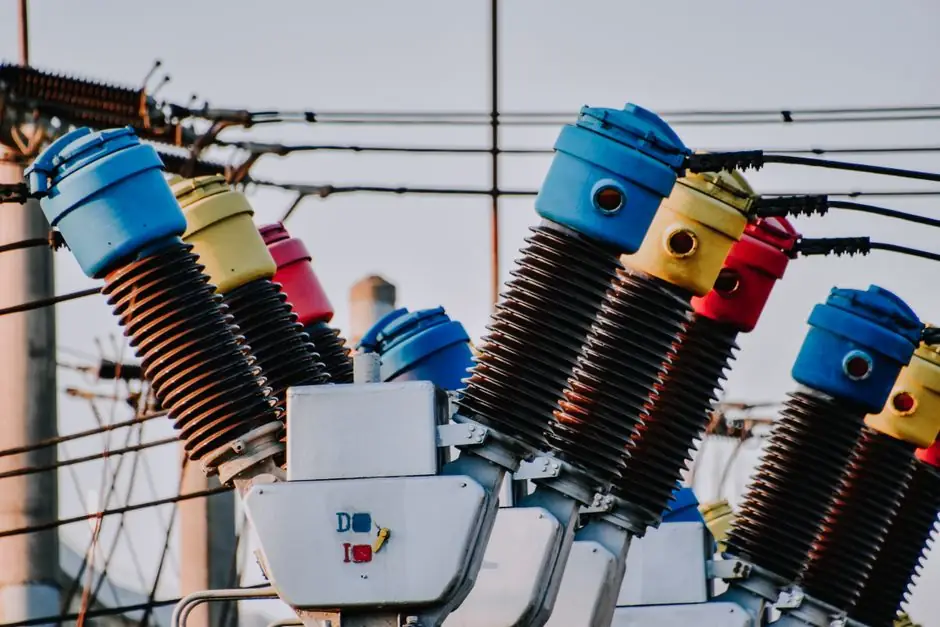
The market for power grid hardware is projected to expand from USD 282.1 billion in 2023 to USD 367.4 billion by 2028, a 5.4% CAGR driven by transmission and distribution upgrades in the US, UK, China, and India [S4]. Within that pool, share is allocated across cable, variable speed drive, transformer, and switchgear suppliers serving generation, transmission, and distribution stages [S4].
Component-level economics dominate the share conversation. HVDC transmission systems require high initial investment for converter stations, while high-end power monitoring devices (data loggers, power quality analysers, data recorders) carry capabilities such as harmonic distortion analysis, flicker detection, and disturbance location that raise unit cost above basic voltage, power factor, and energy meters [S4]. For an equipment buyer comparing power distribution hardware, those cost bands are where manufacturer share skews, since capex weight shifts toward vendors with HVDC and high-end monitoring exposure.
Component-led segmentation: where the USD 367.4 billion lands
The four component buckets (cables, variable speed drives, transformers, switchgear) are the share-defining axis in the most recent MarketsandMarkets segmentation [S4]. Cables anchor long-haul transmission and last-mile distribution; variable speed drives attach to industrial process electrification; transformers cover step-up and step-down duty across generation and load; switchgear handles protection, isolation, and short-circuit interruption in power distribution networks.
Power source mix (oil, natural gas, coal, renewables) determines upstream capex routing, but does not directly redistribute share between hardware OEMs. Renewables-driven long-distance flow increases the HVDC converter station content per project, which is a high-capex, low-volume line item, versus conventional HVAC substation work that distributes share more evenly across switchgear and transformer suppliers [S4]. Applications are split across generation, transmission, and distribution; transmission-side spending has been the leading share gainer as the US, UK, China, and India prioritise grid modernisation and substation retrofit programmes [S4].
What drives capex allocation: T&D upgrade vs HVDC restraint
Investments in upgrading and expanding transmission and distribution infrastructure are the primary market driver per the most recent public forecast [S4]. The mechanism is substation modernisation, replacing legacy components with efficient, overcurrent-protective equivalents, and rebuilding the network to carry long-distance renewable flow with minimum losses.
The restraint is the high installation cost of HVDC transmission systems and high-end monitoring devices, which slows deployment in budget-constrained utilities [S4]. Buyers specifying HVDC weigh converter station capex against HVAC alternatives, and that decision is where transformer and switchgear OEMs see the largest share swings. In an HVAC corridor, transformer and switchgear share is split more evenly; in an HVDC corridor, the converter station vendor captures a disproportionate share of project value, displacing some transformer content at the line terminal.
Manufacturer comparison: capability, cost band, and fit
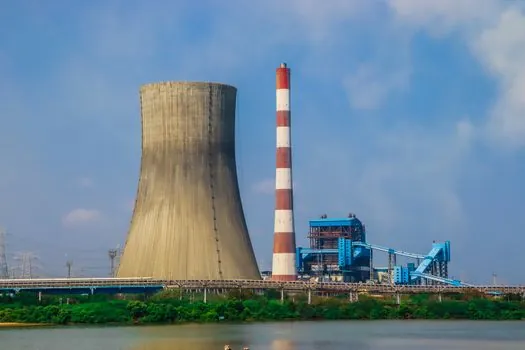
A criteria-based read of the OEM landscape, using only what the public research supports, lines the main supplier categories up against three decision criteria: HVDC converter capability, monitoring device tier, and application scope. [S5]
Transformer OEMs with HVDC converter station exposure compete for high-voltage direct current tenders; their share is concentrated in cross-border and offshore wind interconnect projects where converter capex is unavoidable. Transformer and switchgear suppliers focused on substation retrofit programmes compete on a different cost band, with distribution-class units priced against basic monitoring stacks. HVDC and high-end monitoring OEMs capture a smaller volume share but a disproportionate revenue share, because data loggers, power quality analysers, and data recorders cost materially more than low-end devices that only measure voltage, power factor, and energy use [S4].
The fit for a given buyer depends on project voltage class and length. For HVAC substation retrofit at distribution voltages, the power supply and switchgear OEM roster is the relevant short list. For long-haul renewable evacuation at 320 kV and above, the HVDC converter station short list collapses to a smaller vendor pool. Sourcing teams should map the cost band first (HVDC converter capex vs HVAC substation scope) before filtering OEMs on monitoring tier.
Standards and sourcing posture for grid hardware buyers
Specifications across switchgear, transformer, and HVDC converter station work are governed by IEC and IEEE series standards covering insulation coordination, short-circuit withstand, and harmonic limits. Power quality and monitoring device specifications typically reference IEC 61000 series and IEEE 519 for harmonic distortion control, while transformer loss evaluation follows IEC 60076. Buyers should anchor RFQ language to these standards rather than to vendor marketing claims, especially where HVDC converter station scope is in play. [S1]
Sourcing posture in 2026 has shifted toward dual-sourcing transformer and switchgear SKUs at the distribution voltage class, with single-sourcing reserved for HVDC converter station work where the qualified vendor pool is small. Distribution utilities, particularly those running substation retrofit programmes, increasingly bundle low-end and high-end monitoring device procurement to standardise data interfaces across the power meter fleet.
Adjacent signals: utility-side build-out and equipment category knock-on
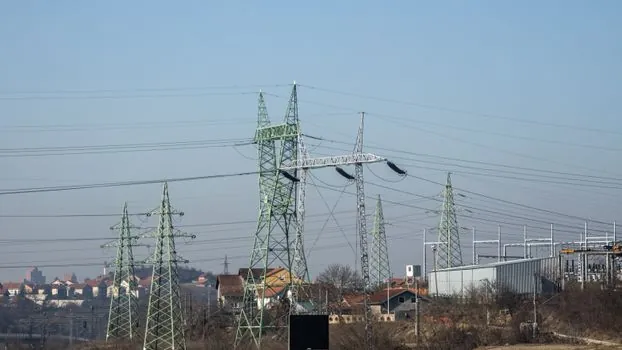
Two recent procurement signals bracket the demand side. A US grid build-out signal linked to two answer periods flags continued transmission capex, while a separate cluster of US grid-filing activity reinforces the same direction [S1]. A multilateral hydropower signal and a separate Senegal gas-to-power advance confirm that generation-side interconnection is still a live driver behind transmission procurement decisions in 2026.
Adjacent equipment categories mirror the same cycle. The 2026 electric motor competitive map shows AC sizing and EV traction mix pulling on rare-earth supply [S3], and the WEG-KATT deal reported on 2026-08-11 has reshaped the 2026 electric motor supplier map, a downstream effect of the same industrial electrification push that drives grid capex [S2]. Transformer demand tracking through 2026-2030 points to volume growth skewed toward Asia-Pacific, consistent with the substation retrofit programmes cited in the most recent public forecast [S4]. For buyers, the power tool and power mixer categories sit further downstream and only weakly track grid capex; the higher-leverage categories remain transformer, switchgear, cable, and HVDC converter station.
Trackable next node: watch the 2026 HVDC tender pipeline in the US, UK, China, and India for converter station award decisions, since each award is a discrete share reallocation event. The 2027 substation retrofit programme milestones in those same four markets will confirm or revise the 5.4% CAGR trajectory for switchgear and transformer OEMs.
Related analysis: Two answer periods flag US grid build-out as Senegal gas-to-power advances.