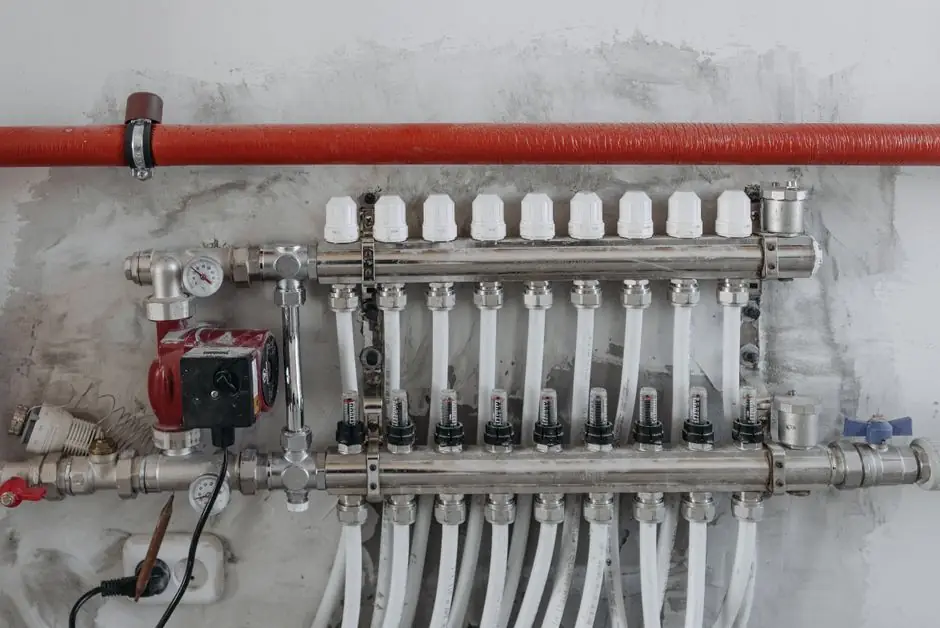
The global heat pump market is on track to reach $103.0 billion in 2026 and $200.7 billion by 2033, equating to a 10.0% CAGR over 2026 to 2033, with 2025 baseline spending of $94.5 billion already locked in [S5]. Air-source units continue to command the largest technology share, and Chinese OEMs hold the majority of export unit volumes to Europe, Oceania, and the Americas.
Manufacturer concentration is high in air-source and swimming-pool heat pumps, where Guangdong-based factories run 200,000+ m² facilities, ship 2 million+ units per year, and hold CE, ERP, Keymark, MCS, CB, and SAA certifications [S3]. For related process equipment context, see our encyclopedia entry on heat-treatment furnace design.
Top-tier Chinese air-source exporters and capacity benchmarks
Power World Machinery Equipment Co., Ltd. is one of the largest air-to-water heat pump manufacturers in China, running a 200,000 m² factory, exceeding 2 million units of annual capacity, and exporting to 60+ countries with CE, MCS, ISO, EN 14511, and EN 14825 compliance [S3]. The same source positions the company inside a "Top 10 heat pump Leading Brands" cohort in China and a "top 5 Chinese heat pump exporter" group, with 200+ patents and 20 in-house test laboratories [S3]. SPRSUN, founded 1999, also exports air-source, EVI, swimming-pool, and hot-water units under OEM/ODM contracts from Guangdong [S4].
Dabei Central Air Conditioning Co., Ltd., established 1996 in Guangzhou, runs 200+ staff and ships 8 kW to 60 kW heat pumps, 10-30 kW chillers, and 100-500 L water tanks under ISO 9001:2000 with CE and CCC certification, exporting mainly to Western Europe, Eastern Europe, and South America [S1]. Foshan Shunde Hodglon, founded Q1 2003, supplies heat pump, heat pump water heater, and heat pump dryer product lines out of Guangdong [S7].
European-targeted A+++ inverter and R290 segment
HEEALARX (export brand) targets Poland, the Czech Republic, Slovakia, Germany, Norway, Spain, and France with full inverter EVI air-to-water heat pumps in split and monobloc formats, using Alfa Laval plate exchangers and R32 refrigerant in its A+++ efficiency class [S2]. The R290 DC inverter, split inverter, and monoblock inverter product tree covers three sub-segments of the European house-heating channel, all positioned at the A+++ ERP band [S2].
European buyers consistently filter on the EN 14511 (rated performance) and EN 14825 (seasonal efficiency / SCOP) tests, plus Keymark and MCS for subsidy eligibility [S3]. Refrigerant choice is bifurcating: R32 dominates the A+++ split and monobloc lines, while R290 (propane, GWP ≈ 3) is taking the lower-capacity niche for eco-design compliance [S2].
Geothermal and ground-source sub-segment
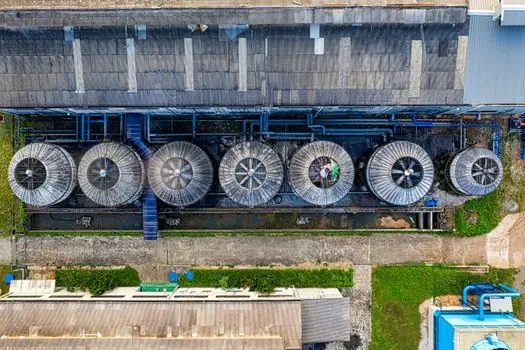
Geothermal heat pumps (GSHP) are defined as central heating/cooling systems that exchange heat with the ground via buried pipe loops, comprising the heat pump unit, the ground heat exchanger, and the ductwork [S8]. The technology holds a smaller share of the global heat pump market than air-source but earns a premium on coefficient of performance (COP) in cold-climate installs, because ground temperature stays roughly stable year-round versus ambient swings [S8].
MarketsandMarkets segments geothermal power and heat pump as a separate EP 1308 report line, refreshed September 2026, indicating sustained analyst coverage of the GSHP niche alongside the broader market [S9]. For complementary rotating-equipment context, see our reference on centrifugal pump selection criteria.
Application split: residential, commercial, and pool channels
The 2026 segmentation breaks capacity into "up to 10 kW" and "above 1000 kW" buckets, with applications split between Residential and Industrial [S5]. Operation types are split between Electric and Hybrid, and technology is split between Air Source and Water Source [S5]. Swimming-pool heat pumps are a discrete product line at SPRSUN, HEEALARX, and Power World, with commercial and residential inverter variants sold separately [S2][S4].
Typical nameplate ranges from the active Chinese OEM cohort include 8-60 kW for general heat pumps (Dabei) [S1], 100-500 L buffer tanks, 10-30 kW chillers [S1], and full inverter EVI ratings aimed at the European -20 °C heating regime [S2]. The titanium heat-exchanger sub-line, including US$ 23.00/kg titanium tube for swimming pool heaters from Shandong Meide, is a price-defined niche within the pool segment [S6].
Standards, certification gates, and refrigerant rules

EN 14511 sets the rated performance test method for heat pumps, EN 14825 sets the seasonal efficiency / SCOP labelling band, and CE marking covers EU conformity under the relevant directives [S3]. Keymark is the voluntary pan-European mark for heat pumps and is widely used to unlock national subsidies, while MCS (UK Microgeneration Certification Scheme) is mandatory for UK installers claiming the Boiler Upgrade Scheme grant [S3]. Outside Europe, SAA (Australia), CB (IECEE scheme), and ISO 9001 round out the typical cert stack held by Guangdong-based exporters [S3][S1].
Refrigerant selection is the second spec gate: R32 remains the workhorse for A+++ split and monobloc units, and R290 is being adopted in the small-capacity residential slot for its low GWP [S2]. Heat exchanger material selection between stainless-steel brazed plate and titanium is the third gate, with titanium preferred for aggressive pool-water chemistries [S6].
Who the top manufacturers suit, and where they do not
For project contractors and wholesalers running multi-megawatt residential or commercial builds in EU-27, the CE + Keymark + EN 14825 stack from the Guangdong top-10 cohort is the lowest-friction procurement route, with 25-day lead times achievable on stocked models [S3]. For OEM/ODM buyers wanting private-label drop-shipping, SPRSUN and Hodglon run sample services and audited supplier profiles on Made-in-China.com [S4][S7]. For niche European cold-climate house-heating installs targeting -20 °C and A+++, the HEEALARX EVI monobloc and split lines are purpose-built [S2].
These suppliers are NOT a fit for buyers who need local field service in North America or for projects that require AHRI-certified air-conditioning ratings rather than EN 14511 ratings, since the Chinese top-tier cohort is overwhelmingly certified to the European cert stack [S3]. They are also not the right fit for buyers whose end-customer requires R454C or CO2 (R744) refrigerant, since the visible product lines from the cohort centre on R32 and R290 [S2]. For process-cooling loops where a diaphragm pump or gear pump is needed alongside the heat pump, these suppliers typically do not bundle the rotating equipment.
Selection criteria: how to filter a heat pump shortlist

Decision filters that consistently separate the shortlist are: (1) certification stack (CE + EN 14511 + EN 14825 + Keymark for EU; MCS for UK; AHRI for North America); (2) refrigerant (R32, R290, R454C, R744); (3) SCOP at the design ambient (A+++ at -20 °C, A++ at -10 °C, A+ at 0 °C); (4) nameplate range alignment to load (8-60 kW for residential, above 1000 kW for industrial); and (5) titanium vs stainless plate heat exchanger for pool or aggressive-water duty [S1][S2][S3][S5][S6].
Lead time, after-sales network, and patent depth are the soft criteria. Power World publishes 25-day lead time, 60+ countries served, and 200+ patents as its buyer-facing differentiators [S3]. For more on parallel industrial procurement topics, see this EV charger market share by manufacturer breakdown for 2026 and this battery energy storage competitive landscape piece.
Failure modes and procurement risks to watch
The most common spec failures on incoming Chinese OEM heat pumps are: (a) EN 14825 SCOP at the rated climate point that is one band lower than the brochure claims, especially at -15 °C and below; (b) Keymark certificate scope that does not cover the exact model code being quoted, only the family; and (c) refrigerant charge mismatch on R290 units where the EU F-Gas limit of 150 g per appliance is exceeded in larger outputs [S2][S3].
Pool-side units also fail when the heat exchanger is stainless plate on chlorinated or salt-water pools, where titanium is the correct material and a US$ 23.00/kg titanium tube spec should be requested up front [S6]. Geothermal units fail when the ground loop is undersized versus the heat pump's nominal capacity, so loop length per kW should be confirmed against the IGSHPA-style design rule before order placement [S8][S9].
Sourcing channels and 2026 market signals
Three sourcing channels dominate: (1) direct-from-factory via Made-in-China.com or HiSupplier audited profiles, with sample service and OEM/ODM available; (2) regional European service centres set up by the top-5 Chinese exporters; and (3) Intersolar, Chillventa, ISH, BePositive, and MCE trade shows, which the cohort uses for product launches [S3][S4][S7].
Two trackable signals to watch over the next two quarters: first, the next Grand View Research refresh of the 2026 to 2033 forecast, which currently sits at $103.0 billion (2026) to $200.7 billion (2033) at 10.0% CAGR [S5]; second, the September 2026 MarketsandMarkets EP 1308 geothermal report release, which will reset the GSHP sub-segment baseline [S9]. For a parallel cross-industry signal, see this industrial procurement signal on construction materials.