
Residential PPR pipe runs are most commonly sized 20 mm, 25 mm, and 32 mm, with the catalog range typically extending from 20 mm up to 110 mm across the product family [S4]. For a single-family home, the rule of thumb is 20-25 mm for fixture branches and 32 mm for whole-house mains, scaling up to 40-50 mm only when an apartment riser or multi-unit manifold is involved [S4][S5].
PPR (polypropylene random copolymer) competes with metal and PEX in this segment on three engineering axes: heat resistance, corrosion immunity, and heat-fused joint integrity, and its expected service life is published at 50+ years under covered, non-UV-exposed conditions [S4]. Detailed PPR system engineering is covered in the PPR pipe encyclopedia entry, which complements the spec-driven selection logic below.
Define the Operating Envelope Before Picking a PN Rating
PN rating ties directly to safety margin: the higher the PN grade, the stronger the pipe against internal pressure, and that margin matters more as sustained temperature rises [S2]. For residential cold water distribution, S4 (PN12.5) is the standard baseline and is widely used in basic residential cold-water networks [S4]. For hot water service up to 80°C, S3.2 (PN16) or S2.5 (PN20) is specified, with PN20 the comfortable buffer for domestic hot water plumbing and PN25 reserved for hot water risers and special high-pressure conditions [S2][S4].
A common residential baseline of PN16 for hot water up to 80°C lines matches the most-frequently-stated residential PN range across recent PPR selection guides [S4][S6]. Cold lines can drop one PN grade because pressure, not temperature, governs the design margin in that branch, while hot lines cannot drop the same grade without eroding the safety factor [S2]. Always cross-check the project design pressure and the expected continuous service temperature against the local code before locking the PN number, because PN-to-temperature derating is the most common under-specification error in residential bids [S2].
Match Diameter to Fixture Count, Not to Intuition
For branch lines, standard sizes typically range from 20 mm to 25 mm, and main supply lines for a single dwelling often run at 32 mm [S5]. A practical residential sizing table derived from current PPR selection guides: 20 mm for branch lines serving 1-2 fixtures with a maximum flow of 24 L/min; 25 mm for 3-6 fixtures up to 42 L/min; 32 mm for whole-house mains or small apartments up to 72 L/min; 40 mm for apartment risers serving 6-12 units up to 110 L/min; 50 mm for building mains covering 12-20 units up to 170 L/min; 63 mm for 20+ unit commercial-scale runs up to 270 L/min [S5].
For longer pipe lengths, friction loss drives a one-size-up adjustment: each 10 m of run can reduce delivered pressure by roughly 5-10% depending on flow, which is the classic reason residential mains grow from 25 mm to 32 mm on longer layouts [S4]. Catalog wall-thickness spread for PPR pipe is roughly 2.0-20.8 mm across a 20-160 mm diameter range, so verify that the wall thickness on the delivered spool matches the PN grade printed on the label before fusion [S2]. For related pipe-family decision logic that complements PPR work, see PA 6 vs PA 6/6 vs PA 11 vs PA 12: spec-driven nylon selection, which walks through a similar spec-criteria workflow for engineering plastics.
PN Rating, SDR, and the S-Series Cross-Reference

PPR pressure classes are published in both PN and SDR (or S-series) notation, and a residential specifier should be comfortable translating between them: S5 (SDR 11) maps to PN10, S4 (SDR 9) to PN12.5, S3.2 (SDR 7.4) to PN16, S2.5 (SDR 6) to PN20, and S2 to PN25 [S4]. Residential projects typically use PN16 pipes, while commercial buildings usually require PN20 ratings, which is the working rule published across current PPR manufacturer guidance [S6].
For domestic hot water up to 80°C, residential builds sit on PN20 (S2.5) or PN25 (S2) with a temperature rating above 80°C, which is also the heating-system baseline carried over from radiator and underfloor loops [S4]. The same temperature derating logic governs hot-side risers in multi-storey residential work, so treat PN25 as the conservative default for any hot riser that does not have a confirmed lower design temperature. Selection pitfalls to avoid: oversized diameter wastes material and slows draw-off time, undersized diameter creates pressure drop and fixture starvation, and mismatched PN between hot and cold runs on a single manifold is the most common field-failure root cause in residential callback data [S1][S4].
Fittings, Jointing, and On-Site Quality Control
PPR systems are joined by socket fusion welding, and a correctly executed fusion joint can reduce leakage risk versus threaded metal joints, but only when the pipe ends and fitting sockets are dimensionally consistent [S2]. Three checks that prevent the majority of site call-backs: confirm outer diameter and wall thickness stability across delivered batches; confirm pipe-end and fitting-socket tolerance alignment for a clean fusion socket; confirm PN and size marking on every spool, because mixed PN pallets on the same manifold is a frequent installer error [S2].
For fitting selection, the pipe fitting encyclopedia entry catalogues elbow, tee, reducer, and valve geometry that pairs with the diameter table above, and the pipe clamp encyclopedia entry covers the support spacing that keeps hot PPR runs from sagging at elevated temperature. Cold-climate residential work needs additional care: PPR can become brittle in cold conditions, increasing the risk of cracking during installation, while higher ambient temperatures can soften the pipe and shift its performance envelope, so storage and installation timing are part of the spec, not an afterthought [S5].
Where PPR Wins, Where It Does Not, and the Cost of Mis-Spec
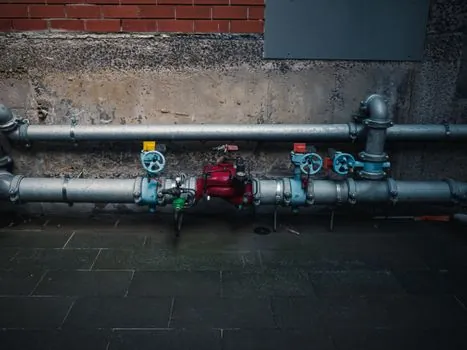
PPR's published advantages for residential plumbing are heat resistance (when PN-graded correctly), corrosion immunity with no rust scaling, smooth inner wall for reduced pressure loss, hygienic performance for drinking-water lines in many regions, and fusion-welded joints that reduce leak paths when installed correctly [S2]. These same properties also drive the typical 50+ year service life that PPR makers publish for covered, non-UV-exposed installations [S4]. The trade-off is environmental: UV exposure shortens PPR service life, so outdoor residential risers need UV-resistant PPR variants or protection, and the published life figure is conditional on that protection [S4].
Common residential selection mistakes that the current guides flag directly: choosing a pipe that is too small and starving fixtures, choosing a pipe that is unnecessarily large and wasting material, ignoring friction-loss up-sizing on long runs, and under-specifying PN on hot lines where sustained temperature is the actual load case [S1][S4]. For broader plastics spec context that informs residential pipe material choice, POM selection for general fabrication: grades, specs, and shop-floor criteria is a useful adjacent read on translating polymer datasheets into shop-floor decisions.
Residential PPR Spec Checklist
1. Cold lines: S4 (PN12.5) at 20-25 mm for branches, 32 mm for the main [S4][S5]. 2. Hot lines up to 80°C: S3.2 (PN16) or S2.5 (PN20); PN20 is the typical residential hot default, PN25 for risers and special conditions [S2][S6]. 3. Diameter: 20 mm for 1-2 fixtures (24 L/min), 25 mm for 3-6 fixtures (42 L/min), 32 mm for whole-house mains (72 L/min), 40 mm for 6-12 unit apartment risers, 50 mm for 12-20 unit building mains [S5]. 4. Friction: up-size one diameter class for every 10 m of additional run to hold the 5-10% per-10 m pressure loss in check [S4]. 5. Jointing: socket fusion, with PN and size verified on every spool and dimensional consistency confirmed between pipe and fitting before welding [S2]. 6. Environment: keep UV-exposed runs in UV-resistant PPR or shielded conduit to preserve the 50+ year service-life figure [S4].
Trackable signals for the next residential spec cycle: watch for DIN 8077/8078 and ISO 15874 revision activity tied to PN-temperature derating curves, and watch Chinese and EU PPR makers for any 2026 updates to residential hot-water PN guidance above 70°C continuous service. The denser the manufacturer's published pressure-temperature derating table, the more confidence a residential engineer can place in long-term hot-side performance claims.